
The dream of entrepreneurship often feels inextricably linked with the daunting necessity of significant capital. Visions of plush office spaces, large inventory orders, and substantial marketing budgets dance in the minds of aspiring business owners, often leading to paralysis. However, the truth is far more liberating: starting a successful business with little to no money is not just possible, it’s a proven path many thriving enterprises have taken. This journey demands ingenuity, resilience, and a meticulous understanding of financial resourcefulness, rather than deep pockets.
In an increasingly digitized world, the barriers to entry for new businesses have plummeted. What was once an expensive endeavor requiring brick-and-mortar investments or massive upfront production costs can now be launched from a laptop with nothing more than an idea and the drive to execute it. This article will guide you through the principles, strategies, and practical steps to transform your entrepreneurial vision into a tangible, revenue-generating reality, all while keeping your initial financial outlay at absolute zero. It’s about leveraging your skills, time, and the vast array of free resources available, proving that the most valuable capital you possess is your own ambition and intellect.
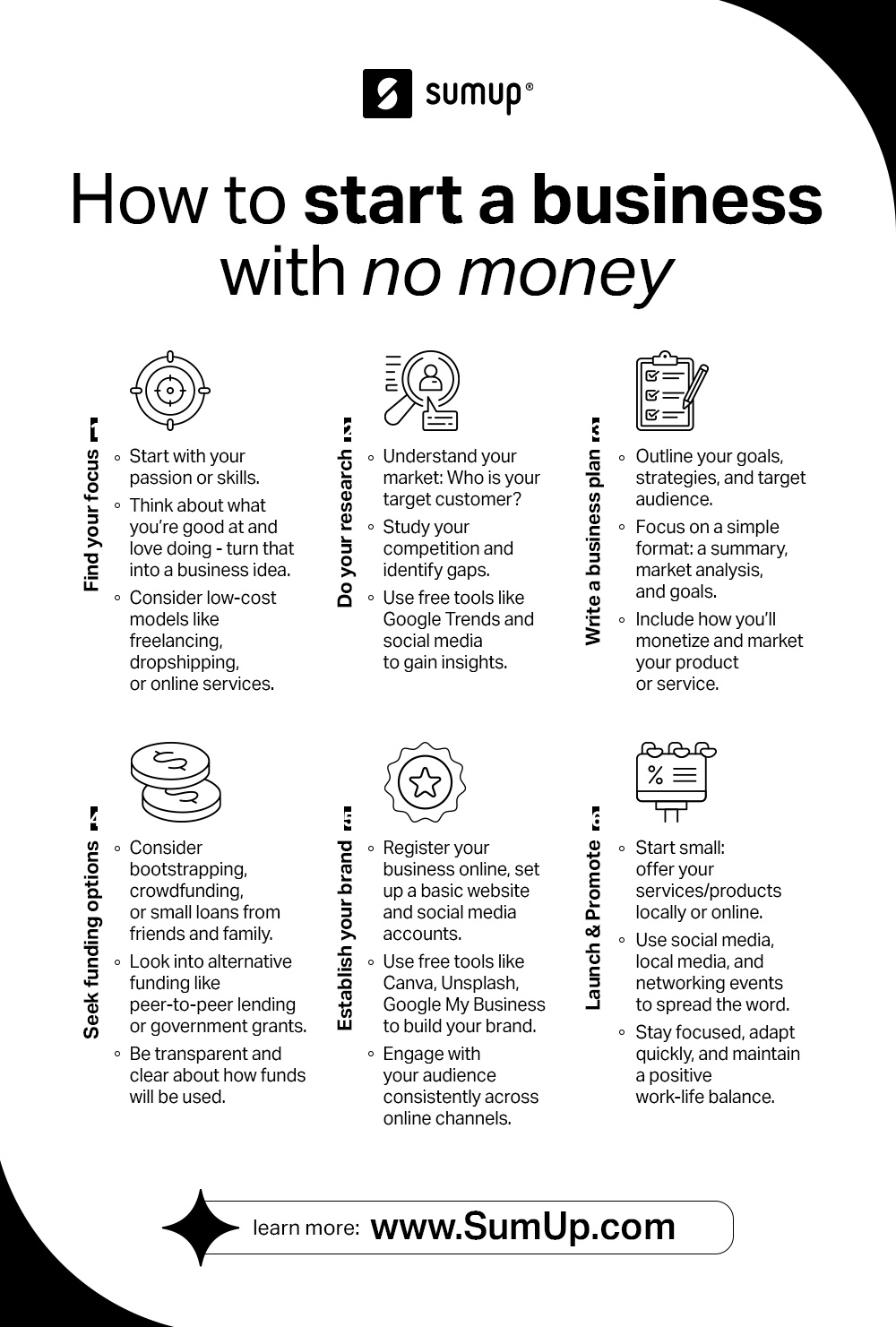
The Entrepreneurial Mindset: From Scarcity to Resourcefulness
The foundational step in starting a business without money isn’t about finding a secret stash of cash; it’s about fundamentally altering your approach to resources. Traditional business models often focus on what capital can buy. The “no money” approach focuses on what ingenuity, skill, and strategic action can create.
Shifting Your Perspective on Capital
When you commit to starting with no money, you’re forced to define “capital” differently. It’s no longer just cash in the bank, but rather:
- Time: Your most valuable asset, which you can invest directly into building your business.
- Skills & Knowledge: Expertise you possess, which can be monetized or leveraged to create value.
- Network: Your connections, which can provide advice, partnerships, or even early customers.
- Grit & Determination: The psychological capital to persevere through challenges and learn continuously.
- Free Tools & Resources: The abundance of online platforms, software, and educational content that eliminate traditional costs.
This reframing is crucial. Instead of asking, “What can I afford?” you begin to ask, “How can I achieve this objective using what I already have or can access for free?” This perspective fosters creativity and problem-solving, turning financial constraints into an engine for innovation.
Identifying Your Innate Skills and Value
Every individual possesses a unique blend of skills, experiences, and passions. These are your initial, no-cost assets. Before you can build a business, you must first identify what you are genuinely good at, what problems you enjoy solving, and what knowledge you possess that others might value.
- Skills Audit: List all your professional and personal skills – writing, graphic design, social media management, tutoring, coding, cooking, organizing, problem-solving, customer service, sales, etc.
- Passion & Interest Alignment: What topics genuinely excite you? Where do you naturally spend your free time learning or engaging? A business built around passion is far more sustainable, especially when motivation must compensate for lack of monetary investment.
- Problem-Solving: Think about common frustrations or unmet needs you or people you know encounter. Can your skills be applied to alleviate these pain points? This is the bedrock of any successful venture.
Monetizing your existing skills is the quickest path to generating initial income without needing external funding. Whether it’s freelancing, consulting, or creating a niche product, your expertise is your first product.
The Power of Lean Thinking and Bootstrapping
Lean thinking, popularized by startups, is about maximizing value while minimizing waste. For a no-money business, this means:
- Minimum Viable Product (MVP): Launching the simplest possible version of your product or service that still delivers core value to customers. This allows you to test assumptions, gather feedback, and iterate without over-investing time or (non-existent) money.
- Bootstrapping: Funding your business exclusively from personal savings or from the initial revenues generated by the business itself. With no money, this means starting with personal time and skill investment, then using the smallest profits to fund the next stage of growth. This forces financial discipline and ensures every dollar earned is strategically deployed.
- Frugality: Embracing extreme cost-consciousness in every decision. Can a task be done for free? Can you barter for a service? Can you learn to do it yourself rather than hiring someone? This mindset is not about being cheap, but about being efficient and strategic with every single resource.
Unearthing High-Demand, Low-Cost Business Ideas
With a resourceful mindset in place, the next step is to identify business opportunities that inherently require minimal financial outlay. The key is to leverage intellectual property, skills, and digital platforms rather than physical assets or inventory.
Leveraging Your Expertise: Service-Based Ventures
The most direct path to earning income with no money is by selling your time and specialized skills. Service-based businesses have extremely low overhead because your primary “product” is your expertise.
- Freelancing: Offer skills like writing, editing, graphic design, web development, social media management, virtual assistance, translation, or data entry. Platforms like Upwork, Fiverr, or local classifieds can connect you with clients. Your portfolio is your resume, and your computer is your office.
- Consulting/Coaching: If you have deep expertise in a specific niche (e.g., fitness, career development, business strategy, specific software), you can offer one-on-one or group coaching/consulting sessions. Initial marketing can be done through your personal network and free social media channels.
- Local Services: Consider services like pet sitting, dog walking, tutoring, house organizing, or personal assisting. These often require only your time, reliability, and basic local advertising (e.g., community groups, word-of-mouth).
The beauty of service-based businesses is that they often generate cash flow quickly, which can then be reinvested into developing more scalable products or a stronger brand presence.
Digital Products and Content Creation: Minimal Overhead, Maximum Reach
The digital economy offers incredible avenues for creating and selling products with virtually no manufacturing or inventory costs.
- E-books/Guides: If you have specialized knowledge, package it into an e-book or a comprehensive guide. Tools like Canva can help with design, and platforms like Gumroad or even your own simple website can handle sales and distribution.
- Online Courses/Workshops: Create video lessons or interactive workshops on a skill you possess. Platforms like Teachable or Thinkific allow you to host and sell courses, often with a free tier to start. You can even host live workshops via Zoom for a low cost or free for initial small groups.
- Templates/Printables: Design digital templates (e.g., budgeting spreadsheets, social media templates, resume templates, planners) or printable artwork. These are created once and can be sold repeatedly.
- Stock Photography/Videography/Music: If you have artistic skills, contribute to stock sites (e.g., Shutterstock, Adobe Stock) and earn royalties.
The initial investment here is primarily your time and creative effort. Distribution is digital, eliminating physical shipping and handling costs.
Dropshipping and Print-on-Demand: Inventory-Free E-commerce
For those interested in physical products but without capital for inventory, these models are game-changers:
- Dropshipping: You set up an online store (e.g., Shopify with a free trial, or Etsy/eBay for minimal fees) and list products from a supplier. When a customer buys, you purchase the item from the supplier, who then ships it directly to the customer. You never hold inventory, paying for the product only after you’ve received payment from the customer. The challenge is finding reliable suppliers and effective marketing.
- Print-on-Demand (POD): Similar to dropshipping, but you design custom graphics for products like T-shirts, mugs, phone cases, or posters. When a customer orders, a POD service (e.g., Printful, Printify) prints your design onto the product and ships it directly. Again, no inventory, no upfront costs for products.
Both models require an initial investment of time for research, setup, and marketing, but eliminate the significant capital drain of purchasing and storing inventory.
Building Your Business Foundation on a Shoestring Budget
Once you have an idea, the next challenge is to establish your business presence and operational framework without incurring debt or major expenses. The digital landscape is a treasure trove of free and freemium tools designed precisely for this purpose.
Utilizing Free Digital Tools and Platforms
Leverage the power of the internet to create a professional facade and streamline operations:
- Website/Online Presence: Start with free website builders (e.g., Google Sites, WordPress.com’s free plan, Canva’s free website creator), or social media profiles (Facebook Business Page, Instagram Professional Account, LinkedIn) as your primary online “storefront.” These allow you to showcase your services/products and connect with potential customers.
- Communication & Collaboration: Gmail for professional email, Google Meet or Zoom (free tier) for virtual meetings, Slack (free tier) for team communication (if you bring on collaborators), and Google Drive for cloud storage and document sharing.
- Design & Marketing: Canva (free version) for creating stunning graphics, logos, and social media content. Unsplash or Pexels for free stock photos. Mailchimp (free tier) for email marketing to up to 2,000 subscribers.
- Project Management: Trello (free tier) or Asana (free tier) to organize tasks and manage your workload effectively.
- Financial Tracking: Google Sheets or Excel for basic bookkeeping. There are also simple free budgeting apps that can help track initial income and expenses.
The cumulative effect of these free tools is a highly functional, professional-looking business infrastructure that costs nothing but your time to set up and learn.

Guerrilla Marketing and Organic Growth Strategies
Marketing doesn’t have to be expensive. In fact, some of the most effective strategies rely on ingenuity and effort, not ad spend:
- Content Marketing: Create valuable blog posts, videos, podcasts, or social media content that addresses your target audience’s pain points. Share your expertise freely to build trust and authority. This establishes you as a thought leader and organically draws people to your offerings.
- Social Media Engagement: Actively participate in relevant online communities (Facebook groups, LinkedIn groups, Reddit subreddits). Offer genuine help, share insights, and subtly promote your services when appropriate. Focus on building relationships, not just broadcasting sales messages.
- Search Engine Optimization (SEO): Learn basic SEO principles to ensure your website or content ranks higher in search engine results. Using relevant keywords, creating high-quality content, and getting backlinks are free ways to increase visibility.
- Word-of-Mouth: This is the most powerful and cheapest form of marketing. Deliver exceptional value and customer service from day one. Encourage satisfied clients to leave reviews and refer new customers. Offer small incentives for referrals if feasible.
- Public Relations (DIY PR): Identify local media outlets, blogs, or podcasts that cater to your niche. Craft compelling pitches about your unique business or expertise and offer yourself as a source. Getting featured in the media can provide immense credibility and exposure for free.
These strategies require consistent effort and patience but build a strong, authentic connection with your audience that paid ads often struggle to achieve.
The Art of Networking and Bartering for Services
Your network is a goldmine of potential resources:
- Networking: Attend free local business events, workshops, or online webinars. Connect with other entrepreneurs, potential collaborators, mentors, and even future clients. Strong relationships can lead to opportunities, advice, and referrals.
- Bartering: Can you offer your skills in exchange for a service you need? For example, offer to build a website for a local photographer in exchange for professional headshots, or provide social media management for a graphic designer in exchange for a logo design. This creative exchange of value eliminates cash transactions.
- Mentorship: Seek out experienced entrepreneurs who are willing to offer guidance. Many successful individuals are happy to provide advice to aspiring business owners, and their wisdom is invaluable.
These non-monetary exchanges are critical for bootstrapping, allowing you to access resources that would otherwise be out of reach without capital.
Generating Initial Revenue and Reinvesting for Growth
The ultimate goal of starting a business, especially one with no money, is to generate income as quickly as possible. This initial cash flow is your lifeline and your fuel for sustainable growth.
The Freelance Launchpad: Earning While You Build
For many “no money” entrepreneurs, initial revenue comes from directly selling their skills as a freelancer. This “freelance launchpad” approach allows you to:
- Validate Your Skills: Prove to yourself and others that your skills have market value.
- Build a Portfolio: Each freelance project becomes a valuable addition to your portfolio, attracting more clients or proving concept for future products.
- Generate Seed Capital: The income earned, however modest, becomes your very first business capital. It can be used for small, strategic investments like a premium tool subscription, a better microphone for a podcast, or a small ad campaign.
- Understand Customer Needs: Working directly with clients gives you firsthand insight into their challenges, which can inform the development of more scalable products or services later on.
Prioritize finding your first paying customers, even if the initial projects are small. The experience and revenue are far more valuable than perfecting a business plan in isolation.
Securing Your First Customers and Proof of Concept
Your first few customers are critically important. They provide not just revenue, but also:
- Validation: Their willingness to pay proves there’s a market for your offering.
- Testimonials & Case Studies: Positive feedback and measurable results become powerful social proof for future marketing.
- Feedback: Early customers are often willing to provide constructive criticism, helping you refine your product or service.
Focus intensely on delivering exceptional value to these early adopters. Go above and beyond. Ask for feedback. Encourage them to spread the word. A strong foundation of satisfied early customers can be the engine of organic growth.
Smart Reinvestment: Fueling Expansion Without Debt
Every dollar earned in the early stages should be viewed as precious fuel for growth. Avoid taking profits out of the business prematurely. Instead, adopt a disciplined reinvestment strategy:
- Prioritize Essential Tools: Invest in tools that will significantly improve efficiency or customer experience (e.g., a professional email service, a paid Zoom plan for longer meetings).
- Strategic Marketing: Once you have consistent income, allocate a small percentage to targeted, low-cost marketing experiments (e.g., a small social media ad budget to test audiences).
- Skill Development: Invest in courses or workshops that enhance your core business skills or allow you to expand your service offerings. Many affordable options exist on platforms like Udemy or Coursera.
- Outsourcing Non-Core Tasks (Carefully): As income grows, consider outsourcing tasks that are time-consuming but not core to your unique value proposition (e.g., administrative tasks, basic bookkeeping). This frees up your time for higher-value activities.
The goal is to create a self-sustaining cycle where revenue continuously funds strategic improvements, slowly building momentum and capacity without needing external funding.
Sustaining Momentum and Scaling Responsibly
The journey doesn’t end when you make your first sale; it truly begins. Sustaining growth, managing finances, and knowing when and how to scale are critical for long-term success as a bootstrapped entrepreneur.
Mastering Personal and Business Finance from Day One
Even with no money, financial discipline is paramount.
- Separate Finances: As soon as you start earning, create a separate bank account for your business, even if it’s a simple free checking account. This makes tracking income and expenses infinitely easier and legally cleaner.
- Detailed Record-Keeping: Keep meticulous records of all income and expenses. Use a spreadsheet, free accounting software (like Wave Accounting for small businesses), or even a simple ledger. This is crucial for understanding profitability, making informed decisions, and preparing for taxes.
- Cash Flow Management: Monitor your cash flow closely. Understand when money is coming in and when it’s going out. For a bootstrapped business, maintaining positive cash flow is existential.
- Budgeting: Create a lean budget for your business, even if it’s just zero-based budgeting in the beginning. Every potential expense should be scrutinized for its absolute necessity and ROI.
Understanding your financial health allows you to make data-driven decisions about pricing, investment, and growth.
Strategic Partnerships and Collaborations
Scaling with no money often means leveraging the resources and networks of others through strategic partnerships:
- Complementary Businesses: Identify other businesses that serve your target audience but offer non-competing services. For example, a web designer could partner with a copywriter, or a fitness coach with a nutritionist. You can cross-promote, refer clients, and even co-create new products or services, expanding your reach and offerings at no cost.
- Affiliate Marketing: If you create digital products, allow others to sell them for a commission. This can significantly extend your sales force without hiring staff.
- Guest Blogging/Podcasting: Offer your expertise to other platforms in exchange for exposure to their audience. This builds your authority and drives traffic back to your own offerings.
These collaborations allow you to achieve growth and reach that would be impossible to fund independently.

When to Seek External Funding (and how to prepare for it)
While the goal is to start with no money, there might come a point where strategic external funding could accelerate growth significantly. This decision should only be made when:
- You Have Proven Your Model: You have consistent revenue, a strong customer base, and clear metrics demonstrating profitability and market demand.
- You Have a Clear Use for Funds: You know exactly how the money will be used to generate a significant return (e.g., hiring key staff, developing a new product feature, scaling marketing).
- You’ve Exhausted Bootstrapping: You’ve maximized what you can achieve through internal resources and organic growth.
If you do decide to seek funding, your meticulous financial records, robust business model, and proof of concept developed during your “no money” phase will be your most compelling assets. You’ll be approaching investors from a position of strength, showcasing a resilient, revenue-generating enterprise that has already overcome significant challenges through sheer ingenuity.
Starting a business with no money is an ultimate test of entrepreneurial spirit. It demands creativity, financial discipline, relentless problem-solving, and an unwavering belief in your own capabilities. By focusing on your inherent skills, leveraging free resources, and meticulously managing every generated dollar, you can build a robust and profitable enterprise, proving that true wealth lies not in what you start with, but in how intelligently and diligently you build.
aViewFromTheCave is a participant in the Amazon Services LLC Associates Program, an affiliate advertising program designed to provide a means for sites to earn advertising fees by advertising and linking to Amazon.com. Amazon, the Amazon logo, AmazonSupply, and the AmazonSupply logo are trademarks of Amazon.com, Inc. or its affiliates. As an Amazon Associate we earn affiliate commissions from qualifying purchases.