
The world of stock market investing can seem daunting, a complex labyrinth of charts, jargon, and volatile movements. For many, it conjures images of high-stress trading floors or sophisticated algorithms. However, at its core, investing in stocks is simply about owning a piece of a company, participating in its growth, and potentially sharing in its profits. For beginners, the journey begins not with a colossal sum of money or an advanced degree in finance, but with understanding fundamental principles, setting clear goals, and embracing a disciplined approach. This comprehensive guide aims to demystify stock investing, providing a clear roadmap for anyone ready to take their first confident steps towards building long-term wealth.
1. Understanding the Fundamentals of Stock Investing
Before diving into specific strategies or platforms, it’s crucial to grasp the bedrock concepts that underpin the stock market. A solid foundation of knowledge will empower you to make informed decisions and navigate the market with greater confidence.
What Exactly is a Stock?
At its simplest, a stock, or equity, represents a fractional ownership interest in a company. When you buy a company’s stock, you become a shareholder, meaning you own a tiny portion of that business. This ownership entitles you to certain rights, typically including voting rights on corporate matters and a claim on the company’s assets and earnings. Companies issue stocks to raise capital for various purposes, such as expanding operations, research and development, or paying off debt. In return, investors hope the company’s value will increase, leading to a rise in their stock price, or that the company will distribute a portion of its profits through dividends.
Why Invest in Stocks?
Investing in stocks offers several compelling advantages, primarily centered around wealth creation and outpacing inflation. Historically, the stock market has been one of the most effective tools for building long-term wealth. Unlike traditional savings accounts, which often yield meager returns that struggle to keep pace with the rising cost of living, stocks have the potential for significant capital appreciation. As companies grow and become more profitable, their stock prices tend to rise. Additionally, some companies pay dividends, providing a regular income stream to shareholders. Over extended periods, the power of compounding—reinvesting your earnings to generate further earnings—can transform modest investments into substantial nest eggs.
Key Risks and Rewards
While the rewards of stock investing can be substantial, it’s equally important to acknowledge the inherent risks. The primary risk is market volatility, meaning the value of your investments can fluctuate significantly, sometimes rapidly. Economic downturns, industry-specific challenges, company-specific news, or geopolitical events can all cause stock prices to fall, leading to a loss of capital if you sell during a dip. There’s also the risk of a company going bankrupt, which could result in a total loss of your investment in that particular stock.
However, understanding these risks allows for mitigation strategies. Diversification, investing across various companies and sectors, helps spread risk. A long-term perspective often smooths out short-term market fluctuations, as history shows the stock market tends to recover and grow over extended periods. The potential rewards—capital appreciation, dividend income, and the ability to outpace inflation—are compelling reasons why stocks remain a cornerstone of most successful investment portfolios.
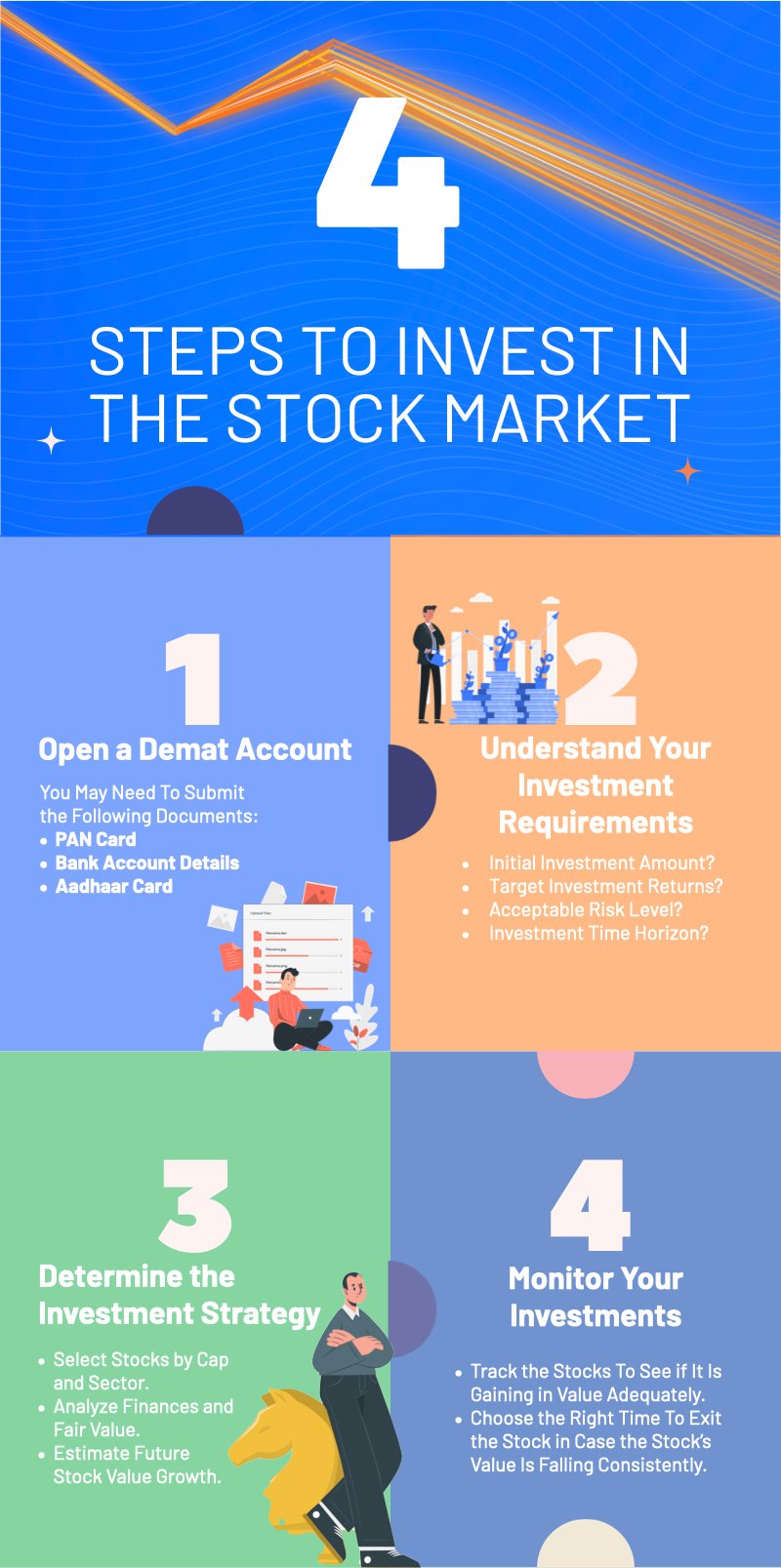
2. Preparing for Your Investment Journey
Embarking on your stock investing journey isn’t just about opening a brokerage account; it’s about thoughtful preparation. Before committing your hard-earned money, it’s crucial to lay a strong personal financial foundation and define your investment parameters.
Assess Your Financial Health
Before allocating funds to stocks, ensure your personal finances are in order. This means having a stable income, a clear understanding of your monthly expenses, and, critically, an emergency fund. An emergency fund, typically 3-6 months’ worth of living expenses saved in an easily accessible account, acts as a crucial safety net. It ensures that unforeseen expenses—like job loss or medical emergencies—don’t force you to sell your investments at an inopportune time, potentially locking in losses. Furthermore, address high-interest debt, such as credit card balances. The guaranteed returns from paying off such debt often far outweigh the uncertain returns from the stock market, especially for beginners. Only invest money you can comfortably afford to lose, without impacting your immediate financial stability.
Define Your Investment Goals and Time Horizon
What do you hope to achieve by investing in stocks? Are you saving for retirement decades away, a down payment on a house in five years, or funding your child’s education? Your goals will profoundly influence your investment strategy. Short-term goals (under 5 years) generally warrant less risky investments, as there’s less time to recover from market downturns. Long-term goals (10+ years), on the other hand, provide ample time for investments to grow and recover from volatility, making stocks a more suitable choice. Clearly defining your goals and the timeline for achieving them will help you select appropriate investments and maintain discipline during market fluctuations.
Determine Your Risk Tolerance
Risk tolerance is your psychological comfort level with investment volatility and potential losses. Are you comfortable with significant fluctuations in your portfolio’s value in pursuit of higher returns, or do you prefer a more conservative approach with less dramatic swings? Understanding your risk tolerance is vital because it prevents you from making emotional decisions during market downturns. If you invest too aggressively for your comfort level, you might panic and sell at the worst possible time. Conversely, if you’re too conservative, you might miss out on significant growth opportunities. Be honest with yourself about how much risk you can truly stomach, and let that guide your investment choices. Most online brokerage platforms offer questionnaires to help you assess your risk profile.
3. Choosing the Right Investment Path
With your financial house in order and your goals defined, the next step is to choose how you will access the market and what type of strategy you will employ.
Brokerage Accounts: The Gateway to the Market
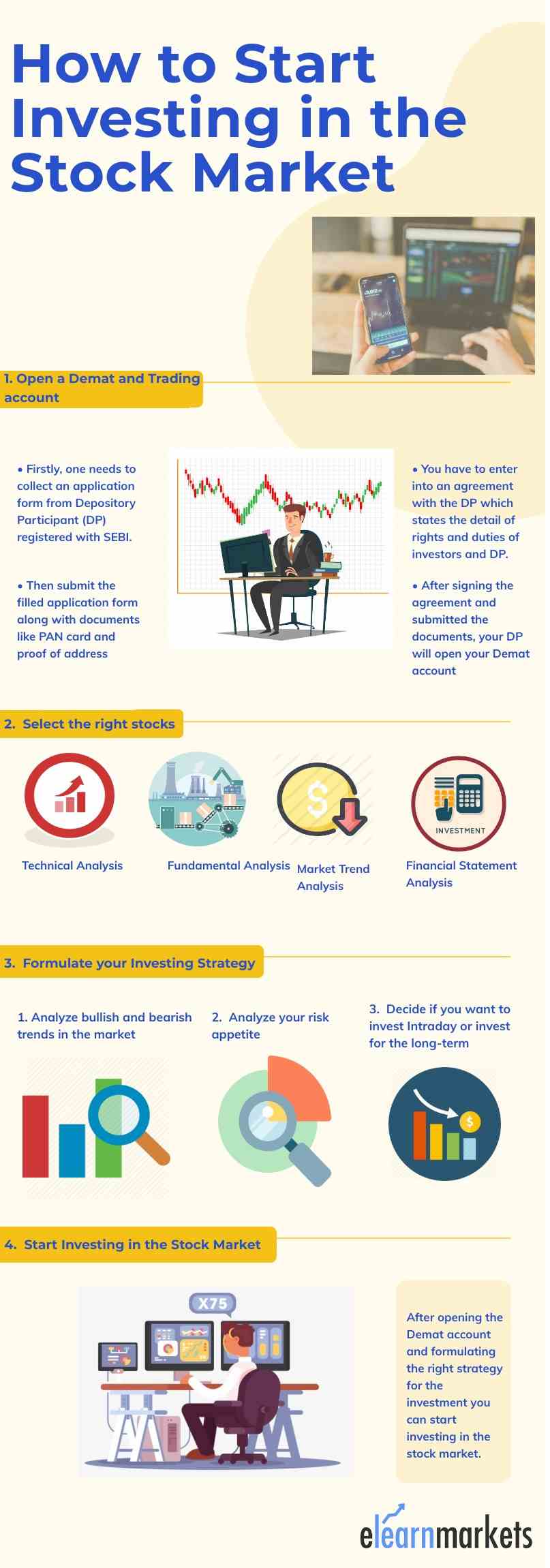
To buy and sell stocks, you’ll need to open an investment account with a brokerage firm. These firms act as intermediaries, executing trades on your behalf. For beginners, full-service brokers offer extensive advice and managed portfolios, but typically come with higher fees. Discount brokers, prevalent online, provide self-directed trading platforms with lower fees, making them popular for new investors. When choosing a broker, consider factors such as:
-
Fees and Commissions: Look for brokers with low or zero commission fees on stock trades.
-
Minimum Deposit: Some brokers have minimum initial deposit requirements.
-
Available Investments: Ensure they offer the types of investments you’re interested in (stocks, ETFs, mutual funds, etc.).
-
Research Tools and Educational Resources: Beginner-friendly platforms often provide valuable analytical tools, articles, and webinars.
-
Customer Service: Responsive and helpful customer support can be invaluable.
-
Platform Usability: A user-friendly interface makes the trading experience smoother.
Popular choices for beginners include platforms like Fidelity, Charles Schwab, Vanguard, and Robinhood (though Robinhood’s simplified interface can sometimes encourage risky behavior).
Active vs. Passive Investing Strategies
There are two primary approaches to investing:
-
Active Investing: This involves frequently buying and selling individual stocks with the goal of “beating the market” or outperforming a specific benchmark index (like the S&P 500). Active investing requires significant time for research, analysis, and monitoring. It can be rewarding for experienced investors who dedicate themselves to it, but it often carries higher transaction costs and a greater risk of underperforming the market, especially for beginners.
-
Passive Investing: This strategy focuses on buying and holding a diversified portfolio of investments, often through index funds or Exchange Traded Funds (ETFs), that aim to mirror the performance of a broad market index. Passive investing is generally characterized by lower fees, less frequent trading, and a long-term, buy-and-hold philosophy. For most beginners, passive investing through diversified index funds or ETFs is highly recommended as it offers broad market exposure, lower risk, and consistent returns aligned with the overall market’s growth, without requiring constant monitoring.
Diversification: Your Shield Against Volatility
Diversification is the cornerstone of risk management in investing. It means spreading your investments across various assets, industries, and geographies to reduce the impact of any single investment performing poorly. The old adage, “Don’t put all your eggs in one basket,” perfectly encapsulates this principle.
For stock investors, diversification can involve:
-
Across Companies: Owning shares in multiple companies rather than just one.
-
Across Industries/Sectors: Investing in technology, healthcare, finance, consumer staples, etc., to avoid being overly exposed to a downturn in a single sector.
-
Across Geographies: Investing in both domestic and international markets.
-
Across Asset Classes: While this article focuses on stocks, a truly diversified portfolio might also include bonds, real estate, or other assets.
For beginners, index funds and ETFs are excellent tools for instant diversification. A single S&P 500 index fund, for instance, gives you a tiny ownership stake in 500 of the largest U.S. companies, providing broad market exposure and inherent diversification with just one purchase.
4. Making Your First Investment
With your brokerage account set up and a strategy in mind, it’s time to make your first move. This step involves researching potential investments and executing your initial trade.
Researching Companies and Sectors
If you choose to invest in individual stocks, thorough research is paramount. Start by looking at companies whose products or services you understand and admire. Consider:
-
Company Fundamentals: Examine financial statements (income statement, balance sheet, cash flow statement) to assess revenue growth, profitability, and debt levels.
-
Competitive Landscape: Understand the company’s position within its industry, its competitive advantages, and potential threats.
-
Management Team: A strong, experienced, and ethical management team is a significant asset.
-
Growth Prospects: What are the future opportunities for the company and its industry?
-
Earnings Reports: Keep an eye on quarterly and annual earnings announcements.
For beginners, focusing on large, well-established companies with a long history of profitability and consistent dividends (often called “blue-chip” stocks) can be a less risky starting point. Remember, if you opt for passive investing via index funds or ETFs, your research will shift from individual companies to the underlying index or ETF provider.
Understanding Basic Valuation Metrics
While advanced valuation can be complex, understanding a few basic metrics can help you assess whether a stock is potentially overvalued or undervalued:
-
Price-to-Earnings (P/E) Ratio: This divides a company’s stock price by its earnings per share. A high P/E ratio might suggest investors expect high future growth, but it could also indicate overvaluation.
-
Dividend Yield: For dividend-paying stocks, this is the annual dividend per share divided by the stock’s price, expressed as a percentage. It shows the return on your investment from dividends alone.
-
Market Capitalization: This is the total value of a company’s outstanding shares (share price x number of shares). It helps classify companies as large-cap, mid-cap, or small-cap, each with different risk/reward profiles.
These metrics should be used in conjunction with other research and compared against industry averages and competitors.
Placing Your First Trade
Once you’ve identified an investment (whether an individual stock or an ETF), placing your first trade is straightforward through your brokerage account. You’ll typically enter the ticker symbol (a unique abbreviation for the stock, e.g., AAPL for Apple), the number of shares you wish to buy, and the order type.
-
Market Order: This instructs your broker to buy or sell shares immediately at the best available current price. While simple, the price might fluctuate slightly between when you place the order and when it’s executed.
-
Limit Order: This allows you to set a specific maximum price you’re willing to pay for a buy order, or a minimum price you’re willing to accept for a sell order. Your order will only execute if the stock reaches that price or better. This offers more control but means your order might not execute if the price isn’t met.
For beginners, especially with highly liquid (frequently traded) stocks or ETFs, a market order is often sufficient. Always double-check your order details before confirming!
5. Long-Term Strategies and Continuous Learning
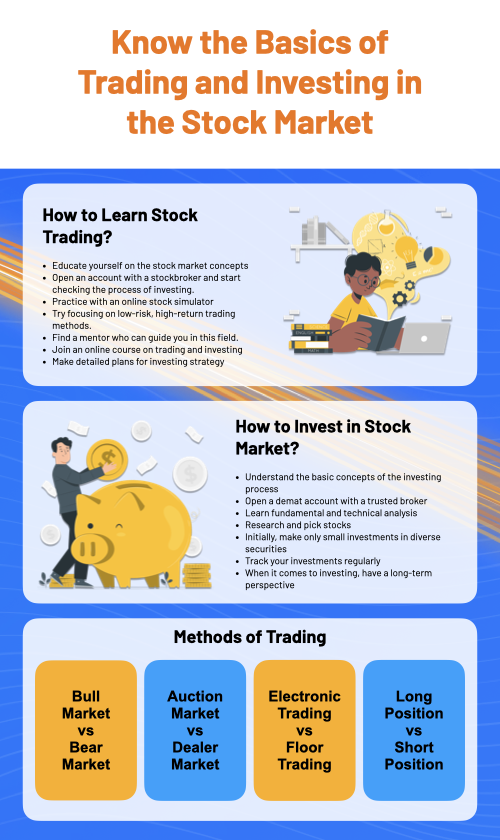
Investing in stocks is a marathon, not a sprint. Success is often found through patience, discipline, and a commitment to continuous learning.
The Power of Compounding and Dollar-Cost Averaging
Two powerful strategies for long-term investors are:
-
Compounding: This is the process of earning returns on your initial investment and on the accumulated returns from previous periods. Reinvesting dividends and capital gains allows your money to grow exponentially over time. The earlier you start, the more time compounding has to work its magic.
-
Dollar-Cost Averaging (DCA): This strategy involves investing a fixed amount of money at regular intervals (e.g., $100 every month), regardless of the stock’s price. When prices are high, your fixed sum buys fewer shares; when prices are low, it buys more shares. This averages out your purchase price over time, reduces the risk of making a single large investment at a market peak, and instills a disciplined investing habit. DCA is particularly effective for beginners who want to mitigate the impact of market timing.
Monitoring Your Portfolio (Without Obsessing)
While it’s important to keep an eye on your investments, excessive monitoring can lead to emotional decisions. For long-term investors, daily or even weekly checks are usually unnecessary and can be counterproductive. Set a schedule for reviewing your portfolio – perhaps quarterly or semi-annually – to ensure it still aligns with your goals, risk tolerance, and asset allocation. This is when you might rebalance your portfolio if certain asset classes have grown significantly more than others, bringing it back to your target allocation. Avoid making hasty decisions based on short-term market noise or news headlines.
Stay Informed and Adapt
The financial landscape is dynamic, and continuous learning is key to becoming a more confident and successful investor. Read reputable financial news sources, follow established investment experts, and delve into educational resources offered by your brokerage or financial institutions. Understanding macroeconomic trends, technological shifts, and industry developments will help you make more informed decisions. However, differentiate between genuine insights and speculative hype.
As you gain experience, your knowledge will grow, and you may wish to explore more sophisticated strategies or diversify into different asset classes. The key is to remain patient, disciplined, and focused on your long-term objectives. Starting your investing journey can be one of the most impactful steps you take towards securing your financial future. By understanding the basics, preparing diligently, choosing wisely, and committing to a long-term perspective, you can confidently navigate the stock market and harness its potential for wealth creation.
aViewFromTheCave is a participant in the Amazon Services LLC Associates Program, an affiliate advertising program designed to provide a means for sites to earn advertising fees by advertising and linking to Amazon.com. Amazon, the Amazon logo, AmazonSupply, and the AmazonSupply logo are trademarks of Amazon.com, Inc. or its affiliates. As an Amazon Associate we earn affiliate commissions from qualifying purchases.