
The modern economic landscape has undergone a seismic shift, transforming the concept of the “home office” from a luxury into a primary engine of wealth creation. Starting a business from home is no longer just a hobbyist’s pursuit; it is a sophisticated financial strategy that minimizes overhead, leverages existing assets, and maximizes net profit margins. By removing the burden of commercial rent and long commutes, entrepreneurs can redirect their capital toward growth, marketing, and high-yield investments. However, the transition from a traditional employment mindset to a home-based business owner requires a rigorous focus on financial planning, tax optimization, and scalable income models.
Evaluating the Financial Foundation of a Home-Based Business
The primary allure of a home-based business is the drastic reduction in operational expenses (OPEX). In a traditional brick-and-mortar setup, a significant portion of gross revenue is immediately diverted to fixed costs such as lease payments, utility deposits, and facility maintenance. By operating from home, an entrepreneur effectively turns their personal living space into a dual-purpose asset.
Low Overhead and the Power of Bootstrapping
Bootstrapping—the process of starting a company with little to no outside capital—is most effective in a home environment. When your “office” is a designated area in your residence, your initial capital expenditure (CAPEX) is limited to essential equipment like a high-performance computer, specialized software, or inventory storage solutions. This lean financial structure allows for a faster “break-even” point, which is the moment when your total revenue equals your total expenses. Every dollar saved on rent is a dollar that can be reinvested into customer acquisition or product development, significantly accelerating the compounding growth of the business.
Maximizing Tax Deductions and Home Office Credits
From a personal finance perspective, starting a business at home offers unique tax advantages that are often overlooked. In many jurisdictions, the “Home Office Deduction” allows business owners to deduct a portion of their mortgage interest, property taxes, utilities, and home insurance. These deductions are typically calculated based on the percentage of the home used exclusively for business purposes. Understanding the distinction between direct expenses (repairs to the specific office space) and indirect expenses (general home maintenance) is crucial for optimizing your tax return. By working with a financial professional to document these expenses, you can significantly lower your taxable income, effectively increasing your take-home pay compared to a standard W-2 employee.
Selecting High-Yield Home Business Models
Success in the home-based arena depends heavily on selecting a business model that aligns with current market demands and offers high profit margins. The goal is to identify “Money” niches—areas where the value of the service or product is high, but the cost of delivery remains low.
The Service-Based Margin Advantage
Service-based businesses, such as financial consulting, digital marketing, or specialized remote coaching, often boast the highest profit margins because they sell expertise rather than physical goods. There is no inventory to manage, no shipping logistics, and no spoilage. The primary investment is time and intellectual property. For instance, a freelance financial analyst working from home can charge premium rates while maintaining an expense ratio of less than 10%. This allows for a robust cash flow that can be diverted into personal investment portfolios or retirement accounts.
E-commerce and Lean Inventory Management
For those interested in product-based businesses, the “Money” strategy involves lean inventory management. Models like dropshipping or print-on-demand allow entrepreneurs to sell goods without ever touching the product, eliminating the need for expensive warehouse space. Alternatively, specialized “private labeling” where goods are shipped directly from a manufacturer to a fulfillment center (like Amazon FBA) allows the business to remain “home-based” in its management while scaling its physical operations globally. The financial key here is monitoring the “Return on Ad Spend” (ROAS) and ensuring that the cost of goods sold (COGS) leaves enough room for a sustainable net margin.
Digital Assets and Passive Income Streams
The ultimate goal for many home-based entrepreneurs is the creation of digital assets. This includes online courses, proprietary software (SaaS), or subscription-based content. These models require a high initial investment of time or capital for development but offer near-zero marginal costs for every additional customer. From a business finance perspective, this is the most scalable model because it breaks the link between hours worked and dollars earned, allowing the business owner to build wealth 24/7.

Financial Planning and Cash Flow Management
The transition to home-based entrepreneurship often brings a shift from predictable bi-weekly paychecks to variable income. Mastering the flow of money into and out of the business is the difference between a thriving enterprise and a failing side hustle.
Establishing a Dedicated Financial Infrastructure
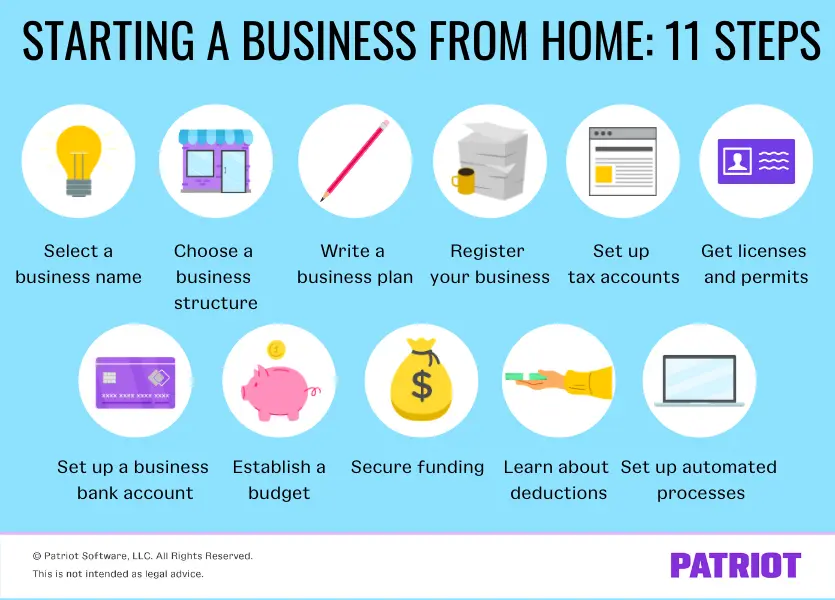
One of the most common mistakes new home business owners make is co-mingling personal and business finances. To maintain professional financial integrity, it is essential to open a dedicated business bank account and obtain a separate business credit card. This separation simplifies bookkeeping, provides a clear audit trail for tax purposes, and allows you to build a business credit score. A strong business credit profile can eventually provide access to low-interest loans or lines of credit, which are vital for scaling when the time is right.
The Importance of Cash Flow Forecasting
In a home business, cash flow is the lifeblood of daily operations. Entrepreneurs must develop a 12-month cash flow forecast that estimates monthly revenue against anticipated expenses. This forecast helps identify potential “dry spells” before they occur, allowing the owner to adjust marketing efforts or tighten spending. Maintaining a “cash cushion”—typically three to six months of operating expenses—is a fundamental personal finance rule that applies doubly to the self-employed. This reserve ensures that personal obligations like mortgage payments and health insurance remain covered even during market fluctuations.
Investing in Tools for Financial Automation
As a solo operator or a small team, your time is your most valuable financial asset. Investing in financial tools like automated accounting software (e.g., QuickBooks or Xero), automated invoicing systems, and AI-driven expense trackers can save dozens of hours each month. Automation reduces human error in payroll and tax calculations, ensuring that you avoid costly penalties from regulatory bodies. By automating the “back office,” you can focus your energy on “revenue-generating activities” (RGAs), such as sales and strategic partnerships.
Legalizing and Scaling the Financial Structure
As a home business grows, its legal and financial structure must evolve to protect the owner’s personal assets and prepare for future expansion.
Choosing the Right Business Entity
Selecting the correct legal structure is a critical financial decision. Many start as a Sole Proprietorship due to its simplicity, but as revenue increases, transitioning to a Limited Liability Company (LLC) or an S-Corporation can offer significant benefits. An LLC provides a “corporate veil,” protecting your personal home and savings from business-related lawsuits. From a tax perspective, an S-Corp election can allow the owner to draw a “reasonable salary” while taking additional profits as distributions, which are not subject to self-employment taxes. This strategy can save thousands of dollars annually as the business moves into higher income brackets.
Reinvesting Profits for Long-Term Wealth
A home-based business should be viewed as a vehicle for long-term wealth. Once the business is profitable and the cash reserve is established, the focus should shift to wealth diversification. This involves moving excess business profit into diversified investment vehicles such as SEP-IRAs or Solo 401(k)s. These retirement accounts are designed specifically for the self-employed, allowing for much higher contribution limits than traditional employer-sponsored plans. This not only builds a retirement nest egg but also provides an immediate tax deduction for the business.

Scaling Beyond the Home Office
Starting a business from home does not mean it must stay there forever. The ultimate financial success of a home-based venture often involves reaching a “ceiling” where the current environment limits growth. At this stage, the entrepreneur must decide whether to remain a highly profitable “solopreneur” or scale into a larger organization. Scaling might involve hiring remote employees, outsourcing logistics to third-party providers, or eventually moving into a dedicated commercial space. The financial indicators for this move include a consistent surplus of demand that cannot be met by the current capacity and a high enough “Lifetime Value” (LTV) per customer to justify increased overhead.
Starting a business at home is a sophisticated exercise in financial engineering. By leveraging the low-cost environment of the home, selecting high-margin business models, and maintaining a disciplined approach to cash flow and tax strategy, an entrepreneur can build a powerful engine for personal wealth. The key is to remain analytical, treat the home office with the same professional rigor as a corporate headquarters, and always keep a close eye on the bottom line. In the realm of money and business, the home is no longer just a place to live—it is a launchpad for financial independence.
aViewFromTheCave is a participant in the Amazon Services LLC Associates Program, an affiliate advertising program designed to provide a means for sites to earn advertising fees by advertising and linking to Amazon.com. Amazon, the Amazon logo, AmazonSupply, and the AmazonSupply logo are trademarks of Amazon.com, Inc. or its affiliates. As an Amazon Associate we earn affiliate commissions from qualifying purchases.