
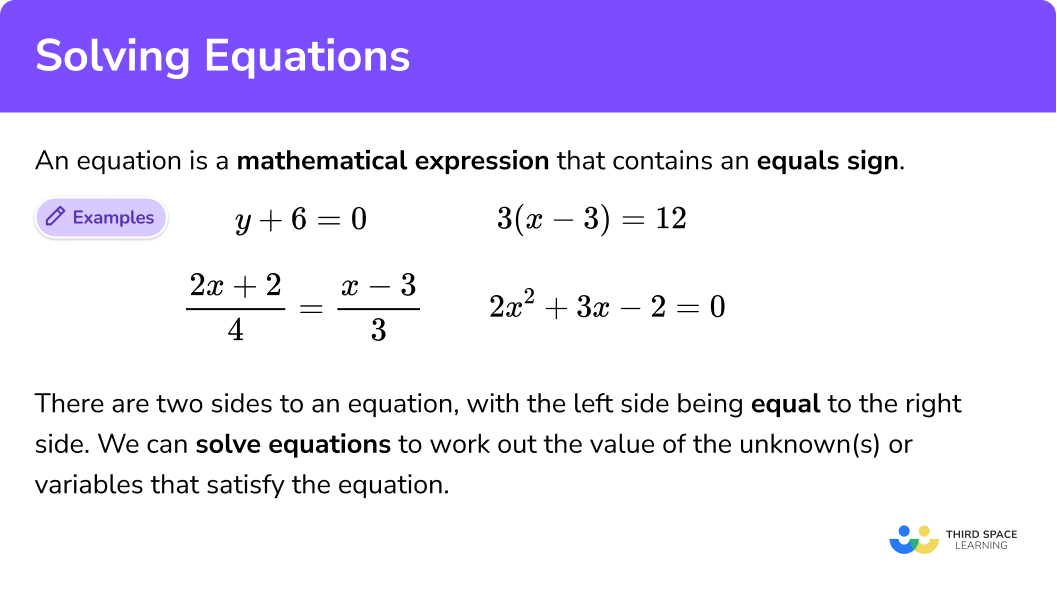
In the vast landscape of mathematics, few concepts are as foundational yet perpetually relevant as solving for ‘x’. This enigmatic variable sits at the heart of algebra, representing an unknown quantity waiting to be uncovered. While the underlying mathematical principles have remained constant for centuries, the methods and tools we employ to unearth ‘x’ have undergone a dramatic technological revolution. Gone are the days when pencil and paper were the sole instruments of discovery; today, an arsenal of digital tools, software, and artificial intelligence stands ready to assist, enhance, and even automate the process of equation mastery.

This shift isn’t merely about finding answers faster; it’s about deepening understanding, tackling problems of unprecedented complexity, and democratizing access to advanced mathematical concepts. This article will delve into how technology has fundamentally reshaped our approach to “solving x” in mathematics, providing insights for students, educators, and professionals seeking to harness these powerful digital aids.
The Digital Evolution of Algebraic Problem-Solving
The journey from manual calculation to sophisticated digital computation illustrates the relentless pursuit of efficiency and accuracy in mathematics. Understanding this evolution is crucial to appreciating the current state of tech-assisted problem-solving.
From Slide Rules to Scientific Calculators
The earliest mechanical aids, like the abacus and later the slide rule, marked humanity’s first forays into automating mathematical operations. However, the true digital leap for algebraic problem-solving arrived with the advent of the scientific calculator. These handheld devices, starting in the 1970s, transformed how students and professionals engaged with complex equations. They brought trigonometric functions, logarithms, powers, and roots to our fingertips, drastically reducing the time and potential for error in intricate arithmetic. For the first time, solving for ‘x’ in equations involving these functions became a matter of strategic button presses rather than laborious table lookups and manual computation. Their enduring relevance in classrooms and basic engineering tasks underscores their fundamental utility.
Graphing Calculators: Visualizing ‘X’
The next significant technological leap was the graphing calculator, epitomized by models from Texas Instruments and Casio. These devices moved beyond mere numerical computation to offer a visual representation of algebraic functions. By plotting equations, users could literally “see” where a function intersected the x-axis, thus identifying its roots or solutions for ‘x’. This visualization capability was revolutionary. It allowed students to develop an intuitive understanding of function behavior, identify patterns, and graphically verify algebraic solutions. For complex equations where multiple solutions might exist or where non-real solutions were involved, graphing calculators provided invaluable insights, bridging the gap between abstract algebra and tangible visual proof.
Computer Algebra Systems (CAS) as Advanced Solvers
The proliferation of personal computers opened the door for even more powerful tools: Computer Algebra Systems (CAS). Software like Wolfram Alpha, MATLAB, Mathematica, Maple, and open-source libraries like SymPy for Python represent the pinnacle of computational mathematics. CAS systems don’t just compute numerical answers; they perform symbolic manipulation. This means they can simplify expressions, expand polynomials, differentiate, integrate, and, crucially, solve complex equations for ‘x’ analytically – providing the exact solution in terms of other variables or constants, rather than just a numerical approximation. Whether ‘x’ is part of a high-degree polynomial, a system of linear equations, or even a differential equation, CAS can often find the solution, along with step-by-step derivations, making them indispensable for advanced research, engineering, and education.
Software Tools and Platforms for Equation Mastery
Beyond dedicated scientific and graphing calculators, a rich ecosystem of software and online platforms has emerged, offering specialized functionalities for every level of mathematical problem-solving.
Dedicated Math Software: Beyond Basic Calculators
The digital landscape is populated with an array of software designed to make mathematics more accessible and interactive. Online platforms like Desmos and GeoGebra, for instance, offer powerful, intuitive graphing capabilities that go beyond traditional graphing calculators. They allow for dynamic manipulation of variables, instant visualization of changes, and collaborative sharing of mathematical explorations. Similarly, a myriad of educational apps and programs cater to specific learning styles, breaking down complex topics into digestible modules and offering practice problems with immediate feedback. These tools transform the passive act of problem-solving into an active, engaging, and often visual learning experience, empowering users to experiment and solidify their understanding of how ‘x’ behaves in different contexts.
AI and Machine Learning in Solving Complex ‘X’ Problems
The cutting edge of tech-assisted mathematics lies in Artificial Intelligence and Machine Learning. AI-powered tools, such as Symbolab, Photomath, and a growing number of AI tutors, are changing the game. These applications can interpret handwritten or typed mathematical problems, identify the type of equation, and often provide not just the answer, but detailed, step-by-step solutions with explanations. For highly complex non-linear equations, systems of equations, or even problems involving calculus, AI can leverage vast computational power and pattern recognition to identify optimal solution strategies. This emerging technology holds immense promise for personalized learning, automated assessment, and pushing the boundaries of what’s computationally feasible in scientific research, while also raising important questions about the balance between automation and fundamental skill development.
Programming for ‘X’: Python and Other Languages
For those who wish to delve deeper into the mechanics of solving ‘x’ and integrate it into broader computational tasks, programming languages offer unparalleled flexibility. Python, with its extensive scientific libraries like NumPy, SciPy, and SymPy, has become a cornerstone for numerical and symbolic computation. Programmers can write custom scripts to implement specific algorithms for solving equations (e.g., Newton-Raphson method for finding roots, Gaussian elimination for systems of linear equations). This approach is particularly valuable when ‘x’ represents a parameter in a larger data model, an unknown in a simulation, or a variable in a complex engineering problem that requires iterative solutions or specific numerical precision. Learning to program for ‘x’ bridges the gap between theoretical mathematics and practical computational science.
Strategies for Effective Tech-Assisted Learning and Problem-Solving
While technology offers incredible power, its effectiveness hinges on how intelligently it is utilized. It’s a tool to enhance, not replace, fundamental understanding.
Understanding the Underlying Math First
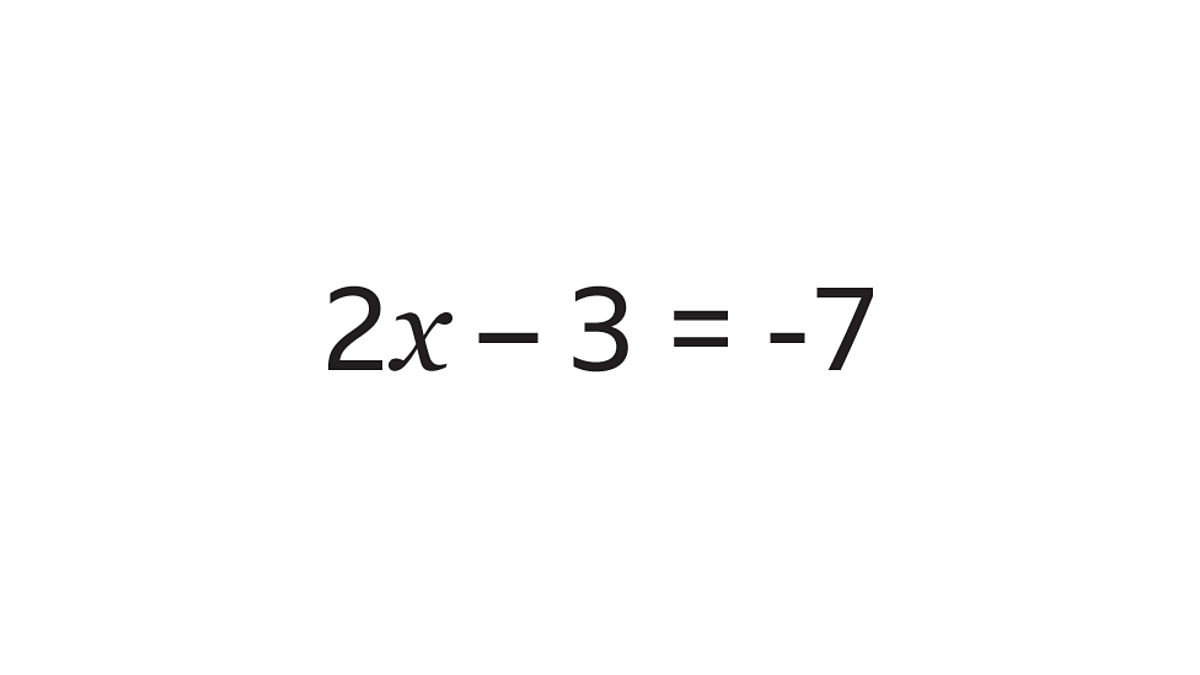
The most crucial strategy for effective tech-assisted problem-solving is to always maintain a foundational understanding of the mathematical principles. Technology can compute, but it cannot conceptualize or reason in the human sense. Users must understand what an equation represents, what ‘x’ signifies within that context, and what algebraic operations are permissible. Without this basic comprehension, technology becomes a black box, offering answers without insight. Incorrect input, misinterpretation of results, or failure to recognize absurd answers are common pitfalls for those who rely on technology without internalizing the underlying mathematics.
Step-by-Step Solutions and Learning Aids
Many advanced mathematical software and AI tools provide not just the final answer for ‘x’, but also detailed, step-by-step solutions. This feature is invaluable as a learning aid. Instead of merely using the tool to get an answer, students and learners should meticulously follow these steps, comparing them to their own manual attempts or using them to understand the logical progression of solving an equation. This transforms the solver into a virtual tutor, demystifying complex procedures and reinforcing the ‘how’ behind the ‘what’.
Verification and Error Checking with Technology
A powerful way to leverage technology is for verification and error checking. If an equation has been solved algebraically by hand, a graphing tool can confirm the solution visually. A different software package or a simple calculator can be used to plug the derived value of ‘x’ back into the original equation to ensure it holds true. This cross-verification significantly reduces the chances of errors, builds confidence in the solution, and provides an additional layer of understanding by approaching the problem from multiple computational angles.
The Future Landscape of Solving ‘X’
The rapid pace of technological innovation suggests that our methods for solving ‘x’ will continue to evolve, promising even more sophisticated and integrated approaches.
Enhanced Accessibility and Personalized Learning
The future will likely see even greater accessibility to advanced mathematical problem-solving tools. Cloud-based platforms and mobile applications will continue to democratize access, making powerful computational resources available to anyone with an internet connection. Furthermore, AI-driven adaptive learning platforms will personalize the experience of solving for ‘x’, identifying individual strengths and weaknesses, and tailoring instruction and practice problems to optimize learning outcomes. This means that mastering algebra could become a more customized and efficient journey for millions.
Integration with STEM Fields
Solving for ‘x’ is not an isolated mathematical exercise; it’s a foundational skill for all STEM (Science, Technology, Engineering, and Mathematics) disciplines. Future technological advancements will undoubtedly lead to even tighter integration of mathematical solvers within broader engineering design software, scientific simulation platforms, and data analytics environments. This will enable professionals to solve for ‘x’ as an embedded part of larger, real-world problems – whether determining a critical parameter in a structural design, an unknown quantity in a quantum physics experiment, or an optimal variable in a machine learning algorithm.
Ethical Implications and Skill Development
As technology grows more powerful, the discussion around its ethical implications and impact on skill development will intensify. While AI can solve incredibly complex problems, the critical thinking, problem decomposition, and logical reasoning skills honed through manual problem-solving remain paramount. The future will demand a balance: individuals who are proficient in leveraging cutting-edge technology for efficiency and complexity, but who also possess a deep, intuitive understanding of mathematical principles and the ability to operate effectively without digital assistance when necessary. The goal isn’t to replace human mathematical prowess but to augment it.
Conclusion
Solving for ‘x’ in mathematics has transcended the traditional boundaries of pencil and paper, embracing a vibrant ecosystem of technological tools. From the ubiquitous scientific calculator to sophisticated Computer Algebra Systems, dynamic graphing software, and cutting-edge AI, technology has revolutionized how we approach algebraic challenges. It has made complex problems more tractable, learning more interactive, and understanding more profound.
However, the essence of mastering ‘x’ remains rooted in comprehension, not just computation. These tools are powerful allies that amplify our capabilities, allowing us to explore, verify, and conquer equations of unprecedented difficulty. By embracing technology intelligently, understanding its strengths and limitations, and never losing sight of the foundational mathematical concepts, we can unlock new frontiers in problem-solving and truly master the art of finding ‘x’.
aViewFromTheCave is a participant in the Amazon Services LLC Associates Program, an affiliate advertising program designed to provide a means for sites to earn advertising fees by advertising and linking to Amazon.com. Amazon, the Amazon logo, AmazonSupply, and the AmazonSupply logo are trademarks of Amazon.com, Inc. or its affiliates. As an Amazon Associate we earn affiliate commissions from qualifying purchases.