
In the digital landscape, the concept of “simplifying fractions” extends far beyond the pencil-and-paper exercises of a middle school classroom. In the realms of software engineering, data science, and artificial intelligence, simplifying a fraction is a fundamental task of numerical optimization and symbolic computation. Whether it is a scientific calculator app reducing a complex ratio or an AI-driven educational tool explaining the process to a student, the technology behind simplification relies on elegant algorithms and robust data structures.
This guide explores the technological frameworks used to simplify fractions, the algorithmic logic that powers these tools, and the advanced software ecosystems that make mathematical optimization seamless for developers and users alike.
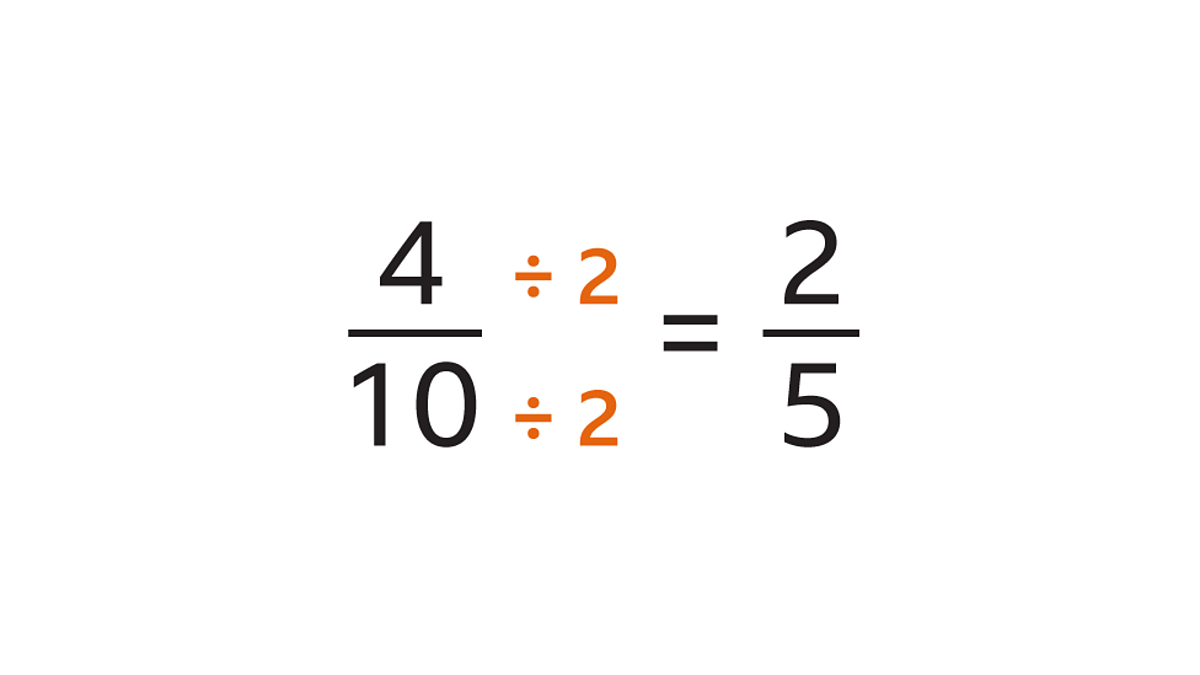
The Core Logic: Computational Methods for Fraction Reduction
At its heart, simplifying a fraction—reducing it to its “lowest terms”—is an exercise in finding the greatest common divisor (GCD). In technology, we don’t guess factors; we use iterative or recursive logic to find the most efficient path to the answer.
The Role of the Greatest Common Divisor (GCD)
For a computer to simplify a fraction like 48/60, it must identify the largest positive integer that divides both the numerator and the denominator without leaving a remainder. In tech terms, this is a “search and identify” operation. While a human might see “12” through intuition, a software program requires a standardized procedure. The GCD is the cornerstone of fractional logic in programming languages ranging from C++ to Python, ensuring that data is stored in its most compressed and readable form.
Implementing Euclidean Algorithms in Modern Software
The most famous method for this is the Euclidean Algorithm. Developed over two millennia ago, it remains one of the most efficient algorithms in modern computing. It works by repeatedly replacing the larger number with the remainder of the larger number divided by the smaller one.
In a software environment, the Euclidean Algorithm is often implemented as a recursive function. This allows the computer to handle incredibly large numbers—fractions with hundreds of digits—without crashing or losing precision. When you use a digital tool to simplify a fraction, you are witnessing the execution of one of the world’s first true “tech” shortcuts, optimized for modern processor speeds.
AI and Machine Learning in Mathematical Processing
As we move into the era of Artificial Intelligence, the process of simplifying fractions has evolved from simple calculation to complex pattern recognition and natural language understanding.
Natural Language Processing (NLP) and Fraction Extraction
Modern AI tools, such as Large Language Models (LLMs), do not just see numbers; they interpret context. If a user asks, “If I have three-quarters of a pie and give away a sixth, what’s left in its simplest form?”, the AI must perform several layers of “tech” work. First, it uses Natural Language Processing (NLP) to extract the fractional values. Then, it converts those values into a machine-readable format (often floating-point numbers or objects), performs the subtraction, and finally applies a simplification algorithm to present the result in a human-friendly way.
Symbolic Computation vs. Floating Point Arithmetic
One of the major challenges in tech-based math is “precision loss.” Standard computers often convert fractions into decimals (floating-point numbers), which can lead to rounding errors (e.g., 1/3 becoming 0.3333333). To combat this, advanced mathematical software uses “Symbolic Computation.”
System software like Mathematica or Maple treats fractions as symbols rather than decimals. This allows the technology to maintain 100% accuracy throughout the simplification process. By keeping the numerator and denominator as separate integers in a “Fraction Object,” the software ensures that the final “simplified” output is exact, not an approximation.
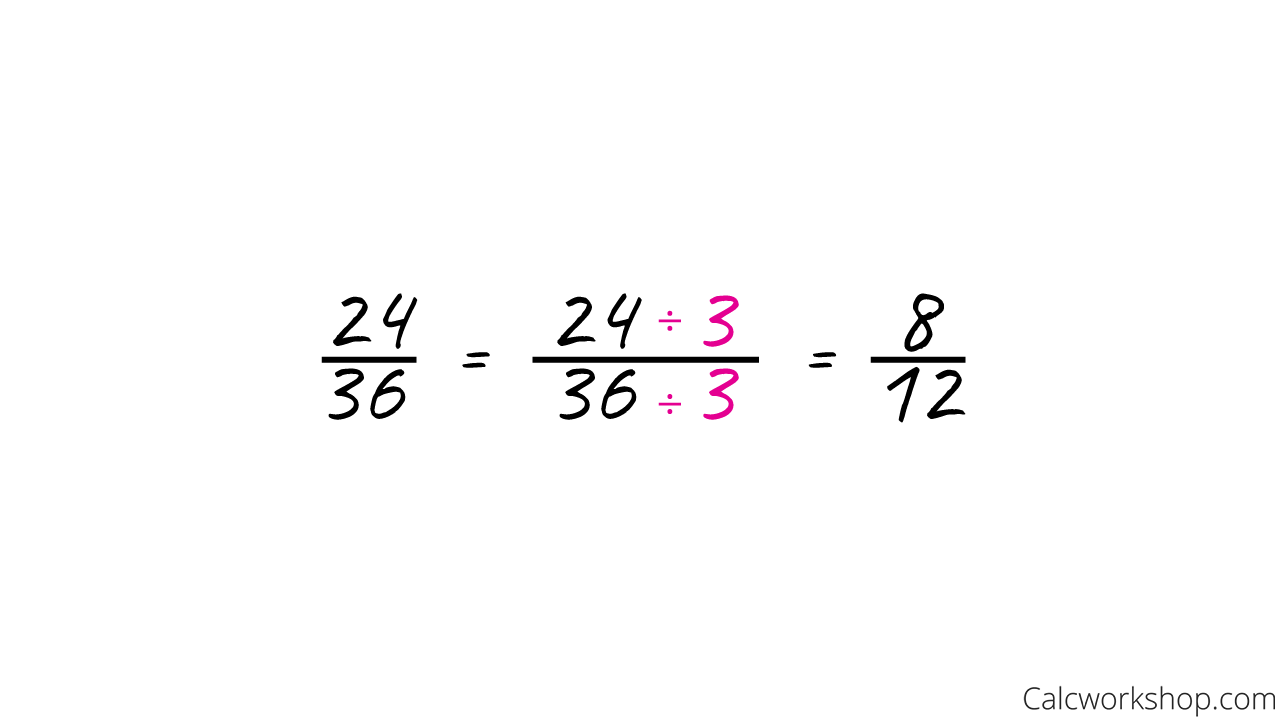
Essential Software Tools and Apps for Mathematical Simplification
The average user interacts with fraction simplification through a variety of applications. These tools range from simple mobile apps to complex libraries used by data scientists.
Advanced Calculator Apps and Scientific Software
The modern scientific calculator app is a marvel of software engineering. Unlike the hardware calculators of the 1990s, today’s apps utilize “Pretty Print” technology, which uses LaTeX or similar typesetting engines to render simplified fractions exactly as they appear in textbooks. Behind the interface, these apps use highly optimized C-libraries to provide instantaneous results, even when dealing with algebraic fractions containing variables (e.g., simplifying 2x/4x to 1/2).
Open-Source Libraries for Developers
For those building software, simplifying fractions is usually handled by pre-existing code libraries. In the Python ecosystem, the fractions module is the industry standard.
- The
FractionClass: By importing this library, a developer can simply inputFraction(16, 64), and the software automatically returns1/4. - JavaScript and Web Dev: In web development, libraries like
fraction.jsallow developers to build mortgage calculators or cooking apps where users need to scale recipes. These libraries handle the “heavy lifting” of the math, allowing the developer to focus on the user interface and experience.
Digital Security and Data Efficiency Through Ratios
Simplifying fractions isn’t just about math; it is a vital component of how data is transmitted and secured across the internet.
Image Compression and Aspect Ratios
In the tech world of digital imaging and video, fractions define aspect ratios (e.g., 16:9). When a software program resizes an image, it must simplify ratios to maintain visual integrity. If a screen resolution is 1920×1080, the software simplifies this fraction to determine the aspect ratio (16/9). Efficiently simplifying these ratios in real-time is crucial for GPU (Graphics Processing Unit) performance and video streaming fluidity.
Cryptography and Numerical Reduction
In the realm of digital security and cybersecurity, modular arithmetic—a “cousin” of fraction simplification—is used to encrypt data. Algorithms like RSA encryption rely on the properties of prime numbers and the reduction of large numerical values. While not “simplifying a fraction” in the schoolhouse sense, the technological process of finding common factors and reducing complexity is what keeps our online transactions and passwords secure.
Future Trends: Quantum Computing and EdTech Evolution
As we look toward the future, the way technology handles mathematical simplification is set to undergo another transformation.
Beyond Binary: Quantum Approaches to Numerical Logic
Classical computers use bits (0s and 1s) to process the Euclidean Algorithm. Quantum computing, however, uses qubits, which can exist in multiple states. This could potentially allow for the simplification of “n-dimensional” fractions or incredibly complex ratios used in quantum physics and aerospace engineering at speeds currently unimaginable. While we are still in the early stages, the “tech” of simplification is a prime candidate for quantum speed-ups.
Educational Technology (EdTech) and Interactive Learning
The most visible impact of these technological advancements is in the classroom. Platforms like Khan Academy, Photomath, and WolframAlpha have revolutionized how we learn to simplify fractions.
- Step-by-Step Logic: These tools use “Explainable AI” to show not just the answer, but the algorithmic path taken to get there.
- Gamification: Modern apps use game engines (like Unity) to create interactive environments where students “drag and drop” factors to simplify fractions, turning a dry mathematical process into a haptic, digital experience.

Conclusion
Simplifying fractions is a foundational pillar of the tech world. From the ancient logic of the Euclidean Algorithm to the cutting-edge capabilities of Symbolic Computation and AI, the ability to reduce complexity is what allows our software to be fast, accurate, and user-friendly. Whether you are a developer utilizing a Python library, an engineer calculating aspect ratios, or a student using an AI tutor, you are benefiting from a sophisticated technological ecosystem dedicated to the art of mathematical simplification. As software continues to evolve, our tools for handling these basic numerical units will only become more intuitive, ensuring that even the most complex data can be reduced to its most elegant and efficient form.
aViewFromTheCave is a participant in the Amazon Services LLC Associates Program, an affiliate advertising program designed to provide a means for sites to earn advertising fees by advertising and linking to Amazon.com. Amazon, the Amazon logo, AmazonSupply, and the AmazonSupply logo are trademarks of Amazon.com, Inc. or its affiliates. As an Amazon Associate we earn affiliate commissions from qualifying purchases.