
Budgeting is often misunderstood as a practice of restriction—a financial diet intended to strip away the joys of spending. However, in the realm of sophisticated personal finance, a budget is actually a blueprint for freedom. It is the tactical process of assigning a purpose to every dollar you earn, ensuring that your capital is deployed in a way that aligns with your long-term life goals. Whether you are looking to eradicate debt, build an investment portfolio, or save for a significant milestone, a well-structured budget is the foundational tool that makes these objectives possible.
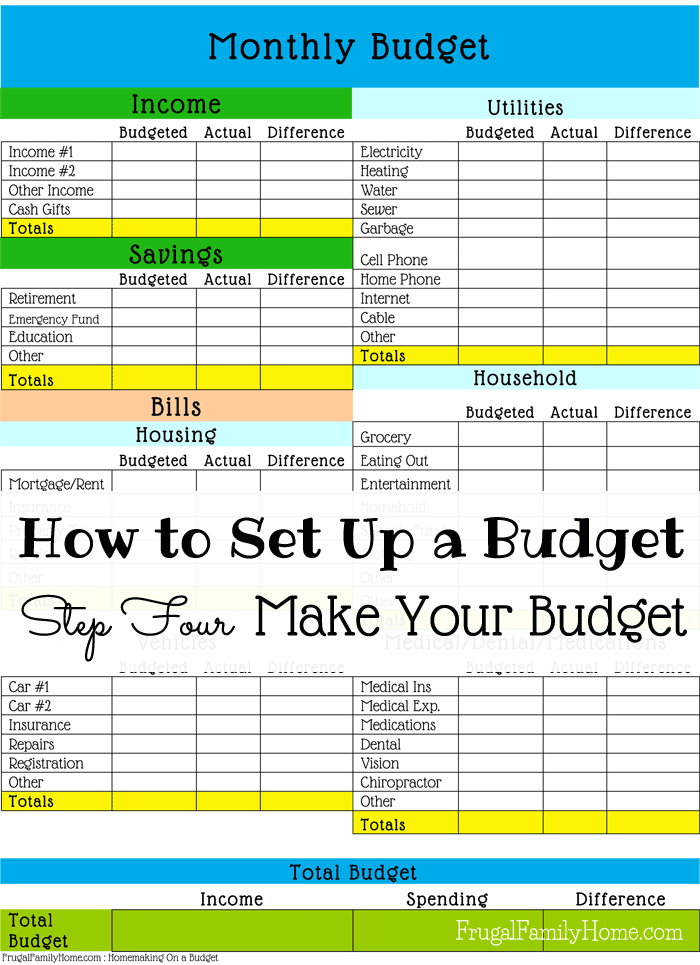
The Foundational Principles of Strategic Budgeting
Before diving into the mechanics of spreadsheets and line items, it is essential to understand the underlying principles of cash flow management. Budgeting is not merely about tracking what has already happened; it is about forecasting and intentionality. To set up a budget effectively, one must distinguish between the various types of financial obligations and the psychological drivers behind spending.
Understanding Your Net Cash Flow
The most basic equation in personal finance is your net cash flow: Income minus Expenses. While this sounds simple, many individuals fail to accurately account for their true net income. This includes factoring in taxes, insurance premiums, and retirement contributions that are often deducted before a paycheck hits a bank account. Establishing a clear view of your “take-home” pay is the first step in creating a realistic budget. Without an accurate baseline, any plan you create will be built on a faulty foundation.
Differentiating Fixed vs. Variable Expenses
A successful budget categorizes spending into two distinct buckets: fixed and variable. Fixed expenses are those that remain constant month-to-month, such as mortgage or rent payments, car insurance, and loan repayments. These are the easiest to track but often the hardest to change. Variable expenses, on the other hand, fluctuate based on behavior and lifestyle choices—this includes groceries, entertainment, and dining out. Mastering your budget requires a deep dive into these variable costs, as they represent the primary area where you can exercise control and find “found money” to reallocate toward savings or investments.
The Importance of the Emergency Fund
A budget that does not account for the unexpected is a fragile one. Financial experts suggest that before aggressively pursuing high-yield investments or luxury purchases, one must establish an emergency fund. Typically consisting of three to six months of essential living expenses, this fund acts as a buffer against the volatility of life. When you set up your initial budget, “Emergency Fund Contribution” should be treated as a non-negotiable expense until the target balance is reached.
Choosing the Right Budgeting Framework
There is no “one size fits all” approach to financial management. The methodology you choose should reflect your personality, your financial complexity, and your level of discipline. Here are three of the most effective frameworks used by financial professionals today.
The 50/30/20 Rule
Popularized by Senator Elizabeth Warren and widely adopted by financial planners, the 50/30/20 rule is an excellent entry point for those who want a simple, high-level overview of their finances. Under this framework, 50% of your income goes toward “Needs” (housing, utilities, transportation), 30% toward “Wants” (travel, hobbies, dining), and 20% toward “Financial Goals” (debt repayment, savings, and investments). This system provides a healthy balance between living for today and planning for tomorrow without requiring the granular tracking of every single receipt.
Zero-Based Budgeting
Zero-based budgeting is the gold standard for those who want total control over their capital. The philosophy is simple: Income minus Expenses equals Zero. This does not mean you have zero dollars in your bank account at the end of the month; rather, it means every dollar has been assigned a specific task—whether that task is paying the electric bill, buying groceries, or being moved into a brokerage account. This method forces you to be intentional with every cent, preventing “leakage” where money disappears into small, uncounted purchases.
The “Pay Yourself First” Method
Also known as reverse budgeting, this strategy prioritizes long-term wealth building over short-term spending. In this model, you determine how much you need to save or invest to reach your goals and automate those transfers the moment you receive your paycheck. Whatever is left over is yours to spend as you see fit. This is highly effective for individuals who find traditional tracking tedious but have high enough earnings to cover their basic needs comfortably.
A Step-by-Step Execution Plan for Your Budget
Once you have selected a framework, the actual setup process requires a systematic approach. Consistency is the primary driver of success in personal finance; therefore, the setup should be designed for sustainability.

Step 1: Audit Three Months of Historical Data
To create a realistic budget, you must look backward before looking forward. Download your bank and credit card statements from the last 90 days. Categorize every transaction to identify patterns. You might be surprised to find that your “coffee habit” or “subscription services” account for a significantly larger percentage of your income than you realized. This audit provides the “reality check” necessary to set achievable targets.
Step 2: Define and Prioritize Financial Goals
A budget without a goal is just a list of numbers. Why are you budgeting? Are you trying to pay off $20,000 in student loans? Are you saving for a down payment on a home? Are you aiming for early retirement? Define these goals in “SMART” terms (Specific, Measurable, Achievable, Relevant, and Time-bound). By attaching a “why” to your budget, you increase your psychological resilience when it comes time to cut back on discretionary spending.
Step 3: Categorize and Allocate
Using your chosen framework, allocate your income into categories. Start with your “Must-Haves” (housing, food, utilities, minimum debt payments). Next, allocate funds toward your “Financial Goals” (savings, extra debt payments). Finally, look at the remaining balance and distribute it among your “Wants.” If your expenses exceed your income, this is where you must make the hard decisions—identifying which “Wants” can be trimmed or eliminated to ensure you are not living beyond your means.
Step 4: Implement Sinking Funds
One of the most common reasons budgets fail is “surprise” expenses that aren’t actually surprises. Car registration, annual insurance premiums, holiday gifts, and home maintenance are all predictable costs that occur infrequently. Sinking funds involve calculating the annual cost of these items, dividing by 12, and setting that amount aside monthly. This prevents a $1,000 car repair from derailing your entire monthly financial plan.
Leveraging Tools and Technology for Optimization
In the modern digital landscape, you do not need to rely on a pen and paper to manage your finances. Leveraging technology can automate the tedious parts of budgeting, allowing you to focus on high-level decision-making.
Digital Budgeting Applications
There are numerous applications designed to sync directly with your bank accounts and categorize your spending in real-time. Tools like You Need A Budget (YNAB) focus on the zero-based budgeting philosophy, while others like Rocket Money or Empower offer comprehensive overviews of your net worth and recurring subscriptions. These tools provide visual dashboards that make it easy to see where you stand at any given moment in the month.
The Power of Spreadsheets
For those who prefer a more “hands-on” and customized approach, a traditional spreadsheet (Excel or Google Sheets) remains an elite tool. Spreadsheets allow for infinite customization and do not require sharing your banking credentials with a third-party app. Many advanced budgeters use spreadsheets to track “FIRE” (Financial Independence, Retire Early) metrics, such as savings rates and projected investment growth over decades.
Automating the Ecosystem
Automation is the ultimate “cheat code” for financial success. Set up automatic transfers for your savings, investments, and bill payments. When the “work” of budgeting is handled by software, you remove human error and the temptation to spend money that should have been saved. Your goal should be to create a financial ecosystem where the right behaviors happen by default.
Sustaining Long-Term Financial Health
Setting up a budget is an event, but budgeting itself is a lifestyle. To ensure your financial plan remains relevant, it must evolve as your life does.
The Monthly Review and Adjustment
At the end of every month, spend 30 minutes reviewing your performance. Did you overspend in the “dining out” category? Why? Was it a one-time event (a birthday) or a shift in habit? Adjust the following month’s budget accordingly. A budget is a living document, not a static decree. If a category is consistently over-budget, you may need to increase the allocation or find ways to reduce costs in that specific area.
Managing Lifestyle Creep
As your career progresses and your income increases, there is a natural tendency to increase your spending in tandem—a phenomenon known as “lifestyle creep.” While it is acceptable to enjoy the fruits of your labor, the most successful wealth-builders maintain a “relative” budget. If you receive a 10% raise, consider allocating 7% of that to your investments and only 3% to your lifestyle. This ensures that your wealth grows faster than your expenses.

Navigating Variable Income
For freelancers, entrepreneurs, or those in commission-based roles, budgeting can be more complex. The best approach for variable income is the “Hill and Valley” method. Calculate your “baseline” monthly expenses (the minimum you need to survive). In high-earning months (the hills), save the excess into a separate “buffer” account. In lean months (the valleys), draw from that buffer to cover your baseline. This creates a steady financial experience despite a volatile income stream.
In conclusion, setting up a budget is the single most impactful step you can take toward financial mastery. It transforms money from a source of stress into a tool for empowerment. By understanding your cash flow, choosing a strategic framework, executing a meticulous plan, and leveraging modern technology, you position yourself to not only survive but thrive in any economic climate. Remember: a budget doesn’t tell you that you can’t spend; it tells you exactly how you can spend to build the life you truly want.
aViewFromTheCave is a participant in the Amazon Services LLC Associates Program, an affiliate advertising program designed to provide a means for sites to earn advertising fees by advertising and linking to Amazon.com. Amazon, the Amazon logo, AmazonSupply, and the AmazonSupply logo are trademarks of Amazon.com, Inc. or its affiliates. As an Amazon Associate we earn affiliate commissions from qualifying purchases.