
In the rapidly evolving landscape of digital finance, peer-to-peer (P2P) payment applications have become indispensable tools for managing personal transactions. Among these, Cash App stands out as a prominent player, offering a streamlined platform for sending, receiving, and even investing money directly from a smartphone. Its intuitive interface and robust feature set have made it a favorite for quick, cashless exchanges between friends, family, and even some businesses. Understanding the technical nuances of how to efficiently and securely send money via Cash App is crucial for maximizing its utility and ensuring a smooth user experience. This guide delves into the specifics, offering a professional, insightful, and engaging exploration of Cash App’s money transfer capabilities, all framed within the context of technology and its practical application.
Understanding Cash App: Your Digital Wallet’s Foundation
Cash App, developed by Square, Inc., represents a significant advancement in mobile payment technology. It’s more than just a money transfer service; it’s a comprehensive digital wallet ecosystem. At its core, it leverages sophisticated software architecture to facilitate instant monetary exchanges, bypassing traditional banking delays. For anyone looking to utilize this powerful application, a foundational understanding of its operational mechanics and initial setup procedures is paramount.
The Mechanics of Peer-to-Peer Transactions
At the heart of Cash App’s functionality lies its P2P payment system. This technology allows users to send money directly to another individual without needing bank account numbers or routing information for each transaction. Instead, Cash App uses unique identifiers such as a $Cashtag, phone number, or email address linked to a user’s account. This abstraction simplifies the process significantly, reducing the potential for errors and speeding up transactions. When you initiate a payment, Cash App’s backend system processes the request, debits your chosen funding source (Cash App balance, linked debit card, or bank account), and credits the recipient’s Cash App balance, often instantaneously. The entire operation is orchestrated by a robust server infrastructure and secure data encryption, ensuring that funds are transferred accurately and privately. This reliance on a proprietary network for transaction clearing distinguishes it from traditional wire transfers or ACH payments, highlighting its technological efficiency.
Setting Up Your Cash App Profile: Essential Pre-requisites
Before you can send money, your Cash App profile must be fully configured. This initial setup phase is critical from a technological standpoint, as it establishes your digital identity within the Cash App ecosystem and links it to verifiable financial instruments. The process typically involves:
- Downloading and Installing the App: The first step is to download the Cash App application from your device’s official app store (Google Play Store for Android or Apple App Store for iOS). This ensures you are using a legitimate and secure version of the software.
- Creating an Account: Upon launching the app, you’ll be prompted to create an account using either a phone number or an email address. This contact information serves as a primary identifier and communication channel.
- Linking a Bank Account or Debit Card: To send money, you need a funding source. Cash App requires you to link a bank account (via your bank’s login credentials for secure verification) or a debit card. This integration uses secure API connections to establish a conduit for funds to flow in and out of your Cash App balance. The technology here is designed to securely tokenize your card information, meaning Cash App stores a secure representation of your card details rather than the raw data, enhancing security.
- Verifying Your Identity (Optional but Recommended): For higher transaction limits and access to all features (like ordering a Cash Card), Cash App may ask for personal information such as your full name, date of birth, and the last four digits of your Social Security Number. This is a regulatory requirement for financial technology platforms to comply with KYC (Know Your Customer) and AML (Anti-Money Laundering) laws, demonstrating the intersection of tech innovation with financial compliance.
Properly completing these steps ensures that your Cash App account is not only operational but also secure and compliant with industry standards, setting the stage for seamless money transfers.
Step-by-Step: Initiating a Cash App Transfer
The process of sending money through Cash App is designed for simplicity, yet it involves a sequence of precise technical interactions within the application’s user interface. Following these steps ensures your payment reaches its intended recipient without hitches.
Entering the Amount and Recipient Details
Once your account is set up, sending money begins on the main interface:
- Open the Cash App: Launch the application on your smartphone.
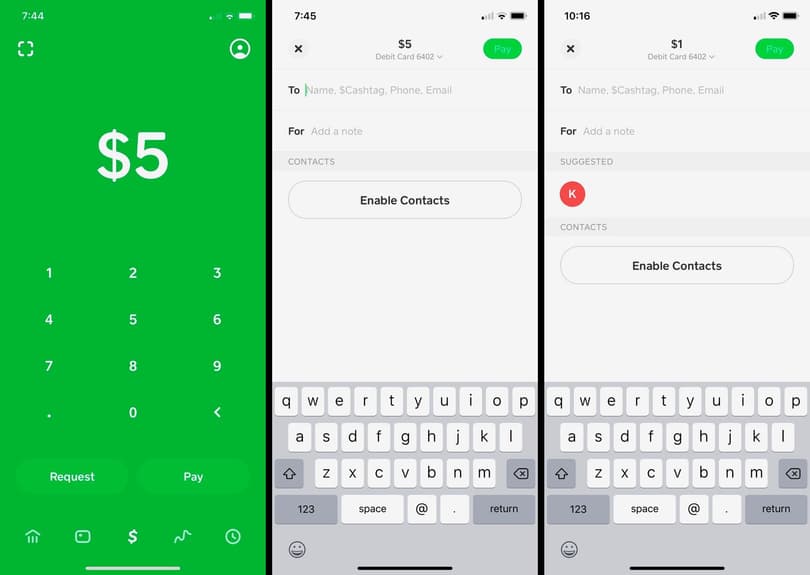
- Tap the “$_ ” Icon: This is typically located at the bottom center of the screen and serves as the gateway to initiating a transaction.
- Enter the Amount: Use the numeric keypad to input the exact amount of money you wish to send. The app’s interface provides clear visual feedback of the entered sum.
- Tap “Pay”: After entering the amount, a “Pay” button will illuminate. Tapping this moves you to the next screen, where you specify the recipient.
- Identify the Recipient: Here, you’ll input the recipient’s unique identifier. This can be:
- $Cashtag: This is a personalized username for Cash App users (e.g.,
$JohnDoe). It’s the most common and often preferred method due to its simplicity. - Phone Number: The mobile number linked to their Cash App account.
- Email Address: The email address associated with their Cash App account.
The app’s intelligent search functionality will often suggest recipients from your contacts if they are also Cash App users, streamlining the selection process.
- $Cashtag: This is a personalized username for Cash App users (e.g.,
- Add a Memo (Optional): A text field allows you to add a note or memo about the payment (e.g., “Dinner last night,” “Rent,” “Gift”). This feature, while simple, is crucial for record-keeping and clarifying the purpose of the transaction for both sender and receiver. Technically, this memo is stored as metadata associated with the transaction record.
This sequence of inputs, carefully guided by the app’s UI/UX design, minimizes user error and maximizes efficiency.
Funding Your Transfer: Sources and Options
A critical technical decision point in sending money is selecting the source of funds. Cash App offers flexibility, allowing users to choose from their existing Cash App balance or an external linked account:
- Cash App Balance: If you have funds already stored in your Cash App balance, the app will default to using these funds first. This is typically the fastest method as the funds are already within Cash App’s internal system.
- Linked Debit Card: If your Cash App balance is insufficient, or if you prefer, you can opt to send money directly from your linked debit card. The app securely communicates with your bank (via card networks like Visa or MasterCard) to authorize and process the payment. This incurs a standard 0.5% – 1.75% fee for instant transfers directly from a debit card, reflecting the costs associated with card processing.
- Linked Bank Account: While a linked bank account can be used to add money to your Cash App balance, direct payments from a bank account typically route through your Cash App balance first. Transfers directly from a bank account often don’t incur fees but might take longer than debit card transfers for the funds to settle in your Cash App balance.
The app’s backend intelligently manages these funding options, prioritizing immediate access to funds while also providing transparent information about associated fees, which are dynamically displayed before confirming the transaction. This real-time fee calculation is a key technological feature, ensuring users are fully informed.
Verifying and Confirming Your Payment
The final stage of initiating a transfer involves a crucial verification step designed to prevent accidental payments and ensure transaction accuracy:
- Review Transaction Details: Before confirming, Cash App presents a summary screen detailing the recipient, the amount, the memo, and the chosen funding source. This is your last chance to review all information for correctness.
- Confirm Payment: Once you are certain all details are accurate, you tap the “Pay” or “Confirm” button. Depending on your security settings, you might be required to enter your PIN, use Touch ID, or Face ID to authorize the transaction. This biometric or PIN authentication adds a critical layer of security, validating that you are the legitimate account holder initiating the transfer.
- Confirmation Screen: Upon successful transmission, you’ll see a confirmation screen indicating that the money has been sent. The recipient will typically receive an instant notification within the Cash App, and often an SMS or email notification, depending on their settings. A digital receipt is also generated and stored within your activity feed for future reference.
This multi-step verification process, incorporating user review and strong authentication methods, is a testament to the application’s commitment to secure and reliable financial transactions.
Navigating Advanced Features and Best Practices for Transfers
Beyond basic P2P transfers, Cash App offers several advanced features and best practices that enhance the user experience and security of your digital financial interactions. Leveraging these functionalities thoughtfully can significantly improve how you manage your money within the app.

Scheduling Payments and Recurring Transfers
While often used for immediate, one-off payments, Cash App also supports scheduled and recurring transfers, a feature that brings advanced financial planning capabilities to a mobile platform. This is particularly useful for regular payments like rent, allowances, or bill splitting among roommates.
- Setting Up Scheduled Payments: Within the app, you can typically access options to schedule a future payment. This involves specifying the amount, recipient, and the desired date for the transfer. The app’s internal scheduling algorithm then queues this transaction to be processed automatically on the designated date, drawing from your selected funding source.
- Implementing Recurring Transfers: For payments that occur regularly (weekly, bi-weekly, monthly), Cash App allows you to set up recurring transfers. This function requires defining the frequency and end date (or selecting “no end date”). The system then automates these transfers, eliminating the need for manual initiation each time. This feature relies on robust backend job scheduling and database management to ensure timely execution.
Utilizing these scheduling features requires careful initial setup but ultimately automates routine financial tasks, a powerful application of technology for personal finance management.
Understanding Transaction Limits and Fees
Like all financial technology platforms, Cash App operates within certain regulatory and operational constraints, which manifest as transaction limits and potential fees. Understanding these is vital for effective use:
- Sending Limits: New and unverified accounts typically have lower sending limits (e.g., $250 per week). Verifying your identity by providing your full name, date of birth, and the last four digits of your SSN significantly increases these limits (e.g., $7,500 per week). These limits are in place to comply with financial regulations and to mitigate fraud risks, showcasing a balance between user convenience and security protocols.
- Receiving Limits: Similarly, there are limits on how much money an unverified account can receive (e.g., $1,000 per 30 days), which also increase substantially upon verification.
- Transfer Fees:
- Sending from Cash App Balance or Linked Bank Account: Generally, there are no fees for sending money directly from your Cash App balance or a linked bank account using standard transfer speeds.
- Sending from a Linked Debit/Credit Card: A small fee (typically 0.5% – 1.75%) is applied when sending money from a linked debit or credit card for instant transfers. This fee covers the cost of card processing networks.
- Instant Deposits: While standard deposits from Cash App to your linked bank account are free (and typically take 1-3 business days), choosing an “Instant Deposit” option incurs a 0.5% – 1.75% fee to expedite the transfer to your bank account, usually within minutes.
The app is designed to clearly display any applicable fees before you confirm a transaction, ensuring transparency in financial operations.
Enhancing Security for Your Digital Transactions
Security is paramount when dealing with financial applications. Cash App incorporates several technological safeguards, but user adherence to best practices is equally important:
- Strong Passwords/PINs: Always use a unique, complex PIN for your Cash App account and avoid sharing it.
- Two-Factor Authentication (2FA): Enable 2FA for an extra layer of security. This requires a code sent to your registered phone number or email in addition to your PIN or biometric ID, making it much harder for unauthorized users to access your account.
- Biometric Security: Utilize your device’s biometric features (Touch ID, Face ID) for quick and secure login and transaction authorization.
- Beware of Scams: Be vigilant against phishing attempts, fake support accounts, and requests for money from unknown sources. Cash App’s technology cannot protect against social engineering scams if users willingly provide information or send money to fraudsters. Always verify the recipient’s identity, especially their $Cashtag.
- Regular Software Updates: Keep your Cash App and device operating system updated. Updates often include critical security patches and performance improvements, protecting against newly discovered vulnerabilities.
By adopting these security measures, users can significantly reduce the risk associated with digital money transfers, reinforcing the technological integrity of their financial interactions.
Troubleshooting Common Issues and Ensuring Smooth Transfers
Even with robust technology, issues can occasionally arise during money transfers. Knowing how to diagnose and address these common problems is essential for a seamless user experience and maintaining confidence in the platform.
Addressing Failed Payments and Pending Transactions
When a payment doesn’t go through as expected, it can be frustrating. Cash App provides mechanisms to understand and resolve these situations:
- Failed Payments: A payment might fail for several reasons:
- Insufficient Funds: The most common reason. The linked bank account or debit card may not have enough money, or your Cash App balance is too low.
- Incorrect Recipient Details: Typing an incorrect $Cashtag, phone number, or email address will result in a failed transaction, as the system cannot find a matching recipient.
- Bank Rejection: The linked bank might decline the transaction due to security flags, daily limits, or other internal policies.
- Technical Glitches: While rare, temporary network issues or app bugs can occasionally cause transactions to fail.
In most cases, Cash App provides an immediate notification within the app, explaining the reason for the failure. The funds are typically not debited from your account or are immediately refunded.
- Pending Transactions: Sometimes, a transaction might show as “Pending” rather than “Completed.” This usually means the system is still processing the payment, often due to:
- Bank Processing Delays: Especially if funds are being pulled directly from a bank account, it might take a little longer for the bank to clear the transaction.
- Recipient Verification: If the recipient is a new user or has an unverified account, the funds might be held pending their account setup or verification.
- Security Review: Occasionally, transactions might be flagged for a security review if they are unusually large or fit certain risk patterns.
Pending transactions typically resolve themselves within a few minutes to a few hours. Users should monitor their activity feed for updates.
Understanding the status indicators within the app’s activity log is key to troubleshooting these issues effectively.
The Process of Canceling or Disputing Payments
One of the limitations of P2P apps like Cash App is the finality of transactions, similar to handing over physical cash. However, there are specific scenarios and steps if you need to cancel or dispute a payment:
- Canceling an Unclaimed Payment: If you sent money to a phone number or email that isn’t yet linked to an active Cash App account, the payment might remain “unclaimed.” In such cases, Cash App usually allows you to cancel the payment directly from your activity feed. This functionality is technically possible because the funds haven’t been fully delivered to a verified recipient.
- Requesting a Refund: Once a payment is claimed by a recipient, it cannot be canceled by the sender. Your only recourse is to request a refund from the recipient. Cash App provides a “Request” feature for this purpose, which sends a formal request to the recipient. The decision to refund, however, rests entirely with the recipient.
- Disputing Unauthorized Transactions: If you believe an unauthorized transaction occurred (e.g., your account was hacked), you should immediately report it to Cash App support. The platform has fraud detection systems and a dispute resolution process for such cases, requiring investigation and evidence. This involves internal forensic tools and communication protocols to trace the unauthorized activity.
The app’s design emphasizes the “instant” nature of transfers, which implies a higher degree of responsibility on the sender to verify details before confirming.
Contacting Cash App Support for Technical Assistance
When self-troubleshooting isn’t enough, contacting Cash App support is the next step. The availability of reliable technical support is a hallmark of a robust technology platform:
- In-App Support: The most efficient way to contact support is directly through the Cash App. Navigate to your profile icon (top right corner), scroll down, and select “Support” or “Cash App Support.” This leads you to a comprehensive help center with FAQs and articles. If your issue isn’t resolved, you can initiate a chat or email support request from there. This in-app channel provides context to the support team, often including your account details and relevant transaction history, streamlining the resolution process.
- Website Support: The Cash App website also hosts an extensive support section with articles and a way to contact them via email.
- Phone Support (Limited): While primarily digital, Cash App may offer limited phone support for specific, urgent issues, especially those related to account security.
When reaching out, be prepared to provide specific details about the transaction, error messages, and any troubleshooting steps you’ve already taken. This helps the support team, equipped with their own diagnostic tools and system access, to quickly pinpoint and resolve your technical issue, ensuring that the technology continues to serve your financial needs effectively.
By mastering these technical aspects and best practices, users can confidently and securely navigate the process of sending money via Cash App, fully leveraging this powerful digital financial tool.
aViewFromTheCave is a participant in the Amazon Services LLC Associates Program, an affiliate advertising program designed to provide a means for sites to earn advertising fees by advertising and linking to Amazon.com. Amazon, the Amazon logo, AmazonSupply, and the AmazonSupply logo are trademarks of Amazon.com, Inc. or its affiliates. As an Amazon Associate we earn affiliate commissions from qualifying purchases.