
The dream of accumulating significant wealth often feels like a distant fantasy, especially when the goal is as ambitious as reaching a million dollars. Yet, what if that dream could be realized in a decade? The idea of saving a million dollars in just 10 years, while undeniably challenging, is not merely a pipe dream for a select few. With strategic planning, disciplined execution, and the intelligent use of financial tools like a “million dollar calculator,” this goal can transition from aspiration to a tangible objective.
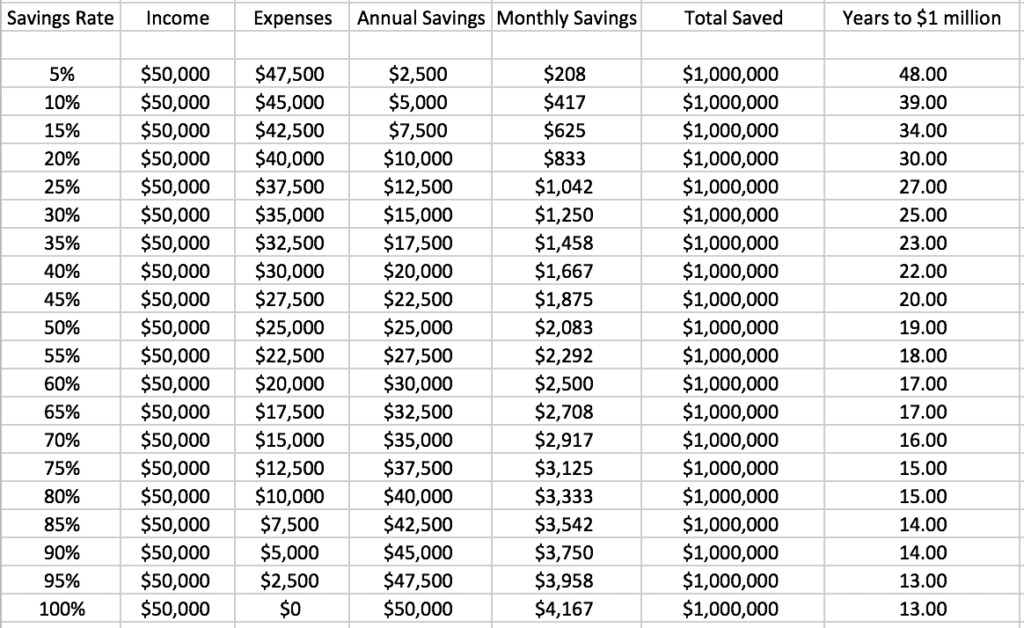
This guide delves into the mechanisms, strategies, and mindset required to achieve this financial milestone. We’ll explore how to leverage the power of consistent saving and smart investing, demystifying the path to becoming a millionaire within a decade, and underscoring the indispensable role of a financial calculator in charting your course.
The Ambitious Goal: Is a Million Dollars in 10 Years Truly Attainable?
At first glance, the prospect of saving a million dollars in just ten years might seem daunting, if not impossible. A quick calculation reveals that this requires accumulating an average of $100,000 per year. For many, this figure far exceeds their current annual savings capacity. However, the true picture is more nuanced than simple arithmetic, incorporating the magic of compound interest and the strategic deployment of capital.
Understanding the Numbers: The Power of Consistent Saving
To save a million dollars in 10 years without any investment returns, you would indeed need to save $100,000 annually, or approximately $8,333.33 per month. This figure alone can be a significant barrier. However, the equation changes dramatically when you introduce the concept of investment growth.
The power of consistent saving isn’t just about the raw amount you set aside; it’s about the habit and the foundation it builds. Regularly allocating a portion of your income, no matter how modest to begin with, creates a financial discipline that is crucial for long-term wealth accumulation. When pursuing a high-stakes goal like a million dollars in a decade, this consistency must be amplified, meaning a substantial percentage of your income must be dedicated to savings and investments. This requires a hard look at your current income and expenditure, identifying areas where savings can be maximized and income can be boosted.
The Role of Compounding: Your Secret Weapon
Compound interest, often hailed as the “eighth wonder of the world,” is the linchpin of accelerated wealth accumulation. It’s the process where the interest you earn on your initial investment also starts earning interest. Over time, this snowball effect can significantly reduce the amount of personal savings you need to contribute to reach your goal.
Consider this: if you could achieve an average annual return of, say, 8% on your investments, the amount you’d need to save monthly drops considerably compared to saving without any returns. A financial calculator immediately brings this reality to light, showing you how much less you need to save personally each month if your investments are working hard for you. This is why investing early and consistently in assets that generate reasonable returns (like diversified stock market funds) is far more effective than simply hoarding cash. The longer your money has to compound, the less active saving you need to do, making a 10-year target more achievable.
Realistic Expectations and Personal Circumstances
While a million dollars in 10 years is an ambitious goal, its attainability depends heavily on individual circumstances. Factors like current income, existing savings, debt levels, and the ability to significantly increase earnings or reduce expenses all play a critical role. For someone earning a modest salary with significant debt, the path will be far steeper than for a high-income earner with minimal financial obligations.
It’s important to set realistic expectations based on your unique financial situation. A “million dollar calculator” isn’t a magic wand; it’s a tool that provides clarity. It will highlight the demanding requirements, pushing you to either find ways to meet those requirements or adjust your timeline. Understanding these personal parameters is the first step in creating a viable plan, one that is challenging but ultimately within reach.
Leveraging the “Million Dollar Calculator”: Your Roadmap to Wealth
The term “calculator” might sound simple, but in the context of reaching a million dollars in 10 years, it’s a sophisticated analytical tool. It moves beyond basic arithmetic to integrate variables like initial capital, monthly contributions, anticipated annual returns, and the crucial timeframe, providing a concrete financial roadmap.
How Financial Calculators Work: Demystifying the Math
At its core, a financial calculator for wealth accumulation (often called a compound interest calculator or savings goal calculator) uses time value of money principles. It takes your inputs and projects future values based on mathematical formulas. It’s not just adding up your savings; it’s calculating how your money grows exponentially when invested.
These calculators typically employ variations of the future value (FV) formula for an ordinary annuity, which considers a series of equal payments made at regular intervals (your monthly contributions) compounded over a period. It considers both your initial lump sum (if any) and your regular contributions, applying the specified interest rate over the given duration. This sophisticated yet accessible tool demystifies complex financial projections, making the path to your million-dollar goal transparent and quantifiable.
Inputting Your Variables: Starting Point and Target
To get the most out of a million-dollar calculator, you need to input accurate data. This typically includes:
- Current Savings/Initial Capital: Any money you already have invested and ready to contribute to your goal. The more you start with, the less you’ll need to save monthly.
- Target Amount: In this case, $1,000,000.
- Time Horizon: 10 years.
- Expected Annual Rate of Return: This is perhaps the most critical and debated input. It represents the average annual growth you anticipate from your investments. While past performance is no guarantee of future results, a diversified portfolio of index funds or ETFs historically yields average returns in the 7-10% range over long periods. For a 10-year horizon, a conservative estimate like 7-8% might be a good starting point, though some might target higher with more aggressive investments (and associated risk).
- Monthly Contribution: This is often the output the calculator provides – how much you need to save monthly to reach your goal given the other variables. Or, you can input a monthly contribution and see what your total will be.
By playing with these variables, you can immediately see the impact of starting with more, achieving higher returns, or extending your timeline.
Interpreting the Results: What Your Calculator Tells You
Once you input your figures, the calculator will provide a clear monthly savings target. For example, if you start with $0 and aim for $1,000,000 in 10 years with an 8% annual return, the calculator might tell you that you need to save approximately $5,400 per month. Without any returns (0% interest), that figure jumps to $8,333.33 per month.
These numbers are not just figures; they are actionable insights. If $5,400 seems manageable, you have a solid path forward. If it feels impossible, the calculator guides your next steps:
- Increase Income: Can you earn more to meet the monthly contribution?
- Optimize Spending: Where can you drastically cut expenses to free up cash?
- Boost Returns: Can you invest more aggressively (with caution) to aim for a slightly higher average return, reducing the monthly savings burden?
- Extend Timeline: Is 12 or 15 years more realistic if 10 is too aggressive for your current capacity?
The calculator makes the invisible visible, turning a vague aspiration into a defined financial challenge with quantifiable solutions.
Pillars of Accelerated Wealth Accumulation: Strategies Beyond the Calculator

While the calculator provides the roadmap, it’s your actions that drive the journey. Achieving a million dollars in 10 years demands a multi-pronged approach focused on both increasing what you bring in and optimizing what you put out.
Boosting Your Income: Side Hustles, Raises, and Entrepreneurship
For most people, simply cutting expenses isn’t enough to free up thousands of dollars per month. A significant increase in income is almost always necessary to hit a million-dollar target in a decade.
- Salary Negotiation & Career Advancement: Consistently seek promotions, negotiate higher salaries, and invest in skills that make you more valuable in the job market. Each salary bump directly impacts your ability to save more.
- Side Hustles: The gig economy offers countless opportunities. Freelancing, consulting, online courses, content creation, or even a part-time job can provide substantial supplementary income that can be directly channeled into your savings goal.
- Entrepreneurship: Starting your own business, even a small one, can offer unlimited income potential. While riskier, a successful venture can accelerate your wealth accumulation beyond traditional employment. The key is to funnel a significant portion of any new income directly into your investment accounts, not into lifestyle creep.
Aggressive Saving and Expense Optimization
Increasing income is one side of the coin; aggressive saving is the other. This isn’t about minor adjustments; it’s about a complete re-evaluation of your spending habits.
- Budgeting with a Purpose: Create a detailed budget that prioritizes your million-dollar goal. Every dollar should have a job, and a large portion of those jobs should be “saving for the future.”
- Minimalist Mindset: Embrace a minimalist approach to consumption. Distinguish between needs and wants, and drastically reduce discretionary spending. This might mean foregoing expensive vacations, dining out less, driving an older car, or living in a smaller home than you could technically afford.
- Automate Savings: Set up automatic transfers from your checking account to your investment account immediately after you get paid. This “pay yourself first” strategy ensures you don’t accidentally spend the money before it reaches your savings.
- Debt Elimination: High-interest debt (credit cards, personal loans) is a wealth killer. Prioritize paying off these debts aggressively before focusing heavily on investments, as the interest saved is a guaranteed return.
Smart Investing: Maximizing Returns While Managing Risk
Saving alone, even aggressively, might not be enough. Your money needs to grow through strategic investments.
- Diversification: Don’t put all your eggs in one basket. Invest across various asset classes (stocks, bonds, real estate) and geographies. Index funds and Exchange Traded Funds (ETFs) that track broad markets (like the S&P 500) offer broad diversification and typically lower fees than actively managed funds.
- Risk Tolerance: A 10-year timeline is considered medium-term for investing. While you need growth, you also need to understand and manage risk. Younger investors with stable incomes might tolerate more volatility, while those closer to retirement (or with higher current income) might choose a slightly more conservative allocation. However, for aggressive growth over 10 years, a significant allocation to equities (stocks) is often necessary.
- Tax-Advantaged Accounts: Maximize contributions to retirement accounts like 401(k)s, IRAs, or Roth IRAs. These accounts offer tax benefits (tax-deductible contributions, tax-free growth, or tax-free withdrawals in retirement) that can significantly boost your net returns. If you max these out and still have more to invest, consider a taxable brokerage account.
- Low-Cost Investing: Minimize investment fees. High fees, even seemingly small percentages, can eat into your returns significantly over 10 years. Opt for low-cost index funds or ETFs.
Crafting Your Personalized 10-Year Million-Dollar Plan
The general strategies must be translated into a concrete, personalized plan. This involves breaking down the overarching goal into manageable, actionable steps.
Step-by-Step Breakdown: Monthly Contributions Required
Using your financial calculator, determine your precise monthly savings target. Let’s assume, for example, that the calculator indicates you need to save $5,400 per month.
- Income Assessment: Do you currently earn enough to save this much? If your take-home pay is $7,000, saving $5,400 might be possible but would require extreme frugality. If your take-home pay is $4,000, you must increase your income.
- Budgetary Allocation: Once you know your target, adjust your budget to prioritize this saving amount. It’s not about saving what’s left over; it’s about making your monthly contribution the first expense you cover.
- Income Gap Analysis: If there’s a gap between what you can save and what you need to save, identify exactly how much more income you need to generate monthly. This provides a tangible goal for your side hustles or career advancements.
Diversifying Your Investment Portfolio
A 10-year timeline generally suggests a growth-oriented portfolio. A common approach for this timeframe might be:
- 80-90% Equities: Invest in broad market index funds (e.g., total stock market, S&P 500) or growth-oriented ETFs. International stocks can also provide diversification.
- 10-20% Fixed Income: A small allocation to bonds can help reduce volatility, especially as you get closer to your goal, but for aggressive growth over 10 years, equities will be the primary driver.
- Alternative Investments (Optional): Some might consider a small allocation to real estate (REITs), commodities, or even cryptocurrencies for higher potential returns, but these come with increased risk and should be approached cautiously and with thorough research.
The key is to select investments that align with your expected rate of return input into the calculator and your personal risk tolerance.
Regular Review and Adaptation: Staying on Track
A financial plan is not static; it’s a living document.
- Monthly Check-ins: At the end of each month, review your budget, actual savings, and investment performance. Are you hitting your monthly contribution target?
- Quarterly Portfolio Review: Review your investment portfolio’s performance against your expectations. Rebalance your portfolio if necessary to maintain your target asset allocation.
- Annual Reassessment: Once a year, conduct a comprehensive review. Has your income changed? Have your expenses shifted? Are your investments performing as expected? Use your financial calculator again with updated figures to see if you’re still on track or if adjustments are needed. Life happens, and your plan needs to be flexible enough to accommodate changes while keeping the ultimate goal in sight.
Overcoming Challenges and Maintaining Momentum
The path to a million dollars in 10 years is not without its obstacles. Market downturns, unexpected expenses, and loss of motivation are all potential hurdles.
Dealing with Setbacks: Financial Shocks and Life Changes
Life is unpredictable. You might face job loss, medical emergencies, or significant unexpected expenses.
- Emergency Fund: Before seriously pursuing aggressive investments, ensure you have a robust emergency fund (3-6 months of living expenses) in an easily accessible, liquid account. This fund acts as a buffer against life’s curveballs, preventing you from having to tap into your growth investments.
- Flexibility: When setbacks occur, reassess your plan. You might need to temporarily reduce contributions or adjust your timeline. The goal isn’t to be rigid, but to be resilient and adapt without abandoning the larger objective.
The Importance of Financial Literacy and Discipline
Achieving such an ambitious goal requires more than just a calculator; it demands continuous learning and unwavering discipline.
- Educate Yourself: Continuously learn about personal finance, investing, and wealth management. Read books, follow reputable financial news sources, and understand the macroeconomic factors that can impact your investments.
- Maintain Discipline: The biggest challenge is often sticking to the plan, especially when faced with temptations to spend or fear during market volatility. Consistent action, regardless of external noise, is paramount. Automating savings helps immensely here.

Celebrating Milestones and Staying Motivated
The journey can be long and arduous. Celebrate small wins along the way to maintain motivation:
- Mini-Goals: Break down the $1 million into smaller milestones (e.g., first $100k, $250k, $500k).
- Reward System: Implement non-financial rewards for hitting these milestones, reinforcing positive behavior.
- Focus on the “Why”: Continuously remind yourself why you are pursuing this goal – financial independence, future security, supporting family, or pursuing a dream. This intrinsic motivation is a powerful force.
Saving a million dollars in 10 years is an audacious goal, but with the right tools, a robust strategy, unwavering discipline, and a clear understanding of the financial landscape, it is remarkably achievable. Your financial calculator is not just a device for computation; it’s a compass guiding you through the complexities of wealth accumulation, transforming an ambitious dream into a tangible reality.
aViewFromTheCave is a participant in the Amazon Services LLC Associates Program, an affiliate advertising program designed to provide a means for sites to earn advertising fees by advertising and linking to Amazon.com. Amazon, the Amazon logo, AmazonSupply, and the AmazonSupply logo are trademarks of Amazon.com, Inc. or its affiliates. As an Amazon Associate we earn affiliate commissions from qualifying purchases.