
The transition from a traditional brick-and-mortar mindset to a digital-first economy has redefined what it means to be an entrepreneur. Running an online business is no longer just about having a website; it is about managing a complex financial ecosystem that requires precision, strategic investment, and a deep understanding of digital cash flow. To build a venture that is not only functional but also highly profitable, an entrepreneur must prioritize the “Money” aspect of the business—focusing on revenue models, tax optimization, and the financial tools that drive sustainable growth.
Building a Sustainable Financial Foundation
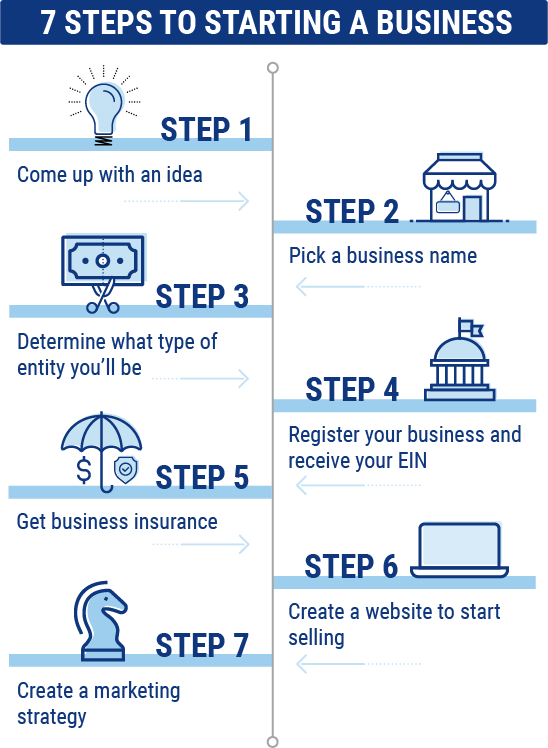
The longevity of an online business is dictated by its structural integrity. Before the first dollar is earned, a founder must decide on a framework that protects personal assets and optimizes the bottom line. Unlike physical storefronts, online businesses face unique fiscal challenges, including cross-border tax complexities and varying overhead costs that can fluctuate wildly with scale.
Choosing the Right Revenue Model
The most critical financial decision for any online entrepreneur is the selection of a revenue model. This choice dictates the business’s cash flow patterns and long-term valuation. High-margin models, such as Software as a Service (SaaS) or digital product sales, offer the advantage of low COGS (Cost of Goods Sold). Once the initial development cost is recouped, the marginal cost of selling to an additional customer is near zero, leading to exponential profit growth.
Conversely, e-commerce models—particularly dropshipping or inventory-based retail—operate on thinner margins. Success in these areas requires a meticulous focus on supply chain costs and volume. For service-based online businesses, such as consultancy or digital agencies, the challenge is decoupling time from income. Transitioning from hourly billing to value-based pricing or “productized” services is a primary strategy for increasing the net income per hour worked.
Tax Planning and Legal Entity Selection
Operating online does not exempt a business from the realities of the tax man; in fact, it often complicates them. Selecting the right legal entity—be it a Sole Proprietorship, LLC, or S-Corp—is a fundamental financial strategy. For many online business owners, an LLC provides the necessary liability protection while allowing for pass-through taxation. However, as the business scales and profits exceed a certain threshold (often around $60,000 to $100,000 annually), electing S-Corp status can result in significant savings on self-employment taxes.
Furthermore, online businesses must navigate the “Nexus” laws regarding sales tax. Selling digital or physical products across state or international lines triggers tax obligations in jurisdictions where the business has a “significant presence.” Utilizing automated tax compliance software is not just a convenience; it is a financial necessity to avoid back-taxes and penalties that can cripple a growing enterprise.
Optimizing Digital Cash Flow and Overhead
In the digital world, “lifestyle creep” often manifests as “software creep.” While the overhead for an online business is significantly lower than a physical office, the accumulation of monthly subscriptions and hidden fees can erode profit margins if left unchecked.
Managing Subscription-Based Expenses
The modern online business runs on a stack of SaaS tools—hosting, email marketing, CRM, project management, and specialized AI tools. While each may only cost $30 to $100 per month, an unmonitored tech stack can easily cost thousands of dollars a year. To maintain a healthy bottom line, entrepreneurs should conduct a quarterly financial audit of all recurring expenses.
The goal is to calculate the Return on Investment (ROI) for every tool. If a marketing automation platform costs $200 a month but contributes to $2,000 in additional sales, it is a high-value asset. If a premium design tool is rarely used, it is a liability. Consolidating tools into “all-in-one” platforms can often reduce overhead and simplify financial tracking.
The Importance of a Cash Reserve
Cash flow volatility is a hallmark of the online business world. Algorithm changes, seasonal shifts in consumer behavior, or a sudden increase in advertising costs can lead to “lean” months. Financial resilience is built by maintaining a dedicated business cash reserve—ideally three to six months of operating expenses.

This reserve serves two purposes. First, it acts as an insurance policy against unforeseen disruptions. Second, it provides “opportunity capital.” When a competitor goes out of business or a high-value domain name becomes available, having liquid cash allows the entrepreneur to strike quickly without relying on high-interest credit. Managing this reserve involves keeping funds in high-yield business savings accounts to ensure the money is working for the business even when it is not being spent.
Strategic Reinvestment for Scalable Growth
Profit is the goal, but reinvestment is the engine of growth. One of the most common financial mistakes online entrepreneurs make is withdrawing all profits for personal use too early. To scale, a business must systematically reinvest its earnings into assets that generate more revenue.
Calculating Customer Acquisition Cost (CAC) and Lifetime Value (LTV)
To run a profitable online business, you must master the relationship between Customer Acquisition Cost (CAC) and Lifetime Value (LTV). CAC is the total cost of sales and marketing efforts required to acquire a single customer. LTV is the total revenue a business can expect from a single customer account throughout the business relationship.
A healthy online business typically aims for an LTV to CAC ratio of at least 3:1. If you spend $10 on ads to acquire a customer who spends $30, the business is scalable. However, if the CAC begins to climb due to increased competition in the digital ad space, the entrepreneur must find ways to increase LTV—perhaps through upselling, cross-selling, or implementing a subscription model—to maintain financial viability. Understanding these metrics allows for “data-driven” reinvestment, where every dollar spent on growth is a calculated move rather than a gamble.
Diversifying Income Streams to Mitigate Risk
The most successful online businesses do not rely on a single source of income. Financial diversification is the ultimate hedge against the fragility of the internet. An e-commerce store might add an affiliate marketing arm; a SaaS company might offer high-ticket consulting; a content creator might launch a paid community or digital course.
By creating multiple revenue streams, the business creates a “financial flywheel.” Income from a stable, low-maintenance stream (like affiliate commissions) can be used to fund a high-growth, high-risk project (like a new app development). This approach ensures that if one platform changes its terms of service or a specific market becomes saturated, the business’s overall income remains stable.
Leveraging Financial Technology for Efficiency
Modern financial tools have democratized the ability to run a global business from a laptop. By automating the “boring” parts of finance, an entrepreneur can focus on high-level strategy and income-generating activities.
Integrated Payment Gateways and Currency Management
Accepting payments is the lifeblood of an online business. However, transaction fees can vary significantly between providers like Stripe, PayPal, and specialized merchant accounts. For businesses operating internationally, currency conversion fees are a silent profit-killer.
Sophisticated entrepreneurs use multi-currency business accounts that allow them to hold, receive, and spend in dozens of currencies at the mid-market exchange rate. By avoiding the 2-3% conversion fees charged by traditional banks or standard payment processors, a business doing $500,000 in international sales can save upwards of $15,000 annually—money that goes straight to the bottom line.

Automated Accounting and Real-Time Reporting
The days of handing a shoebox of receipts to an accountant at the end of the year are over. Real-time financial visibility is required to navigate the fast-paced online market. Cloud-based accounting software that integrates directly with bank accounts and payment gateways provides an instantaneous view of profit and loss statements, balance sheets, and accounts receivable.
Automation in bookkeeping reduces human error and ensures that the business is always “audit-ready.” More importantly, it allows for “proactive” financial management. Instead of wondering if the business was profitable last month, the entrepreneur can see their daily burn rate and net margin in real-time. This level of financial clarity is what separates a “side hustle” from a professional online enterprise.
In conclusion, running an online business is a disciplined exercise in financial management. By selecting a high-margin revenue model, optimizing overhead, strategically reinvesting profits, and leveraging the latest in financial technology, an entrepreneur can build a scalable income engine. The digital landscape offers unparalleled opportunities for wealth creation, but only for those who treat their online business with the same fiscal rigor as a traditional high-stakes investment. In the end, the most successful online businesses are not just those with the most traffic, but those with the most robust and sustainable financial structures.
aViewFromTheCave is a participant in the Amazon Services LLC Associates Program, an affiliate advertising program designed to provide a means for sites to earn advertising fees by advertising and linking to Amazon.com. Amazon, the Amazon logo, AmazonSupply, and the AmazonSupply logo are trademarks of Amazon.com, Inc. or its affiliates. As an Amazon Associate we earn affiliate commissions from qualifying purchases.