
In a world driven by numbers, percentages are the universal language of finance. From understanding sales discounts and interest rates to analyzing investment returns and budgeting your income, a firm grasp of percentage calculations isn’t just a useful skill—it’s a critical component of financial literacy and empowerment. Yet, for many, the mere mention of percentages conjures images of complex equations and mental blocks. This perception often leads to over-reliance on calculators, which can be inefficient and sometimes even misleading if you don’t grasp the underlying concepts.
This comprehensive guide is designed to demystify percentages, transforming them from a daunting mathematical challenge into an intuitive and rapid mental calculation tool. We’ll dive deep into practical strategies, real-world financial applications, and actionable tips that will enable you to confidently and quickly calculate percentages on the fly, giving you an edge in managing your personal finances, making informed purchasing decisions, and even navigating complex business scenarios. Prepare to unlock a new level of financial fluency and make percentages work for you, not against you.
The Fundamentals: Deconstructing the Concept of a Percentage
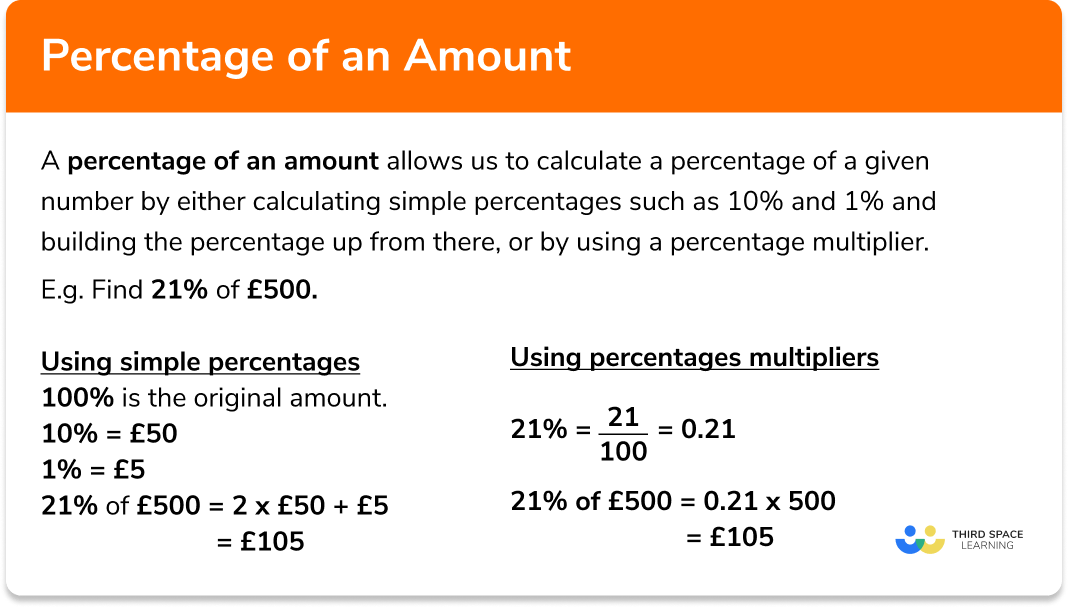
Before we can sprint through calculations, it’s crucial to solidify our understanding of what a percentage truly represents. At its core, a percentage is simply a way to express a proportion or a fraction out of 100. The word “percent” literally means “per hundred” or “for every hundred.” Understanding this basic definition is the gateway to unlocking quicker and more intuitive calculation methods.
Decimals and Fractions: The Building Blocks of Percentages
Every percentage has an equivalent decimal and fractional form, and being able to convert between these forms mentally is a powerful skill.
-
Percentage to Decimal: To convert a percentage to a decimal, simply divide it by 100. This is equivalent to moving the decimal point two places to the left.
- Example: 75% = 0.75; 10% = 0.10; 3% = 0.03.
-
Decimal to Percentage: To convert a decimal to a percentage, multiply it by 100. This means moving the decimal point two places to the right and adding the percent sign.
- Example: 0.50 = 50%; 0.08 = 8%; 1.25 = 125%.
-
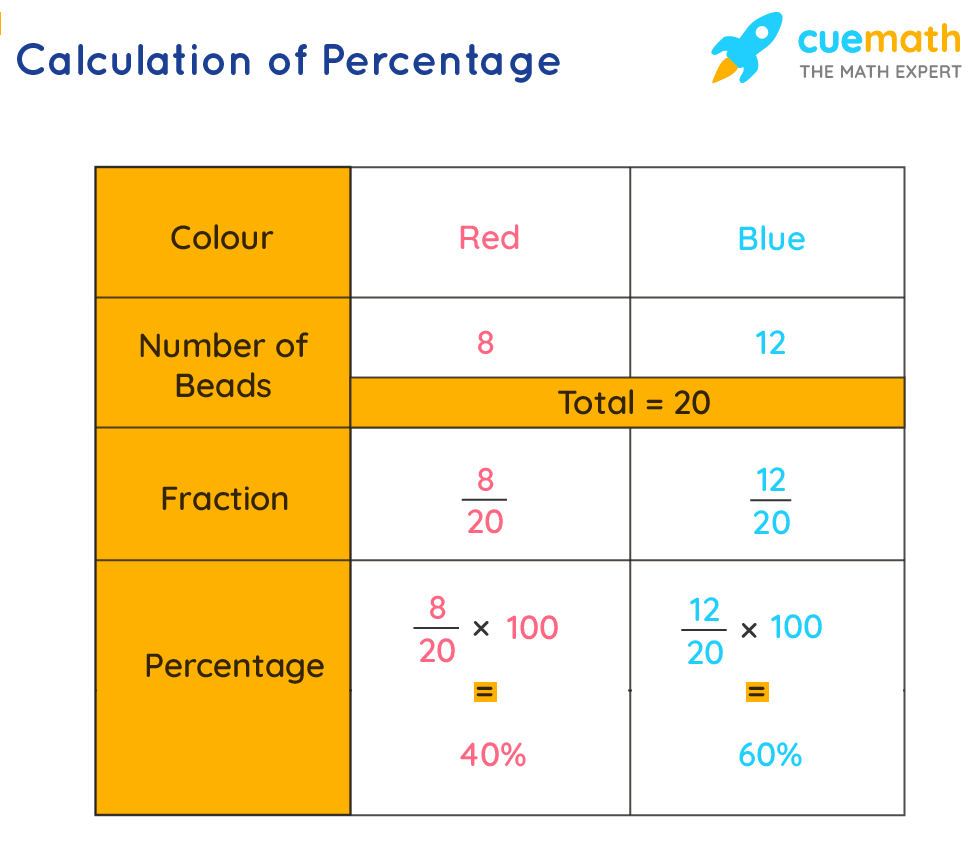
Fractions to Percentages: Divide the numerator by the denominator, then multiply by 100.
- Example: 1/2 = 0.50 = 50%; 3/4 = 0.75 = 75%; 1/5 = 0.20 = 20%.
These conversions are fundamental because most real-world percentage calculations often involve their decimal equivalents. When you calculate “X percent of Y,” you’re essentially finding X/100 * Y, or simply the decimal equivalent of X multiplied by Y.
Basic Percentage Scenarios: “Of” Means Multiply
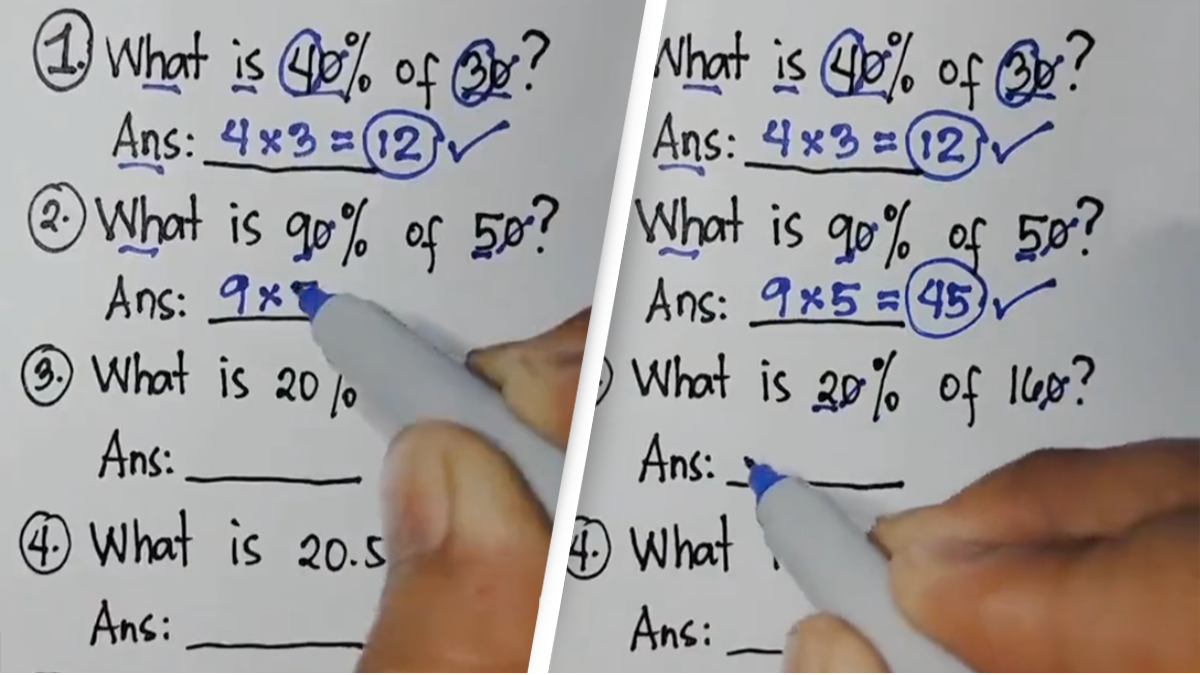
The most common percentage calculation involves finding a percentage of a given number. The key to remember here is that in mathematics, the word “of” almost always implies multiplication.
-
Calculating X% of Y: To find X% of Y, convert X% to its decimal form and multiply it by Y.
-
Example: What is 20% of 300?
-
20% as a decimal is 0.20.
-
0.20 * 300 = 60.
-
-
Example: What is 5% of 80?
-
5% as a decimal is 0.05.
-
0.05 * 80 = 4.
-
-
Mastering these basic conversions and the “of = multiply” rule lays the groundwork for tackling more complex financial calculations with ease and speed.
Mental Math Mastery: Rapid Calculation Strategies
The true power of quick percentage calculations lies in mastering mental shortcuts. These strategies leverage common percentages and simple arithmetic to break down complex problems into manageable steps, allowing you to estimate or calculate exact figures without reaching for a device.
The 10% Rule: Your Ultimate Financial Shortcut
The 10% rule is arguably the most powerful mental math tool for percentages. Once you can quickly find 10% of any number, you unlock a cascade of other percentages.
-
Finding 10%: To find 10% of any number, simply move the decimal point one place to the left.
-
Example: 10% of $250 is $25.00.
-
Example: 10% of $45 is $4.50.
-
Example: 10% of $1,890 is $189.00.
-
-
Deriving Other Percentages from 10%:
-
20%: Double the 10% value. (10% * 2)
- Example: 20% of $250 = $25 * 2 = $50.
-
5%: Halve the 10% value. (10% / 2)
- Example: 5% of $45 = $4.50 / 2 = $2.25.
-
1%: Move the decimal point two places to the left (or 10% / 10).
- Example: 1% of $250 = $2.50.
-
15%: Add 10% and 5%. (10% + 5%)
- Example: 15% of $250 = $25 (10%) + $12.50 (5%) = $37.50.
-
30%, 40%, etc.: Multiply the 10% value by 3, 4, etc.
- Example: 30% of $1,890 = $189 * 3 = $567.
-
Halving and Doubling: Leveraging Familiar Fractions
Many percentages are easily calculated by thinking of them as simple fractions.
-
50%: This is simply half of the number. (Divide by 2)
- Example: 50% of $120 = $60.
-
25%: This is a quarter of the number, or half of 50%. (Divide by 4, or divide by 2 twice)
- Example: 25% of $80 = $20.
-
20%: This is one-fifth of the number. (Divide by 5)
- Example: 20% of $150 = $30.
The “Flipping” Trick: When X% of Y = Y% of X
This is an often-overlooked but incredibly powerful mental shortcut. The mathematical property states that X% of Y is always equal to Y% of X. This can simplify calculations dramatically, especially when one of the numbers is a “nice” percentage like 10%, 20%, 25%, or 50%.
-
Example: What is 8% of 25? This sounds tricky.
-
Instead, calculate 25% of 8.
-
25% of 8 is 1/4 of 8, which is 2.
-
So, 8% of 25 = 2.
-
-
Example: What is 12% of 50?
-
Instead, calculate 50% of 12.
-
50% of 12 is 6.
-
So, 12% of 50 = 6.
-
Breaking Down Complex Percentages
For percentages that aren’t easily derived from 10% or simple fractions, you can break them down into easier components.
-
Example: What is 37% of 200?
-
Think of 37% as 30% + 7%.
-
10% of 200 = 20.
-
30% of 200 = 20 * 3 = 60.
-
1% of 200 = 2.
-
7% of 200 = 2 * 7 = 14.
-
Total: 60 + 14 = 74.
-
By combining these mental math strategies, you can quickly estimate or precisely calculate a wide range of percentages, significantly enhancing your financial agility.
Advanced Applications in Financial Contexts
The ability to quickly calculate percentages extends far beyond simple classroom exercises. In the world of money, these skills translate directly into better decision-making, greater financial control, and an improved understanding of your economic landscape.
Discounts and Sales: Saving Money Instantly
Shopping savvy relies heavily on understanding percentages. Whether it’s 20% off a new gadget or an additional 15% markdown on clearance items, quick calculation helps you assess the true value and impact on your wallet.
-
Calculating Discount Amount: Original Price × Discount Percentage (in decimal form).
-
Example: A $70 item with 30% off.
-
30% of $70 = (10% of $70) * 3 = $7 * 3 = $21.
-
You save $21.
-
-
-
Calculating Final Price: Original Price – Discount Amount, OR Original Price × (1 – Discount Percentage in decimal form).
-
Example: For the $70 item with $21 off, the final price is $70 – $21 = $49.
-
Alternatively: $70 * (1 – 0.30) = $70 * 0.70 = $49.
-
-
Multiple Discounts: Be careful! Successive discounts are applied to the reduced price, not the original. A 20% discount followed by a 10% discount is not a 30% discount.
-
Example: A $100 item with 20% off, then an additional 10% off.
-
First discount: $100 – (20% of $100) = $100 – $20 = $80.
-
Second discount: $80 – (10% of $80) = $80 – $8 = $72.
-
Total discount is $28, not $30.
-
-
Tips and Gratuities: Essential Social Finance
Calculating tips quickly is a common social expectation. Most often, tips range from 15% to 20% of the bill.
-
Quick 15% Tip: Find 10% (move decimal one place left), then add half of that amount (5%).
-
Example: $48 bill.
-
10% of $48 = $4.80.
-
5% of $48 = $2.40.
-
15% tip = $4.80 + $2.40 = $7.20.
-
-
-
Quick 20% Tip: Find 10% (move decimal one place left), then double it.
-
Example: $48 bill.
-
10% of $48 = $4.80.
-
20% tip = $4.80 * 2 = $9.60.
-
-
Interest Rates and Loans: Understanding Your Debt and Savings
Interest rates are expressed as percentages and are central to understanding the cost of borrowing and the growth of savings.
-
Simple Interest: Principal Amount × Annual Interest Rate (as a decimal) × Time (in years).
-
Example: A $1,000 loan at 5% simple interest for 2 years.
- Interest = $1,000 * 0.05 * 2 = $100.
-
-
Compound Interest (Conceptually): While calculating compound interest mentally is complex, understanding the percentage effect is crucial. It means your interest earns interest, leading to exponential growth or debt accumulation. Recognizing a 7% annual compounding rate on investments, for instance, helps you grasp the long-term potential of your savings.
-
APR vs. APY:
-
APR (Annual Percentage Rate): The annual rate charged for borrowing or earned by an investment. It usually doesn’t account for compounding.
-
APY (Annual Percentage Yield): Reflects the total amount of interest paid on a deposit account or investment based on the interest rate and the frequency of compounding for a 12-month period. APY is often higher than APR on savings due to compounding.
-
Investment Growth and Returns: Tracking Your Wealth
Investors constantly deal with percentages to evaluate performance, risk, and potential returns.
-
Percentage Gain/Loss: (Current Value – Original Value) / Original Value × 100%.
-
Example: Investment grew from $500 to $600.
- ($600 – $500) / $500 = $100 / $500 = 0.20 = 20% gain.
-
-
Return on Investment (ROI): A common metric using percentage gain. It measures the profitability of an investment.
- ROI = (Net Profit / Cost of Investment) × 100%.
Taxes and Budgeting: Navigating Financial Obligations
Percentages are integral to understanding tax burdens and effective budgeting.
-
Sales Tax: Added as a percentage of the purchase price.
-
Example: $25 item with 8% sales tax.
-
8% of $25 (using flipping trick: 25% of 8) = 2.
-
Tax is $2. Total price = $27.
-
-
-
Income Tax: Calculated based on income brackets, where different portions of your income are taxed at different percentage rates.
-
Budgeting: Many popular budgeting rules, like the 50/30/20 rule (50% for needs, 30% for wants, 20% for savings/debt repayment), are expressed in percentages. Quick calculations help you allocate your income correctly.
-
Example: $3,000 monthly income using 50/30/20 rule.
-
Needs (50%): 0.50 * $3,000 = $1,500.
-
Wants (30%): (10% of $3,000) * 3 = $300 * 3 = $900.
-
Savings/Debt (20%): (10% of $3,000) * 2 = $300 * 2 = $600.
-
-
Tools and Practices for Reinforcing Your Skills
Like any skill, mastering quick percentage calculations requires consistent practice and the right approach. It’s not about being a math genius, but about building muscle memory for common scenarios.
The Power of Practice: Daily Exercises
-
Integrate into Daily Life: Actively look for percentages in advertisements, news articles, financial statements, and store discounts. Challenge yourself to calculate them mentally before checking with a calculator or the displayed price.
-
Flashcards or Apps: Create simple flashcards with common percentage problems (e.g., “15% of 80,” “20% of 150”) and practice regularly. Many financial apps also include quick calculation tools that can serve as excellent practice and verification mechanisms.
-
Estimate First, Then Calculate: Before doing a precise calculation, try to estimate the answer. This helps build intuition and allows you to quickly spot if your exact calculation is way off.
When to Use a Calculator (and When Not To)
The goal of this guide is not to eliminate calculators entirely but to empower you to be less dependent on them for everyday financial decisions.
-
Use Mental Math For:
-
Quick estimates (e.g., “Is this discount good enough?”).
-
Common percentages (5%, 10%, 15%, 20%, 25%, 50%).
-
Situations where speed is essential (e.g., tipping, sales tax at checkout).
-
-
Use a Calculator For:
-
Complex, multi-step calculations (e.g., detailed mortgage interest, intricate investment returns).
-
When absolute precision is legally or financially critical.
-
To verify your mental calculations after you’ve made an attempt.
-
The strategic use of both mental math and digital tools ensures efficiency and accuracy in your financial dealings.
Visualizing Percentages: A Mental Aid
Sometimes, thinking visually can help. Imagine a pie chart or a bar representing 100%. When you think of 25%, picture a quarter of that chart filled in. When you see 50%, imagine half. This mental representation can reinforce the concept of percentages as proportions, making them less abstract and easier to manipulate.
Conclusion
The ability to quickly calculate percentages is more than just a mathematical parlor trick; it’s a fundamental life skill that underpins sound financial decision-making. By embracing the strategies outlined in this guide—from understanding basic conversions to mastering mental shortcuts like the 10% rule and the “flipping” trick—you equip yourself with an invaluable tool for navigating the complexities of personal finance, investing, and consumer choices.
No longer will discounts confuse you, tips intimidate you, or interest rates remain an enigma. Through consistent practice and a commitment to applying these techniques in your daily life, you will build confidence, enhance your financial literacy, and gain a profound sense of control over your money. Start practicing today, and transform yourself into someone who doesn’t just manage finances but truly understands and masters them.
aViewFromTheCave is a participant in the Amazon Services LLC Associates Program, an affiliate advertising program designed to provide a means for sites to earn advertising fees by advertising and linking to Amazon.com. Amazon, the Amazon logo, AmazonSupply, and the AmazonSupply logo are trademarks of Amazon.com, Inc. or its affiliates. As an Amazon Associate we earn affiliate commissions from qualifying purchases.