
The S&P 500 Index stands as one of the most widely recognized benchmarks for the performance of the U.S. stock market. Representing 500 of the largest publicly traded companies in the United States, it offers investors a diversified exposure to the American economy’s most influential sectors. For many, investing in the S&P 500 is synonymous with investing in the broader market, making it a cornerstone of long-term wealth accumulation strategies. However, the phrase “purchasing the S&P 500 index” can be a bit misleading. Unlike buying shares of a single company, you cannot directly purchase the index itself, as it is a theoretical construct—a statistical measure of performance. Instead, investors gain exposure to the S&P 500 through specific financial products designed to track its performance. This guide will demystify the process, outlining the primary investment vehicles, a step-by-step approach to investing, and crucial considerations for anyone looking to make the S&P 500 a part of their financial portfolio.
Understanding the S&P 500 Index: What You’re Really Buying
Before diving into how to buy, it’s essential to grasp what the S&P 500 truly represents and why it’s such an attractive investment. A clear understanding will empower you to make informed decisions about your investment strategy.
What is the S&P 500?
The S&P 500, or Standard & Poor’s 500, is a market-capitalization-weighted index that tracks the performance of 500 large companies listed on U.S. stock exchanges. “Market-capitalization-weighted” means that companies with larger market values (share price multiplied by the number of outstanding shares) have a greater impact on the index’s performance. It’s often considered a leading indicator of U.S. equities and the broader economy, reflecting the health and sentiment of major American corporations. The companies within the S&P 500 span every major industry sector, including technology, healthcare, financials, consumer discretionary, and more, providing robust diversification within a single investment.
Why Invest in the S&P 500?
The appeal of the S&P 500 is multifaceted, drawing in both novice and seasoned investors:
- Broad Diversification: By investing in products that track the S&P 500, you are instantly diversified across 500 companies and numerous sectors. This significantly reduces the company-specific risk associated with investing in individual stocks. Even if one or two companies perform poorly, their impact on the overall index is mitigated by the performance of the other 498.
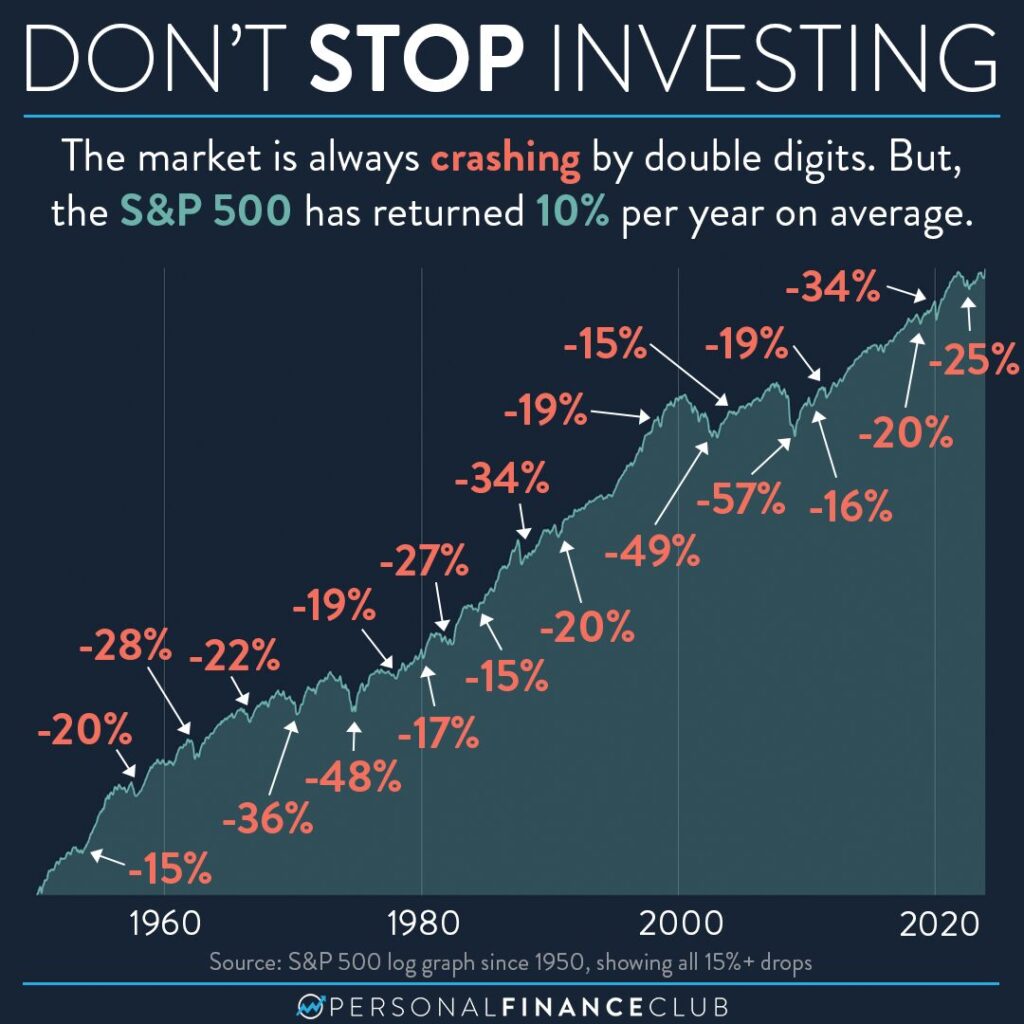
- Historical Performance: Over extended periods, the S&P 500 has demonstrated remarkable resilience and consistent growth, averaging around 10-12% annual returns before inflation over several decades. While past performance is no guarantee of future results, its long-term trajectory makes it a compelling option for wealth accumulation.
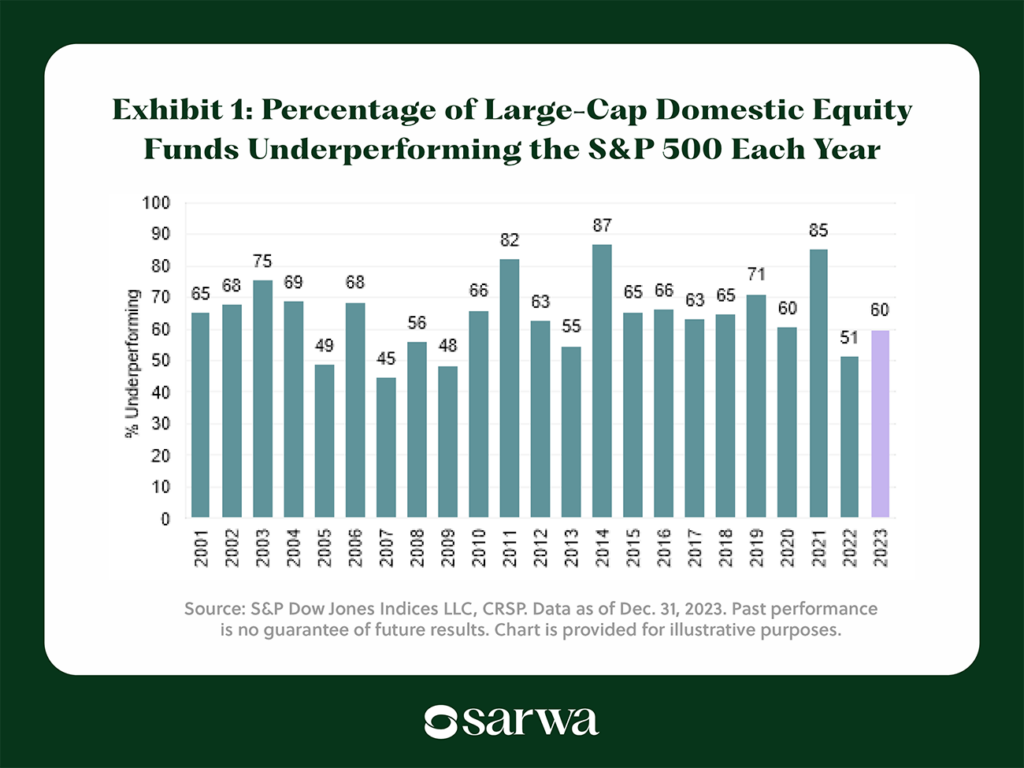
- Simplicity and Low Cost: Investing in an S&P 500 index fund or ETF offers a straightforward approach to market exposure. These passively managed funds aim simply to replicate the index’s performance, which typically translates to significantly lower expense ratios (annual fees) compared to actively managed funds that employ portfolio managers to pick stocks.
- Exposure to Economic Growth: As the S&P 500 is composed of leading U.S. companies, investing in it means you are effectively investing in the growth and innovation of the American economy.
You Can’t “Directly” Buy the Index
It’s crucial to reiterate that the S&P 500 is an index, not a tangible asset you can purchase directly. It’s a calculation, a benchmark. Therefore, when people talk about “buying the S&P 500,” they are referring to investing in financial products specifically designed to mimic its performance by holding the same stocks, in roughly the same proportions, as the index itself. These products are typically Exchange-Traded Funds (ETFs) and Index Mutual Funds.
Primary Investment Vehicles for S&P 500 Exposure
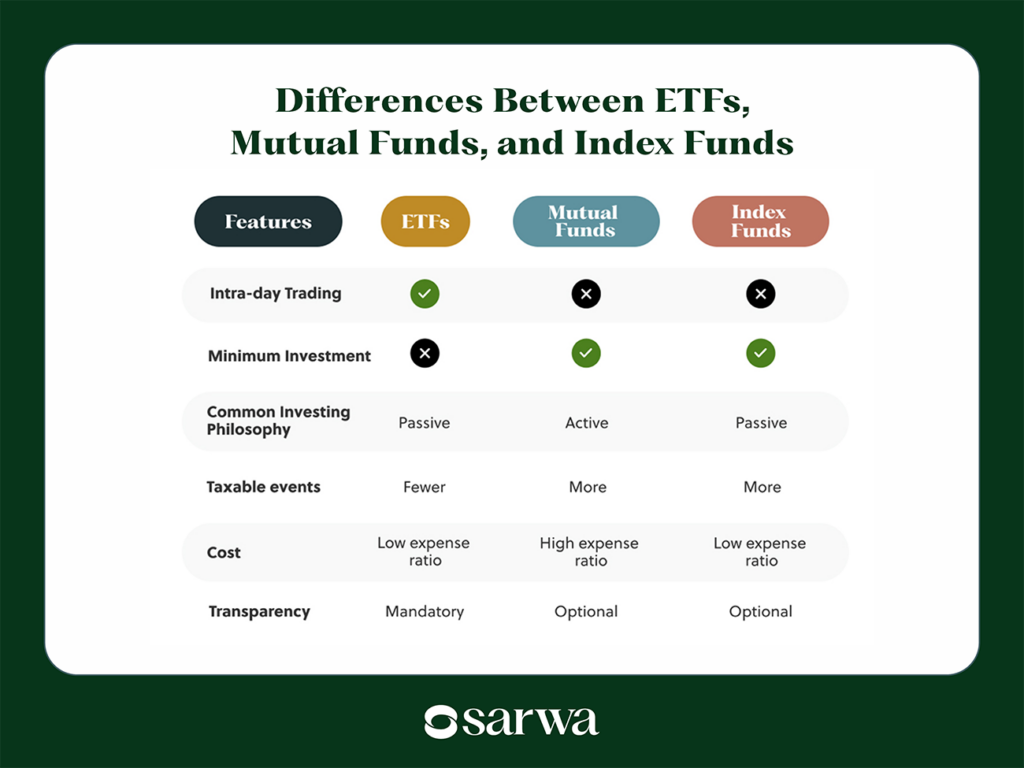
To gain exposure to the S&P 500, investors primarily turn to two types of funds: Exchange-Traded Funds (ETFs) and Index Mutual Funds. While both aim to track the index, they have distinct characteristics that suit different investor preferences and strategies.
Exchange-Traded Funds (ETFs)
ETFs are investment funds that hold assets such as stocks, commodities, or bonds, and trade on stock exchanges like regular stocks. S&P 500 ETFs hold the underlying 500 stocks (or a representative sample) and are designed to mirror the index’s performance.
- Key Benefits:
- Liquidity: ETFs can be bought and sold throughout the trading day at market prices, offering flexibility that mutual funds do not.
- Low Expense Ratios: Most S&P 500 ETFs boast incredibly low expense ratios, often below 0.10% annually, meaning more of your money stays invested.
- Transparency: Their holdings are publicly disclosed daily, so you always know what the fund owns.
- Diversification: Instant diversification across the S&P 500 companies with a single purchase.
- Examples: Some of the most popular S&P 500 ETFs include SPDR S&P 500 ETF Trust (SPY), iShares Core S&P 500 (IVV), and Vanguard S&P 500 ETF (VOO). These are highly liquid and widely accessible.
- How to Buy: ETFs are purchased through a brokerage account, just like individual stocks. You’ll specify the ticker symbol and the number of shares you wish to buy.
Index Mutual Funds
Index mutual funds are professionally managed funds that pool money from many investors to purchase a portfolio of securities designed to track a specific index, such as the S&P 500. Unlike ETFs, mutual funds are typically bought and sold once per day, after the market closes, at their Net Asset Value (NAV).
- Key Benefits:
- Automatic Rebalancing: Fund managers automatically adjust holdings to ensure the fund accurately tracks the index, saving you the hassle.
- Convenience for Regular Contributions: Ideal for investors who want to invest a fixed amount regularly (e.g., monthly contributions) without worrying about daily price fluctuations. Many offer automatic investment plans.
- Low Expense Ratios: Similar to ETFs, S&P 500 index mutual funds also have very low expense ratios, though sometimes slightly higher than their ETF counterparts.
- Examples: Prominent S&P 500 index mutual funds include Fidelity 500 Index Fund (FXAIX) and Vanguard 500 Index Fund Admiral Shares (VFIAX).
- How to Buy: Index mutual funds can be purchased directly from the fund company (e.g., Vanguard, Fidelity) or through a brokerage account that offers them. They usually require an initial minimum investment, which can range from a few hundred to a few thousand dollars.
Futures Contracts and Options (For Sophisticated Investors)
While ETFs and index mutual funds are the primary and recommended routes for retail investors, it’s worth noting that highly sophisticated investors or institutions might use S&P 500 futures contracts or options.
- Futures Contracts: These are agreements to buy or sell the value of the S&P 500 at a predetermined price on a future date. They involve significant leverage and are used for hedging or speculative purposes, carrying substantial risk.
- Options: S&P 500 options give the holder the right, but not the obligation, to buy or sell the index’s value at a specific price by a certain date. These are complex financial instruments with high risk and are not suitable for general index investing.
These advanced instruments are typically outside the scope of “how to purchase the S&P 500 index” for the average long-term investor seeking broad market exposure.
Step-by-Step Guide to Investing in the S&P 500
Investing in the S&P 500 via ETFs or index mutual funds is a straightforward process once you understand the steps involved.
Step 1: Open a Brokerage Account
The first prerequisite for purchasing S&P 500 tracking products is a brokerage account. This account acts as your gateway to the stock market.
- Types of Accounts:
- Individual/Joint Taxable Account: For personal investments where capital gains and dividends are typically taxed annually.
- Retirement Accounts: Such as an Individual Retirement Account (IRA) or Roth IRA, offering significant tax advantages. You can also invest in S&P 500 funds within a 401(k) or 403(b) if your employer’s plan offers them.
- Choosing a Broker: Consider factors like:
- Fees: Many brokers now offer commission-free trading for stocks and ETFs. Check for fees on mutual funds, account maintenance, or inactivity.
- Platform and Tools: Look for user-friendly interfaces, research tools, and educational resources.
- Customer Service: Essential for when you have questions or encounter issues.
- Examples: Popular brokers include Fidelity, Vanguard, Charles Schwab, E*TRADE, and Merrill Edge. Online-only platforms like Robinhood also offer commission-free ETF trading.
Step 2: Fund Your Account
Once your brokerage account is open, you’ll need to transfer money into it. Common methods include:
- Electronic Funds Transfer (ACH): Linking your bank account allows for easy transfers, though it may take a few business days for funds to settle.
- Wire Transfer: Faster but often incurs fees.
- Check Deposit: Slower processing time.
- Rollover: If moving funds from an old retirement account.
Be aware of any minimum initial deposit requirements your chosen broker or specific mutual fund might have.
Step 3: Choose Your Investment Vehicle (ETF vs. Mutual Fund)
Decide whether an S&P 500 ETF or an S&P 500 index mutual fund aligns better with your investing style and goals.
- Consider ETFs if: You prefer the flexibility of trading throughout the day, want potentially lower expense ratios, or aim to buy fractional shares (if your broker offers them).
- Consider Index Mutual Funds if: You prefer setting up automatic, regular contributions (dollar-cost averaging) without managing individual trades, appreciate automatic rebalancing, or prefer a “set it and forget it” approach for long-term investing.
- Minimum Investments: ETFs typically allow you to buy as little as one share, while many mutual funds have initial minimums, sometimes $1,000 or more.
Step 4: Place Your Order
The actual purchase process is usually straightforward through your broker’s online platform or mobile app.
- For ETFs: Search for the ETF by its ticker symbol (e.g., VOO, SPY). Choose “Buy,” specify the number of shares, and select your order type (e.g., “Market Order” for immediate execution at the current market price, or “Limit Order” to specify a maximum price you’re willing to pay).
- For Index Mutual Funds: Search for the fund by its ticker symbol (e.g., FXAIX, VFIAX). You’ll typically specify the dollar amount you wish to invest, and the order will execute at the fund’s NAV at the end of the trading day.
Step 5: Monitor and Maintain
Once invested, regular monitoring is generally not required for passively managed index funds, but there are a few aspects to keep in mind:
- Dividend Reinvestment: Consider reinvesting dividends back into the fund to compound your returns. Most brokers offer this as an option.
- Dollar-Cost Averaging: Continue to invest a fixed amount regularly, regardless of market fluctuations. This strategy can reduce risk by averaging out your purchase price over time.
- Portfolio Rebalancing (Less Critical): For a pure S&P 500 investment, rebalancing isn’t necessary as the fund itself handles it. However, if the S&P 500 is just one component of a broader portfolio (e.g., with international stocks and bonds), you might periodically adjust allocations to maintain your target asset mix.
Important Considerations Before You Invest
While investing in the S&P 500 is often recommended for its simplicity and historical returns, it’s not without its nuances. A thoughtful approach involves considering various factors that can impact your investment’s performance and suitability.
Risk vs. Reward
No investment is entirely risk-free, and the S&P 500 is no exception.
- Market Risk: The value of your investment will fluctuate with the broader market. There will be periods of decline, sometimes significant ones (bear markets), as well as periods of growth.
- Long-Term Perspective: The S&P 500’s historical resilience is observed over decades, not months or even a few years. Investors should be prepared for volatility and commit to a long-term horizon (5-10+ years) to ride out downturns and benefit from compound growth.
- No Guarantees: Past performance is not indicative of future results. Economic conditions, global events, and geopolitical factors can all influence market performance.
Costs and Fees
Even with low-cost index funds, understanding all associated expenses is crucial, as they can erode your returns over time.
- Expense Ratios: This is the most critical fee for index funds and ETFs. It’s an annual percentage of your investment that goes to the fund manager. For S&P 500 index products, aim for expense ratios below 0.10% (e.g., 0.03% to 0.09%).
- Trading Commissions: While most brokers offer commission-free ETF trading, some may still charge commissions for certain mutual funds, especially those not offered by the brokerage itself.
- Advisory Fees: If you work with a financial advisor, they will charge a fee for their services, typically a percentage of assets under management.
Tax Implications
The type of account you use to hold your S&P 500 investment significantly impacts its tax treatment.
- Tax-Advantaged Accounts (IRAs, 401(k)s): Investments within these accounts grow tax-deferred or tax-free (in the case of a Roth IRA), meaning you don’t pay taxes on dividends or capital gains until withdrawal in retirement (or not at all for Roth). This allows for greater compounding.
- Taxable Brokerage Accounts: You’ll owe taxes annually on dividends and realized capital gains (when you sell shares for a profit). Capital gains are taxed at different rates depending on how long you held the investment (short-term vs. long-term).
Diversification Beyond the S&P 500
While the S&P 500 itself offers excellent diversification within U.S. large-cap equities, it’s not a complete portfolio.
- Geographic and Size Diversification: A truly diversified portfolio might also include international stocks (developed and emerging markets) and U.S. small-cap and mid-cap stocks.
- Asset Class Diversification: Consider adding other asset classes like bonds, which can help reduce overall portfolio volatility, especially as you approach retirement. Real estate or alternative investments can also play a role depending on your financial situation and risk tolerance.
- Asset Allocation: Determine an asset allocation strategy (e.g., 60% stocks, 40% bonds) that aligns with your age, risk tolerance, and financial goals. The S&P 500 can be a core component of the equity portion.
FAQs and Common Misconceptions
Addressing some frequently asked questions can help clarify common doubts about investing in the S&P 500.
Is the S&P 500 a Safe Investment?
No investment is “safe” in the sense of being guaranteed not to lose money. The S&P 500 is subject to market fluctuations, and its value can go down. However, when viewed over long periods (decades), it has historically been one of the most reliable wealth-building tools, demonstrating an ability to recover from downturns and achieve consistent growth. For long-term investors, it’s considered a relatively stable and prudent investment.
How Much Money Do I Need to Start?
The barrier to entry for S&P 500 investing has significantly lowered.
- ETFs: You can start with the price of a single share, which for popular S&P 500 ETFs like VOO or SPY, might be a few hundred dollars. Many brokers now also offer fractional share investing, allowing you to buy even a portion of a share for as little as $1.
- Index Mutual Funds: These often have higher initial minimums, typically ranging from $500 to $3,000, depending on the fund and brokerage.
Should I Invest All My Money At Once?
This is a classic debate: lump sum investing versus dollar-cost averaging.
- Lump Sum Investing: Statistically, investing a lump sum all at once tends to outperform dollar-cost averaging over the very long term, particularly in rising markets, as more money is invested sooner.
- Dollar-Cost Averaging (DCA): Involves investing a fixed amount of money at regular intervals (e.g., $100 every month). DCA helps mitigate risk by averaging out your purchase price, preventing you from investing all your money at a market peak. It’s also an excellent strategy for those who receive regular income and want to invest consistently.
The best approach often depends on your personal comfort with market timing and your cash flow situation.
Investing in the S&P 500 Index is an accessible and powerful strategy for long-term wealth creation. By understanding that you’re investing in products like ETFs and index mutual funds that track the index, rather than the index directly, you can confidently navigate the investment landscape. With a straightforward process of opening an account, funding it, choosing the right vehicle, and maintaining a long-term perspective, the S&P 500 can become a cornerstone of your financial future. Remember to always consider your personal financial situation, risk tolerance, and consult with a qualified financial advisor if you need personalized guidance.
aViewFromTheCave is a participant in the Amazon Services LLC Associates Program, an affiliate advertising program designed to provide a means for sites to earn advertising fees by advertising and linking to Amazon.com. Amazon, the Amazon logo, AmazonSupply, and the AmazonSupply logo are trademarks of Amazon.com, Inc. or its affiliates. As an Amazon Associate we earn affiliate commissions from qualifying purchases.