
In an increasingly complex financial landscape, the ability to effectively manage one’s money is not merely a desirable skill but an essential foundation for stability, growth, and achieving personal aspirations. A budget, far from being a restrictive financial straitjacket, is in fact a powerful compass, guiding your financial decisions and illuminating the path towards your goals. It is a strategic blueprint that transforms abstract financial objectives into actionable steps, providing clarity, control, and ultimately, peace of mind. Without a coherent budget, individuals and businesses alike often find themselves adrift, reacting to financial pressures rather than proactively shaping their financial future. This comprehensive guide will demystify the budgeting process, offering a clear, actionable framework to help you plan, implement, and maintain a budget that genuinely serves your financial well-being.
The Indispensable Role of Budgeting in Financial Well-being
Budgeting is fundamentally about understanding where your money comes from and where it goes. It’s the cornerstone of personal finance, empowering you to make informed choices that align with your values and long-term objectives. Far from a tedious chore, establishing and adhering to a budget is an act of self-care and financial empowerment.
Gaining Clarity and Control Over Your Finances
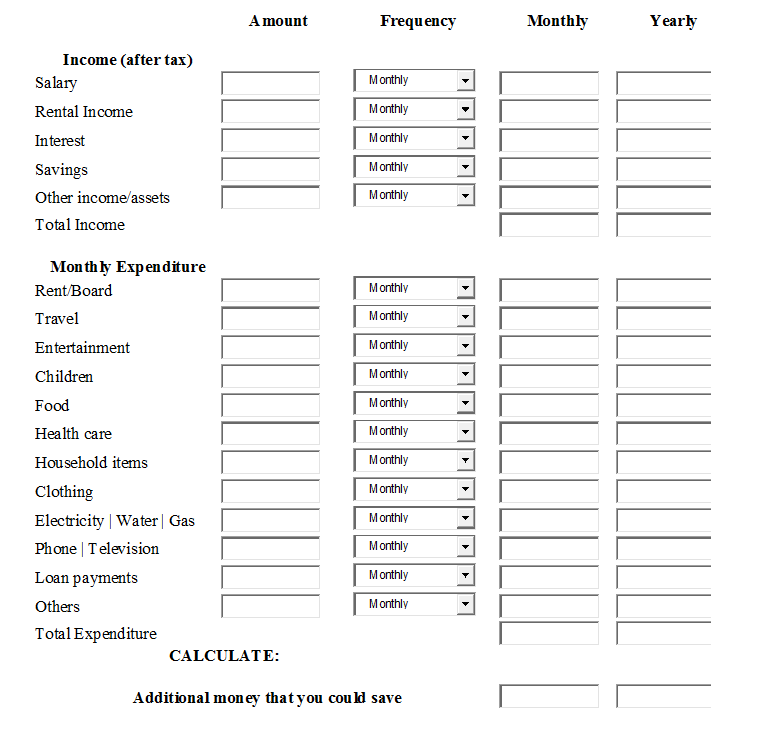
One of the most immediate benefits of budgeting is the profound clarity it provides. Many people operate with a vague understanding of their income and expenses, leading to constant surprise or anxiety when bills arrive or unexpected costs arise. A budget brings every dollar into focus. By categorizing income and outgoings, you gain an unparalleled insight into your spending habits, identifying areas of strength and potential weakness. This detailed overview is the first step towards taking proactive control, shifting from a reactive posture to a strategic one. It replaces guesswork with data, allowing you to make conscious decisions about how your money is allocated, rather than letting it simply dissipate. This control reduces stress, fosters a sense of security, and enables more confident financial decision-making.
Achieving Short-term and Long-term Financial Goals
Every financial goal, whether it’s saving for a down payment, paying off debt, funding a child’s education, or building a retirement nest egg, hinges on a well-structured budget. A budget transforms nebulous aspirations into tangible targets by allocating specific amounts of money towards them. Without a budget, saving for a holiday or an emergency fund often becomes an afterthought, prone to being siphoned off by discretionary spending. A budget, however, makes these goals non-negotiable line items. It forces you to prioritize and make trade-offs, ensuring that your current spending doesn’t derail your future ambitions. For instance, if your goal is to pay off credit card debt, your budget will clearly show how much extra you can contribute each month, accelerating your journey to becoming debt-free. Similarly, it delineates the contributions required to hit your long-term investment targets, providing a clear roadmap to financial independence.
Building Resilience and Reducing Financial Stress
Life is unpredictable, and financial emergencies are an unfortunate reality. A well-planned budget inherently incorporates provisions for the unexpected, primarily through the creation and maintenance of an emergency fund. By consistently setting aside funds for unforeseen circumstances – job loss, medical emergencies, car repairs – a budget acts as a financial shock absorber. This proactive approach significantly reduces financial stress and anxiety during difficult times, preventing minor setbacks from escalating into major crises. Knowing you have a safety net provides immense psychological comfort, allowing you to navigate life’s challenges with greater confidence and less panic. Moreover, the disciplined habits fostered by budgeting contribute to overall financial resilience, making you better equipped to weather economic downturns or personal financial fluctuations.
Essential Steps to Constructing Your Budget
Building an effective budget doesn’t require complex financial software or an accounting degree; it primarily demands honesty, discipline, and a willingness to understand your own financial behaviors. The process can be broken down into several foundational steps.
Step 1: Calculate Your Net Income
The very first step is to establish exactly how much money you have coming in. Your net income is the total amount of money you receive after taxes, social security, and any other deductions have been taken out. This is your “take-home” pay. If you have multiple income sources (salary, freelance work, rental income, benefits, etc.), sum them all up to get your total monthly net income. It’s crucial to use your net income, as your gross income (before deductions) can give a misleading picture of the actual funds available for spending and saving. For those with irregular income, it’s advisable to take an average of your net income over the past 3-6 months, or to budget conservatively based on your lowest expected income, saving any surplus from higher-income months.
Step 2: Track and Categorize Your Spending
This is often the most revealing and challenging part of budgeting. For at least one month, diligently track every dollar you spend. This can be done using a notebook, a spreadsheet, a budgeting app, or by reviewing bank statements and credit card bills. Categorize these expenses into meaningful groups. Common categories include:
- Fixed Expenses: These are costs that typically stay the same each month and are difficult to change in the short term (e.g., rent/mortgage, loan payments, insurance premiums, subscriptions).
- Variable Expenses: These fluctuate from month to month and often offer opportunities for adjustment (e.g., groceries, utilities, transportation, dining out, entertainment, clothing).
- Savings/Debt Repayment: Contributions to emergency funds, retirement accounts, investment accounts, or extra payments towards debt.
Thorough tracking reveals where your money is actually going versus where you think it’s going. It’s common for people to underestimate spending in discretionary areas like dining out or impulse purchases.
Step 3: Differentiate Between Needs and Wants
Once you have a clear picture of your spending, critically evaluate each expense.
- Needs: These are essential for survival and basic functioning (e.g., housing, utilities, food, essential transportation, healthcare).
- Wants: These are expenses that enhance your quality of life but are not strictly necessary (e.g., dining out, entertainment subscriptions, new gadgets, expensive holidays).
This distinction is vital for making informed decisions. While it’s important to budget for some wants to maintain a balanced life, recognizing them allows you to identify areas where you can cut back if needed, freeing up funds for savings or debt repayment.
Step 4: Create Your Budget Plan
With your income calculated and expenses categorized, you can now construct your budget. The fundamental principle is simple: Income – Expenses = Zero (or a surplus for savings/debt reduction).
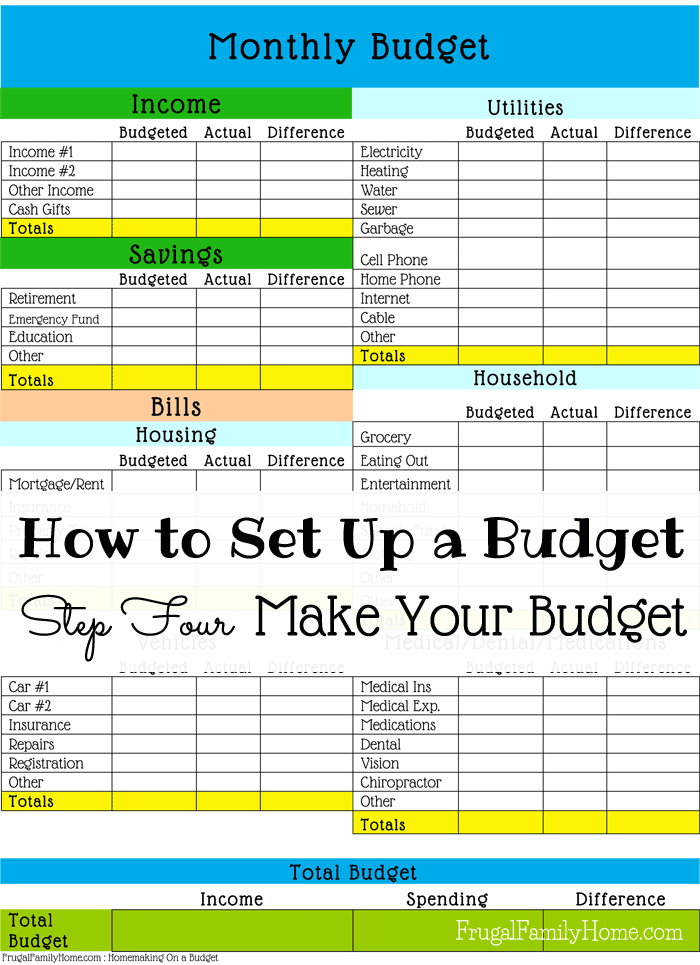
Allocate specific amounts for each spending category based on your tracking and your financial goals. Ensure that your total planned expenses and savings do not exceed your net income. If they do, you’ll need to revisit your “wants” and identify areas to reduce spending. This phase is about making conscious decisions about where every dollar will go before you spend it. This proactive allocation is what gives you control.
Step 5: Implement, Monitor, and Adjust
A budget is a living document, not a static one. Once your plan is in place, you must actively implement it and consistently monitor your spending against your budgeted amounts. Review your budget weekly or bi-weekly to ensure you’re sticking to your limits. Life circumstances change – income might fluctuate, unexpected expenses arise, or your financial goals evolve. Therefore, it’s crucial to be flexible and willing to adjust your budget as needed. If you consistently overspend in one category, either adjust your budget for that category (if feasible and aligns with goals) or find ways to reduce spending there. The goal is progress, not perfection.
Popular Budgeting Methods and Their Application
While the core principles of budgeting remain consistent, various methods offer different frameworks and philosophies, allowing you to choose one that best fits your personality and financial situation.
The 50/30/20 Rule
This widely popular and straightforward method divides your net income into three main categories:
- 50% for Needs: This covers essential expenses like housing, utilities, groceries, transportation, and minimum loan payments.
- 30% for Wants: This includes discretionary spending like dining out, entertainment, hobbies, travel, and non-essential shopping.
- 20% for Savings & Debt Repayment: This portion is dedicated to building an emergency fund, investing for retirement, paying down high-interest debt beyond the minimum, and other financial goals.
The 50/30/20 rule is excellent for beginners due to its simplicity and clear guidelines. It provides a balanced approach, ensuring both financial responsibility and room for enjoyment, making it sustainable for many. If your “needs” significantly exceed 50%, it might indicate a need to either increase income or reassess core living expenses.
Zero-Based Budgeting
Zero-based budgeting demands that you allocate every single dollar of your income to a specific purpose – be it an expense, savings, or debt repayment – until your income minus your allocated expenses equals zero. The idea is that every dollar has a job. This method requires meticulous planning and tracking but offers unparalleled control and clarity over your finances. It prevents “mystery money” from disappearing and ensures that your spending aligns precisely with your priorities. It’s particularly effective for those who want to be highly intentional with their money and can be very powerful for accelerating debt repayment or savings goals. It encourages conscious decision-making for every expense.
The Envelope System
A tactile and highly effective method for managing cash spending, the envelope system involves withdrawing cash for variable expenses and placing it into separate physical envelopes labeled for categories like “Groceries,” “Dining Out,” “Entertainment,” etc. Once an envelope is empty, you stop spending in that category until the next budgeting period. This method provides an immediate, visual, and tangible limit on spending, preventing overspending in common problem areas. While less practical for all expenses in a digital age, it can be extremely effective for categories where people tend to overspend, helping to build discipline and awareness. Modern variations use digital “envelopes” within budgeting apps for those who prefer electronic transactions.
Leveraging Financial Tools for Enhanced Budget Management
In the digital age, a plethora of tools and applications can simplify and streamline the budgeting process, making it more accessible and less daunting. These tools don’t replace the fundamental principles of budgeting but rather empower you to execute them more efficiently.
Budgeting Apps and Software
Numerous apps and software programs are designed to automate and simplify budgeting. Tools like Mint, YNAB (You Need A Budget), Personal Capital, and PocketGuard link directly to your bank accounts and credit cards, automatically categorizing transactions and providing real-time insights into your spending. They often include features for setting goals, tracking net worth, and visualizing your financial progress.
- Mint: Free, comprehensive, good for beginners, provides overviews and alerts.
- YNAB: Paid, highly prescriptive zero-based budgeting philosophy, excellent for gaining complete control.
- Personal Capital: Free, strong focus on investments and net worth tracking, good for those with more complex financial portfolios.
These digital assistants can drastically reduce the manual effort involved in tracking expenses, offering instant feedback and helping users stay accountable to their financial plans.
Spreadsheets and Templates
For those who prefer a more hands-on approach or desire greater customization, a simple spreadsheet (e.g., Google Sheets, Excel) can be an incredibly powerful budgeting tool. Many free templates are available online, or you can create your own from scratch. A spreadsheet allows you to tailor categories, formulas, and visual representations precisely to your needs. It offers flexibility and the satisfaction of building a system that perfectly reflects your financial situation. While requiring more manual data entry or integration with bank statements, it provides a deep understanding of your finances through active engagement.
Online Banking Tools
Most modern banks offer robust online banking platforms that include basic budgeting features. These might include spending categorization, alerts for large transactions, and visual summaries of your monthly income and outgoings. While perhaps not as comprehensive as dedicated budgeting apps, these built-in tools can serve as a convenient starting point for tracking and understanding your spending, especially for those who prefer to keep their financial management within their banking ecosystem. Regularly reviewing your bank and credit card statements online is, in itself, a form of active monitoring that contributes to budget adherence.
Sustaining Your Budget and Adapting to Change
Creating a budget is an achievement, but sustaining it over the long term is where true financial mastery lies. Life is dynamic, and your budget must be too.
Regular Review and Adjustment
A budget should never be a one-and-done task. Schedule regular reviews – monthly, quarterly, or annually – to assess its effectiveness. Are you consistently overspending in certain categories? Have your income or fixed expenses changed? Are your financial goals still the same? Use these reviews to make necessary adjustments. Maybe you’ve paid off a loan, freeing up funds. Or perhaps a new expense has arisen, requiring you to reallocate resources. Flexibility is key; a budget that is too rigid will inevitably fail. Treat your budget as a living document that evolves with your life.
The Importance of Flexibility and Grace
Budgeting requires discipline, but it also demands a measure of self-compassion. There will be months when you deviate from your plan due to unexpected events, impulse purchases, or simply human error. The goal is not perfection, but consistent effort and learning. Instead of viewing these deviations as failures, see them as opportunities to learn and adjust. Don’t abandon your budget entirely; simply pick yourself up, analyze what went wrong, make the necessary adjustments, and recommit. Building a “buffer” in your budget for miscellaneous or unexpected expenses can also prevent minor overspends from derailing your entire plan.

Celebrating Milestones and Staying Motivated
Financial journeys can be long, and staying motivated is crucial. Set small, achievable milestones within your budget and celebrate them when reached. Whether it’s paying off a credit card, reaching a specific savings target, or sticking to your grocery budget for a quarter, acknowledge your progress. These small victories reinforce positive financial behaviors and provide the encouragement needed to continue on your path. Share your goals with a trusted friend or partner for accountability, or join an online community for support and inspiration. Remember that every small decision you make in line with your budget moves you closer to financial freedom and the life you envision.
Planning a budget is more than just crunching numbers; it’s about gaining control, making intentional choices, and building a secure future. By understanding the “why,” meticulously following the steps, exploring different methods, leveraging available tools, and committing to ongoing review and adjustment, you can transform your relationship with money. A well-planned budget is not a restriction; it is the ultimate enabler of your financial dreams.
aViewFromTheCave is a participant in the Amazon Services LLC Associates Program, an affiliate advertising program designed to provide a means for sites to earn advertising fees by advertising and linking to Amazon.com. Amazon, the Amazon logo, AmazonSupply, and the AmazonSupply logo are trademarks of Amazon.com, Inc. or its affiliates. As an Amazon Associate we earn affiliate commissions from qualifying purchases.