
In an increasingly digital world, the convenience and efficiency of online transactions have become indispensable. This extends profoundly to personal and business finance, particularly when it comes to fulfilling one’s tax obligations. Gone are the days when the only reliable method for paying taxes involved mailing a check and hoping it arrived on time. Today, the Internal Revenue Service (IRS) offers a robust suite of online payment options, transforming what was once a cumbersome chore into a streamlined process. For anyone managing their finances, understanding these digital pathways is not just about convenience; it’s about accuracy, security, and smart financial planning.
The shift towards online tax payments reflects a broader trend in financial management: empowering individuals and businesses with greater control and access to their financial responsibilities. This guide delves into the various methods available for paying your federal taxes online, highlighting their benefits, requirements, and best practices. Whether you’re a first-time filer or a seasoned business owner, mastering these digital tools can significantly reduce stress, minimize errors, and ensure timely compliance with tax laws, ultimately safeguarding your financial well-being.
The Evolution of Tax Payments: Embracing Digital Convenience
The digital revolution has profoundly reshaped how we interact with financial institutions and governmental bodies. The IRS, while traditionally associated with stacks of paper forms and complex regulations, has made significant strides in modernizing its processes, particularly concerning tax payments. This evolution from exclusively physical transactions to a spectrum of digital options marks a pivotal improvement for taxpayers nationwide.
From Paper Checks to Instant Transfers
For decades, the standard method for submitting tax payments involved writing a check, placing it in an envelope, and sending it via postal service. This method, while still technically available, was fraught with potential issues: postal delays, lost mail, and the inherent time lag between payment submission and processing. The lack of immediate confirmation could also be a source of anxiety for taxpayers keen on meeting deadlines.
The advent of the internet and secure online banking technologies paved the way for a more efficient paradigm. Today, taxpayers can initiate payments directly from their bank accounts, use credit or debit cards, or even leverage dedicated federal payment systems. These methods offer not just speed but also immediate confirmation, traceability, and a significantly reduced risk of human error or logistical mishaps. This shift is not merely about convenience; it’s about embedding tax compliance within the broader ecosystem of digital financial management, aligning it with how most people manage their other bills and financial obligations.
The Benefits of Online Tax Payments for Taxpayers
The advantages of opting for online tax payments are numerous and impactful, extending beyond mere ease of use:
- Convenience and Accessibility: Payments can be made 24/7 from anywhere with an internet connection. This eliminates the need to visit a post office, purchase stamps, or adhere to banking hours. For busy professionals or individuals in remote areas, this accessibility is invaluable.
- Speed and Timeliness: Online payments are processed much faster than mailed checks, ensuring that payments reach the IRS by the deadline, even if submitted close to the wire. This is particularly crucial for avoiding late payment penalties, which can accrue significantly.
- Accuracy and Reduced Errors: Digital payment systems often include built-in validation checks, prompting users to correct potential errors before submission. The direct transfer of information reduces the chances of miskeyed account numbers or incorrect amounts that can occur with manual entries or physical checks.
- Security: The IRS utilizes advanced encryption and security protocols to protect sensitive financial information. While no online system is entirely impervious, official IRS payment channels are designed with robust cybersecurity measures to safeguard taxpayer data.
- Instant Confirmation and Record-Keeping: Most online payment methods provide immediate confirmation numbers, serving as verifiable proof of payment. This digital trail simplifies record-keeping, allowing taxpayers to easily track their payments and retrieve confirmation details if needed for future audits or inquiries. This contrasts sharply with the uncertainty associated with mailed checks, where proof of delivery can be harder to obtain.
- Environmental Impact: Opting for online payments contributes to a reduction in paper usage, ink, and transportation resources, aligning with broader sustainability efforts.
Embracing online payment methods is a pragmatic step for any taxpayer seeking to simplify their financial responsibilities and ensure compliance with confidence and peace of mind.
Official IRS Direct Payment Methods
The IRS provides several secure and reliable channels specifically designed for taxpayers to submit payments directly. Understanding these official methods is crucial for making an informed choice that best suits your financial situation and payment preferences. Each method offers distinct features, benefits, and considerations regarding fees and eligibility.
IRS Direct Pay: Your Free Bank-to-Bank Option
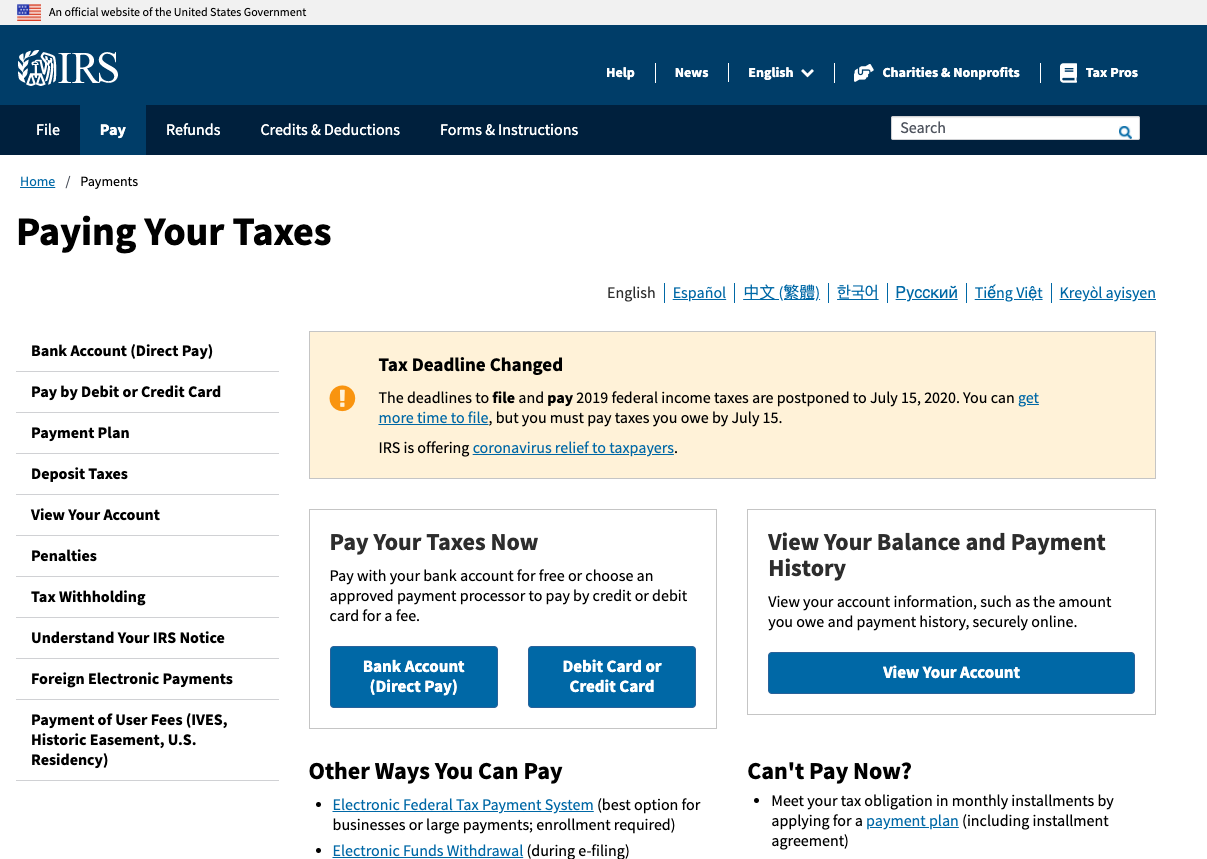
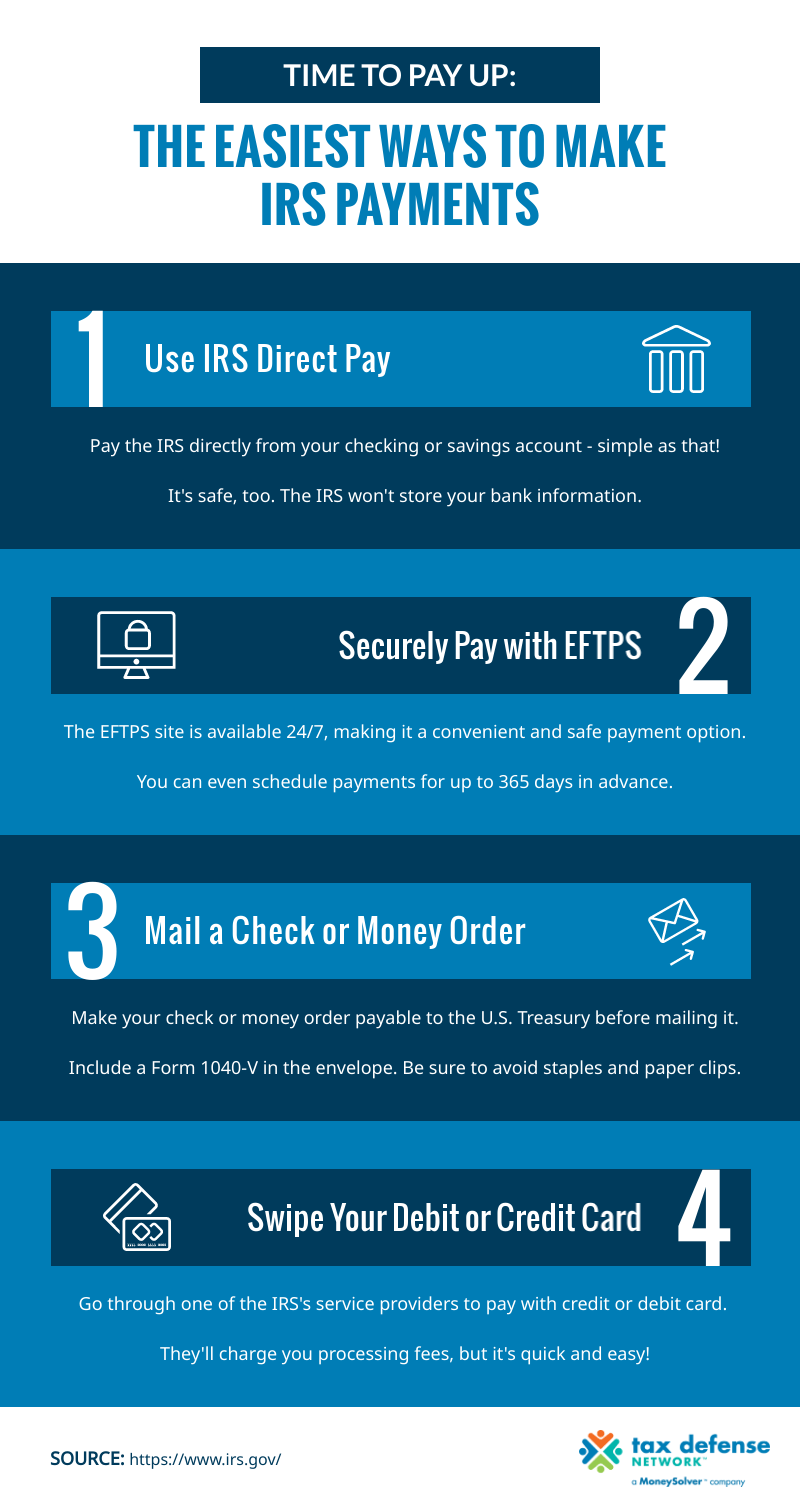
IRS Direct Pay is arguably the most straightforward and cost-effective method for many taxpayers. It allows individuals to pay their federal taxes directly from a checking or savings account, without any processing fees. This service is primarily designed for individual taxpayers making payments for Form 1040 series, estimated taxes, or other common tax types.
To use IRS Direct Pay, you’ll need to provide your bank account and routing numbers, the amount you wish to pay, and select the tax year and type of payment (e.g., balance due, estimated tax, amended return). For security verification, you’ll also need to provide information from a prior tax return (e.g., adjusted gross income from a specific year). Payments can be scheduled up to 365 days in advance, offering excellent flexibility for financial planning. Once a payment is submitted, you receive an immediate confirmation number, which should be saved for your records. This method is highly recommended for its simplicity, zero cost, and direct integration with IRS systems.
Paying with a Debit or Credit Card: Understanding Fees
For taxpayers who prefer the convenience of using a debit or credit card, the IRS facilitates this option through a network of third-party payment processors. While this method offers the flexibility of using cards and potentially earning rewards points (depending on your card’s program), it comes with a crucial caveat: the IRS does not charge a fee for debit or credit card payments, but the third-party processors do. These fees are typically a flat rate for debit card payments and a percentage (ranging from 1.87% to 2.25%) for credit card payments.
To make a payment, you’ll select one of the authorized processors from the IRS website, which will then direct you to their secure payment portal. You’ll need your tax information, card details, and the amount you wish to pay. While the fees might deter some, this option can be attractive for those who prioritize ease, need to make a quick payment, or want to leverage credit card rewards, provided the value of the rewards outweighs the processing fee. Always check the current fees on the IRS website before initiating a payment.
The Electronic Federal Tax Payment System (EFTPS): For Businesses and Frequent Payers
The Electronic Federal Tax Payment System (EFTPS) is a free service provided by the U.S. Department of the Treasury. It’s particularly vital for businesses, payroll service providers, federal agencies, and individual taxpayers who make recurring tax payments, such as estimated taxes or various business taxes (e.g., payroll taxes, corporate income tax). While individuals can use it, EFTPS is most commonly associated with business tax compliance due to its robust features and flexibility.
Registration for EFTPS is required and can take several days, as account information is mailed to you for security purposes. Once registered, users can schedule payments up to 365 days in advance and review their payment history for up to 15 months. EFTPS payments are processed via an Automated Clearing House (ACH) debit from your designated bank account. The system sends an email confirmation for each payment, providing a strong audit trail. For businesses, EFTPS is often a mandatory method for certain tax liabilities, making it an essential tool for effective business financial management. Its ability to schedule payments far in advance and track historical data makes it an invaluable resource for proactive financial planning and compliance.
Leveraging Tax Software and Third-Party Providers
Beyond the direct payment methods offered by the IRS, many taxpayers find additional convenience and integration through commercial tax preparation software and authorized third-party payment processors. These tools often simplify the entire tax filing and payment process, making it a seamless experience from calculation to submission.
Integrated Payments Through Tax Preparation Software
Most popular tax preparation software programs, such as TurboTax, H&R Block Tax Software, and TaxAct, offer integrated payment options. After you’ve completed your tax return within the software and calculated your tax liability, these programs typically provide a prompt to pay any balance due directly.
This integration is a significant advantage because it consolidates the filing and payment steps into a single workflow. When you choose to pay through the software, it often interfaces directly with the IRS’s authorized payment channels (like IRS Direct Pay or an authorized card processor). The software pre-fills the payment amount and other relevant details, minimizing the risk of transcription errors. This method provides an end-to-end solution, from preparing your return to electronically submitting it and paying any taxes owed. It offers a high level of convenience, especially for those who prefer to manage all their tax-related activities within one platform. Ensure that you are using legitimate and updated tax software to maintain security and accuracy.
Utilizing Authorized Payment Processors
Even if you don’t use tax preparation software, or if you prefer a credit/debit card payment, you can directly access authorized third-party payment processors from the IRS website. As mentioned earlier, these processors handle credit and debit card payments to the IRS and charge a small fee for their service.

The IRS maintains an updated list of these authorized processors (e.g., PayUSAtax, Official Payments, ACI Payments, Inc.). When you click on a link from the IRS site, you’ll be redirected to the processor’s secure website where you can input your payment information. These processors act as secure intermediaries, ensuring your financial details are handled safely and the payment is correctly routed to the IRS. Choosing this route provides flexibility for those who want to pay by card but are not using comprehensive tax software. It’s critical to only use processors listed on the official IRS website to avoid scams and ensure the security of your payment. Always verify the URL and look for secure site indicators (like “https://” and a padlock icon) before entering any sensitive information.
Preparing for Your Online Tax Payment
While online tax payments offer unparalleled convenience, proper preparation is key to a smooth and error-free process. Rushing or overlooking essential details can lead to delays, incorrect payments, or even penalties. Proactive steps ensure that your financial responsibilities are met efficiently and accurately.
Essential Information You’ll Need
Before you initiate any online tax payment, gather all necessary information to ensure a seamless transaction. This foundational step prevents interruptions and potential errors:
- Your Tax Return Information: Have your completed tax return readily available, even if you filed electronically. This includes your Social Security Number (SSN) or Individual Taxpayer Identification Number (ITIN), and the exact amount of tax you owe. For businesses, your Employer Identification Number (EIN) will be essential.
- Prior Year’s Adjusted Gross Income (AGI): For security verification when using IRS Direct Pay, you may need your AGI from your most recently filed tax return. This is a common security measure to confirm your identity.
- Bank Account Details (for Direct Pay/EFTPS): If you plan to pay directly from your bank account, you’ll need your bank’s routing number and your checking or savings account number. Ensure these are accurate to avoid failed transactions.
- Credit/Debit Card Information (for Card Payments): If paying by card, have your card number, expiration date, security code (CVV), and the billing address associated with the card.
- Type of Payment: Clearly identify what the payment is for (e.g., current year’s balance due, estimated tax for the next quarter, payment for an amended return, or an IRS notice).
- Tax Period: Confirm the tax year for which you are making the payment. This is especially important for estimated taxes, which are often paid in advance for the upcoming tax year.
Having these details organized upfront will significantly expedite the payment process and reduce the likelihood of input errors.
Key Deadlines and Avoiding Penalties
Understanding and adhering to tax deadlines is paramount in financial management. Missing a payment deadline can result in penalties and interest charges, which can accumulate over time and impact your financial health.
- Annual Tax Day: The primary deadline for filing federal income tax returns and paying any balance due is typically April 15th each year (or the next business day if April 15th falls on a weekend or holiday).
- Estimated Tax Deadlines: For individuals with income not subject to withholding (e.g., self-employed individuals, independent contractors, investors), estimated taxes are paid quarterly. The typical deadlines are April 15, June 15, September 15, and January 15 of the following year. It’s crucial to mark these dates on your calendar and plan your payments accordingly.
- Extensions to File vs. Extensions to Pay: An extension to file your tax return (typically Form 4868) generally grants you an additional six months to submit your paperwork, but it does not extend the time to pay your taxes. If you anticipate owing money, you should still pay an estimated amount by the original deadline to avoid late payment penalties, even if you’re filing for an extension.
The IRS assesses penalties for both failure to file on time and failure to pay on time. Interest also accrues on underpayments. By utilizing online payment methods, especially those that allow scheduled payments, you can proactively manage your tax obligations and significantly mitigate the risk of incurring these additional financial burdens.
Verifying Your Payment: Confirmation and Record-Keeping
Once you’ve submitted an online tax payment, the process isn’t truly complete until you’ve verified its successful transmission and saved your confirmation. This final step is critical for your financial records and provides peace of mind.
- Confirmation Number: All official IRS online payment methods provide an immediate confirmation number. This number is your proof of payment. It’s essential to save this number, either by printing the confirmation page, taking a screenshot, or noting it down in your financial records. For EFTPS, you’ll also receive an email confirmation.
- Bank Statements: Cross-reference your bank statements within a few business days to ensure the payment has been debited correctly. This double-check confirms that the transaction was processed successfully from your financial institution’s side.
- Payment History: For services like EFTPS, you can log in to view your payment history. This provides an ongoing record of your tax payments.
- Organized Records: Maintain a dedicated digital or physical folder for all tax-related documents, including payment confirmations. This organized approach is invaluable for future reference, preparing subsequent tax returns, or responding to any IRS inquiries.
By diligently verifying your payments and maintaining meticulous records, you establish a strong financial audit trail, ensuring that your tax compliance is not only timely but also fully documented.
Navigating Common Challenges and Ensuring Security
While online tax payments offer significant advantages, taxpayers may occasionally encounter challenges. Understanding how to address these issues and, crucially, how to safeguard your financial information online are vital aspects of responsible financial management in the digital age.
Troubleshooting Failed Payments and Error Messages
Despite the robustness of online payment systems, issues can arise. A failed payment or an error message can be frustrating, especially as deadlines loom. Common reasons for payment failures include:
- Incorrect Bank Information: A mistyped routing or account number is a frequent culprit. Double-check these details meticulously before submitting.
- Insufficient Funds: Ensure that the bank account you’re drawing from has sufficient funds to cover the payment. An insufficient funds status will result in a failed transaction and potentially bank fees.
- Exceeded Payment Limits: Some banks or credit card companies have daily transaction limits. If your tax payment exceeds this limit, it may be declined. Contact your financial institution to adjust limits if necessary.
- Security Holds: For larger transactions, your bank or credit card company might flag the payment as suspicious and place a temporary hold. A quick call to your bank can usually resolve this.
- Technical Glitches: While rare, temporary website outages or system errors on the IRS or processor’s side can occur. If you suspect a technical issue, try again after a short period or try a different payment method.
If a payment fails, the most important step is to act promptly. Review the error message carefully for clues. Correct any identified issues and reattempt the payment. If the problem persists, contact your bank or the relevant payment service for assistance. Remember, the deadline remains the same, so addressing the issue quickly is crucial to avoid late payment penalties.
Protecting Your Financial Information Online
The online environment, while convenient, also presents risks of cybercrime. Protecting your sensitive financial information during online tax payments is paramount to preventing identity theft and financial fraud.
- Use Official Channels Only: Always access IRS payment options directly through the official IRS website (IRS.gov). Avoid clicking on links from unsolicited emails, suspicious websites, or pop-up ads, as these could be phishing attempts.
- Secure Connection (HTTPS): Before entering any personal or financial data, ensure the website address begins with “https://” and displays a padlock icon in your browser’s address bar. This indicates a secure, encrypted connection.
- Strong, Unique Passwords: If you create an account for EFTPS or any third-party payment processor, use a strong, unique password that combines letters, numbers, and symbols. Avoid reusing passwords from other online accounts.
- Two-Factor Authentication (2FA): Enable 2FA whenever available. This adds an extra layer of security by requiring a second verification step (e.g., a code sent to your phone) in addition to your password.
- Beware of Phishing Scams: The IRS will never initiate contact with you by email, text message, or social media to request personal or financial information. Any such communication is a scam. Report suspicious communications to the IRS.
- Public Wi-Fi Risks: Avoid making tax payments or accessing sensitive financial accounts while connected to unsecured public Wi-Fi networks. These networks are often vulnerable to eavesdropping. Use a secure, private network, or a Virtual Private Network (VPN) if you must use public Wi-Fi.
- Regular Software Updates: Keep your operating system, web browser, and antivirus software up to date. Software updates often include critical security patches that protect against new vulnerabilities.
By adopting these security practices, you can significantly reduce the risk of your financial information being compromised during your online tax payment transactions.
What to Do If You Can’t Pay Your Full Tax Bill
Sometimes, despite best efforts, a taxpayer may find themselves unable to pay their full tax bill by the deadline. It’s crucial not to ignore this situation, as the IRS has various programs designed to help.
- Pay What You Can: Even if you can’t pay the full amount, pay as much as you can by the deadline. This will reduce the amount subject to penalties and interest.
- Request an Extension to Pay: You can apply for a short-term payment plan (up to 180 days) through the IRS, which may grant you additional time to pay your tax liability in full, though interest and penalties still apply. This can be done online through the IRS’s Online Payment Agreement tool.
- Installment Agreement: If you need more than 180 days, you may be eligible for an installment agreement, which allows you to make monthly payments for up to 72 months. While interest and late-payment penalties still apply, they may be reduced. This can also be set up through the Online Payment Agreement tool.
- Offer in Compromise (OIC): In certain dire financial situations, an OIC allows some taxpayers to resolve their tax liability with the IRS for a lower amount than what they originally owed. An OIC is generally granted when taxpayers are experiencing significant difficulty paying and their ability to pay the full amount is unlikely.
- Consult a Tax Professional: If you’re facing a substantial tax bill you cannot pay, or if your situation is complex, consulting a qualified tax professional (like a CPA or Enrolled Agent) can provide invaluable guidance on the best course of action and help negotiate with the IRS on your behalf.
The key message here is proactive communication. The IRS is generally more willing to work with taxpayers who reach out and make an effort to address their tax obligations, rather than those who ignore them. Understanding these options is a critical part of comprehensive financial planning and responsible tax management.
Paying taxes online to the IRS has become a secure, efficient, and increasingly popular method for fulfilling one’s civic financial responsibilities. By leveraging the official IRS Direct Pay, authorized debit/credit card processors, or the robust EFTPS, individuals and businesses can manage their tax payments with unprecedented ease and accuracy. Furthermore, integrating these payments through tax preparation software streamlines the entire process, while diligent preparation, adherence to deadlines, and meticulous record-keeping ensure a smooth financial journey.
Beyond the mechanics, understanding the underlying financial implications of online payments—from avoiding penalties to securing personal data—is paramount. In an era where financial transactions are predominantly digital, mastering these online tax payment strategies is not just about convenience; it’s a fundamental aspect of sound personal and business finance, contributing to greater control, transparency, and peace of mind in managing your financial well-being.
aViewFromTheCave is a participant in the Amazon Services LLC Associates Program, an affiliate advertising program designed to provide a means for sites to earn advertising fees by advertising and linking to Amazon.com. Amazon, the Amazon logo, AmazonSupply, and the AmazonSupply logo are trademarks of Amazon.com, Inc. or its affiliates. As an Amazon Associate we earn affiliate commissions from qualifying purchases.