
The digital revolution has fundamentally altered the landscape of personal finance, moving the primary point of exchange from physical storefronts to the digital ether. As the global economy continues to shift toward a “cashless” model, understanding how to pay online is no longer a peripheral skill but a core competency of modern financial literacy. Navigating this ecosystem requires more than just knowing where to click; it demands a deep understanding of the tools available, the security protocols that protect your assets, and the strategic management of your digital footprint.

The Evolution of Digital Finance: Understanding Your Payment Options
In the early days of e-commerce, online payments were largely limited to entering credit card numbers into static forms. Today, the “Money” niche has expanded into a complex web of financial tools designed to offer speed, convenience, and varying levels of credit protection. To master online payments, one must first categorize the instruments used to move capital across the web.
Credit and Debit Cards: The Foundation of E-Commerce
Credit and debit cards remain the most ubiquitous tools for online transactions. From a personal finance perspective, the distinction between the two is critical. A debit card draws directly from your liquid assets—the money currently sitting in your checking account. This is excellent for budgeting and avoiding debt, but it offers fewer protections in the event of fraud.
Conversely, credit cards act as a buffer. When you use a credit card, you are spending the issuer’s money, which you agree to pay back later. This provides a significant layer of security; if a transaction is fraudulent, the money hasn’t left your bank account, and you can dispute the charge with the issuer. Furthermore, for those focused on maximizing their financial tools, credit cards often offer rewards programs, cashback, and travel points that, when managed responsibly, provide a net positive return on necessary spending.
Digital Wallets: The Rise of Apple Pay, Google Pay, and PayPal
Digital wallets, or e-wallets, have streamlined the checkout process by acting as a secure repository for your various financial instruments. Platforms like PayPal, Apple Pay, and Google Pay do not necessarily replace your cards; rather, they wrap them in a layer of encryption.
When you pay through a digital wallet, the merchant often never sees your actual card number. Instead, a “token” or a one-time code is generated to authorize the transaction. This reduces the risk of your financial data being compromised during a merchant-side data breach. From a financial management standpoint, these tools also provide centralized dashboards where you can track spending across multiple accounts, making monthly reconciliation much simpler.
Direct Bank Transfers and ACH Payments
For larger transactions or recurring bills—such as rent, utilities, or insurance premiums—direct bank transfers (often via the Automated Clearing House or ACH network) are preferred. These payments move money directly from one bank account to another. While they lack the “points” associated with credit cards, they are often free of the processing fees that some merchants pass on to consumers for card usage. In the context of business finance and high-value personal investing, understanding the clearing times and security of wire transfers vs. ACH is essential for maintaining proper cash flow.
Maximizing Security in the Digital Economy
The primary deterrent for many when considering how to pay online is the perceived risk of cybercrime. However, when the right financial tools and security practices are employed, online payments can be significantly more secure than carrying physical cash. Security in personal finance is about risk mitigation and the strategic use of technology to safeguard your wealth.
Two-Factor Authentication (2FA) and Biometrics
The first line of defense in any online payment system is identity verification. Modern financial tools now almost universally support Two-Factor Authentication (2FA). This requires a second form of verification—usually a code sent to a mobile device or generated by an app—before a transaction can be finalized.
Biometrics have further evolved this space. Using facial recognition or fingerprint scanning on a smartphone to authorize a payment adds a biological layer of security that is nearly impossible to replicate. For the savvy consumer, enabling these features on every financial app is a non-negotiable step in maintaining digital financial integrity.
Virtual Credit Cards: Adding a Layer of Anonymity
One of the most powerful yet underutilized financial tools is the virtual credit card. Services provided by companies like Privacy.com, or even through major issuers like Capital One and Citibank, allow users to generate a “disposable” card number for a specific merchant or a single transaction.
This is a game-changer for managing online payments. You can set a maximum spend limit on a virtual card, ensuring that a subscription service cannot overcharge you, or you can “lock” the card to a specific merchant so that even if the data is stolen, it cannot be used elsewhere. This level of granular control is the hallmark of modern personal finance management.
Identifying Secure Payment Gateways
Before entering any financial data, a user must verify the integrity of the payment gateway. Professional financial sites and e-commerce platforms use SSL (Secure Sockets Layer) encryption, denoted by a padlock icon in the browser address bar and a URL that begins with “https://” rather than “http://”. Furthermore, looking for “Verified by Visa” or “Mastercard ID Check” logos can indicate that the merchant utilizes 3D Secure protocols, which provide an additional verification step with your bank during the checkout process.
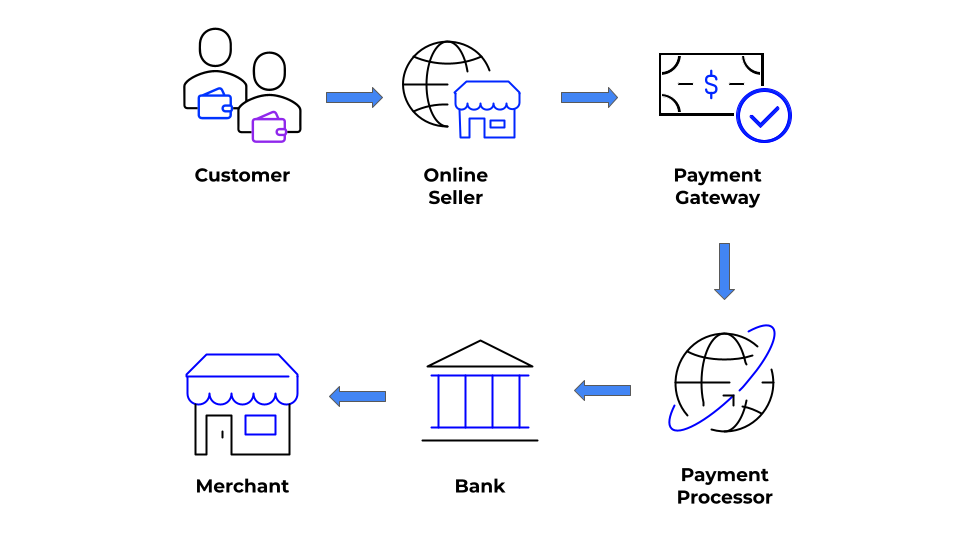
The Logistics of Online Payments: A Step-by-Step Breakdown
For those new to the digital marketplace, the actual process of completing a payment can feel daunting. However, most modern checkout systems follow a standardized logical flow designed to minimize friction while ensuring accuracy.
Navigating the Checkout Process
Once you have selected a product or service, the checkout process typically begins with the “Shopping Cart.” At this stage, it is vital to review the line items for any hidden fees, such as service charges or “convenience fees,” which can impact your overall budget.
After proceeding, you will be asked for shipping and billing information. It is a common misconception that these must be the same; your billing address must match the address on file with your financial institution to pass the AVS (Address Verification System) check, while the shipping address is simply where the item is going. When prompted for payment, you will select your tool—card, wallet, or bank transfer—and enter the required details, including the CVV (Card Verification Value) code, which is a key security feature used to prove that you have the physical card in your possession.
Managing Currency Conversion and Cross-Border Fees
In a globalized economy, paying online often involves international merchants. This introduces the complexity of currency conversion. Many payment processors offer “Dynamic Currency Conversion,” allowing you to see the price in your local currency at the point of sale.
However, from a financial optimization perspective, this is often a poor choice. The exchange rates offered at checkout are usually significantly worse than the mid-market rate. It is generally more cost-effective to pay in the merchant’s local currency and allow your credit card issuer to handle the conversion. Many premium travel credit cards offer “No Foreign Transaction Fees,” which can save you 3% to 5% on every international purchase.
Understanding Transaction Receipts and Documentation
The “payment” isn’t finished when you click the final button. Proper financial management requires a digital paper trail. Always save a PDF copy of the confirmation page and ensure you receive an email receipt. These documents are your primary evidence in case of a shipping dispute, a defective product, or an unauthorized charge. Integrating these receipts into a personal finance app or a dedicated “Tax/Finance” folder in your email allows for seamless tracking and helps in auditing your monthly expenses.
Future-Proofing Your Personal Finance: Emerging Trends
The world of online payments is not static. As technology evolves, new methods of value transfer are emerging that challenge traditional banking models and offer new ways to manage liquidity.
Buy Now, Pay Later (BNPL): Balancing Convenience and Debt
Services like Klarna, Afterpay, and Affirm have exploded in popularity. These tools allow consumers to split a purchase into four or more interest-free installments. While this can be a powerful tool for managing cash flow—allowing you to keep more money in your high-yield savings account for longer—it also carries risks. BNPL can encourage overspending by masking the true cost of an item. For those focused on long-term financial health, BNPL should be used strategically for necessary large purchases, rather than as a way to fund a lifestyle beyond one’s means.
Cryptocurrency and the Decentralized Payment Frontier
While still volatile, cryptocurrency is increasingly being accepted as a legitimate form of online payment. Using a digital wallet to send Bitcoin or Stablecoins (like USDC) directly to a merchant bypasses traditional banking intermediaries. This can result in lower fees for international transfers and near-instant settlement. However, consumers must be aware that crypto payments are typically irreversible. Unlike credit cards, there is no “chargeback” mechanism in the world of decentralized finance (DeFi), making merchant trust paramount.
Peer-to-Peer (P2P) Apps for Service-Based Payments
Apps like Venmo, Zelle, and Cash App have bridged the gap between personal and business finance. While originally intended for splitting dinner bills, they are now frequently used to pay independent contractors, landlords, and small businesses. When using these for online payments, it is vital to understand the “Purchase Protection” policies. For example, Venmo offers a “Goods and Services” toggle that provides protection for a small fee; using the “Friends and Family” option for a commercial transaction leaves the buyer with no recourse if the seller fails to deliver.
Optimizing Online Payments for Better Financial Health
Mastering how to pay online is ultimately about leveraging these tools to improve your overall financial position. It is the shift from being a passive consumer to an active manager of your capital.
Tracking Automated Subscriptions
One of the biggest “leaks” in modern personal finance is the “subscription trap.” Many online payments are recurring. Without a dedicated strategy to track these—using tools like Rocket Money or simple spreadsheet auditing—users can lose hundreds of dollars a year on services they no longer use. Periodically reviewing your “Pre-approved Payments” in PayPal or the “Subscriptions” tab in your Apple/Google account is a high-ROI activity for your financial health.

Leveraging Rewards and Cashback Programs
Every online payment is an opportunity to earn. By using cashback portals like Rakuten or Honey in conjunction with a high-reward credit card, you can effectively shave 2% to 10% off the price of almost everything you buy online. This is “found money” that can be redirected into investments or emergency funds.
In conclusion, the ability to navigate online payments is a cornerstone of 21st-century finance. By selecting the right tools, prioritizing security, and staying informed on emerging trends, you can ensure that your digital transactions are not only convenient but are also working in favor of your long-term financial goals. Whether you are paying a utility bill via ACH or purchasing a global service with a virtual card, the key is a disciplined, informed approach to the movement of your money.
aViewFromTheCave is a participant in the Amazon Services LLC Associates Program, an affiliate advertising program designed to provide a means for sites to earn advertising fees by advertising and linking to Amazon.com. Amazon, the Amazon logo, AmazonSupply, and the AmazonSupply logo are trademarks of Amazon.com, Inc. or its affiliates. As an Amazon Associate we earn affiliate commissions from qualifying purchases.