
Paying state taxes can often feel like deciphering a complex financial puzzle, yet it’s a fundamental aspect of personal and business finance. For residents and businesses operating in North Carolina, understanding how to fulfill these obligations efficiently and accurately is crucial for financial well-being and legal compliance. This guide is designed to demystify the process of paying your North Carolina state taxes, offering a professional, insightful, and engaging roadmap through the various methods, deadlines, and best practices. Adhering to state tax requirements isn’t just about avoiding penalties; it’s about contributing to the public services that underpin the quality of life and economic infrastructure in the Tar Heel State.

North Carolina’s Department of Revenue (NCDOR) administers the state’s tax laws, collecting various taxes ranging from individual income tax and corporate income tax to sales and use tax, and withholding tax. While the specific forms and calculations can vary, the underlying principles of timely and correct payment remain constant. This article will equip you with the knowledge to approach your NC state tax payments with confidence, ensuring you meet your financial responsibilities without unnecessary stress or financial missteps.
Understanding Your NC Tax Landscape
Before diving into the mechanics of payment, it’s essential to grasp who is typically subject to North Carolina state taxes and what types of taxes are most common. This foundational understanding sets the stage for accurate reporting and payment.
Who Needs to Pay NC State Taxes?
Generally, anyone who earns income, conducts business, or purchases goods and services within North Carolina may have state tax obligations.
- Individuals: Residents of North Carolina are subject to individual income tax on their worldwide income. Non-residents who earn income from NC sources (e.g., wages, business income, rental income from NC property) are also required to pay NC income tax.
- Businesses: Entities operating within North Carolina, including corporations, partnerships, and sole proprietorships, are generally subject to corporate income tax (or pass-through entity tax for partnerships/S-corps), sales and use tax on taxable goods and services, and withholding tax for employees.
- Employers: Businesses with employees in NC are responsible for withholding state income tax from employee wages and remitting it to the NCDOR.
Key Tax Types for North Carolinians
While many taxes exist, the most commonly encountered for individuals and businesses include:
- Individual Income Tax (Form D-400 Series): Applied to most types of income, including wages, salaries, interest, dividends, and capital gains. North Carolina utilizes a flat tax rate, making calculations relatively straightforward once taxable income is determined.
- Corporate Income Tax (Form CD-401 Series): Levied on the net income of corporations operating in the state.
- Sales and Use Tax (Form E-500 Series): A consumption tax collected by sellers on taxable goods and services sold in North Carolina. Use tax applies when a resident purchases taxable goods or services outside NC but uses them within the state, and sales tax was not collected or was less than the NC rate.
- Withholding Tax (Form NC-5 Series): Taxes withheld from employee paychecks by employers and remitted to the state.
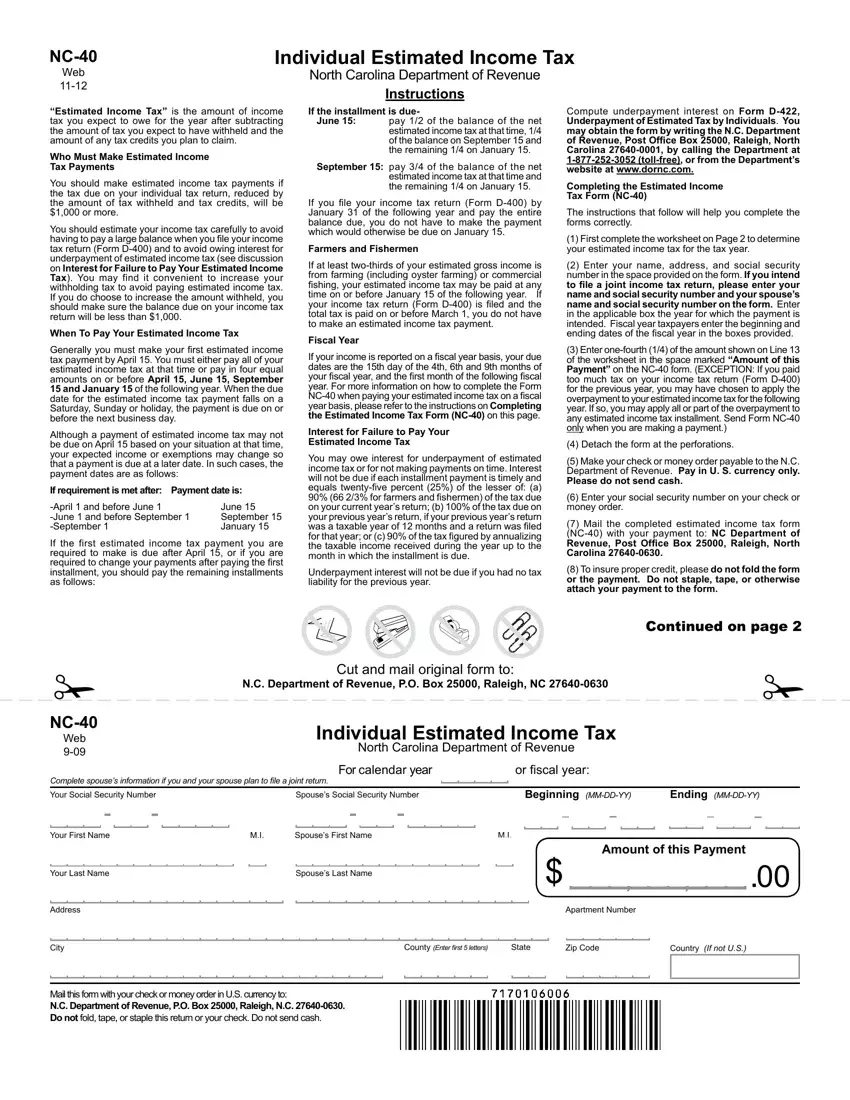
- Estimated Tax (Form NC-40 Series): Required for individuals and businesses who expect to owe at least a certain amount in taxes and do not have sufficient withholding from other sources (e.g., self-employed individuals, those with significant investment income).
The Importance of Timely Compliance
Beyond the legal mandate, timely and accurate tax payment is a cornerstone of sound financial management. Non-compliance can lead to a cascade of financial penalties, including interest charges on underpayments, late payment penalties, and even late filing penalties. These additional costs can significantly erode personal savings or business profits. Moreover, a history of non-compliance can raise red flags with the NCDOR, potentially leading to audits and increased scrutiny, which consume valuable time and resources. Proactive tax planning and adherence to deadlines are not merely regulatory requirements but essential financial strategies for individuals and businesses alike.
Diverse Methods for Paying Your NC State Taxes
The North Carolina Department of Revenue offers several convenient ways to pay your taxes, catering to various preferences and technological capabilities. Choosing the right method can streamline your financial responsibilities and ensure your payments are recorded accurately.
Seamless Online Payment Options
For many, online payment is the quickest and most efficient method. The NCDOR provides secure portals for various tax types.
- NCDOR Website (eServices): The official NCDOR website is the primary hub for online payments. Taxpayers can pay individual income tax, estimated tax, sales and use tax, withholding tax, and corporate income tax directly through the NCDOR’s eServices portal. You’ll typically need your Social Security Number (SSN) or Employer Identification Number (EIN), filing status, and specific tax year information. Payments can usually be made via electronic funds withdrawal (EFW) directly from your bank account or by credit/debit card (often with a convenience fee charged by a third-party processor).
- Third-Party Tax Software: If you use tax preparation software like TurboTax, H&R Block, or tax professional software, you can often elect to pay your NC state taxes directly through the software when you e-file your return. This method integrates payment seamlessly with your filing process, using EFW.
Traditional Mail-In Payment Procedures
While increasingly less common, paying by mail remains an option, particularly for those who prefer physical records or do not have access to online banking.
- Check or Money Order: Payments can be made via check or money order, payable to the “NC Department of Revenue.” It’s crucial to write your SSN or EIN, the tax year, and the type of tax being paid (e.g., “2023 Form D-400”) directly on the check or money order.
- Payment Vouchers: When mailing a payment, it must always be accompanied by the appropriate payment voucher (e.g., Form D-400V for individual income tax, Form NC-40 for estimated tax). These vouchers ensure your payment is correctly attributed to your account and the specific tax obligation. Without the voucher, processing can be delayed, potentially leading to misapplication or penalties.
- Mailing Address: Ensure you use the correct mailing address for your specific payment type, as specified in the instructions for the relevant tax form or on the NCDOR website. Always mail payments well in advance of the deadline to account for postal delivery times.
Leveraging Electronic Funds Withdrawal (EFW)
EFW is a highly recommended method for making tax payments, especially when e-filing. It involves authorizing the NCDOR to directly debit the payment amount from your designated bank account on a specified date.
- Benefits: EFW eliminates postage costs, ensures timely payment (as long as funds are available), and provides an electronic record of the transaction. It reduces the risk of lost payments in the mail.
- How it Works: When filing electronically (either through the NCDOR website or tax software), you’ll be prompted to enter your bank account and routing numbers. You can schedule the payment for the tax deadline or an earlier date.
- Important Note: Make sure the funds are available in your account on the scheduled withdrawal date to avoid bounced payment fees and potential penalties from the NCDOR.
Special Considerations for Estimated Tax Payments
Many individuals, particularly the self-employed, freelancers, or those with significant investment income not subject to withholding, are required to pay estimated taxes quarterly.
- Form NC-40: North Carolina uses Form NC-40, “Individual Estimated Income Tax,” for these payments.
- Payment Methods: Estimated payments can be made online via the NCDOR eServices, through tax software, or by mail with the appropriate payment voucher (Form NC-40) for each quarter.
- Quarterly Deadlines: Remember the critical quarterly deadlines: April 15, June 15, September 15, and January 15 of the following year. Missing these can result in underpayment penalties.
Critical Deadlines and Navigating Extensions
Meeting deadlines is paramount in tax compliance. Understanding these dates and knowing how to properly request an extension can save you from unnecessary stress and financial penalties.
Unpacking Annual Income Tax Deadlines
The general deadline for filing and paying North Carolina individual income tax is April 15th (or the next business day if April 15th falls on a weekend or holiday) of the year following the tax year. For businesses, corporate income tax and other returns typically have similar deadlines, often aligning with federal due dates. It’s crucial to mark these dates on your calendar and begin your tax preparation well in advance. Procrastination is the enemy of timely tax payments.

Quarterly Estimated Tax Payment Schedule
As mentioned, estimated taxes have their own set of critical deadlines, designed to ensure taxpayers pay their income tax liability throughout the year rather than in a single lump sum.
- April 15: For income earned January 1 to March 31.
- June 15: For income earned April 1 to May 31.
- September 15: For income earned June 1 to August 31.
- January 15 (of the following year): For income earned September 1 to December 31.
Missing these dates can trigger underpayment penalties, even if you ultimately pay all your taxes by the annual April 15th deadline. Regular review of your income and projected tax liability throughout the year is a wise financial habit.
Understanding Tax Extensions: File vs. Pay
If you need more time to file your North Carolina income tax return, you can request an extension.
- Automatic Extension: North Carolina generally grants an automatic six-month extension to file your individual income tax return if you file Form D-410, “Application for Extension for Filing Individual Income Tax Return,” or if you have a valid federal extension. This extends your filing deadline, typically to October 15th.
- Crucial Distinction: Extension to File, Not to Pay: It is vital to understand that an extension to file is not an extension to pay. If you anticipate owing taxes, you must still pay an estimate of your tax liability by the original April 15th deadline. If you do not pay at least 90% of your tax liability by the original due date, you will incur penalties and interest on the unpaid amount, even with an extension to file. This is a common pitfall that taxpayers should actively avoid. Always pay what you estimate you’ll owe by the original deadline.
Essential Preparation and What You’ll Need
Successful tax payment begins with thorough preparation. Having all your necessary information and documents organized beforehand will prevent last-minute scrambling and potential errors.
Gathering Your Financial Information and Account Details
Before you initiate any payment, ensure you have easy access to:
- Social Security Number (SSN) or Employer Identification Number (EIN): These are your primary identifiers for tax purposes.
- Previous Year’s Tax Returns: These can serve as a valuable reference for account numbers, estimated payments made, and income details.
- Bank Account Information: For online payments via EFW, you’ll need your bank account number and routing number.
- Credit/Debit Card Details: If opting for card payment (and accepting the potential convenience fee).
- Confirmation Numbers: If you’ve made previous estimated payments or have a balance forward.
Identifying the Correct North Carolina Tax Forms
The NCDOR requires specific forms for different tax types and payment scenarios. Using the wrong form can delay processing and lead to complications.
- Individual Income Tax: Typically Form D-400 (income tax return) and Form D-400V (payment voucher).
- Estimated Tax: Form NC-40.
- Corporate Income Tax: Form CD-401.
- Sales and Use Tax: Form E-500.
- Extension to File: Form D-410.
Always refer to the NCDOR website or the instructions for your specific tax form to confirm you are using the correct and most up-to-date version.
Ensuring Accurate Record-Keeping
Diligent record-keeping is not just for tax filing; it’s equally important for payment verification and future reference.
- Digital Records: If paying online, save confirmation emails, transaction IDs, and screenshots of payment successful pages.
- Physical Records: If paying by mail, make copies of your check, money order, and payment voucher before mailing. Note the date mailed.
- Bank Statements: Regularly check your bank statements to confirm that electronic payments have been successfully debited from your account.
- Organized Files: Maintain a dedicated system (digital or physical) for all tax-related documents, including payment records, for at least three years, as this is the standard statute of limitations for audits.
Avoiding Penalties and Smart Financial Strategies
Navigating tax payments correctly means not only fulfilling your obligation but also doing so in a way that minimizes extra costs and financial stress. Understanding common pitfalls and employing smart strategies can make a significant difference.
Understanding Penalties for Late Filing and Payment
The NCDOR imposes penalties for both late filing and late payment, which can add up quickly.
- Late Payment Penalty: A penalty of 5% of the unpaid tax is assessed for each month (or fraction thereof) that the tax remains unpaid, up to a maximum of 25% of the unpaid tax. Interest also accrues on underpayments.
- Late Filing Penalty: A penalty of 5% of the net tax due is assessed for each month (or fraction thereof) that a return is late, up to a maximum of 25% of the net tax due. This penalty can be assessed even if you have no tax due.
- Underpayment Penalty: Applies if you don’t pay enough tax throughout the year through withholding or estimated payments. This is calculated on the amount of underpayment for each quarter and can be avoided by paying at least 90% of your current year’s tax liability or 100% of your previous year’s liability (110% if your Adjusted Gross Income exceeds certain thresholds).
These penalties underscore the importance of accurate estimation, timely payments, and prompt filing.
Proactive Strategies to Prevent Underpayment Penalties
For those whose income fluctuates or who are self-employed, accurately estimating quarterly tax payments can be challenging.
- Adjust Withholding: If you are an employee, review your Form NC-4 (Employee’s Withholding Allowance Certificate) periodically and adjust your withholding as needed, especially if you experience significant life changes (marriage, new child, second job) or have substantial non-wage income.
- Annualized Income Method: If your income varies significantly throughout the year, you can use the annualized income method to calculate estimated payments. This allows you to pay estimated tax based on income earned in each period, rather than assuming an even distribution.
- Regular Review: Conduct a mid-year financial review to project your annual income and expenses. This allows you to adjust subsequent estimated payments to meet your liability and avoid penalties.
- Safe Harbor Rules: Aim to pay at least 90% of your current year’s tax liability or 100% of your prior year’s tax liability through withholding and estimated payments (110% for high-income taxpayers). Meeting either of these “safe harbor” rules will generally protect you from underpayment penalties.
When to Seek Professional Financial Guidance
While this guide provides a comprehensive overview, complex financial situations or significant life events can warrant professional assistance.
- Complexity: If you have multiple income streams, own a business, have intricate investments, or have recently moved to/from North Carolina, a tax professional (CPA or Enrolled Agent) can provide invaluable advice.
- Audit Concerns: If you receive a notice from the NCDOR or are facing an audit, professional representation is highly recommended.
- Peace of Mind: For many, the peace of mind that comes from knowing their taxes are handled correctly by an expert is well worth the investment. A professional can help identify eligible deductions, optimize your tax strategy, and ensure full compliance.
Verifying Your Payment and Maintaining Compliance
After making a payment, it’s a good practice to verify its receipt.
- Online Account Access: The NCDOR’s eServices portal often allows taxpayers to view their payment history and confirm that payments have been posted to their account.
- Bank Records: Monitor your bank account for the scheduled electronic withdrawal.
- Confirmation Numbers: Keep any confirmation numbers provided after online payments; these are your proof of transaction.
Staying informed about any changes to North Carolina tax laws and proactively managing your financial records will ensure long-term compliance and help you avoid unnecessary financial burdens. Paying your NC state taxes, while a requirement, can be a smooth and manageable process with the right knowledge and tools.
aViewFromTheCave is a participant in the Amazon Services LLC Associates Program, an affiliate advertising program designed to provide a means for sites to earn advertising fees by advertising and linking to Amazon.com. Amazon, the Amazon logo, AmazonSupply, and the AmazonSupply logo are trademarks of Amazon.com, Inc. or its affiliates. As an Amazon Associate we earn affiliate commissions from qualifying purchases.