
Student loan debt has become a defining financial characteristic of the modern era. With total outstanding debt in the United States surpassing $1.7 trillion, the question of “how to pay my student loans” is no longer just a personal inquiry—it is a critical strategic challenge for millions of professionals. Navigating the complexities of interest rates, repayment plans, and forgiveness programs requires more than just financial discipline; it requires a sophisticated roadmap tailored to your specific economic circumstances.
Whether you are a recent graduate entering the workforce or a seasoned professional looking to clear your balance, understanding the mechanics of debt repayment is the first step toward financial sovereignty. This guide explores the most effective strategies for managing and eliminating student debt, ensuring that your path to a zero balance is both efficient and sustainable.

1. Understanding Your Debt Landscape
Before you can effectively tackle your student loans, you must perform a comprehensive audit of what you owe. Not all debt is created equal, and the strategies used for one type of loan may be detrimental when applied to another.
Federal vs. Private Loans
The first distinction to make is between federal and private loans. Federal loans, funded by the government, come with a suite of protections including income-driven repayment (IDR) plans, deferment, forbearance, and various forgiveness programs like Public Service Loan Forgiveness (PSLF). Private loans, issued by banks or online lenders, typically lack these safety nets. They are often subject to market-based interest rates and have rigid repayment terms. Knowing which type you hold determines your flexibility in times of financial hardship.
Interest Rates and Accrual Mechanics
The “cost” of your debt is determined by the interest rate. It is vital to understand whether your rates are fixed or variable. Fixed rates remain constant throughout the life of the loan, providing predictability. Variable rates can fluctuate based on market conditions, potentially increasing your monthly obligation. Furthermore, understanding “capitalization”—where unpaid interest is added to your principal balance—is crucial. Minimizing interest accrual by making payments during grace periods can save thousands of dollars over the long term.
2. Strategic Repayment Models
Once you have mapped out your debt, the next step is to choose a repayment methodology. There are two primary schools of thought when it comes to accelerating debt payoff: the Debt Avalanche and the Debt Snowball.
The Debt Avalanche Method
For those driven by mathematical efficiency, the Debt Avalanche is the superior strategy. In this model, you list all your loans in order of their interest rates. You make the minimum payments on every loan, but any extra capital is funneled toward the loan with the highest interest rate. Once that loan is paid off, you move to the next highest. This method minimizes the total interest paid over time and shortens the overall repayment period. It requires patience, as the largest or highest-interest loan may take a long time to disappear, but it is the most cost-effective route.
The Debt Snowball Method
The Debt Snowball focuses on psychological momentum rather than pure mathematics. Here, you pay off the smallest balances first, regardless of the interest rate. The “win” of seeing a loan balance hit zero provides a dopamine hit that encourages the borrower to stay the course. As each small loan is eliminated, the cash flow previously dedicated to it is “snowballed” into the next smallest balance. This is particularly effective for individuals who feel overwhelmed by the sheer number of different accounts they are managing.
Income-Driven Repayment (IDR) Plans
For federal loan holders, IDR plans can be a lifeline. These plans cap your monthly payments at a percentage of your discretionary income—sometimes as low as $0 per month if your income is below a certain threshold. While these plans extend the life of the loan (often to 20 or 25 years), the remaining balance is typically forgiven at the end of the term. This is a vital tool for those in lower-earning professions or those prioritizing immediate cash flow over long-term interest savings.
3. Optimization through Refinancing and Consolidation
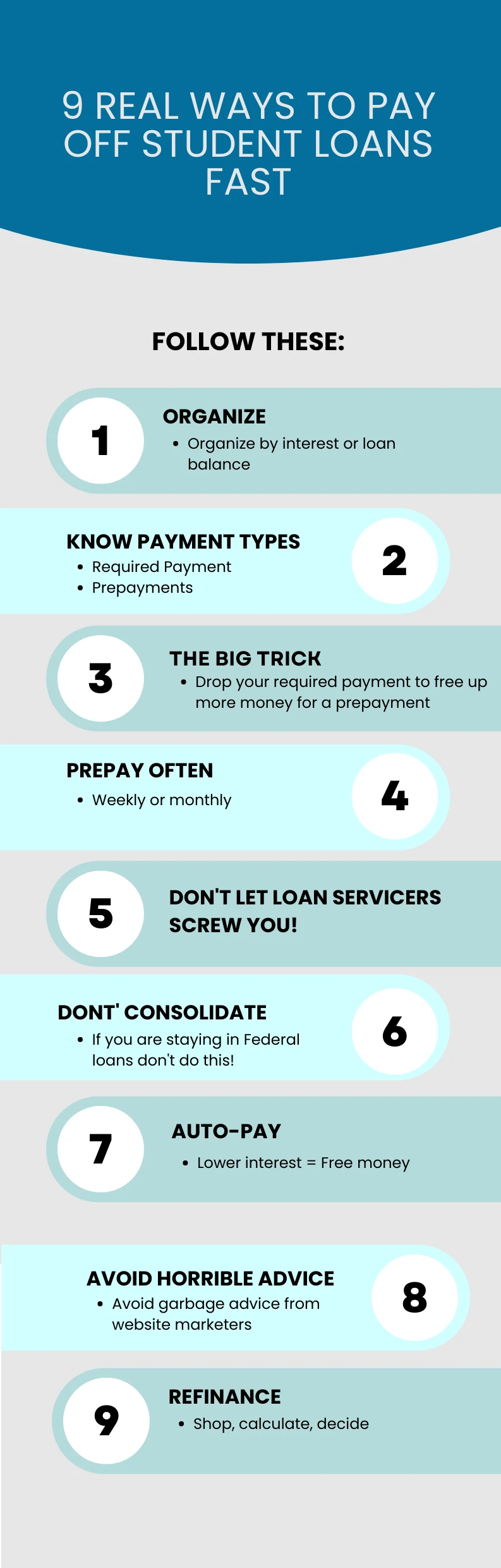
For many borrowers, the original terms of their loans are no longer the most advantageous. As your credit score improves and your income increases, you may have access to financial tools that can lower your costs.
When to Consider Refinancing
Student loan refinancing involves taking out a new loan from a private lender to pay off your existing loans. The primary goal is to secure a lower interest rate. If you have high-interest private loans and your credit profile has improved since graduation, refinancing can save you significant sums. However, a word of caution for federal borrowers: refinancing federal loans into a private loan means permanently losing access to federal protections, such as IDR plans and loan forgiveness. Only refinance federal debt if you are certain you have a stable income and do not need government-backed safety nets.
Consolidation: Pros and Cons
Consolidation is often confused with refinancing, but they are different. Federal Loan Consolidation allows you to combine multiple federal loans into one Direct Consolidation Loan. This simplifies your billing by giving you a single monthly payment. The interest rate on a consolidated loan is the weighted average of the original loans, rounded up to the nearest one-eighth of a percent. While it doesn’t necessarily save you money on interest, it can make you eligible for certain repayment plans and forgiveness options that require a Direct Loan.
Leveraging Employer Benefits and Forgiveness
In a competitive job market, many employers now offer student loan repayment assistance as part of their benefits package. Some companies will match your loan payments up to a certain dollar amount per year. Additionally, programs like Public Service Loan Forgiveness (PSLF) offer total tax-free forgiveness for those working in non-profits or government roles after 120 qualifying payments. Aligning your career path with these programs can be the single most effective way to “pay” your loans without using your own capital.
4. Behavioral Tactics and Financial Discipline
Paying off debt is as much a test of behavior as it is a test of math. Implementing systems to manage your money can prevent burnout and ensure you reach the finish line.
Automating Your Finances
One of the simplest yet most effective ways to stay on track is to set up autopay. Most federal and private lenders offer a 0.25% interest rate discount for borrowers who enroll in automatic payments. Beyond the savings, automation removes the “decision fatigue” associated with monthly budgeting. By treating your loan payment as a non-negotiable fixed cost that leaves your account automatically, you reduce the temptation to spend that money elsewhere.
Managing Windfalls and Side Hustles
To truly accelerate your debt-free date, you must look beyond your primary salary. Financial “windfalls”—such as tax refunds, work bonuses, or inheritance—should be viewed as opportunities to make a dent in your principal balance. Similarly, the rise of the “side hustle” economy provides a pathway to extra income. Dedicating 100% of side-income to your student loans can shave years off your repayment timeline. Because this income isn’t part of your “base” lifestyle, you won’t feel the sting of the extra payments as acutely.
5. Integrating Debt into a Holistic Financial Plan
While “how to pay my student loans” is a priority, it should not happen in a vacuum. Your debt strategy must be balanced against your other long-term financial goals, such as retirement and emergency savings.
Balancing Debt with Investing
A common dilemma is whether to pay down debt or invest in the stock market. A good rule of thumb is to look at the interest rate. If your loan interest rate is 4% and the expected return on a diversified index fund is 7-8%, it may be mathematically wiser to make minimum loan payments while maximizing your investments. However, this depends on your risk tolerance. For some, the peace of mind that comes from being debt-free outweighs the potential 3% gain in the market. At a minimum, always contribute enough to your employer’s 401(k) to receive the full match before putting extra money toward your loans; otherwise, you are leaving “free money” on the table.
Building an Emergency Fund
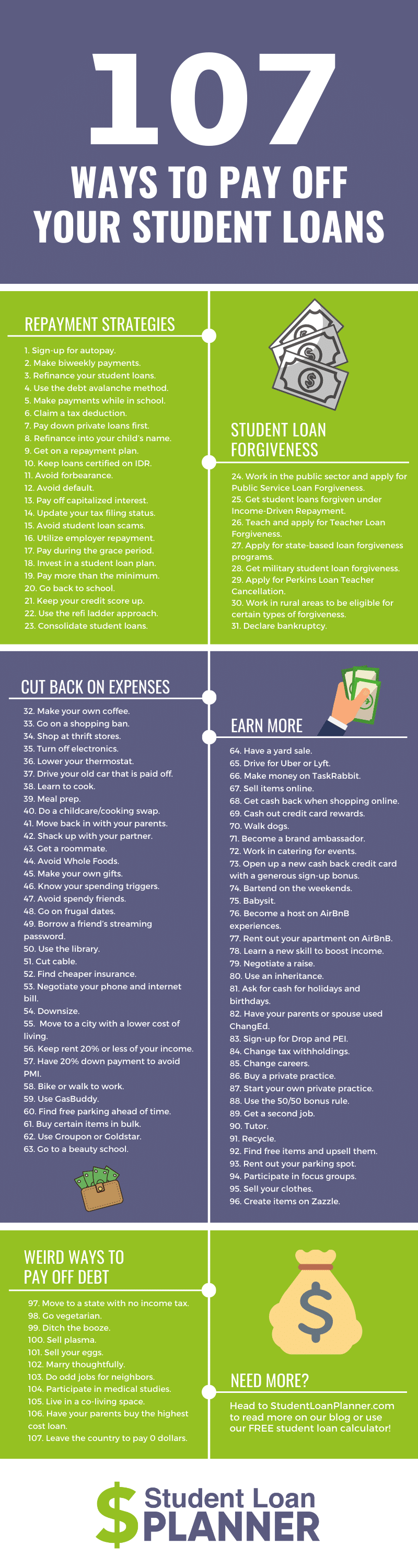
It may seem counterintuitive to keep cash in a savings account earning 4% interest when you have debt at 6% interest, but an emergency fund is your insurance against more expensive debt. Without a cash cushion (typically 3–6 months of expenses), a single car repair or medical bill could force you to use high-interest credit cards, compounding your financial problems. A solid financial foundation requires a balance: protect your present with an emergency fund while attacking your past (the loans) and building your future (investing).
By approaching student loan repayment with a combination of mathematical strategy, institutional knowledge, and behavioral discipline, you can transform a daunting burden into a manageable part of your broader financial success. The journey to a zero balance is a marathon, not a sprint, but with a clear plan, the finish line is well within reach.
aViewFromTheCave is a participant in the Amazon Services LLC Associates Program, an affiliate advertising program designed to provide a means for sites to earn advertising fees by advertising and linking to Amazon.com. Amazon, the Amazon logo, AmazonSupply, and the AmazonSupply logo are trademarks of Amazon.com, Inc. or its affiliates. As an Amazon Associate we earn affiliate commissions from qualifying purchases.