
The transition from traditional paper-based billing to digital payment ecosystems has fundamentally altered the landscape of personal finance management. In an era where financial agility is synonymous with fiscal health, understanding the mechanics of online bill payments is no longer a luxury—it is a core competency. Moving your financial obligations into the digital realm does more than just save on postage; it provides a level of transparency, speed, and organizational control that is impossible to achieve through manual systems. By mastering the various methods of online payment, you can optimize your cash flow, protect your credit score, and build a more resilient financial foundation.
Choosing the Right Digital Payment Channel for Your Budget
The first step in modernizing your financial workflow is identifying which online payment method aligns best with your specific banking habits and liquidity needs. Not all digital payment channels are created equal, and the choice between a bank-led “push” and a vendor-led “pull” can have significant implications for how you track your monthly expenditures.
Direct Vendor Portals (The “Pull” Method)
Most utility companies, insurance providers, and credit card issuers offer dedicated online portals. By creating an account directly with the service provider, you gain access to real-time data regarding your usage and historical billing cycles. This method is often referred to as the “pull” system because you authorize the vendor to withdraw funds from your account. The primary advantage here is the immediacy of the transaction; payments made through vendor portals are usually credited to your account instantly, which is vital if you are paying close to a deadline. Furthermore, these portals often provide granular insights into your spending patterns, such as kilowatt-hour usage for electricity or data consumption for telecommunications.
Online Banking Bill Pay (The “Push” Method)
Most modern financial institutions offer a centralized bill-pay feature within their web or mobile applications. This is the “push” method, where you instruct your bank to send a specific amount of money to a vendor. The benefit of this approach is centralization. Rather than logging into ten different websites to pay ten different bills, you manage your entire financial output from a single dashboard. This provides a holistic view of your ending balance after all obligations are met, which is a cornerstone of effective budgeting. It also minimizes the security risk of sharing your banking credentials across multiple third-party platforms.
Third-Party Payment Apps and Digital Wallets
For those who prioritize mobile-first financial management, third-party apps and digital wallets have become increasingly viable. These services act as intermediaries, often allowing you to consolidate bills and pay them using a variety of funding sources, including linked bank accounts, debit cards, or even accumulated digital balances. While these services offer high levels of convenience and user-friendly interfaces, it is essential to monitor for any “convenience fees” that might be tacked onto the transaction, as these can erode your monthly savings over time.
The Strategic Architecture of a Digital Payment
Paying a bill online is more than just clicking a button; it is a multi-step process that requires attention to detail to ensure accuracy and security. Mastering this process ensures that your funds reach their destination without error, preventing late fees and service interruptions.
Gathering and Verifying Documentation
Before initiating a payment, you must have your most recent statement or digital invoice ready. Key pieces of information include your account number, the billing zip code, and the exact balance due. In the realm of personal finance, precision is paramount. Paying even a few cents less than the statement balance can sometimes trigger automated late fees or interest charges, particularly with high-interest credit card accounts. Always verify that the “Amount Due” matches your expectations based on your previous month’s activity to catch any billing errors before the money leaves your account.
Navigating the Payment Gateway
Once you have accessed your chosen platform, you will be prompted to enter your payment information. You typically have two choices: Electronic Funds Transfer (EFT) using your bank’s routing and account numbers, or a card-based payment using a debit or credit card. From a wealth-building perspective, using a credit card can be advantageous if it offers cash-back rewards or travel points, provided you pay the balance in full to avoid interest. However, if the vendor charges a processing fee for credit cards (often 2-3%), it is mathematically wiser to use an EFT or a debit card to keep those funds in your own pocket.
Confirming and Archiving the Transaction
The process is not complete until you have received a confirmation number. In the digital world, this confirmation number is your legal receipt. It is a best practice to either print this confirmation to a PDF or take a screenshot and save it in an organized folder. Should a technical glitch occur between your bank and the vendor, this documentation is your primary evidence to have late fees waived or to prove that the obligation was met on time.

Optimizing Cash Flow Through Strategic Automation
One of the greatest advantages of online bill payment is the ability to automate your financial life. When handled correctly, automation transforms the chore of bill paying into a passive management system that safeguards your financial reputation and reduces cognitive load.
Categorizing Fixed vs. Variable Expenses
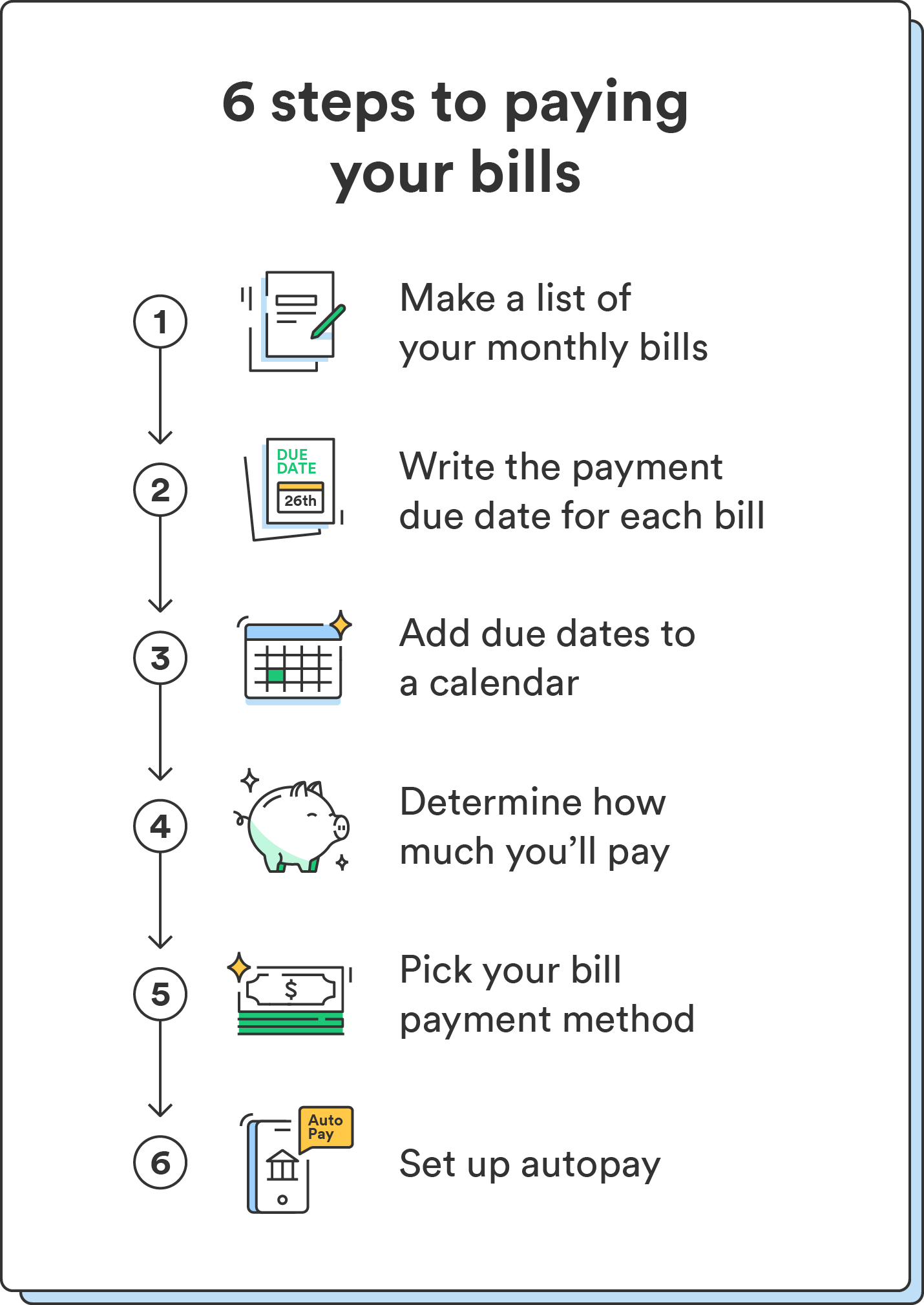
To automate effectively, you must distinguish between fixed expenses (mortgage, car insurance, subscriptions) and variable expenses (electricity, water, credit card balances). Fixed expenses are the easiest to automate because the amount never changes. You can set a recurring payment through your bank or the vendor and virtually forget about it. Variable expenses require more oversight. Many financial experts recommend setting up “alerts” for variable bills rather than full automation, or setting a “cap” on the automated amount to ensure that an unexpectedly high utility bill doesn’t unexpectedly drain your checking account.
The Buffer Strategy for Overdraft Prevention
Automation carries the risk of overdrafts if your account balance is not synchronized with your payment dates. To mitigate this, implement a “buffer strategy.” This involves maintaining a minimum balance in your primary checking account—typically equal to one month’s worth of expenses—that acts as a safety net. Additionally, timing your automated payments to occur two to three days after your primary income deposit ensures that the necessary liquidity is always present, providing a seamless flow of capital from income to obligation.
The Psychology of “Set and Forget”
Automating your bills does more than just save time; it removes the “pain of paying.” By taking the manual effort out of the equation, you are less likely to experience the psychological friction that often leads to procrastination and late payments. This consistency is the bedrock of a high credit score, as payment history is typically the single most significant factor in credit scoring models like FICO.
Security Protocols for Protecting Your Financial Identity
As your financial life moves online, the importance of cybersecurity cannot be overstated. Protecting your bank accounts and personal data is a critical component of modern money management.
Multi-Factor Authentication (MFA)
The first line of defense in online bill pay is Multi-Factor Authentication. This requires not only a password but also a second form of verification, such as a code sent to your smartphone or a biometric scan. You should enable MFA on every financial portal you use. This simple step makes it exponentially more difficult for unauthorized parties to access your funds, even if they manage to obtain your login credentials.
Recognizing Secure Connections and Phishing
Always ensure that the website you are using for payment is secure. Look for the “https://” prefix and the padlock icon in your browser’s address bar. Be particularly wary of “phishing” attempts—emails or text messages that look like they are from your bank or utility company asking you to click a link to pay a bill. These links often lead to fraudulent sites designed to steal your information. The safest practice is to always navigate directly to the official website by typing the address into your browser manually.
Proactive Account Monitoring
Even with robust security measures, you must remain vigilant. Set up “transaction alerts” through your bank that notify you via text or email every time a payment is made or a withdrawal exceeds a certain threshold. This real-time monitoring allows you to spot fraudulent activity or billing errors immediately, rather than discovering them weeks later when you review your monthly statement. In the world of finance, the speed of detection is often the difference between a minor inconvenience and a major loss.
The Long-Term Financial Impact of Digital Proficiency
Mastering online bill payments is an investment in your financial future. Beyond the immediate convenience, it provides the data and the discipline necessary to engage in higher-level financial planning, such as investing and debt reduction.
By utilizing digital history and exportable spreadsheets, you can analyze your spending over months or even years. This data is the fuel for accurate budgeting. It allows you to identify “lifestyle creep” or areas where you can trim expenses to redirect funds toward high-yield savings accounts or retirement portfolios. Furthermore, the reliability of digital payments ensures a pristine credit history, which translates into lower interest rates on future loans, potentially saving you tens of thousands of dollars over the course of your life. In essence, the simple act of paying a bill online is a gateway to a more sophisticated, secure, and prosperous financial life.
aViewFromTheCave is a participant in the Amazon Services LLC Associates Program, an affiliate advertising program designed to provide a means for sites to earn advertising fees by advertising and linking to Amazon.com. Amazon, the Amazon logo, AmazonSupply, and the AmazonSupply logo are trademarks of Amazon.com, Inc. or its affiliates. As an Amazon Associate we earn affiliate commissions from qualifying purchases.