
In an increasingly digitized world, managing personal finances and investments has become more accessible than ever. For those seeking a robust, reliable, and user-friendly platform to grow their wealth, Charles Schwab stands out as a leading choice. With a history spanning over five decades, Schwab has evolved into a financial services giant, offering a comprehensive suite of tools and services ranging from self-directed investing to personalized financial advice, banking, and retirement planning.
Opening an account with Charles Schwab is often the first step for many on their journey toward financial independence, wealth accumulation, or simply smarter money management. Whether you’re a novice investor taking your first steps into the market, a seasoned trader looking for advanced tools, or someone planning for retirement, understanding the process and the breadth of Schwab’s offerings is crucial. This guide will walk you through everything you need to know, from preparing your application to leveraging Schwab’s extensive resources, ensuring a smooth and informed entry into their financial ecosystem.
Understanding Schwab: More Than Just a Brokerage
Before diving into the mechanics of account opening, it’s essential to grasp what Charles Schwab is and why it has become a preferred destination for millions of investors and savers. Schwab isn’t just a brokerage; it’s a full-service financial institution designed to meet a wide spectrum of financial needs.
The Charles Schwab Legacy and Mission
Founded in 1971 by Charles R. Schwab, the company revolutionized the brokerage industry by introducing discount brokerage services, making investing more affordable and accessible to the everyday individual. Over the decades, Schwab has maintained its commitment to client-centricity, technological innovation, and transparent pricing. Its mission remains to champion every client’s goals with passion and integrity, providing the resources and support necessary for them to take control of their financial future. This foundation of trust, accessibility, and client advocacy forms the bedrock of its enduring appeal.
Diverse Account Types to Suit Every Financial Goal
One of Schwab’s significant strengths lies in the sheer variety of account types it offers, catering to different life stages and financial objectives. Understanding these options is key to choosing the right account for your specific needs:
- Brokerage Accounts (Individual & Joint): These are the most common accounts for self-directed investing in stocks, bonds, ETFs, mutual funds, and options. They offer flexibility for short-term and long-term investment strategies.
- Retirement Accounts (IRAs, Roth IRAs, SEP IRAs, SIMPLE IRAs, 401(k)s): Designed for long-term savings with tax advantages, these accounts are critical for retirement planning. Schwab provides various options for both employees and self-employed individuals.
- Education Savings Accounts (529 Plans, Custodial Accounts – UTMA/UGMA): For those planning to fund future education expenses, these accounts offer tax benefits and flexible investment choices.
- Specialty Accounts (Trusts, Estate Accounts): For more complex financial planning, Schwab provides solutions for managing assets held in trusts or estates.
- Schwab Bank Accounts (Checking & Savings): Beyond investing, Schwab offers banking services, including checking accounts with no monthly service fees, unlimited ATM fee rebates worldwide, and high-yield savings accounts.
- Managed Portfolios (Schwab Intelligent Portfolios, Schwab Intelligent Portfolios Premium): For investors who prefer a hands-off approach, Schwab offers automated, algorithm-driven investment management services, some with no advisory fees.
Why Choose Schwab? Key Benefits for Investors
Schwab’s comprehensive offerings are underpinned by several compelling benefits that differentiate it from competitors:
- Low Costs and Commission-Free Trading: Schwab was among the first to eliminate commissions on online trades of U.S.-listed stocks, ETFs, and options, significantly reducing the cost barrier for investors.
- Robust Research and Educational Resources: Clients gain access to proprietary market research, third-party analyses, educational articles, webinars, and tools to help make informed investment decisions.
- Advanced Trading Platforms: From the user-friendly web platform and mobile app to the more sophisticated StreetSmart Edge® desktop platform for active traders, Schwab caters to various trading styles.
- Exceptional Customer Service: Schwab is renowned for its responsive and knowledgeable customer support, available 24/7 via phone, chat, and in-person at branches.
- Security and Trust: As a well-established financial institution, Schwab prioritizes the security of client assets and personal information, offering robust security protocols and the protection of SIPC.
- Integrated Financial Planning: With options for both self-guided tools and access to certified financial advisors, Schwab supports clients in building comprehensive financial plans.
Understanding these foundational aspects of Schwab sets the stage for a more informed and confident account opening experience.
The Step-by-Step Account Opening Process
Opening an account with Charles Schwab is designed to be a straightforward and efficient process, largely facilitated online. However, being prepared with the necessary information and understanding each step can make it even smoother.
Pre-Application Checklist: Gather Your Essentials
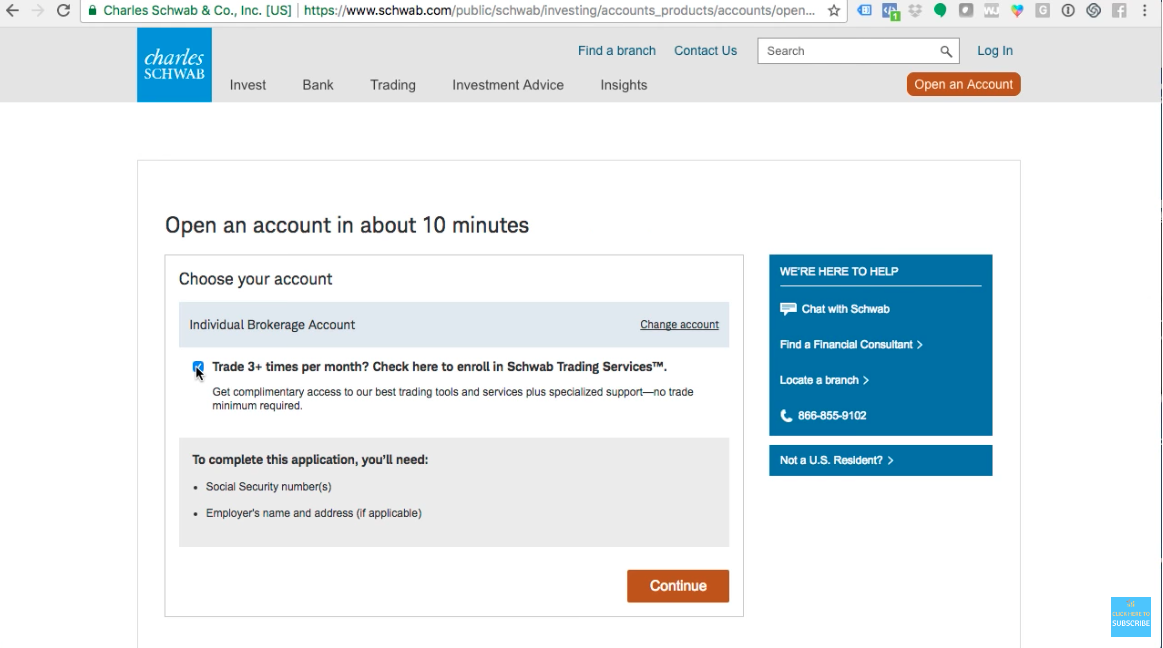
Before you begin the online application, ensure you have the following information and documents readily available. Having these on hand will prevent delays and allow you to complete the application swiftly:
- Personal Information: Your full legal name, date of birth, Social Security Number (SSN) or Taxpayer Identification Number (TIN), current residential address, phone number, and email address. For non-U.S. citizens, additional documentation like a visa or passport might be required.
- Employment Information: Your employer’s name and address, and your occupation.
- Financial Information: Details about your annual income, net worth (excluding primary residence), and investment objectives (e.g., growth, income, speculation). This helps Schwab understand your risk tolerance and suitability for certain investments.
- Bank Account Information: If you plan to fund your account via electronic transfer (ACH), you’ll need your bank account number and routing number.
- Beneficiary Information: If opening a retirement or other specific account, you’ll need the names, dates of birth, and SSNs of your primary and contingent beneficiaries.
For joint accounts, you’ll need similar information for the second account holder. For entity accounts (like trusts or corporate accounts), additional legal documentation will be required.
Navigating the Online Application: A Digital Walkthrough
Schwab’s online application is intuitive and guides you through each section. Here’s a general outline of the steps:
- Choose Your Account Type: Visit the Schwab website (schwab.com) and navigate to the “Open an Account” section. You’ll be prompted to select the type of account you wish to open (e.g., Individual Brokerage, Roth IRA, Joint Brokerage).
- Provide Personal Details: Input all the personal information gathered in your checklist.
- Answer Financial Questions: You’ll be asked about your employment, income, net worth, and investment experience. These questions help Schwab meet regulatory requirements and provide appropriate guidance.
- Select Account Features: Depending on the account type, you might choose features like margin trading (for eligible brokerage accounts), dividend reinvestment options, or specific banking services.
- Review and Consent: Carefully review all the information you’ve entered. You’ll then need to read and electronically agree to Schwab’s terms and conditions, disclosures, and privacy policies.
- E-Signature and Submission: Electronically sign your application and submit it. In some cases, if certain information cannot be verified electronically, you might be asked to print, sign, and mail documents or visit a branch.
The online application typically takes 10-15 minutes to complete, assuming you have all your information ready.
Funding Your New Account: Bringing Your Money In
Once your account is approved, the next crucial step is to fund it. Schwab offers several convenient ways to deposit money:
- Electronic Funds Transfer (EFT/ACH): This is the most common method. You can link your bank account to your Schwab account and transfer funds electronically. It’s usually free, but transfers may take 2-5 business days to clear.
- Wire Transfer: For larger amounts or faster transfers, you can wire money from your bank account to Schwab. This typically incurs a fee from your bank but clears on the same day.
- Check Deposit: You can deposit a check by mailing it, using the Schwab Mobile Deposit feature on your smartphone, or depositing it at a Schwab branch.
- Transfer from Another Brokerage (ACATS): If you’re moving an existing investment account from another firm, Schwab can facilitate an Automated Customer Account Transfer Service (ACATS) transfer. This moves your assets (cash and securities) directly to your new Schwab account. This process can take 5-10 business days and may involve transfer fees from your previous brokerage.
- Direct Deposit: For Schwab Bank checking accounts, you can set up direct deposit for your paycheck or government benefits.
Choose the method that best suits your needs, considering speed, cost, and convenience.
Setting Up Online Access and Security
Upon successful account opening and funding, you’ll receive instructions to set up your online access. This typically involves creating a unique User ID and a strong password. Schwab also strongly recommends and often requires setting up two-factor authentication (2FA) for enhanced security. This usually involves verifying your login with a code sent to your phone or email, or through a dedicated authenticator app, adding an extra layer of protection to your account.

Exploring Schwab’s Investment and Financial Tools
With your account open and funded, the real journey begins: leveraging Schwab’s extensive suite of tools and resources to manage your money and investments effectively.
Self-Directed Investing Platforms: Taking the Reins
For investors who prefer to manage their own portfolios, Schwab provides robust platforms designed for various levels of experience:
- Schwab.com (Web Platform): The primary online portal offers comprehensive access to account management, trading, research, and educational content. It’s user-friendly and suitable for most investors.
- Schwab Mobile App: Available for iOS and Android, the mobile app allows you to manage your accounts, place trades, monitor your portfolio, and access research on the go. Its intuitive interface makes it ideal for everyday investing.
- StreetSmart Edge®: This advanced, customizable desktop platform is geared towards active traders. It provides real-time market data, advanced charting tools, sophisticated order types, and in-depth research to execute complex trading strategies.
- Schwab Intelligent Portfolios: While technically a guided service, the interface for these automated portfolios allows you to monitor your investments and make adjustments as needed, offering a blend of control and automation.
Guided Investing Options: Professional Expertise at Your Fingertips
For those who prefer professional assistance or a more hands-off approach, Schwab offers several guided investing solutions:
- Schwab Intelligent Portfolios: These are algorithm-driven, passively managed portfolios of ETFs. After answering a few questions about your goals and risk tolerance, the system builds and rebalances a diversified portfolio for you, often with no advisory fees.
- Schwab Intelligent Portfolios Premium: This upgraded service combines the automated investing of Intelligent Portfolios with unlimited access to a Certified Financial Planner™ (CFP®) professional. It offers a more personalized financial plan, including guidance on debt, budgeting, and retirement.
- Schwab Private Client™ and Schwab Advisor Network®: For high-net-worth individuals, Schwab Private Client offers dedicated advisory teams. Alternatively, the Schwab Advisor Network connects clients with independent investment advisors who custody their assets at Schwab, providing personalized, fee-based financial planning and investment management.
Research and Educational Resources: Empowering Informed Decisions
A hallmark of Schwab is its commitment to investor education. Clients gain access to:
- Proprietary Research: Schwab’s in-house team provides market insights, economic outlooks, stock and ETF ratings, and sector analyses.
- Third-Party Research: Access reports and ratings from reputable firms like Morningstar, Argus, and Credit Suisse.
- Learning Center: A vast library of articles, videos, tutorials, and webinars covering topics from basic investing concepts to advanced strategies, market trends, and financial planning.
- Podcasts and Webcasts: Regular updates and deep dives into market conditions and investment opportunities.
- Tools and Calculators: Retirement planners, college savings calculators, and investment analysis tools to help with financial planning.
Banking and Cash Management Features: A Holistic Financial Hub
Schwab extends its services beyond investing to offer comprehensive banking solutions, integrating all your financial needs under one roof:
- Schwab Bank Investor Checking Account: This account comes with no monthly service fees, unlimited ATM fee rebates worldwide, and no foreign transaction fees, making it ideal for travel and everyday banking. It seamlessly links with your brokerage account.
- Schwab Bank High Yield Investor Savings Account: A competitive savings option to park cash while earning interest.
- Bill Pay and Zelle®: Convenient options for managing your payments directly from your Schwab accounts.
By integrating banking and brokerage services, Schwab aims to provide a unified platform for managing all aspects of your financial life, simplifying tracking, and optimizing cash flow.
Common Questions and Maximizing Your Schwab Experience
Navigating a new financial platform can sometimes raise questions. Being prepared for common queries and understanding how to best utilize Schwab’s ecosystem will enhance your overall experience.
Eligibility Requirements and Special Cases
Generally, anyone 18 years or older with a valid Social Security Number and a U.S. residential address can open a Schwab account. While Schwab primarily serves U.S. citizens and residents, non-U.S. citizens residing in the U.S. with appropriate visa status can also open accounts. International applicants not residing in the U.S. may have limited options or require specific documentation based on their country of residence. It’s always best to check Schwab’s international client services page or contact them directly for specific eligibility criteria.
For minors, custodial accounts (UTMA/UGMA) can be opened by an adult on their behalf, with the minor becoming the full owner at the age of majority.
Understanding Account Minimums and Fees
One of Schwab’s competitive advantages is its low-cost structure. Many accounts, including standard brokerage accounts and Schwab Intelligent Portfolios (automated investing), have no minimum to open. Schwab Bank checking accounts also have no minimum balance requirements or monthly service fees.
While commission-free trading is standard for U.S.-listed stocks, ETFs, and options, be aware of:
- Mutual Fund Fees: Some mutual funds may have expense ratios or transaction fees. Schwab offers a vast selection of no-transaction-fee (NTF) mutual funds.
- Schwab Intelligent Portfolios Premium: This service has an advisory fee, typically 0.28% of managed assets per year, after a $25,000 minimum.
- Wire Transfer Fees: While Schwab doesn’t charge for incoming wires, outgoing domestic wires usually incur a fee ($25), and international wires cost more.
- Regulatory Fees: Small SEC and FINRA regulatory fees might apply to certain trades, which are passed through from regulators.
- Options Contract Fees: While options commissions are zero, a small per-contract fee typically applies (e.g., $0.65 per contract).
Always review the specific fee schedule for your chosen account type to avoid surprises.
What Happens After You Open Your Account?
Once your account is open and funded, Schwab provides a wealth of resources to help you get started:
- Welcome Kit: You’ll typically receive a digital or physical welcome kit with important account details, instructions for online access, and an overview of available services.
- Statements and Confirmations: Regular account statements and trade confirmations will be available online and/or via mail, keeping you informed of your portfolio’s activity and performance.
- Initial Investment Guidance: Depending on your account type and whether you chose a self-directed or managed option, you might receive suggestions for initial investments or have your portfolio automatically allocated.
- Access to Support: Remember that Schwab’s customer service and branch representatives are there to assist you with any questions or help you navigate the platforms.

Maximizing Your Schwab Experience
To truly get the most out of your Schwab account, consider these strategies:
- Integrate Financial Planning: Use Schwab’s tools to set financial goals – retirement, buying a home, college savings – and track your progress. Consider a free consultation with a Schwab professional to get started on a comprehensive plan.
- Utilize Research and Education: Don’t just trade; learn. Regularly explore Schwab’s research reports, articles, and webinars to stay informed about market trends and refine your investment knowledge.
- Automate Your Investments: Set up recurring deposits to your brokerage or retirement accounts. Dollar-cost averaging can be a powerful strategy to build wealth over time, regardless of market fluctuations.
- Regularly Review Your Portfolio: Periodically assess your portfolio’s performance, ensure it aligns with your risk tolerance and goals, and make adjustments as needed.
- Explore Banking Benefits: Take full advantage of the Schwab Bank Investor Checking Account for everyday banking, especially if you travel frequently, to benefit from ATM fee rebates and no foreign transaction fees.
- Stay Informed on Features: Schwab continually updates its platforms and services. Keep an eye on announcements for new tools, research capabilities, or investment products that could benefit you.
Opening a Schwab account is more than just a transaction; it’s an initiation into a vast ecosystem designed to empower individuals in their financial pursuits. By understanding the breadth of Schwab’s offerings, navigating the account opening process with preparedness, and actively utilizing the myriad of tools and resources available, you are well-positioned to achieve your financial goals with confidence and control. Whether you’re a beginner or an experienced investor, Schwab provides a robust foundation for building and managing your wealth effectively.
aViewFromTheCave is a participant in the Amazon Services LLC Associates Program, an affiliate advertising program designed to provide a means for sites to earn advertising fees by advertising and linking to Amazon.com. Amazon, the Amazon logo, AmazonSupply, and the AmazonSupply logo are trademarks of Amazon.com, Inc. or its affiliates. As an Amazon Associate we earn affiliate commissions from qualifying purchases.