
The world of cryptocurrency, once a niche interest, has rapidly evolved into a significant and increasingly accessible facet of the global financial landscape. For many, it represents a compelling opportunity for investment diversification, wealth growth, and participation in an innovative digital economy. However, the path to entering this realm can seem daunting, riddled with unfamiliar terminology and perceived complexities. This comprehensive guide aims to demystify the process, providing a clear, step-by-step roadmap for opening your first crypto account, firmly rooted in principles of sound financial decision-making and asset security. By understanding the core concepts and following best practices, you can confidently take your first steps into the exciting world of digital assets.
Understanding the Landscape: Why Crypto and What You Need
Before diving into the mechanics of account creation, it’s crucial to grasp the fundamental reasons why individuals are turning to cryptocurrency as an investment and what foundational elements are required to begin. This initial understanding sets the stage for a secure and informed journey into digital finance.
The Allure of Cryptocurrency as an Investment
At its heart, cryptocurrency offers a unique proposition for investors. Unlike traditional financial assets, many cryptocurrencies operate on decentralized networks, free from direct government or institutional control. This characteristic appeals to those seeking financial autonomy and a hedge against conventional economic fluctuations. From a purely investment perspective, the potential for high returns is a significant draw, though this comes hand-in-hand with heightened volatility. For astute investors, crypto can serve as a potent tool for portfolio diversification, adding an uncorrelated asset class that may perform differently from stocks, bonds, or real estate. Furthermore, the underlying technology, blockchain, is powering innovations in areas like decentralized finance (DeFi) and Web3, creating new avenues for financial interaction and value creation that investors wish to capitalize on. Engaging with crypto today can be seen as an investment not just in digital assets, but in the future of finance itself.
Essential Prerequisites for Opening an Account
Opening a crypto account is akin to opening a traditional brokerage or bank account in many respects, particularly concerning regulatory compliance and identity verification. To ensure a smooth process and adhere to anti-money laundering (AML) and know-your-customer (KYC) regulations, you will typically need:
- Valid Government-Issued ID: This could be a passport, driver’s license, or national identity card. This is fundamental for identity verification.
- Proof of Address: Documents like utility bills, bank statements, or official government letters, usually dated within the last three months, are required to confirm your residency.
- Bank Account or Payment Method: To fund your crypto account, you’ll need a linked bank account (for ACH transfers, wire transfers), a debit card, or sometimes a credit card.
- A Secure Internet Connection and Device: Given the financial nature of these accounts, robust security practices, starting with your internet environment, are paramount.
- Basic Understanding of Financial Risk: Cryptocurrencies are volatile. Acknowledging and being prepared for potential price swings and the risk of capital loss is a non-negotiable prerequisite for responsible investing.
Navigating the Exchange World: Choosing Your Platform
The crypto ecosystem is populated by numerous platforms, each offering different features, fee structures, and levels of complexity. Selecting the right exchange is a critical decision that impacts your ease of use, security, and ultimately, your investment experience.
Types of Crypto Exchanges
Understanding the primary types of platforms available will help you make an informed choice:
- Centralized Exchanges (CEXs): These are the most common entry points for new users, acting much like traditional financial institutions. Examples include Coinbase, Binance, and Kraken. CEXs offer user-friendly interfaces, high liquidity, and generally robust customer support. They hold your crypto on your behalf (custodial services) and are subject to varying degrees of regulatory oversight, providing a familiar framework for many investors. Their convenience comes with a trade-off: you don’t directly control your private keys, making you reliant on the exchange’s security.
- Decentralized Exchanges (DEXs): Platforms like Uniswap and PancakeSwap allow users to trade cryptocurrencies directly peer-to-peer without an intermediary. They emphasize self-custody and privacy, as you retain control of your private keys. While offering greater autonomy, DEXs typically have a steeper learning curve, less liquidity for smaller coins, and generally no customer support, making them more suitable for experienced users comfortable with managing their own digital wallets.
- Crypto Brokerage Services: Some traditional financial brokerages are starting to offer crypto trading alongside stocks and bonds. These are often the simplest option but might come with higher fees or limited crypto selections.
Key Factors in Selecting an Exchange (from a Money/Security Perspective)
When evaluating potential platforms, keep these critical financial and security considerations in mind:
- Security Measures: This is paramount. Look for exchanges that offer two-factor authentication (2FA), utilize cold storage (offline storage) for a majority of their assets, and have a strong track record of protecting user funds. Some exchanges also offer insurance on fiat deposits, adding an extra layer of financial protection.
- Fees Structure: Transaction fees (trading fees), withdrawal fees, and deposit fees can significantly impact your investment returns, especially for frequent traders. Compare fee schedules, looking for transparent pricing and competitive rates for the volume you anticipate trading.
- Available Cryptocurrencies: If you have specific investment interests, ensure the exchange lists the cryptocurrencies you wish to buy. A broader selection allows for greater portfolio diversification.
- Regulatory Compliance: Exchanges that operate under clear regulatory frameworks (e.g., licensed in your jurisdiction) often provide greater investor protection and reliability. Research the exchange’s legal standing in your region.
- User Interface and Experience: For beginners, an intuitive, easy-to-navigate platform minimizes the chances of errors and makes managing your financial assets straightforward.
- Customer Support: In the event of technical issues or financial discrepancies, responsive and effective customer support is invaluable. Check reviews regarding their support services.
The Step-by-Step Process: Opening and Funding Your Account
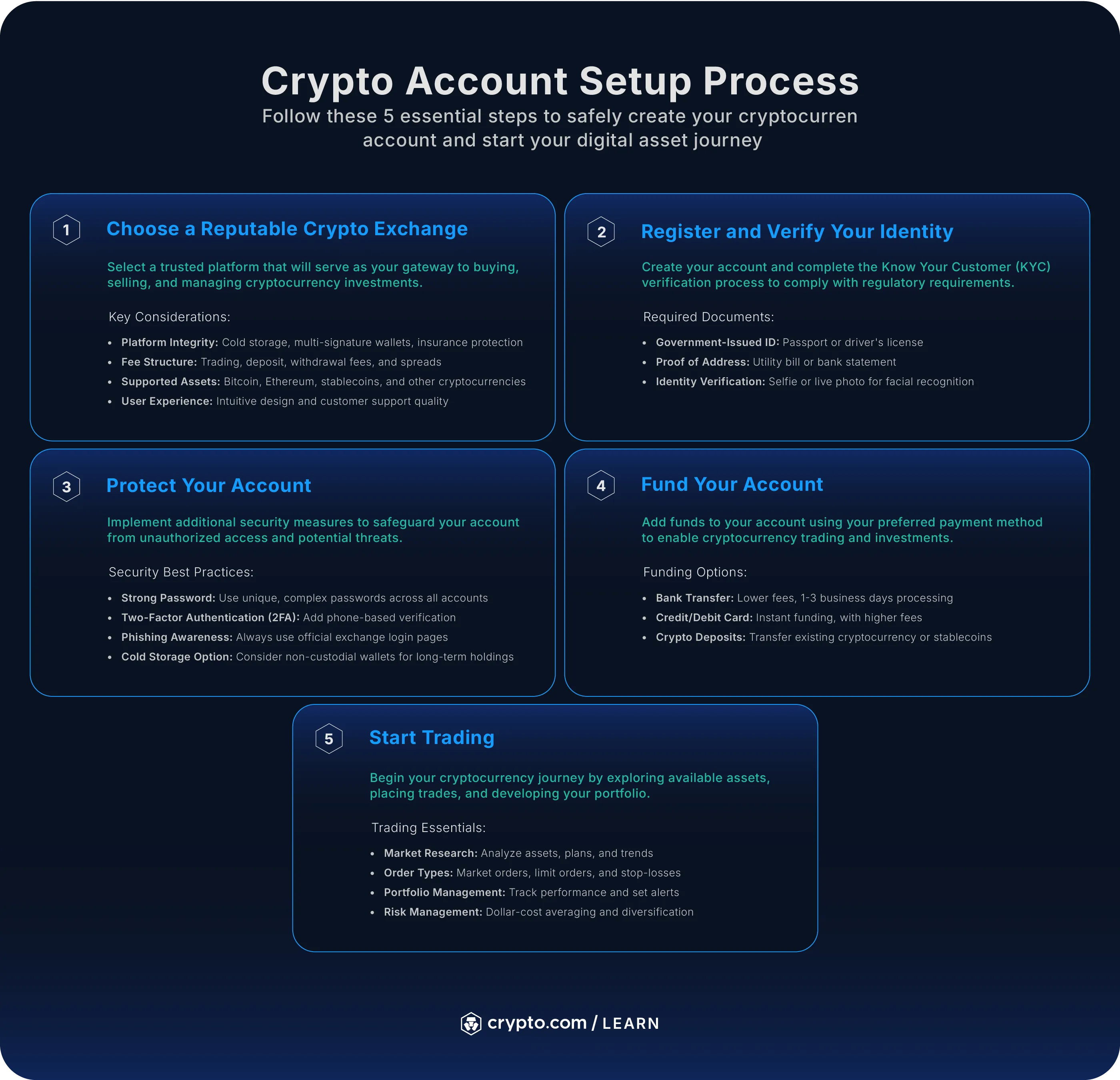
Once you’ve chosen a suitable exchange, the actual process of opening and funding your account is relatively straightforward. This section walks you through the practical steps to get started.
Account Registration and Verification (KYC)
- Visit the Exchange Website/App: Go to the official website or download the legitimate app of your chosen crypto exchange. Be wary of phishing sites.
- Initiate Registration: Click on “Sign Up” or “Register.” You’ll typically be asked for your email address and to create a strong password.
- Complete Personal Information: Provide your full legal name, date of birth, and physical address. Accuracy is crucial for verification.
- Identity Verification (KYC): This is the most crucial step for financial compliance. You will be prompted to upload scans or photos of your government-issued ID and proof of address. Some exchanges may also require a selfie or video verification to confirm you are the person on the ID.
- Wait for Approval: Verification can take anywhere from a few minutes to several days, depending on the exchange and the volume of applications. Your financial account cannot be fully utilized until this process is complete.
Securing Your Account
Before funding, prioritize account security to safeguard your financial assets:
- Strong, Unique Password: Use a complex password that you don’t use anywhere else, combining uppercase and lowercase letters, numbers, and symbols.
- Enable Two-Factor Authentication (2FA): This is non-negotiable for financial security. 2FA adds an extra layer of protection, requiring a code from a separate device (like your phone via an authenticator app) in addition to your password.
- Be Wary of Phishing: Never click on suspicious links or provide account details in response to unsolicited emails or messages. Always verify the source.

Funding Your Crypto Account
With your account verified and secured, you can now deposit funds to begin investing:
- Link Bank Account (ACH/Wire Transfer): This is often the most cost-effective method for larger deposits. You’ll typically provide your bank’s routing number and your account number. Transfers can take a few business days to clear.
- Debit/Credit Card Deposits: This offers instant funding but often comes with higher transaction fees. Be mindful of the associated costs, which can eat into your investment capital.
- Transfer Existing Crypto: If you already own cryptocurrency on another platform or in a private wallet, you can transfer it to your new exchange account. Ensure you use the correct network and wallet address to avoid permanent loss of funds.
- Minimum Deposit Requirements: Some exchanges may have minimum deposit amounts, so check these details before attempting a transfer.
Your First Steps into Crypto Investing: Beyond Account Opening
Opening and funding your account is just the beginning. The next phase involves making informed investment decisions and diligently managing your digital assets.
Making Your First Purchase
- Understand Order Types: Familiarize yourself with basic trading concepts. A market order buys or sells immediately at the current market price, while a limit order allows you to set a specific price at which you want to buy or sell. For beginners, a market order is simpler, but a limit order can help you execute trades at a desired entry point.
- Start Small: Given crypto’s volatility, it’s prudent to start with a smaller, manageable investment amount. This allows you to gain experience without exposing a large portion of your capital to immediate risk.
- Research Your Assets: Don’t buy crypto just because you heard about it. Understand the project’s utility, team, market capitalization, and potential use cases.
Managing Your Crypto Assets
- Wallet Types: For long-term holdings, consider moving your crypto from the exchange (a “hot wallet” controlled by the exchange) to your own “cold wallet” (hardware wallet like Ledger or Trezor). Cold wallets offer superior security by storing your private keys offline, giving you full control over your financial assets.
- Diversification: Just like traditional investing, diversifying your crypto portfolio across different assets can help mitigate risk. Avoid putting all your capital into a single cryptocurrency.
- Regular Portfolio Review: Periodically assess your investments. Market conditions change rapidly in crypto; rebalancing or adjusting your strategy might be necessary based on your financial goals.
Essential Financial Considerations and Risk Management
Investing in cryptocurrency is not without its unique financial challenges. A disciplined approach to risk management is essential.
- Volatility: Cryptocurrencies are known for their dramatic price swings. Be prepared for significant fluctuations in your portfolio’s value. Emotional decision-making during these periods can be detrimental to your long-term financial health.
- “Do Your Own Research” (DYOR): Never blindly follow tips or “influencers.” Conduct thorough research before any investment. Understand the whitepaper, community, and technology behind a crypto project to make informed financial decisions.
- Tax Implications: Cryptocurrency transactions are often taxable events. Consult with a tax professional to understand your obligations regarding capital gains, income, and reporting requirements in your jurisdiction. Neglecting tax planning can lead to significant financial penalties.
- Only Invest What You Can Afford to Lose: This is the golden rule for high-risk assets like cryptocurrency. Never invest funds that are critical for your living expenses, debt repayment, or emergency savings.
Staying Informed and Secure in the Crypto Space
The cryptocurrency market is dynamic, constantly evolving with new technologies, regulations, and investment opportunities. Continuous learning and vigilance are key to protecting your financial interests and making astute investment decisions.
Continuous Learning and Market Awareness
- Follow Reputable Financial News: Stay updated with reliable sources that cover blockchain technology, crypto markets, and global financial trends. Understanding macroeconomic factors can often shed light on crypto market movements.
- Understand Market Cycles: Like traditional markets, crypto experiences bull and bear cycles. Recognizing these patterns can help you make more strategic decisions regarding entry and exit points for your investments.
- Research New Projects: While caution is advised, staying informed about emerging technologies and promising projects can unveil future investment opportunities. Always approach new ventures with a critical, financial-centric mindset.
Advanced Security Practices (for Long-Term Asset Protection)
As your crypto holdings potentially grow, adopting advanced security measures becomes increasingly important for long-term financial asset protection.
- Hardware Wallets for Significant Holdings: For substantial amounts of cryptocurrency, a hardware wallet (cold storage) is highly recommended. It isolates your private keys from the internet, making them impervious to online hacks. This is the pinnacle of self-custody and financial control.
- Regular Security Audits: Periodically review the security settings on your exchange accounts and personal devices. Ensure software is updated, antivirus protection is active, and you are not reusing passwords.
- Beware of Scams: The crypto space is unfortunately fertile ground for various scams (e.g., rug pulls, pump-and-dump schemes, fake giveaways, investment fraud). Be highly skeptical of unsolicited offers promising guaranteed high returns or requests for your private keys. Protecting your financial assets from malicious actors is an ongoing responsibility.
Planning for the Future: Estate Planning and Crypto
An often-overlooked aspect of financial planning for digital assets is ensuring their accessibility in the future, particularly in unforeseen circumstances.
- Securely Document Access Information: Crucial for your beneficiaries, create a secure, encrypted document or physical will that clearly outlines how to access your crypto accounts, including exchange login details, private keys for self-custody wallets, and any necessary passphrases.
- Trusted Executor: Designate a trusted individual who understands your digital asset holdings and can execute your wishes.
- Legal Consultation: Consult with legal and financial advisors experienced in digital assets to integrate your crypto holdings into your overall estate plan, ensuring your legacy is handled as intended.
Conclusion
Opening a crypto account is a significant step towards participating in a transformative financial paradigm. From understanding the compelling investment potential and choosing a secure platform to executing your first trades and diligently managing your assets, each stage requires careful consideration rooted in sound financial principles. By prioritizing security, conducting thorough research, and adopting a disciplined approach to risk management, you can navigate the exciting yet volatile world of cryptocurrency with confidence. Remember, the journey into digital assets is one of continuous learning. Embrace this opportunity to expand your financial horizons responsibly and strategically, positioning yourself to potentially benefit from the innovations shaping the future of money.
aViewFromTheCave is a participant in the Amazon Services LLC Associates Program, an affiliate advertising program designed to provide a means for sites to earn advertising fees by advertising and linking to Amazon.com. Amazon, the Amazon logo, AmazonSupply, and the AmazonSupply logo are trademarks of Amazon.com, Inc. or its affiliates. As an Amazon Associate we earn affiliate commissions from qualifying purchases.