
The era of looking at a static airport arrival board to determine a flight’s status is long gone. In its place is a sophisticated digital ecosystem that leverages global positioning, satellite communication, and crowdsourced data to provide real-time updates on nearly every aircraft in the sky. Whether you are a software developer looking to integrate aviation data into an application, a tech enthusiast curious about the hardware behind the scenes, or a traveler wanting the most precise data available, understanding how to monitor flights requires a deep dive into the technology that powers the modern airspace.
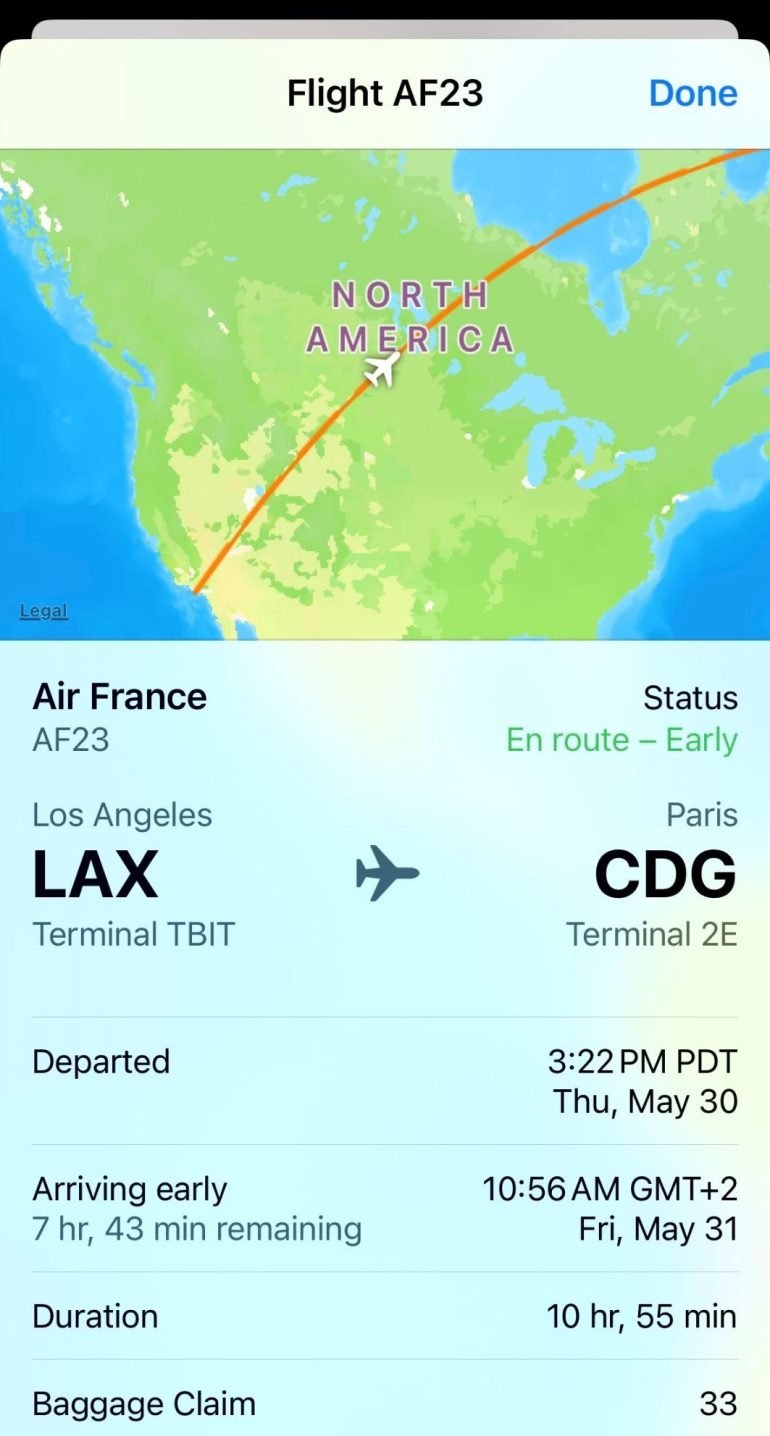
The Core Infrastructure of Flight Tracking Technology
At the heart of modern flight monitoring lies a transition from traditional primary radar—which bounces radio waves off objects—to more precise, data-driven systems. To monitor a flight accurately today, one must understand the protocols and hardware that transmit an aircraft’s position, speed, and altitude to the ground.
Understanding ADS-B Technology
The backbone of current flight tracking is Automatic Dependent Surveillance-Broadcast (ADS-B). This technology represents a paradigm shift in aviation. Unlike radar, which is “active” (it seeks out the aircraft), ADS-B is “cooperative.” An aircraft equipped with an ADS-B transponder determines its position via GPS and periodically broadcasts this information, along with its identity and altitude, on a 1090 MHz frequency.
For the tech-savvy monitor, ADS-B is the gold standard because the data is unencrypted and accessible to anyone with the right receiver. It provides a high update rate, often once per second, which is significantly more frequent than traditional radar sweeps.
The Role of Multilateration (MLAT)
Not all aircraft are equipped with modern ADS-B out-transponders, particularly older models or small private planes. To monitor these flights, the tech community utilizes Multilateration (MLAT). This process uses a technique called Time Difference of Arrival (TDOA). By measuring the exact time it takes for a signal from an older Mode S transponder to reach four or more separate ground-based receivers, the system can calculate the aircraft’s position through high-speed mathematical triangulation. This requires a dense network of synchronized receivers, showcasing the power of distributed computing in aviation tech.
Satellite-Based Tracking Systems
While ground-based ADS-B covers most landmasses, “black holes” traditionally existed over oceans and remote polar regions. The latest frontier in flight monitoring is Space-Based ADS-B. Companies like Aireon have placed ADS-B receivers on Iridium NEXT satellites, allowing for 100% global coverage. Monitoring flights in these regions no longer relies on estimated “dead reckoning” but on real-time satellite relays, a massive leap forward for global air traffic management and digital safety.
Essential Software and Consumer Platforms
For most users, flight monitoring happens through a software interface. These platforms aggregate the raw data mentioned above and visualize it on a map, providing a user-friendly layer over complex telemetry.
Professional-Grade Dashboards: FlightRadar24 and FlightAware
FlightRadar24 and FlightAware are the industry leaders, but from a technical perspective, they function as massive data aggregators. They maintain the world’s largest networks of ADS-B receivers (often hosted by volunteers).
When you use these platforms, you aren’t just seeing a point on a map; you are seeing a data fusion. They combine ADS-B data with airline schedules, FAA SWIM (System Wide Information Management) feeds, and meteorological data. For the power user, these platforms offer “3D View” features that use WebGL to render a cockpit-eye view of the flight, utilizing satellite imagery and elevation data to simulate the flight path in real-time.
Specialized Mobile Applications for Real-Time Alerts
The shift to mobile has led to the development of apps that use push-notification architecture to monitor flights passively. Apps like App in the Air or Flighty use sophisticated algorithms to predict delays before they are officially announced by airlines. They do this by monitoring “inbound” flight tech—tracking the physical aircraft assigned to your flight number as it completes its previous legs. If the hardware is delayed three cities away, the software predicts a delay for the current user, demonstrating the power of predictive data modeling.
Browser Extensions and Web-Based Tools
For those who spend their time on desktops, various browser extensions can scrape flight numbers from emails or calendar invites and provide a “live” hover-over status. These tools often use light-weight API calls to refresh data in the background, ensuring that the user has the most current information without needing to refresh a heavy map-based website.
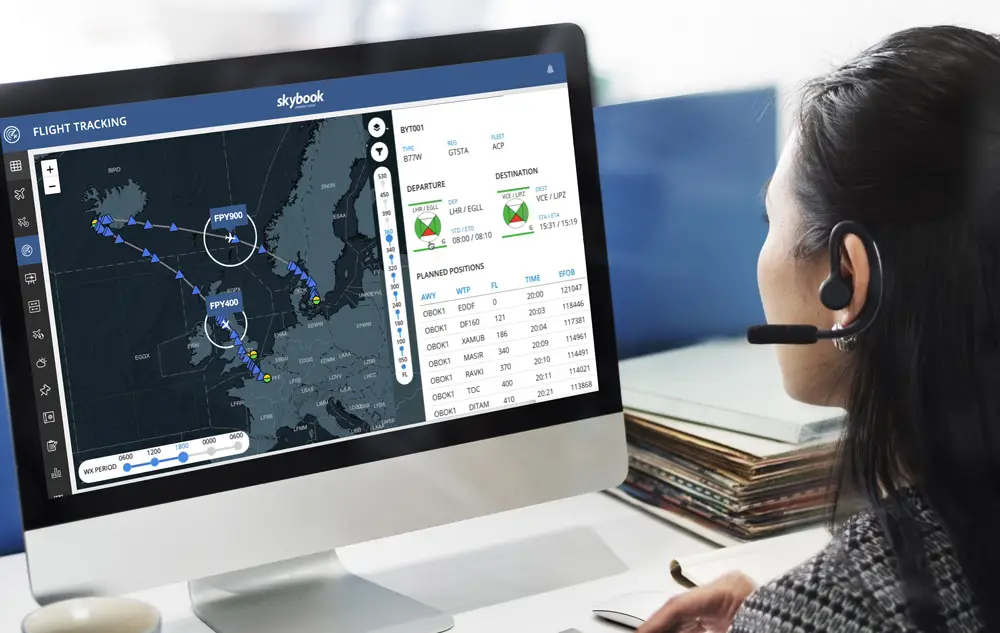
Advanced Data Integration and APIs for Developers
If you are looking to do more than just watch a plane move—perhaps you want to build a tool or analyze trends—you must look at the Application Programming Interfaces (APIs) that serve as the gateway to aviation data.
Utilizing Flight Data APIs
For developers, monitoring flights involves querying structured data. Services like AeroAPI (by FlightAware) or the OpenSky Network offer RESTful APIs that return JSON or XML responses.
- AeroAPI: Provides deep historical data, flight plans, and fuel estimates.
- OpenSky Network: A research-oriented API that provides raw state vectors, ideal for those interested in data science or machine learning models involving air traffic patterns.
- Laminar Data: Focuses on the “Internet of Buildings” approach to airports, providing data on gate changes and taxi times.
Building Custom Monitoring Solutions
With these APIs, one can build a “Flight Board” for a smart home office or a bot that tweets whenever a specific aircraft (like a government jet or a sports team’s plane) takes off. This involves setting up a listener script—often in Python—that polls the API for specific “squawk codes” or tail numbers and triggers an action based on the telemetry returned.
Data Security and Privacy in Aviation Tech
Monitoring flights raises interesting questions about digital privacy. While ADS-B is a public broadcast, many private owners request to be blocked from public tracking sites (the LADD program—Limiting Aircraft Data Displayed). However, tech-savvy monitors often use decentralized networks like ADSBexchange, which does not filter data, sparking a debate between the right to broadcast privacy and the transparency of public airwaves.
Hardware Solutions: Building Your Own Receiver
The most “Tech” way to monitor flights is to stop relying on third-party websites and start capturing the raw radio waves yourself. This is surprisingly accessible thanks to the rise of Software Defined Radio (SDR).
Raspberry Pi and SDR Kits
You can build a fully functional ADS-B ground station for under $100. The setup typically involves:
- A Raspberry Pi: Acting as the central processor.
- An RTL-SDR USB Dongle: This serves as the radio tuner, specifically tuned to 1090 MHz.
- Software: Programs like
dump1090orPiawaretranslate the raw radio signals into readable data packets.
This setup allows you to see flights in your immediate vicinity (up to 250 miles, depending on your antenna) before the data even hits the internet.
Antenna Placement and Optimization
The physics of flight monitoring is as important as the code. Because 1090 MHz is a line-of-sight frequency, antenna placement is critical. Tech enthusiasts often mount high-gain vertical collinear antennas on rooftops or in attics. Using low-loss coaxial cable (like LMR-400) and signal filters to block out interference from nearby cell towers is essential for maximizing the number of “messages per second” your station can process.
Contributing to the Global Data Grid
Once your hardware is live, you can “feed” your data to global networks. In exchange for your local data, many platforms provide you with a free “Enterprise” or “Business” tier subscription (usually worth hundreds of dollars a year). This creates a symbiotic relationship between the individual tech hobbyist and the global aviation monitoring industry.

The Future of Aviation Monitoring: AI and 5G
As we look forward, the technology for monitoring flights is set to become even more granular. The integration of Artificial Intelligence (AI) is beginning to allow for “Intent-Based Tracking,” where algorithms predict a pilot’s next move based on historical patterns and current weather, even before the aircraft begins to turn.
Furthermore, the rollout of 5G at airports and the potential for “Connected Aircraft” will allow for the transmission of massive “black box” data sets in real-time, rather than just basic telemetry. In the future, monitoring a flight might include real-time engine health diagnostics and cabin environment data, all accessible through the same digital interfaces we use to track a flight’s location today.
In conclusion, flight monitoring has evolved from a niche hobby into a high-tech discipline. By leveraging ADS-B hardware, sophisticated API integrations, and global data networks, we can now achieve a level of transparency in the skies that was unimaginable a few decades ago. Whether through a DIY Raspberry Pi station or a professional API, the tools to watch the world move are more powerful—and more accessible—than ever.
aViewFromTheCave is a participant in the Amazon Services LLC Associates Program, an affiliate advertising program designed to provide a means for sites to earn advertising fees by advertising and linking to Amazon.com. Amazon, the Amazon logo, AmazonSupply, and the AmazonSupply logo are trademarks of Amazon.com, Inc. or its affiliates. As an Amazon Associate we earn affiliate commissions from qualifying purchases.