
In the intricate world of finance, numbers speak volumes, and percentages are their eloquent interpreters. From calculating sales tax on a new purchase to projecting investment growth, understanding how to add a percentage to a number is not merely a mathematical exercise; it’s a foundational skill for financial literacy, sound decision-making, and wealth creation. Whether you’re managing personal finances, strategizing investments, or running a business, this seemingly simple arithmetic operation underpins countless calculations that impact your financial well-being. This article delves into the mechanics of adding percentages and, more importantly, illuminates its indispensable applications across the financial spectrum, offering insights to empower your monetary journey.
The Core Mechanics: Understanding and Calculating Percentage Increases
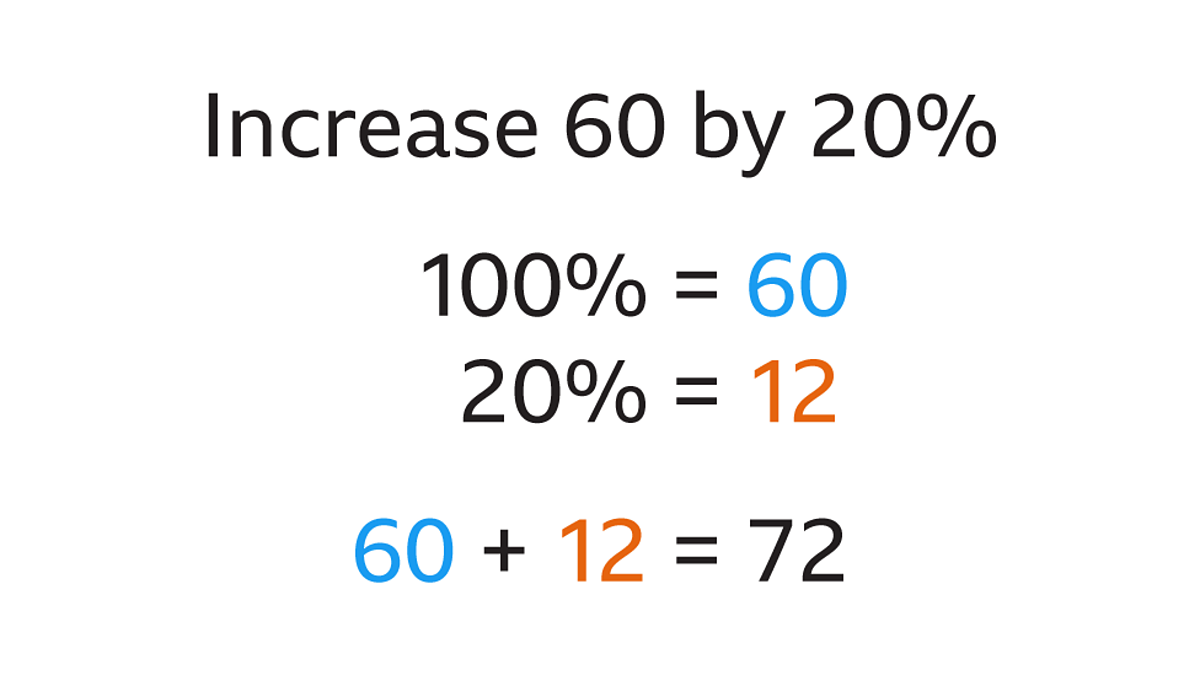
Before we dive into the financial implications, let’s solidify our understanding of the fundamental concept. Adding a percentage to a number essentially means increasing that number by a specified proportion of itself. This basic operation is the bedrock for all more complex financial calculations involving growth, markups, interest, and appreciation.
What Exactly is a Percentage?
At its heart, a percentage is a way of expressing a number as a fraction of 100. The word “percent” literally means “per hundred.” So, 10% is equivalent to 10/100, or 0.10 in decimal form. When we talk about adding a percentage to a number, we’re talking about taking a portion of that original number (defined by the percentage) and adding it back to the original.
The Fundamental Formula: Step-by-Step
Let’s break down the process with a simple, universally applicable formula. To add a percentage to a number, you typically follow these two steps:
- Calculate the Percentage Amount: Convert the percentage to a decimal (divide it by 100) and then multiply it by the original number.
- Formula: Percentage Amount = (Percentage / 100) * Original Number
- Add to the Original Number: Take the calculated percentage amount and add it to the original number.
- Formula: New Number = Original Number + Percentage Amount
Example: Let’s say you want to add 15% to the number 200.
- Percentage Amount = (15 / 100) * 200 = 0.15 * 200 = 30
- New Number = 200 + 30 = 230
So, 200 increased by 15% is 230.
The Multiplier Shortcut: Efficiency in Calculation
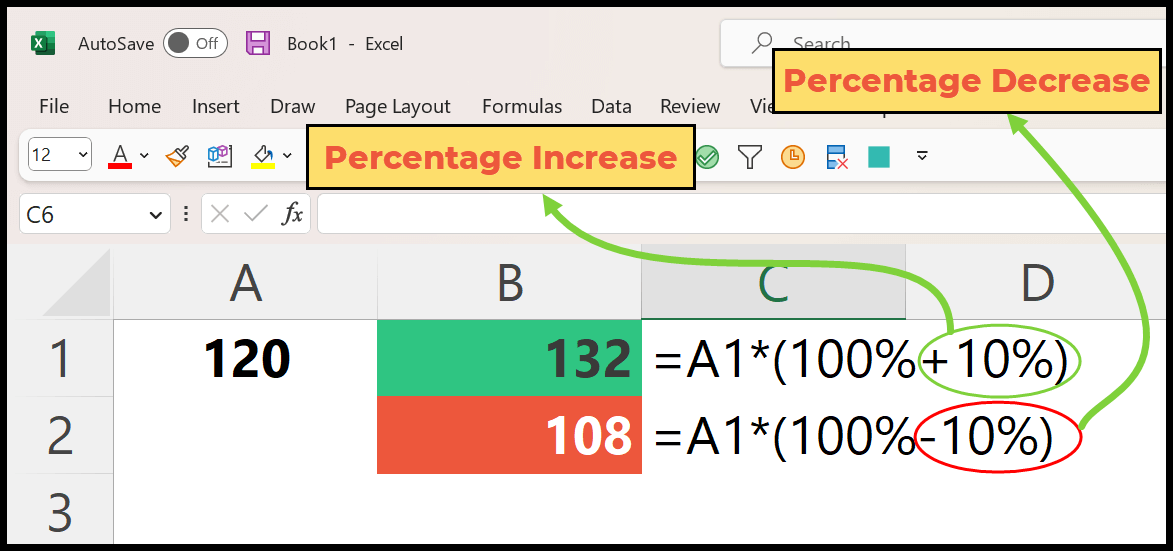
While the two-step method is straightforward, there’s a more efficient “multiplier” shortcut, especially useful when performing multiple calculations or using a calculator. This method combines the two steps into one:
- Convert the Percentage to a Multiplier: Add 1 to the decimal form of the percentage.
- Formula: Multiplier = 1 + (Percentage / 100)
- Multiply by the Original Number: Multiply this multiplier by the original number.
- Formula: New Number = Original Number * Multiplier
Example (using the same numbers): Add 15% to 200.
- Multiplier = 1 + (15 / 100) = 1 + 0.15 = 1.15
- New Number = 200 * 1.15 = 230
Both methods yield the same result, but the multiplier shortcut often streamlines calculations and reduces the chance of error, particularly when dealing with chains of percentages (though compound interest has its own specific formulas).
Navigating Personal Finances with Percentage Prowess
For the average individual, percentages are an inescapable part of daily financial life. Mastery of adding percentages can significantly enhance budgeting, saving, and consumer decision-making.
Decoding Sales Tax, Tips, and Service Charges
Perhaps the most common encounter with percentage addition is when purchasing goods or services. Sales tax, often expressed as a percentage, is added to the price of an item. Similarly, tipping service staff involves adding a percentage of the bill to the total.
Example: You have a restaurant bill of $75, and you want to add a 20% tip.
- Tip Amount = (20 / 100) * 75 = 0.20 * 75 = $15
- Total Bill = $75 + $15 = $90
Using the multiplier shortcut: Total Bill = $75 * (1 + 0.20) = $75 * 1.20 = $90.
Understanding these calculations ensures you’re not caught off guard by the final price and can budget accurately for expenses.
Budgeting for Growth: Buffers and Unexpected Expenses
In personal budgeting, adding a percentage can be a strategic tool. You might add a 5% “buffer” to each budget category to account for minor fluctuations or unexpected price increases. Or, you might earmark a certain percentage of your income to grow your emergency fund.
Example: If your monthly grocery budget is $400, and you want to add a 10% buffer for flexibility.
- Buffer Amount = (10 / 100) * $400 = $40
- Adjusted Budget = $400 + $40 = $440
This proactive approach to budgeting provides a cushion and helps prevent overspending.
Understanding Inflation and Price Adjustments
Inflation, the silent erosion of purchasing power, is typically expressed as a percentage. Understanding how inflation adds to prices over time is crucial for long-term financial planning. Similarly, companies adjust prices, often by a percentage, due to rising costs or market dynamics.
Example: If a service currently costs $100 and is expected to increase by 3% next year due to inflation.
- Price Increase = (3 / 100) * $100 = $3
- New Price = $100 + $3 = $103
Recognizing these dynamics helps you anticipate future expenses and adjust your savings goals accordingly.
Simple Interest: The Foundation of Borrowing and Lending
Interest is essentially the cost of borrowing money or the reward for lending it, typically expressed as an annual percentage rate (APR). Simple interest, though less common for complex loans, is a straightforward application of adding a percentage.
Example: You loan a friend $500 at a simple interest rate of 5% for one year.
- Interest Earned = (5 / 100) * $500 = $25
- Total Repayment = $500 + $25 = $525
This principle forms the basis for understanding more complex interest calculations, such as those on mortgages or credit cards.
Strategic Applications in Investing and Wealth Building
For investors, adding percentages is a daily occurrence, fundamental to evaluating returns, projecting growth, and understanding the performance of assets. It’s how we measure success and plan for the future.
Projecting Portfolio Gains and Investment Returns
When an investment grows, its increase is often expressed as a percentage gain. Understanding how to add this percentage to your initial investment allows you to calculate your total return.
Example: You invest $10,000, and your portfolio sees a 7% return in the first year.
- Gain = (7 / 100) * $10,000 = $700
- New Portfolio Value = $10,000 + $700 = $10,700
This simple calculation is vital for tracking your progress towards financial goals and comparing different investment opportunities.
Analyzing Capital Appreciation and Reinvestments
Capital appreciation refers to the increase in the value of an asset. If you buy a stock for $50 and it appreciates by 10%, you can calculate its new value. If you then reinvest those gains, you’re essentially adding percentages repeatedly.
Example: A property you own was valued at $300,000 and has appreciated by 8% this year.
- Appreciation Amount = (8 / 100) * $300,000 = $24,000
- New Property Value = $300,000 + $24,000 = $324,000
Understanding capital appreciation is key for real estate investors and those holding growth stocks.
The Power of Compounding (Brief Introduction)
While compounding involves repeatedly applying percentage additions over time, the fundamental skill of adding a percentage is its irreducible core. Compounding is essentially adding interest (or returns) to your initial principal, and then in the next period, adding interest to that new, larger principal. This exponential growth is why many financial advisors stress early investment. Each new calculation is an application of adding a percentage to the previously accumulated total.
Business Acumen: Percentages in Profit, Pricing, and Payroll
For entrepreneurs, small business owners, and those managing financial aspects of a company, the ability to add percentages is a critical skill for profitability, competitive pricing, and efficient operations.
Mastering Markups and Calculating Profit Margins
Businesses add a “markup” percentage to the cost of goods to determine their selling price and ensure profitability. This markup directly translates to the gross profit margin.
Example: A product costs your business $50 to produce, and you want a 40% markup.
- Markup Amount = (40 / 100) * $50 = $20
- Selling Price = $50 + $20 = $70
Calculating markups accurately is non-negotiable for sustainable business operations.
Strategic Pricing: Adding Value and Covering Costs
Beyond a simple markup, strategic pricing involves adding percentages for various factors like overheads, marketing costs, and desired profit targets. This ensures that the final price covers all expenses and yields a healthy profit.
Example: If your base cost for a service is $150, and you need to add 25% to cover overheads and another 15% for profit (based on the original cost).
- Overhead portion = 0.25 * $150 = $37.50
- Profit portion = 0.15 * $150 = $22.50
- Selling Price = $150 + $37.50 + $22.50 = $210
This layered approach to adding percentages builds a robust pricing model.
Commissions and Bonuses: Incentives and Earnings
Sales professionals and employees often earn commissions or bonuses based on a percentage of sales or performance. For employers, calculating these incentives accurately is vital for payroll; for employees, it’s about understanding their potential earnings.
Example: A salesperson earns a 12% commission on a $5,000 sale.
- Commission Amount = (12 / 100) * $5,000 = $600
- Total earnings for that sale = $5,000 + $600 (if it’s added to a base salary for total pay, though commissions are usually separate earnings based on sales volume). If this $600 is added to a base salary of $2000, their total pay would be $2600. The core operation is adding that percentage to something, in this case, the salesperson’s income.
Navigating Payroll Deductions and Business Taxes
Businesses must also calculate various percentage-based additions to employee salaries or deductions for taxes. For instance, calculating employer contributions to social security or health benefits involves adding a percentage to an employee’s gross pay. Similarly, sales tax collected is a percentage added to the price of goods.
Example: An employer needs to contribute an additional 7.65% (hypothetical, simplified) of an employee’s $3,000 gross salary towards social security and Medicare.
- Employer Contribution = (7.65 / 100) * $3,000 = $229.50
- Total cost to employer for salary + contribution = $3,000 + $229.50 = $3,229.50
This illustrates how businesses use percentage additions to manage their financial obligations and employee costs.
The Indispensable Value of Financial Percentage Literacy
The ability to proficiently add percentages to numbers transcends mere arithmetic; it is a cornerstone of financial literacy, empowering individuals and businesses to navigate complex economic landscapes with confidence and precision.
Empowering Informed Financial Decisions
Every financial decision, from selecting a savings account with a higher interest rate to evaluating a business proposal, hinges on understanding the percentage-based impact. Without this skill, one is left guessing, vulnerable to miscalculations and missed opportunities. It enables you to compare options logically: is a 5% discount on a product better than a 7% cash-back offer on a different purchase? Knowing how to add (and subtract) percentages helps clarify.
Enhancing Negotiation Skills and Value Assessment
Whether you’re negotiating a salary increase, bargaining for a better loan rate, or assessing the true cost of a bundled service, percentages are your language. Understanding how different percentage adjustments affect the final figure gives you a powerful tool for negotiation and allows you to accurately assess the real value of an offer.
Tools for Accuracy: Calculators and Spreadsheets
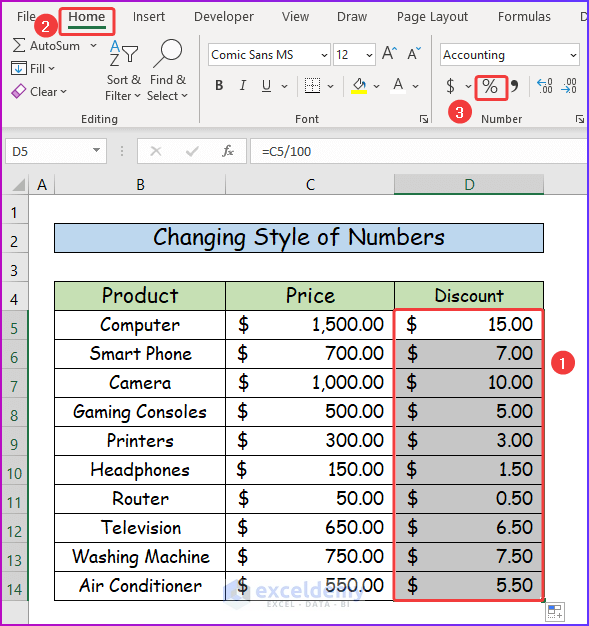
While mental math is useful for quick estimates, for critical financial calculations, leveraging tools like calculators and spreadsheets (like Excel or Google Sheets) is essential. These tools automate the percentage addition process, ensuring accuracy and saving time, especially for complex scenarios or large datasets. While this article isn’t a tech tutorial, recognizing the role of these financial tools in executing percentage calculations effectively within a money context is important.
Building a Strong Foundation for Financial Growth
Ultimately, mastering “how to add a percentage to a number” lays a vital brick in the foundation of your financial education. It’s a skill that pays dividends throughout life, enabling you to manage your money more effectively, make smarter investments, grow your wealth, and steer your business towards greater profitability. In a world increasingly driven by data and numerical analysis, this fundamental understanding is not just an advantage—it’s a necessity. Embrace it, and unlock a new level of financial control and insight.
aViewFromTheCave is a participant in the Amazon Services LLC Associates Program, an affiliate advertising program designed to provide a means for sites to earn advertising fees by advertising and linking to Amazon.com. Amazon, the Amazon logo, AmazonSupply, and the AmazonSupply logo are trademarks of Amazon.com, Inc. or its affiliates. As an Amazon Associate we earn affiliate commissions from qualifying purchases.