
The traditional concept of a “job”—a long-term commitment to a single employer in exchange for a steady paycheck—is no longer the only viable path to financial stability. In the modern economy, the democratization of technology and the globalization of the marketplace have created an environment where income generation is untethered from traditional employment. Making money without a job requires a transition from a “worker” mindset to an “entrepreneurial” mindset, where one views their time, skills, and assets as capital to be deployed for maximum return.
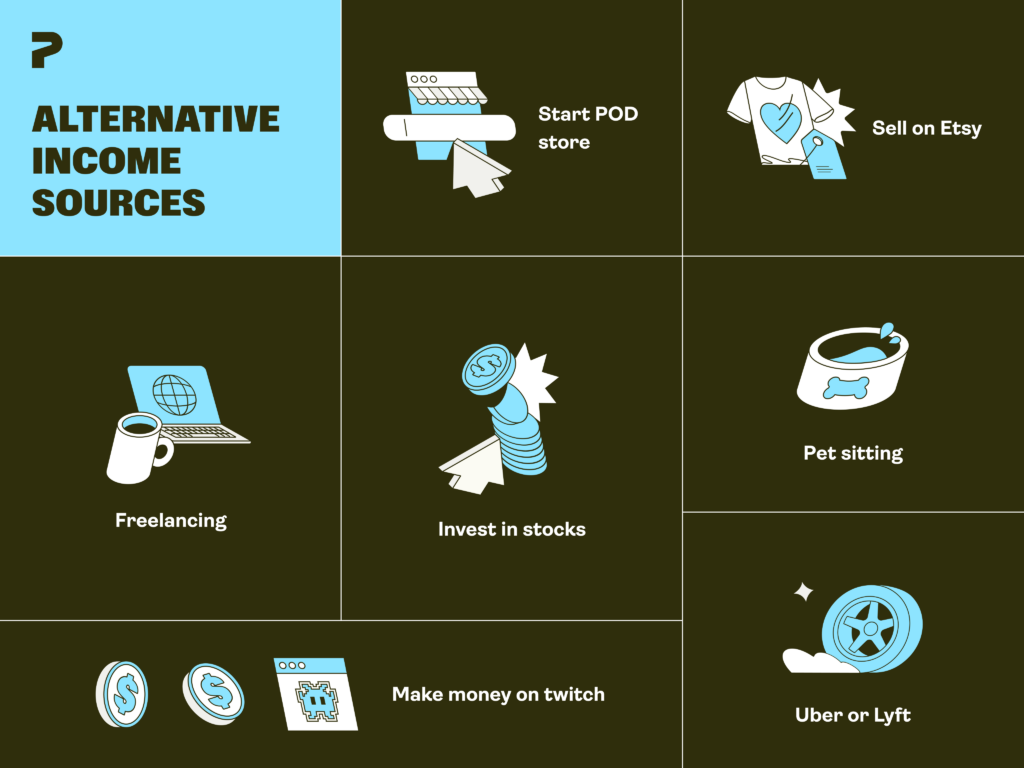
The shift toward autonomous income generation is driven by several factors, including the rise of the gig economy, the accessibility of global digital marketplaces, and the increasing value of specialized knowledge. To succeed in this landscape, individuals must be proactive, disciplined, and strategic about how they diversify their revenue streams. This guide explores the most effective frameworks for generating income outside the confines of a standard 9-to-5 role, focusing on scalability, sustainability, and financial growth.
Leveraging the Digital Economy: Service-Based Income and Freelancing
The most immediate way to generate income without a traditional job is to monetize existing skills through the service-based economy. Unlike employment, where you sell your time to one entity, freelancing and consulting allow you to sell your expertise to multiple clients simultaneously, often at a higher hourly or project-based rate.
The Rise of the Independent Professional
The digital infrastructure of the 21st century has made it possible for professionals in fields like software development, graphic design, digital marketing, and writing to operate as independent entities. Platforms such as Upwork, Tophotal, and specialized niche boards act as intermediaries, connecting supply with global demand. However, the key to high-level income in this space is not just “finding tasks” but “solving problems.” Top-tier freelancers position themselves as consultants who provide ROI, rather than laborers who merely complete checkboxes.
To thrive, an independent professional must focus on personal branding and a robust portfolio. This involves documenting past successes, acquiring testimonials, and demonstrating a clear value proposition. By specializing in a high-demand niche—such as AI integration, blockchain security, or conversion rate optimization—individuals can command premium rates that far exceed standard corporate salaries.
High-Demand Skills for Remote Work
While specialized tech skills are lucrative, there is also a massive market for administrative and operational support. Virtual assistants (VAs), project managers, and customer success specialists are essential for small businesses and e-commerce entrepreneurs who do not want the overhead of full-time employees. By mastering tools like CRM software, project management platforms (Asana, Notion), and communication suites (Slack, Microsoft Teams), an individual can build a “roster” of clients that provides a diversified and stable income base.
Creating Scalable Assets: Passive Income and Content Monetization
One of the most effective strategies for making money without a job is to move away from trading time for money. Instead, focus on building or acquiring assets that generate revenue even when you are not actively working. This is the essence of “scalable” income.
The Power of Digital Products
Digital products—such as e-books, online courses, specialized templates, and stock media—represent one of the highest-margin business models in existence. Once the initial product is created, the cost of replication and distribution is near zero. The challenge lies in identifying a market pain point and creating a solution that is significantly better than the free alternatives available online.
For example, a finance professional might create a suite of complex Excel templates for small business accounting. An educator might build a comprehensive masterclass on a specific software tool. By leveraging platforms like Gumroad, Teachable, or Etsy, creators can reach a global audience. The key to success here is search engine optimization (SEO) and building an email list, which allows for direct communication with potential buyers without relying on third-party algorithms.
Affiliate Marketing and Strategic Partnerships
Affiliate marketing involves promoting a company’s products or services and earning a commission for every sale made through your unique link. While often dismissed as a “get rich quick” scheme, professional affiliate marketing is a sophisticated discipline involving content strategy, trust-building, and data analysis.

Successful affiliate marketers typically build an “authority site” or a social media presence focused on a specific niche—such as high-end photography gear, sustainable home goods, or B2B software. By providing genuine value and honest reviews, they build an audience that trusts their recommendations. This model is highly scalable; as your traffic grows, your income potential grows exponentially without a corresponding increase in workload.
The Sharing Economy: Monetizing Physical and Digital Assets
If you have capital or physical assets, you can generate income by allowing others to use them. The sharing economy has matured into a multi-billion dollar industry that provides significant opportunities for individuals to act as micro-entrepreneurs.
Rental Income Beyond Traditional Real Estate
While owning a rental property is a classic way to generate income without a job, modern platforms have lowered the barrier to entry. Services like Airbnb and Vrbo allow for the short-term rental of spare rooms or vacation homes, often generating much higher yields than long-term leases. Furthermore, the “asset sharing” model has expanded to include vehicles (Turo), storage space (Neighbor), and even high-end equipment or tools (Fat Llama).
By viewing your possessions through the lens of “utilization rates,” you can identify untapped value. A car that sits in a driveway 22 hours a day is a depreciating asset; a car listed on a rental platform is a revenue-generating tool.
Peer-to-Peer Marketplaces and Collaborative Consumption
Beyond physical goods, the peer-to-peer (P2P) economy extends to financial assets. P2P lending platforms allow individuals to act as the bank, lending small amounts of money to others in exchange for interest payments. While this carries higher risk than a traditional savings account, a diversified portfolio of P2P loans can provide a steady stream of passive interest income. Similarly, participating in “data sharing” programs or research studies can provide small, incremental streams of income that, when aggregated, contribute to a larger financial goal.
Building a Sustainable Portfolio: Investing and Financial Management
Generating income is only half the battle; the other half is managing that income so it continues to grow. When you don’t have a job, your “employer” is your capital. Professional financial management becomes the cornerstone of your survival and long-term wealth.
Micro-Investing and Dividend Growth
For those starting with limited capital, micro-investing apps allow for the purchase of fractional shares in high-performing companies or exchange-traded funds (ETFs). The goal for many without a job is to build a “Dividend Growth” portfolio. By investing in companies that consistently pay out a portion of their profits to shareholders, you create a recurring cash flow that functions similarly to a salary. Over time, reinvesting those dividends creates a compounding effect that can eventually cover all basic living expenses.
Managing Cash Flow Without a Fixed Salary
The greatest challenge of making money without a job is the inherent volatility of income. Some months may be highly profitable, while others are lean. To mitigate this, successful “non-employed” individuals employ a rigorous cash flow management strategy.
First, it is essential to maintain an “opportunity fund”—a cash reserve that is larger than a standard emergency fund. This provides the runway needed to pivot between different income streams or invest in new tools and education. Second, one must account for taxes and benefits independently. Without an employer to withhold taxes or provide health insurance, the individual must act as their own human resources department, setting aside 25-30% of all gross income for tax liabilities and securing private insurance.
The Growth Mindset: Adapting to Market Shifts
Making money without a job is not a “set it and forget it” endeavor. The markets for freelance services, digital products, and asset rentals are constantly evolving. The most successful individuals in this space are those who commit to lifelong learning. They stay ahead of technological trends, such as how generative AI can enhance their productivity, and they are quick to exit saturated markets in favor of emerging opportunities.
In conclusion, the path to making money without a job is built on diversification and the strategic application of value. By combining service-based work for immediate cash flow, digital assets for scalability, and smart investing for long-term stability, anyone can build a robust financial future that is independent of a traditional employer. This lifestyle offers unparalleled freedom, but it requires a level of discipline and strategic thinking that far exceeds the requirements of a standard job. The reward, however, is a resilient and self-determined financial life.
aViewFromTheCave is a participant in the Amazon Services LLC Associates Program, an affiliate advertising program designed to provide a means for sites to earn advertising fees by advertising and linking to Amazon.com. Amazon, the Amazon logo, AmazonSupply, and the AmazonSupply logo are trademarks of Amazon.com, Inc. or its affiliates. As an Amazon Associate we earn affiliate commissions from qualifying purchases.