
The digital economy has fundamentally altered the barrier to entry for entrepreneurship. Unlike the brick-and-mortar era, where capital expenditures on real estate and inventory often precluded the average individual from starting a business, the online landscape offers a high-leverage environment where intellectual property and digital systems can generate significant wealth. Building an online company today is less about physical resources and more about strategic capital allocation, revenue model optimization, and financial scalability. This guide explores the essential financial and operational frameworks required to transform a digital concept into a profitable, high-valuation enterprise.
Strategic Capital Allocation: Funding the Digital Enterprise
The first step in making an online company is determining the financial foundation upon which the business will sit. In the “Money” niche, this is a question of capital allocation: how much of your own money should you risk, and when does it make sense to use other people’s money (OPM)?
Bootstrapping for Maximum Ownership
Bootstrapping is the process of building a company from the ground up with nothing but personal savings and, eventually, the revenue from the business itself. From a wealth-building perspective, bootstrapping is highly efficient because it allows the founder to retain 100% equity. In the digital world, where overhead can be kept remarkably low, bootstrapping is often the most prudent path.
To bootstrap successfully, a founder must focus on “lean” operations. This means prioritizing “Revenue Generating Activities” (RGAs) over aesthetic concerns. Instead of spending capital on a premium domain or a high-end logo, the bootstrapped entrepreneur invests in a Minimum Viable Product (MVP) and immediate customer acquisition. The goal is to reach the break-even point as quickly as possible, allowing the business to self-fund its growth.
Leveraging Venture Capital and Angel Investment
While bootstrapping offers control, external funding offers speed. If the online company is entering a “winner-take-all” market—such as a social network or a complex SaaS platform—raising capital may be a necessity to capture market share before competitors.
Understanding the cost of capital is crucial here. Selling 20% of a company for $1 million might seem like a win, but if that company eventually reaches a $100 million valuation, that initial capital cost the founder $20 million in future value. Professional online entrepreneurs weigh the “equity burn” against the potential for accelerated ROI. For many, the hybrid approach—bootstrapping to gain initial traction (traction increases valuation) and then raising a seed round—provides the best balance of growth and equity retention.
Engineering Profitability: High-Margin Business Models
Not all online companies are created equal in terms of financial health. The “how” of making an online company is deeply tied to the “what.” Selecting a business model with high margins and predictable cash flow is the difference between a struggling side hustle and a legitimate wealth-generating asset.
The SaaS Model and Recurring Revenue Stability
Software as a Service (SaaS) remains the gold standard for online business finance. The reason is simple: Monthly Recurring Revenue (MRR). In a traditional one-time sales model, a company starts every month at zero. In a SaaS model, a company starts each month with the revenue of the previous month (minus churn).
From a valuation standpoint, SaaS companies command the highest multiples. While a standard e-commerce store might sell for 3x to 4x its annual profit (SDE), a SaaS company with low churn and high growth can often fetch 8x to 15x its annual revenue. When building an online company, integrating a subscription element is one of the most effective ways to ensure long-term financial stability.
Asset-Light Service Models and High-Ticket Consulting
For those looking to generate significant cash flow with zero upfront inventory costs, service-based models are ideal. Agencies, consulting firms, and specialized digital services (like AI implementation or cybersecurity auditing) allow for high profit margins because the primary cost is labor.
The financial secret to a successful service-based online company is “productization.” Instead of selling hours for dollars—which is a linear and unscalable way to make money—the entrepreneur should sell a “productized service.” This involves a fixed scope of work for a fixed price, allowing the company to optimize internal processes and increase the margin on every client served.
E-commerce: Balancing Cash Flow and Inventory
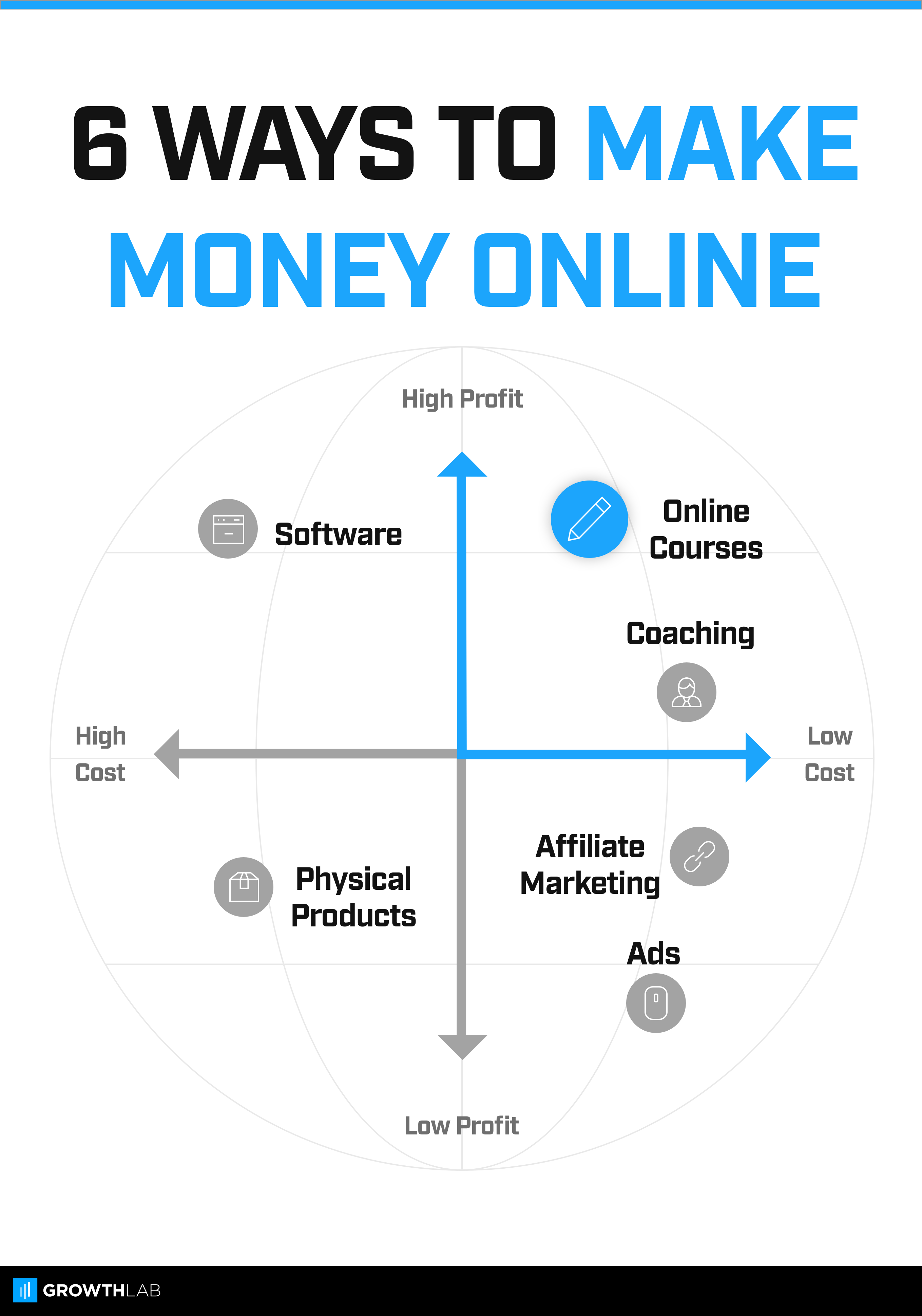
E-commerce is a capital-intensive online business model. Unlike software, physical products require “working capital.” To grow, you must buy more inventory; to buy more inventory, you need cash. This “cash gap” is the primary reason many e-commerce companies fail despite having high sales.
To build a financially healthy e-commerce company, focus on the “Cash Conversion Cycle” (CCC). This is the time it takes for a dollar spent on inventory to return to your bank account as revenue. Successful online retailers use strategies like “just-in-time” inventory or high-speed turnover to keep their capital liquid, ensuring they have the funds necessary to reinvest in marketing and product development.
The Financial Infrastructure: Payments, Accounting, and Compliance
A company is not merely a website; it is a legal and financial entity. Building an online company requires a robust “FinTech stack” to handle global transactions, tax obligations, and financial reporting.
Optimizing the Payment Gateway Funnel
The lifeblood of an online company is its ability to accept payments. Choosing the right payment processor (such as Stripe, PayPal, or Adyen) involves more than just looking at the transaction fee (typically 2.9% + $0.30). You must also consider “authorization rates” and “churn prevention.”
For subscription-based companies, involuntary churn—where a customer’s credit card fails—can account for up to 30% of lost revenue. High-level online businesses use sophisticated dunning systems and smart payment routing to recover this revenue. Every percentage point saved in the payment funnel goes directly to the bottom line, significantly impacting the company’s valuation.
Tax Planning and Multi-Jurisdictional Challenges
One of the greatest advantages of an online company is the ability to operate across borders. However, this introduces “Nexus” issues and VAT/GST obligations. From a money-management perspective, ignoring tax compliance is a significant liability that can destroy a company during an acquisition audit.
Smart founders establish a clear legal structure—often an LLC or a C-Corp in the United States, or a Ltd. in the UK—early on. They also utilize automated tax tools (like TaxJar or Avalara) to handle the complexity of sales tax across different states and countries. Furthermore, understanding “transfer pricing” and international tax treaties can allow an online company to legally optimize its effective tax rate, freeing up more capital for reinvestment.
Scaling for Valuation and Exit
The ultimate goal of making an online company for many is the “exit”—selling the business for a life-changing sum. To do this, the business must be built with “exitability” in mind from day one.
Reinvestment Strategies and Compound Growth
The most powerful force in finance is compound interest, and this applies to business growth as well. A founder must decide how much of the profit to take as a “draw” (personal income) and how much to reinvest into the company.
In the early stages, a 100% reinvestment strategy is often necessary to achieve escape velocity. This capital is typically funneled into “Customer Acquisition Cost” (CAC). If you know that spending $1 on advertising yields $3 in Lifetime Value (LTV), then the logical financial move is to reinvest every available dollar into that acquisition channel until the LTV/CAC ratio begins to diminish.

Understanding Valuation Multiples for Digital Assets
When it comes time to sell your online company, it will be valued based on its “Seller’s Discretionary Earnings” (SDE) or its EBITDA (Earnings Before Interest, Taxes, Depreciation, and Amortization). Digital asset marketplaces and M&A brokers look at several key financial metrics:
-
Revenue Concentration: Does one client represent more than 20% of your revenue? If so, the risk is higher, and the valuation multiple will be lower.
-
Growth Rate: A company growing at 50% year-over-year is worth significantly more than a stagnant company with the same profit.
-
Owner Involvement: Is the company a “passive” asset, or does it require 60 hours a week from the founder? Companies with robust systems and a management team in place command “premium” multiples because they are transferable assets rather than a “job” for the new owner.
By focusing on these financial pillars—capital efficiency, high-margin models, robust infrastructure, and exit-readiness—you can build an online company that serves as a powerful engine for wealth creation. The digital world offers the opportunity; the application of sound financial principles determines the outcome.
aViewFromTheCave is a participant in the Amazon Services LLC Associates Program, an affiliate advertising program designed to provide a means for sites to earn advertising fees by advertising and linking to Amazon.com. Amazon, the Amazon logo, AmazonSupply, and the AmazonSupply logo are trademarks of Amazon.com, Inc. or its affiliates. As an Amazon Associate we earn affiliate commissions from qualifying purchases.