
Building a successful business is an exercise in financial engineering as much as it is an act of creativity. While many entrepreneurs focus on the aesthetics of their brand or the mechanics of their product, the underlying architecture of a sustainable enterprise is built upon robust financial principles. To move from a fledgling startup to a profitable powerhouse, one must understand the flow of capital, the optimization of margins, and the strategic reinvestment of profits. Success is not merely measured by top-line revenue, but by the efficiency with which that revenue is converted into wealth and long-term stability.
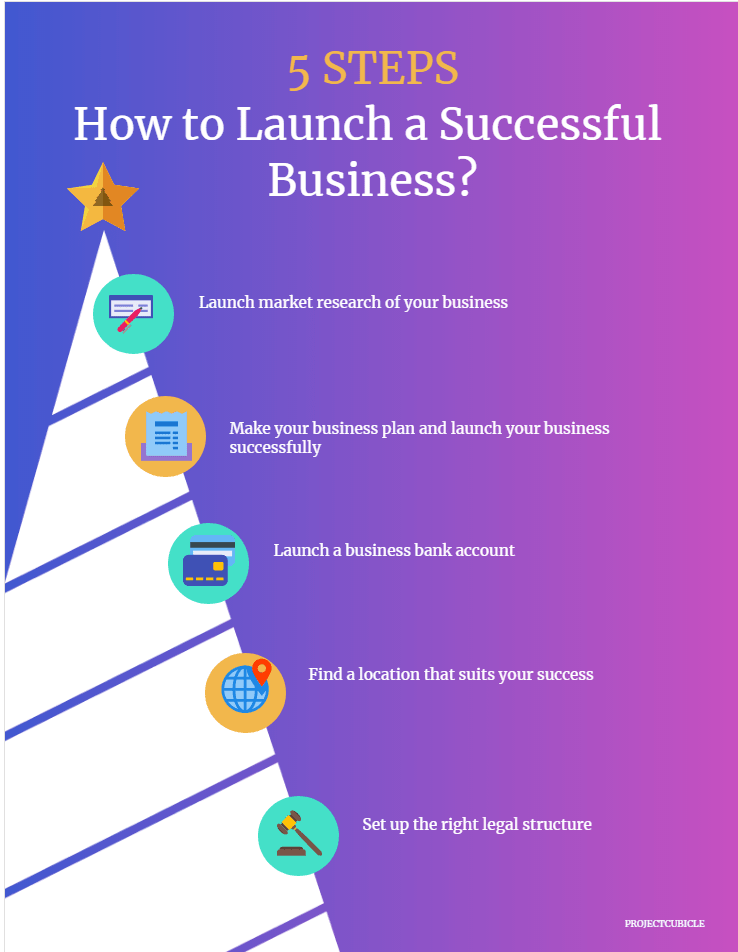
Establishing a High-ROI Business Model
The foundation of any successful business lies in its business model, specifically its ability to generate a high Return on Investment (ROI). A business that generates high revenue but operates on razor-thin margins is inherently fragile. To build a resilient enterprise, the focus must be on maximizing the delta between the cost of delivery and the price the market is willing to pay.
Identifying High-Margin Revenue Streams
Not all revenue is created equal. A common mistake among early-stage entrepreneurs is pursuing volume at the expense of profitability. A successful business identifies which products or services offer the highest margins and prioritizes them. This requires a granular analysis of the Cost of Goods Sold (COGS) and the operational overhead associated with each unit of value delivered.
High-margin businesses often leverage intellectual property, proprietary processes, or high-value consulting where the marginal cost of serving an additional customer is low. By focusing on these “premium” tiers, a business can achieve higher net profits with fewer operational headaches, allowing for a leaner team and more focused resource allocation.
Understanding Unit Economics and Customer Acquisition Cost (CAC)
A business is only sustainable if the Lifetime Value (LTV) of a customer significantly exceeds the Cost of Acquisition (CAC). This ratio—LTV:CAC—is the heartbeat of financial scalability. If it costs $100 to acquire a customer who only spends $80 over their lifetime, the business is effectively buying its own destruction.
Successful business owners obsess over these numbers. They look for ways to lower CAC through organic growth and referral loops while simultaneously increasing LTV through upselling, cross-selling, and subscription models. When the LTV:CAC ratio reaches 3:1 or higher, the business has found a “money machine” where every dollar spent on growth yields three dollars in value, providing a clear path to aggressive scaling.
Strategic Financial Management: Beyond the P&L
Profit and Loss (P&L) statements are essential, but they only tell part of the story. Many businesses have gone bankrupt while showing a “profit” on paper because they lacked liquidity. Strategic financial management involves mastering the timing of cash flows and ensuring that the business remains solvent during market fluctuations.
Optimizing Cash Flow for Long-Term Liquidity
Cash flow is the lifeblood of a business. Managing it requires a deep understanding of the “cash conversion cycle”—the time it takes for a dollar spent on inventory or labor to return to the company’s bank account as revenue. A successful business works to shorten this cycle by negotiating better terms with vendors, demanding upfront payments from clients, and maintaining lean inventory levels.
Furthermore, maintaining a “war chest” or a capital reserve is vital. This liquidity provides the business with the “optionality” to survive economic downturns or to strike when competitors are weak. A business without a cash reserve is a business at the mercy of the market; a business with high liquidity is a business that can dictate its own terms.
Tax Planning and Capital Structure
How a business is structured financially can have a massive impact on its ultimate success. Efficient tax planning is not about evasion; it is about utilizing the legal framework to keep more of what the business earns. This involves choosing the right corporate entity, maximizing deductible expenses, and utilizing tax credits for research and development.
Equally important is the capital structure—the mix of debt and equity used to fund operations. While debt is often viewed negatively, strategic leverage can accelerate growth without diluting ownership. However, the interest coverage ratio must be carefully monitored to ensure that debt obligations do not stifle the company’s ability to reinvest in its core operations.
Scaling Through Intelligent Reinvestment
Once a business becomes profitable, the most critical question becomes: what should be done with the excess capital? Scaling is not about spending more; it is about investing more into the areas that provide the highest returns.
The Compounding Power of Retained Earnings
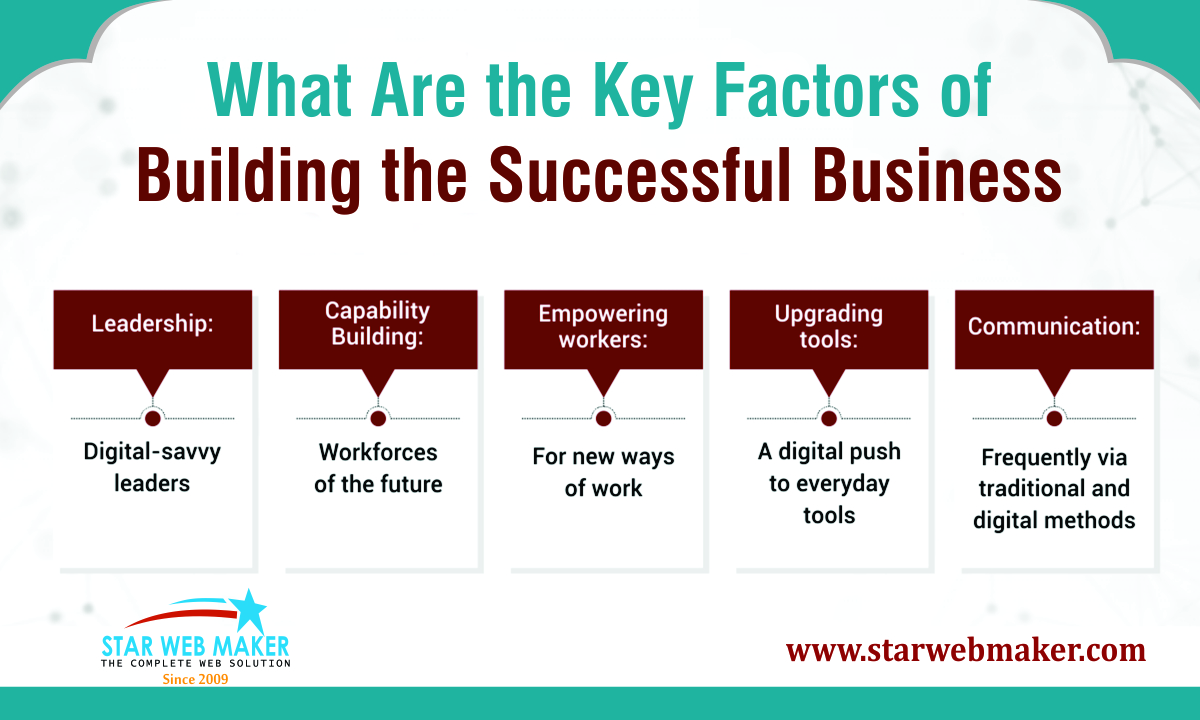
The most successful businesses in history grew not through constant external funding, but through the power of retained earnings. By reinvesting profits back into the company—whether through better technology, more efficient systems, or higher-tier talent—the business creates a compounding effect.
This internal compounding is often more valuable than seeking external investment because it allows the founders to maintain control and avoid the “growth at all costs” trap that often leads to financial ruin. Reinvestment should be focused on increasing the “moat” around the business, making it harder for competitors to enter the space and more expensive for customers to leave.
Diversification vs. Core Competency Investment
A common financial trap is “diworsification”—the act of investing profits into unrelated side projects that distract from the primary profit engine. A successful business understands its “circle of competence.” Instead of starting five mediocre businesses, the savvy entrepreneur doubles down on the one that is already working.
Scaling should be focused on vertical or horizontal integration that strengthens the core business. This might mean acquiring a supplier to lower costs (vertical) or launching a complementary product line for the existing customer base (horizontal). Every dollar reinvested must be benchmarked against the expected internal rate of return (IRR). If a reinvestment opportunity doesn’t beat a basic market index or a high-yield savings account after accounting for risk, the capital might be better off returned to the owners or kept as a cash reserve.
Navigating Capital Infusion and Debt
At certain stages of growth, internal cash flow may not be enough to capture a massive market opportunity. Knowing when and how to bring in outside capital is a hallmark of high-level business success.
Bootstrapping vs. External Funding
Bootstrapping—funding a business entirely from its own revenue—is the ultimate test of financial viability. It forces the business to be lean, disciplined, and customer-focused. However, there are times when “speed to market” is the most important factor. In these cases, seeking venture capital or angel investment may be necessary.
The trade-off is clear: equity. Giving away a percentage of the company means giving away a percentage of all future profits. Successful business owners only seek external equity when the infusion of capital will grow the “pie” so significantly that their smaller slice of the new pie is worth more than their 100% stake in the old one.
Leveraging Debt as a Growth Multiplier
For established businesses with steady cash flows, debt is often a more attractive option than equity. Low-interest loans or lines of credit allow a business to purchase equipment, hire staff, or fund marketing campaigns without giving up ownership.
The key to using debt successfully is the “spread.” If a business can borrow money at 6% interest and deploy that capital into a project that yields a 15% return, the business has successfully manufactured a 9% margin on “other people’s money.” This is the essence of financial leverage. However, this strategy requires rigorous risk management. Over-leveraging during a period of high interest rates or declining demand is the primary reason why otherwise successful businesses fail.
Exit Strategy and Valuation Metrics
A truly successful business is one that is “built to sell,” even if the owner never intends to sell it. A business that can operate without its founder and consistently produces high net income is an asset with a high market valuation.
Understanding EBITDA and Multiples
In the world of business finance, valuation is often driven by a multiple of EBITDA (Earnings Before Interest, Taxes, Depreciation, and Amortization). This metric provides a standardized view of the company’s operational profitability. To increase the “success” of a business in financial terms, the owner must focus on both increasing EBITDA and increasing the “multiple” the market is willing to pay.
Multiples are increased by reducing risk, diversifying the customer base, and creating recurring revenue models. A business with 1,000 customers paying $100 a month is valued much higher than a business with one customer paying $100,000 a month, because the risk of revenue loss is significantly lower.

Building Generational Wealth through Business Equity
The ultimate stage of business success is the transition from “earned income” to “asset-based wealth.” By building a company that is an independent, cash-flowing entity, the owner creates a vehicle for long-term wealth. This asset can be sold for a massive liquidity event, passed down to heirs, or kept as a source of passive distributions.
To reach this stage, the business must move beyond the “hustle” phase and into the “institutional” phase. This requires documented systems, professional financial auditing, and a management team capable of maintaining profitability. When a business reaches this level of financial maturity, it is no longer just a job for the owner; it is a sophisticated financial instrument that provides security, freedom, and the capital necessary to pursue further ventures.
aViewFromTheCave is a participant in the Amazon Services LLC Associates Program, an affiliate advertising program designed to provide a means for sites to earn advertising fees by advertising and linking to Amazon.com. Amazon, the Amazon logo, AmazonSupply, and the AmazonSupply logo are trademarks of Amazon.com, Inc. or its affiliates. As an Amazon Associate we earn affiliate commissions from qualifying purchases.