
Navigating the intricacies of tax obligations can often feel daunting, but fulfilling your responsibility to the Internal Revenue Service (IRS) is a cornerstone of sound personal and business finance. Whether you owe additional taxes, are making estimated payments, or are settling a past due amount, understanding the various methods available is crucial for accuracy, efficiency, and peace of mind. This comprehensive guide delves into the financial tools and strategies for making payments to the IRS, ensuring you meet your obligations effectively within the money management framework.
Navigating Your Tax Obligations: Understanding IRS Payments
Making a payment to the IRS isn’t merely a transaction; it’s a critical component of your overall financial health and compliance. Understanding the fundamental aspects of this process can prevent penalties, reduce stress, and ensure your financial records remain in good standing.
Why Timely Payments Matter
The IRS operates on a pay-as-you-go tax system. This means taxpayers are expected to pay most of their tax throughout the year, either through withholding from paychecks or by making estimated tax payments. Failing to pay on time can lead to significant financial repercussions. The IRS typically charges penalties for late payment and interest on underpayments. These charges can accrue rapidly, turning a manageable tax liability into a much larger burden. Proactive and timely payments are therefore a fundamental principle of effective financial management, helping to preserve your capital and avoid unnecessary costs. From a personal finance perspective, budgeting for taxes throughout the year or ensuring adequate withholdings are strategies that prevent a large, unexpected tax bill that could destabilize your financial planning.
Key Information You’ll Need
Before initiating any payment, gathering the correct information is paramount. This includes:
- Your Taxpayer Identification Number (TIN): For individuals, this is typically your Social Security Number (SSN). For businesses, it’s often an Employer Identification Number (EIN).
- The Tax Year for the Payment: Clearly identifying which tax year the payment applies to is vital, especially if you are making estimated payments or paying a past due amount.
- The Payment Amount: Double-check the exact amount you intend to pay.
- The Tax Form or Purpose: Whether it’s for Form 1040, estimated taxes (Form 1040-ES), a specific notice, or an installment agreement, knowing the purpose helps ensure the payment is correctly credited.
- Bank Account Information (for direct payments): This includes your bank’s routing number and your checking or savings account number.
Having these details readily available streamlines the payment process and significantly reduces the chance of errors, which could delay crediting your payment or even lead to incorrect penalty assessments.
Digital Pathways: Convenient Online Payment Methods
In an increasingly digitized world, the IRS has embraced technology to offer multiple online payment options, prioritizing convenience, speed, and security. These digital financial tools are often the most recommended methods due to their efficiency and the ability to track payments electronically.
IRS Direct Pay: Streamlined Bank Account Transfers
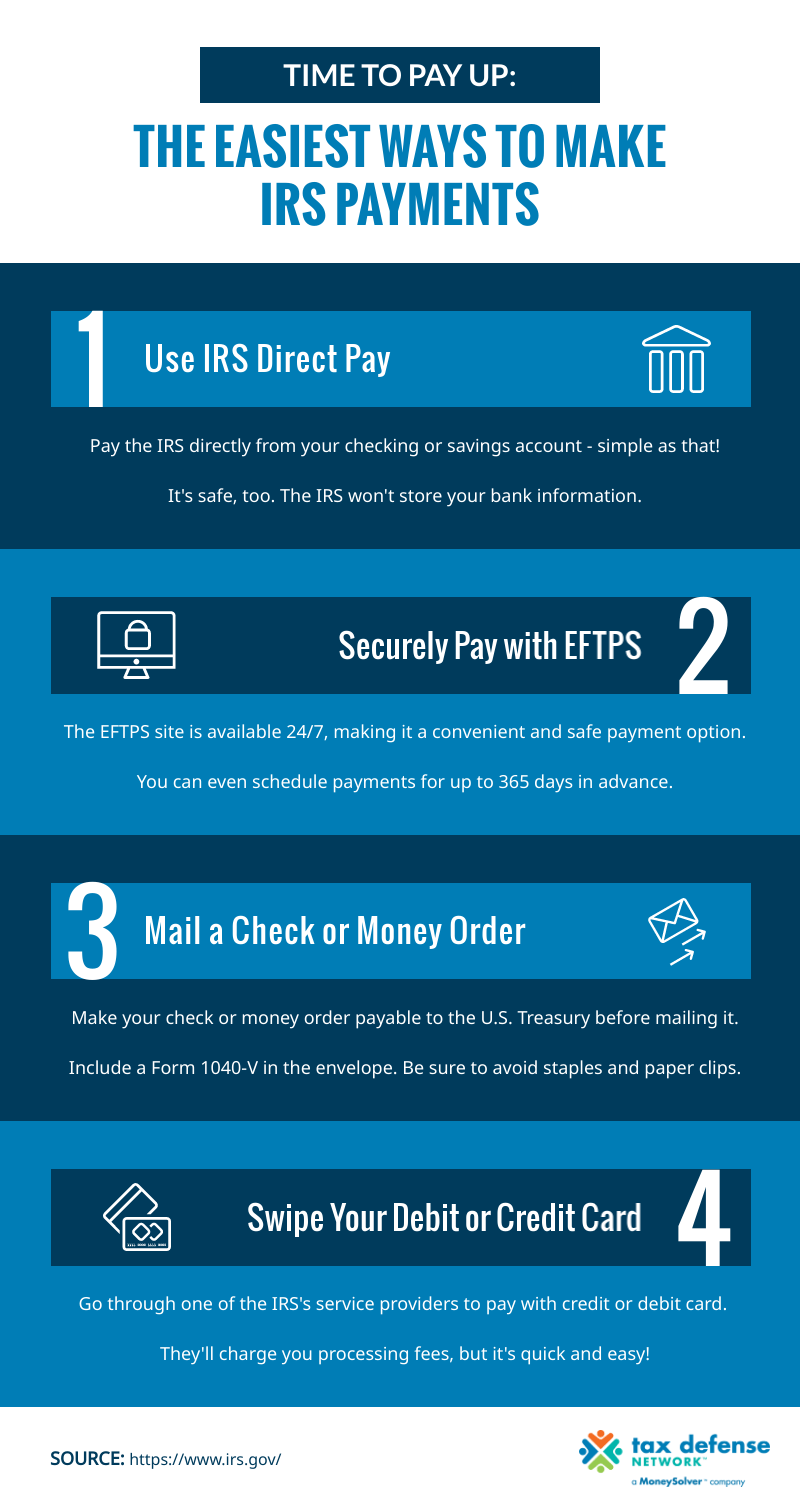
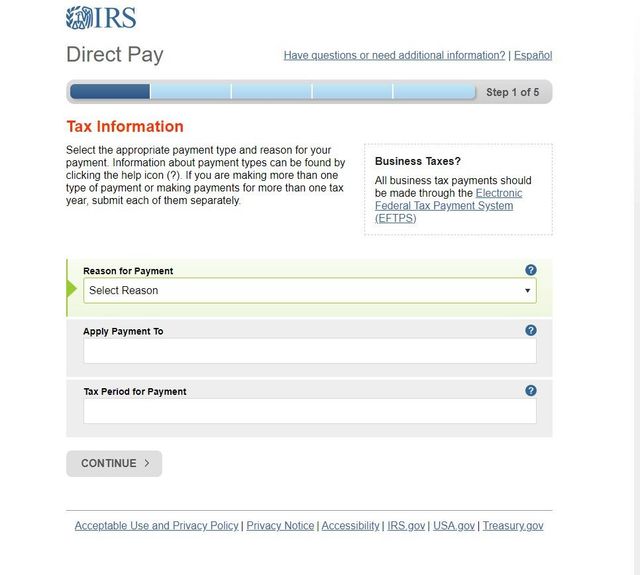
IRS Direct Pay is a free, secure web service that allows individuals to pay their income tax directly from a checking or savings account. This method is available for various types of payments, including:
- Form 1040 series taxes (tax due on an original return, an amended return, or an extension payment).
- Estimated tax payments.
- Installment agreement payments.
The primary advantages of IRS Direct Pay include no processing fees, immediate confirmation, and the ability to schedule payments up to 365 days in advance. It’s an ideal tool for personal finance management, allowing taxpayers to set and forget future payments, integrating seamlessly into a disciplined budget.
EFTPS: The Business Standard
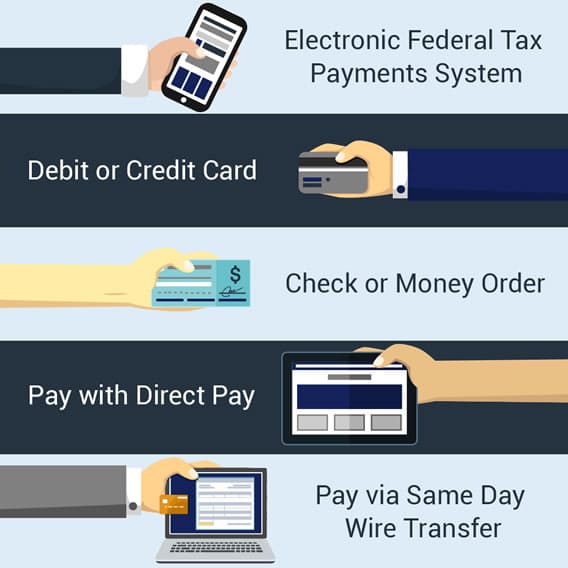
The Electronic Federal Tax Payment System (EFTPS) is the IRS’s long-standing electronic payment option, primarily used by businesses but also available to individuals. It allows taxpayers to make all types of federal tax payments, including income, employment, excise, and corporate taxes.
To use EFTPS, you must first enroll on their website. After enrollment and receiving a PIN, you can schedule payments online or by phone. EFTPS also allows you to schedule payments up to 365 days in advance and offers a robust payment history feature, making it an invaluable tool for business finance and meticulous record-keeping. While it requires an initial setup, its comprehensive capabilities make it a preferred choice for entities with frequent or varied tax obligations.
Credit, Debit Card, or Digital Wallet Options
For those who prefer the convenience or rewards associated with using credit or debit cards, the IRS partners with several third-party payment processors. While the IRS itself does not charge a fee for using these methods, the processors do impose a convenience fee, which varies depending on the processor and the type of card or digital wallet used (e.g., PayPal, Click to Pay).
This option offers flexibility, especially for individuals who might need to leverage credit lines to manage an unexpected tax bill or who want to accrue credit card rewards points. However, the associated fees should be weighed against the benefits, considering whether the rewards outweigh the cost. This is a classic financial decision point, requiring an evaluation of utility versus expense, which is fundamental to personal finance.
Leveraging Third-Party Processors
When choosing to pay by credit card, debit card, or digital wallet, you will interact directly with an authorized payment processor. These processors are secure and have strict guidelines from the IRS. It’s crucial to select one from the official list provided on the IRS website to ensure legitimate and secure transactions. After making a payment, the processor will provide a confirmation number, which is essential for your records. The payment date is determined by when the payment is submitted to the processor, not when the IRS receives it from the processor. This distinction is important for meeting deadlines.
Traditional Avenues: Non-Digital Payment Options
Despite the push towards digitization, the IRS still provides traditional payment methods for those who prefer them or do not have access to online services. These methods ensure accessibility for all taxpayers.
Paying by Mail: Check or Money Order
For taxpayers who prefer physical transactions, sending a check or money order via mail remains a viable option. When paying by mail:
- Make your check or money order payable to the “U.S. Treasury.”
- Write your name, address, daytime phone number, Social Security Number (or EIN), the tax year, and the related tax form number (e.g., “2023 Form 1040”) on the check or money order.
- Do not staple or attach the payment to your tax return.
- Include a payment voucher (Form 1040-V) if you are filing a paper Form 1040 series return.
- Mail your payment to the correct IRS address, which varies depending on your location and the type of form being filed. Always check the IRS website or your tax form instructions for the correct mailing address.
While this method provides a tangible record (a cancelled check), it is slower and carries the risk of postal delays. It also lacks the immediate confirmation provided by digital methods.
Cash Payments Through Retail Partners
The IRS offers a cash payment option through various retail partners nationwide. This service allows taxpayers to make payments in cash at participating stores, often using a barcode generated online or from an IRS notice. This method is particularly useful for individuals who are unbanked or underbanked.
To utilize this, you must first access a secure payment network online (like PayNearMe or ACI Payments, Inc.) to generate a payment code or barcode. You then take this code and your cash to a participating retail location (e.g., 7-Eleven, CVS). There may be a small fee charged by the retail partner for this service. Always retain the transaction receipt as proof of payment.
Wire Transfers (for Specific Scenarios)
In specific, high-value situations, particularly for international taxpayers or certain business scenarios, wire transfers may be an option. However, this is generally reserved for very particular circumstances and usually requires coordination directly with the IRS or a financial institution well in advance. This is not a standard method for the average taxpayer and typically incurs bank fees.
When You Can’t Pay: Understanding Payment Solutions
Facing a tax liability you cannot immediately afford can be stressful, but the IRS offers several relief options. It’s crucial to communicate with the IRS proactively rather than ignoring the problem, as silence can lead to escalated penalties and collection actions. Understanding these financial tools can help you manage your debt responsibly.
Installment Agreements: Spreading Out Your Payments
If you owe taxes but cannot pay the full amount by the due date, you may be able to set up an Installment Agreement. This allows you to make monthly payments for up to 72 months. While entering into an installment agreement will still incur interest and a late payment penalty (albeit at a reduced rate), it prevents more severe collection actions. You can apply for an Installment Agreement online through the IRS website (Online Payment Agreement tool) if you owe a combined total of under $50,000 in tax, penalties, and interest. This is a practical financial strategy for managing short-term liquidity issues while still fulfilling your tax obligations.
Offer in Compromise (OIC): Settling Your Debt
An Offer in Compromise (OIC) allows certain taxpayers to resolve their tax liability with the IRS for a lower amount than what they originally owe. An OIC may be an option when you have a true inability to pay the full amount due to your current financial situation, or when there’s doubt about the amount owed or the collectibility of the debt. The IRS considers your ability to pay, your income, expenses, and asset equity when evaluating an OIC. It’s a complex process that requires significant financial documentation and negotiation, often best navigated with the help of a tax professional. From a financial planning perspective, an OIC is a last-resort debt resolution strategy.
Temporary Delay in Collection: Hardship Relief
In cases of extreme financial hardship, the IRS may determine that you cannot pay any of your tax debt. In such situations, the IRS may temporarily delay collection until your financial condition improves. This is known as “Currently Not Collectible” status. While collection is delayed, the interest and penalties continue to accrue. This is not debt forgiveness but a pause in collection efforts due to your inability to pay without sacrificing basic living expenses. To qualify, you must provide the IRS with detailed financial information proving your hardship.
The Importance of Communication with the IRS
The most critical takeaway when facing an inability to pay is to communicate directly and honestly with the IRS. Ignoring notices or failing to respond can lead to liens, levies, or other aggressive collection tactics. The IRS is often willing to work with taxpayers who demonstrate a good-faith effort to resolve their tax debts. Proactive engagement can lead to more favorable outcomes and helps maintain your financial standing.
Best Practices and Pitfall Avoidance
Successfully navigating IRS payments requires diligence and adherence to best practices in financial record-keeping and transaction management. Avoiding common pitfalls can save you time, money, and unnecessary stress.
Double-Check Your Information
Errors in your Social Security Number, routing number, tax year, or payment amount can cause significant delays or misapplication of your payment. Before submitting any payment, whether online or by mail, carefully review all details. This simple step is a critical aspect of financial accuracy and compliance.
Keep Meticulous Records
For every payment made, retain robust records. This includes:
- Confirmation numbers for online payments.
- Cancelled checks or bank statements showing the debit.
- Copies of payment vouchers (Form 1040-V).
- Dates and amounts of all payments.
These records are your proof of payment and invaluable if there’s ever a dispute or discrepancy with the IRS. Good record-keeping is a fundamental principle of sound personal and business finance.
Understand Penalties and Interest
Be aware that even if you pay your taxes in full, if you pay them late, you may still owe penalties and interest. Conversely, if you receive a refund, the IRS may still charge you penalties for underpayment during the year if you did not pay enough estimated tax or have enough withheld. Understanding these rules helps you anticipate potential costs and make informed financial decisions.
Verify Payment Status
If you’ve made a payment and want to confirm its receipt, you can check the IRS website’s “Check Your Payment” tool or review your IRS online account. For payments made by mail, this process can take several weeks. Regularly verifying payment status ensures your financial accounts with the IRS are current and accurate.
Avoiding Scams
Unfortunately, tax season is ripe for scams. Be wary of unsolicited emails, phone calls, or texts claiming to be from the IRS demanding immediate payment via unusual methods (like gift cards or wire transfers). The IRS typically initiates contact through mail. Always verify the authenticity of any communication if you have doubts, especially if it involves payment demands. Protecting your financial information from fraudulent schemes is paramount.
Paying your taxes to the IRS is an essential aspect of financial responsibility. By understanding the various payment methods, leveraging available digital tools, recognizing traditional options, and knowing your avenues for relief if you can’t pay, you can manage your tax obligations effectively. Proactive financial planning, meticulous record-keeping, and diligent adherence to IRS guidelines are the keys to a smooth and penalty-free tax experience, reinforcing your overall financial health.
aViewFromTheCave is a participant in the Amazon Services LLC Associates Program, an affiliate advertising program designed to provide a means for sites to earn advertising fees by advertising and linking to Amazon.com. Amazon, the Amazon logo, AmazonSupply, and the AmazonSupply logo are trademarks of Amazon.com, Inc. or its affiliates. As an Amazon Associate we earn affiliate commissions from qualifying purchases.