
Creating a home budget is often perceived as a restrictive exercise in self-denial. However, in the realm of personal finance, a budget is not a cage; it is a roadmap. It is the tactical execution of your financial values, allowing you to direct your capital toward the things that matter most while eliminating the silent drain of unconscious spending. Mastery over your household cash flow is the foundational step toward wealth accumulation, debt elimination, and long-term financial security.
To build a budget that actually works, one must move beyond simple arithmetic and address the structural habits that govern daily spending. This guide provides a professional framework for designing, implementing, and maintaining a home budget that serves as a powerful engine for your financial goals.
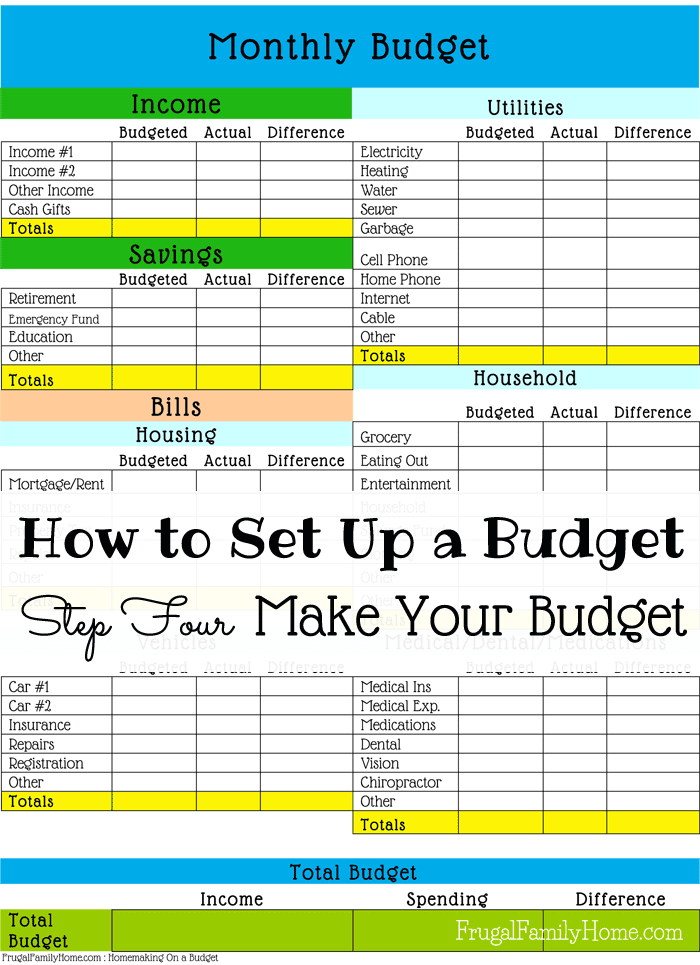
The Foundation: Auditing Your Current Financial State
Before you can chart a course for the future, you must have an uncompromisingly honest view of your current situation. Many individuals fail at budgeting because they base their plans on idealized versions of their spending rather than historical reality.
Identifying Total Net Income
Your budget must be built on “take-home pay,” not your gross salary. To calculate your actual monthly cash flow, aggregate all sources of income after taxes, 401(k) contributions, and insurance premiums have been deducted. If you are a freelancer or have a variable income, use a conservative average of your last six to twelve months of earnings. This prevents the “lifestyle creep” that often occurs during high-earning months, which can leave you vulnerable during leaner periods.
Categorizing Historical Expenses
The most effective way to begin is by reviewing the last 90 days of bank statements and credit card transactions. Group these expenses into two primary categories: fixed and variable.
-
Fixed Expenses: These are recurring costs that remain relatively constant, such as mortgage or rent payments, car insurance, utility base rates, and subscription services.
-
Variable Expenses: These fluctuate based on behavior, such as groceries, dining out, fuel, entertainment, and miscellaneous shopping.
Calculating the Gap
Subtract your total average monthly expenses from your total net income. If the number is positive, you have a surplus that can be directed toward investing or debt repayment. If the number is negative, you are living on credit, and immediate structural changes are required to prevent a long-term financial crisis.
Strategic Frameworks: Choosing a Budgeting Method
There is no one-size-fits-all approach to financial management. The “best” budget is the one you will actually stick to. Depending on your personality and financial complexity, one of the following proven methodologies may be most effective.
The 50/30/20 Rule
This is a popular high-level framework for those who prefer simplicity over granular tracking. Under this model, you allocate your after-tax income into three buckets:
-
50% for Needs: Housing, utilities, basic groceries, and minimum debt payments.
-
30% for Wants: Hobbies, vacations, dining out, and non-essential upgrades.
-
20% for Financial Goals: This includes high-interest debt repayment, emergency fund contributions, and retirement investing.
Zero-Based Budgeting
Often cited as the most effective method for aggressive debt repayment, zero-based budgeting requires that every single dollar of income be assigned a specific “job” at the beginning of the month. If you earn $5,000, your categories (including savings and investments) must total exactly $5,000. This method eliminates “leakage”—those small, unmonitored purchases that can aggregate into thousands of dollars of lost potential annually.
The Envelope System (and Digital Equivalents)
For those who struggle with overspending in specific categories like “Dining” or “Clothing,” the envelope system provides hard boundaries. You decide on a monthly limit for a category, withdraw that amount in cash, and place it in an envelope. Once the cash is gone, spending in that category stops until the next month. In the modern era, many financial tools allow you to do this digitally through “sinking funds” or sub-accounts.
Optimizing the Budget: Identifying Leaks and Opportunities
Once the framework is established, the next phase is optimization. A budget is a living document that should be refined to maximize the efficiency of every dollar.

The “Sinking Fund” Strategy
One of the most common reasons budgets fail is the “unexpected” expense—an annual car registration, a semi-annual insurance premium, or holiday spending. Professional budgeters use sinking funds to neutralize these threats. By calculating the annual cost of these items and dividing by twelve, you can include them as a “monthly expense” in your budget. This ensures the cash is available when the bill arrives, preventing you from dipping into your emergency fund or using high-interest credit.
Analyzing Opportunity Costs
Every dollar spent on a depreciating asset or a fleeting convenience is a dollar that cannot be invested in a compounding asset. When reviewing your variable expenses, look for high-impact cuts. For example, reducing a $600 monthly dining-out habit to $300 and investing the difference in a low-cost index fund could result in hundreds of thousands of dollars in wealth over a 30-year horizon. This shift in perspective—from “saving” to “investing in your future self”—is essential for long-term motivation.
Negotiating Fixed Costs
Fixed costs are not always as rigid as they seem. Periodically auditing your insurance policies, internet packages, and cell phone plans can yield significant savings. In the competitive financial landscape, many providers offer retention discounts or lower rates for new customers. A few hours of negotiation per year can often “find” an extra $100 to $200 per month in your budget without changing your lifestyle at all.
Leveraging Financial Tools for Sustainability
In the digital age, manual spreadsheets are no longer the only option. Utilizing the right technology can automate the most tedious parts of budgeting, making it easier to stay consistent.
Aggregation Tools
Apps and software that sync directly with your bank accounts and credit cards provide real-time visibility into your spending. These tools can automatically categorize transactions and alert you when you are nearing your limit in a specific category. However, the caveat of automation is the “set it and forget it” trap; you must still review the data weekly to ensure accuracy and maintain awareness of your financial flow.
The Role of Spreadsheets
For those who want total control and privacy, a custom spreadsheet remains the gold standard. It allows for complex forecasting and historical trend analysis that many apps lack. By manually entering data, you develop a “tactile” relationship with your money, which often leads to more disciplined spending habits.
Automating Savings and Debt Payments
The most successful budgeters treat their savings and debt payments like a mandatory bill. By automating a transfer to your brokerage account or high-yield savings account on the day your paycheck hits, you remove the “willpower” element of budgeting. You learn to live on what is left, effectively forcing a higher savings rate.
Maintaining Momentum: The Monthly Review
A home budget is not a project with a completion date; it is a recurring management process. To ensure longevity, implement a “Monthly Financial Review.”
Assessing Variances
At the end of each month, compare your actual spending against your budgeted amounts. If you consistently overspend in one category, your budget may be unrealistically low, or your habits may need adjustment. Use this data to recalibrate for the following month.
Adjusting for Life Stages
Your budget should evolve as your life does. A promotion, the birth of a child, or a change in housing costs requires a total re-evaluation of your allocations. The goal is to remain agile. A budget that is too rigid will eventually be abandoned, while a budget that is too loose provides no benefit.
Celebrating Milestones
Psychological stamina is vital in personal finance. Use your budget to track your progress toward specific milestones—hitting your first $10,000 in an emergency fund, paying off a credit card, or reaching a certain net worth. Acknowledging these wins reinforces the positive behavior and transforms budgeting from a chore into a rewarding game of strategy.

Conclusion
Mastering a home budget is the ultimate act of financial self-care. It provides the clarity needed to make informed decisions, the discipline to avoid debt, and the fuel to build real wealth. By understanding your income, choosing a strategic framework, and utilizing modern tools, you transition from being a passive observer of your finances to being the active architect of your financial future. The process requires initial effort, but the peace of mind and financial freedom it produces are among the highest returns on investment you will ever achieve.
aViewFromTheCave is a participant in the Amazon Services LLC Associates Program, an affiliate advertising program designed to provide a means for sites to earn advertising fees by advertising and linking to Amazon.com. Amazon, the Amazon logo, AmazonSupply, and the AmazonSupply logo are trademarks of Amazon.com, Inc. or its affiliates. As an Amazon Associate we earn affiliate commissions from qualifying purchases.