
In an increasingly digital financial landscape, tools like Cash App have become indispensable for millions, offering a streamlined way to manage money on the go. At the heart of its utility for everyday spending is the Cash App Card – a free, customizable debit card linked directly to your Cash App balance. Understanding how to efficiently load money onto this card is fundamental to harnessing the full power of your digital wallet, enabling seamless transactions, bill payments, and even budgeting. This guide delves into the various methods for funding your Cash App Card, offering insights into optimizing its use within your broader personal finance strategy.
Understanding Your Cash App Card: A Gateway to Digital Finance
The Cash App Card isn’t just another debit card; it’s a direct extension of your Cash App balance, designed to bridge the gap between your digital funds and the physical world of spending. Issued by Sutton Bank and powered by Visa, it functions like any traditional debit card, allowing you to make purchases online, in stores, and withdraw cash from ATMs (with associated fees). But its integration with the Cash App ecosystem offers unique advantages for financial management.
The Role of Your Cash App Card in Personal Finance
For many, the Cash App Card serves multiple roles: it can be a primary spending card for day-to-day expenses, a secondary card for specific budgeting purposes, or even a convenient tool for receiving and spending funds from side hustles or peer-to-peer transactions. Its appeal lies in its simplicity, speed, and the instant access it provides to your Cash App balance. Unlike traditional bank cards that might take days to reflect certain transactions, your Cash App Card taps directly into your immediately available funds. This real-time access is crucial for managing cash flow effectively, especially for those who rely on immediate fund availability for budgeting or unforeseen expenses.
Benefits of Integrating the Cash App Card into Your Financial Strategy
Beyond basic spending, the Cash App Card offers several benefits that enhance its utility in your personal finance toolkit. Its customization options, for instance, allow for a personalized touch, while features like “Boosts” provide instant discounts at various merchants, directly saving you money on everyday purchases. For individuals looking to manage specific spending categories, the Cash App Card can be designated for entertainment, groceries, or travel, making it easier to track expenditures separately from a primary bank account. Furthermore, its direct link to the Cash App platform means that managing your funds, reviewing transaction history, and even sending money to friends or family are all accessible from a single, intuitive interface. This consolidation simplifies financial oversight, reducing the complexity often associated with juggling multiple financial accounts and tools.
Diverse Methods to Fund Your Cash App Card: Beyond the Basics
Loading money onto your Cash App Card is a straightforward process, but the platform offers several methods, each suited to different financial needs and preferences. Understanding these options is key to ensuring your card is always funded when you need it.
Linking a Bank Account for Direct Transfers
The most common and often preferred method for loading money onto your Cash App Card is by linking an external bank account. This method facilitates direct transfers from your checking or savings account to your Cash App balance.
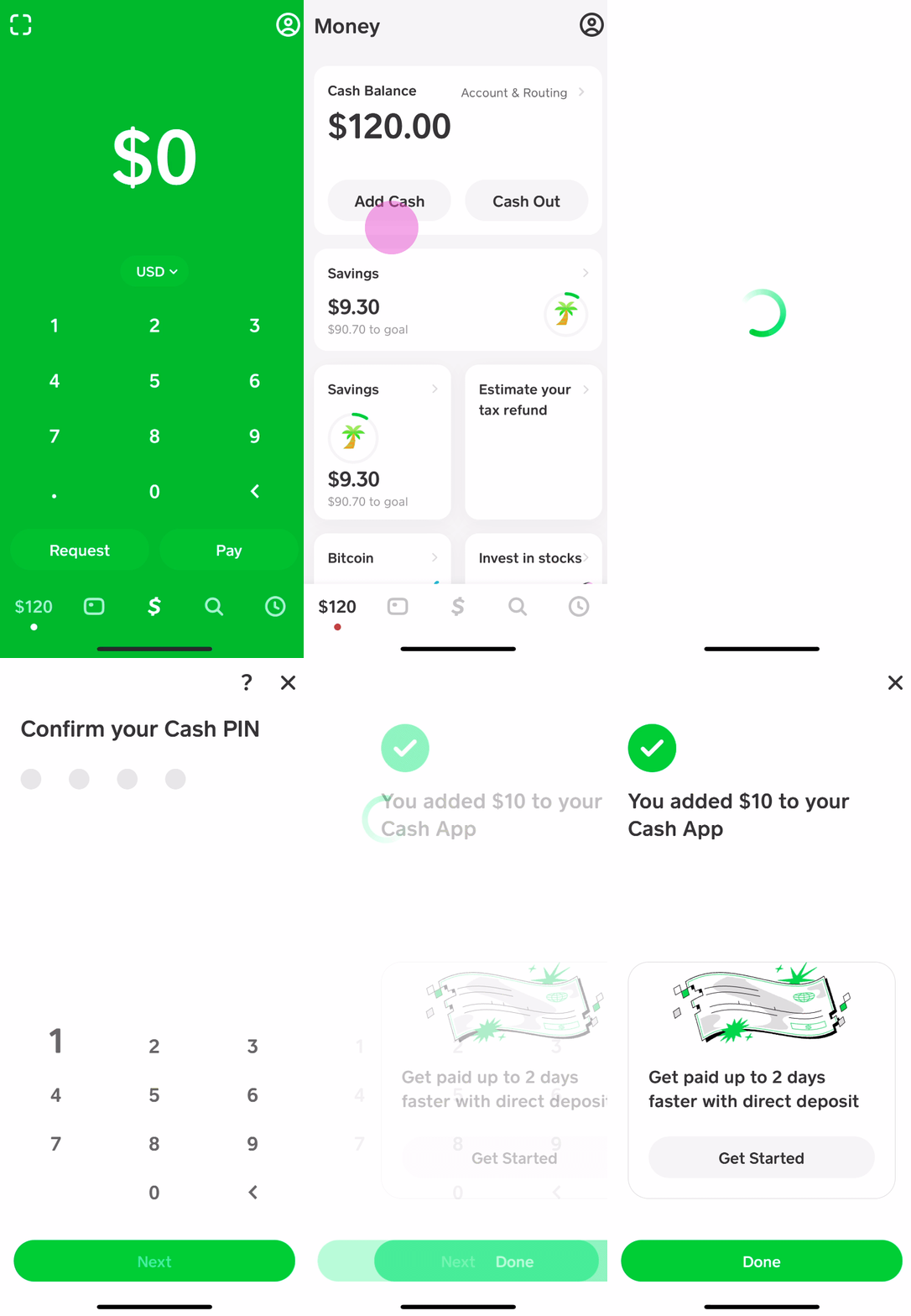
- How it works: Within the Cash App, you navigate to the “Banking” or “My Cash” tab, select “Add Cash,” and choose your linked bank account as the source. You’ll specify the amount, confirm, and the funds are typically transferred almost instantly.
- Benefits: This method is highly secure, as it leverages established banking infrastructure, and is ideal for larger transfers or regular top-ups. It also offers transparency, with transactions clearly visible in both your bank statement and Cash App history.
Adding Funds with a Debit Card: Quick Top-Ups
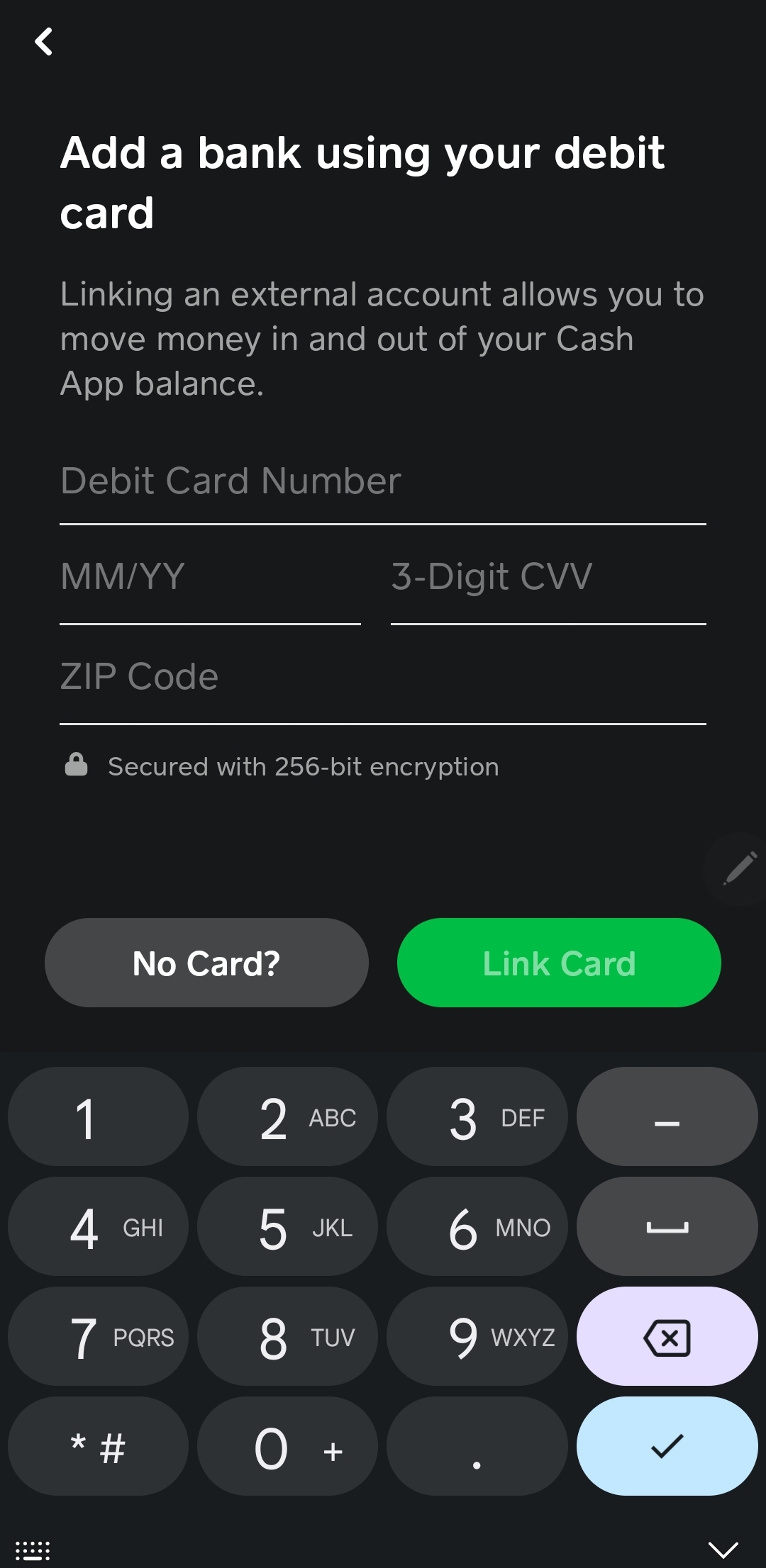
If you need to add funds quickly and your bank account isn’t immediately accessible, or if you prefer not to link your primary bank account, using a linked debit card is an excellent alternative.
- Process: Similar to linking a bank account, you’ll add your debit card details to Cash App. When adding cash, select the debit card as your funding source.
- Instant vs. Standard: While most debit card transfers are instant, some may take slightly longer depending on your bank. Be aware that some banks or Cash App itself may impose limits on the amount you can add via debit card within a specific timeframe.
Setting Up Direct Deposit: Leveraging Cash App for Regular Income
For those seeking to integrate Cash App more deeply into their financial life, setting up direct deposit allows you to receive paychecks, government benefits, or tax refunds directly into your Cash App balance. This can be particularly appealing for individuals without traditional bank accounts or those looking for early access to their funds.
- How it works: Cash App provides you with unique routing and account numbers. You simply provide these details to your employer or benefits provider, just as you would for a traditional bank account.
- Benefits: Many users experience early access to their paychecks (up to two days earlier than traditional banks), which can significantly aid in financial planning and bill management. It streamlines the process of getting paid and immediately having funds available on your Cash App Card.
Receiving Money from Others: Peer-to-Peer Transfers
One of Cash App’s core functionalities is its peer-to-peer payment system. Friends, family, or even clients can send money directly to your Cash App account, which then becomes instantly available on your Cash App Card.
- Utilizing your $Cashtag: Each Cash App user has a unique $Cashtag. By sharing this with others, they can send money to you quickly and securely. The funds appear in your balance and are immediately accessible via your card. This method is highly convenient for splitting bills, receiving payments for services, or simply getting money from someone.
Depositing Cash at Retailers: Bridging the Physical and Digital
For those who frequently deal with physical cash, Cash App offers a convenient way to convert that cash into digital funds available on your card. This is particularly useful if you receive cash payments or prefer managing your funds digitally.
- Participating Stores: This service is available at various major retailers, including Walmart, Walgreens, CVS, 7-Eleven, and others. You can typically find a list of nearby participating locations within the Cash App.
- Process and Fees: At the store, you’ll generate a barcode within the Cash App. Present this barcode to the cashier along with the cash you wish to deposit. The cashier scans the barcode, accepts your cash, and the funds are usually available in your Cash App balance within minutes. Be aware that a small fee (often around $1) is typically charged per cash deposit by the retailer.
Optimizing Your Cash App Card Usage: Financial Best Practices
Beyond simply loading money, maximizing the value of your Cash App Card involves smart financial habits and an understanding of the platform’s features and limitations.
Budgeting with Cash App: Tracking Spending and Utilizing Features
Integrating your Cash App Card into your budgeting strategy can significantly enhance your financial control. The app provides a clear transaction history, allowing you to track where your money goes. For instance, you could dedicate your Cash App Card solely for discretionary spending (e.g., dining out, entertainment) and monitor that budget separately.
- Leveraging Activity Logs: Regularly review your activity log to identify spending patterns.
- Categorization (Manual): While Cash App doesn’t offer robust auto-categorization, you can mentally (or with a separate spreadsheet) categorize your Cash App spending to fit into your overall budget.
- “Boosts” for Savings: Activating relevant “Boosts” can provide instant discounts on purchases, directly contributing to savings within your spending categories.
Security Measures: Protecting Your Funds and Financial Data
As with any financial tool, security is paramount. Cash App employs several features to protect your account, and users should also adopt best practices.
- PIN, Touch ID/Face ID: Always enable these features for accessing your Cash App and authorizing transactions.
- Two-Factor Authentication (2FA): Set up 2FA for an added layer of security, requiring a code from your phone in addition to your password.
- Recognizing Scams: Be vigilant against phishing attempts and scams. Cash App will never ask for your PIN or full login details outside the app. Only send money to people you know and trust.
- Report Suspicious Activity: Immediately report any unauthorized transactions or suspicious activity to Cash App support.
Understanding Fees and Limits: Transparency in Financial Tools
While Cash App is largely fee-free for standard operations, it’s crucial to understand where fees might apply and what transaction limits exist. This knowledge prevents unexpected charges and ensures your transactions go smoothly.
- Instant Transfer Fees: While standard bank transfers are free, instant transfers from Cash App to a linked bank account typically incur a small fee (e.g., 0.5% – 1.75%).
- ATM Withdrawal Fees: While Cash App doesn’t charge for ATM withdrawals if you’ve set up direct deposit (after meeting certain criteria for fee-free withdrawals), the ATM operator itself may charge a fee. If you haven’t met the criteria, Cash App charges an additional fee.
- Cash Deposit Fees: As mentioned, retailers may charge a small fee for cash deposits.
- Transaction Limits: Cash App has limits on how much you can send, receive, and withdraw over certain periods. For example, initially, you might be limited to sending $250 within any 7-day period and receiving $1,000 within any 30-day period. These limits can be increased by verifying your identity with your full name, date of birth, and the last 4 digits of your SSN.
Integrating Cash App into Your Personal Finance Strategy
The Cash App Card is a versatile financial tool that, when used strategically, can significantly complement your existing personal finance infrastructure. It’s not necessarily a replacement for a traditional bank account, but rather a powerful addition.
Complementing Traditional Banking
Many users find Cash App most effective when it works in conjunction with their primary bank. For example, you might use your traditional bank for large savings, investments, and complex financial services, while leveraging Cash App for daily spending, quick peer-to-peer payments, and specific budgeting categories. This hybrid approach allows you to enjoy the best of both worlds: the robust services of a traditional bank and the agility and convenience of a digital wallet. Using direct deposit to Cash App for a portion of your income, for instance, can help segment funds for specific immediate expenses or discretionary spending, keeping your main bank account for long-term savings and bill payments.

Utilizing Cash App for Specific Financial Goals
The simplicity of the Cash App Card makes it ideal for managing particular financial goals. You could use it to create a dedicated “fun money” fund, load a weekly allowance onto it for a dependent, or even set aside money for a short-term savings goal like a concert ticket or a small gadget. By isolating these funds on your Cash App Card, you gain clearer visibility into that specific budget and reduce the temptation to dip into other savings. This focused approach to micro-budgeting can be surprisingly effective in achieving smaller financial objectives without overcomplicating your overall financial plan.
In conclusion, loading money onto your Cash App Card is a foundational step in mastering this versatile digital financial tool. By understanding the various deposit methods, embracing security best practices, and strategically integrating it into your personal finance framework, you can unlock its full potential for efficient, flexible, and insightful money management.
aViewFromTheCave is a participant in the Amazon Services LLC Associates Program, an affiliate advertising program designed to provide a means for sites to earn advertising fees by advertising and linking to Amazon.com. Amazon, the Amazon logo, AmazonSupply, and the AmazonSupply logo are trademarks of Amazon.com, Inc. or its affiliates. As an Amazon Associate we earn affiliate commissions from qualifying purchases.