
The share market, often perceived as a labyrinth of complex jargon and volatile movements, is in reality a powerful engine for wealth creation and financial independence. For many, the idea of investing in stocks can be intimidating, conjuring images of frantic traders on a stock exchange floor. However, understanding the share market is not an exclusive domain for financial professionals; it’s an essential skill for anyone aspiring to build long-term wealth. This comprehensive guide will demystify the process, providing a structured approach to learning the intricacies of the share market, empowering you to make informed investment decisions.
Understanding the Fundamentals of the Share Market
Before diving into trading, it’s crucial to grasp the foundational concepts that underpin the share market. Think of it as learning the alphabet before writing a novel; without a solid base, sustainable success is unlikely.
What is the Share Market?
At its core, the share market (also known as the stock market or equity market) is a public exchange where shares of publicly listed companies are bought and sold. When you buy a share, you are essentially purchasing a tiny fraction of ownership in that company. This ownership gives you a claim on the company’s assets and earnings, and potentially, voting rights in corporate decisions. The market provides a platform for companies to raise capital for expansion and operations, and for investors to grow their wealth through capital appreciation (when share prices rise) and dividends (a portion of the company’s profits distributed to shareholders).
Key Concepts and Terminology
Navigating the share market requires familiarity with its unique language. Here are some fundamental terms:
- Shares/Equities: Units of ownership in a company.
- Stock Exchange: The marketplace where stocks are traded (e.g., NYSE, NASDAQ, NSE, BSE).
- IPO (Initial Public Offering): The first time a private company offers its shares to the public.
- Dividend: A distribution of a portion of a company’s earnings to its shareholders.
- Volatility: The degree of variation of a trading price series over time. High volatility means prices can change dramatically.
- Bull Market: A market condition where prices are rising or are expected to rise.
- Bear Market: A market condition where prices are falling or are expected to fall.
- Portfolio: A collection of all the investments held by an individual or institution.
- Broker: An individual or firm that executes buy and sell orders on behalf of investors.
- Market Capitalization: The total value of a company’s outstanding shares, calculated by multiplying the current share price by the number of shares outstanding.
Why Invest in the Share Market?
Investing in the share market offers several compelling advantages:
- Wealth Creation: Historically, equities have outperformed most other asset classes over the long term, offering significant potential for capital appreciation.
- Beating Inflation: Inflation erodes the purchasing power of money. Share market investments can help your money grow at a rate that outpaces inflation, preserving and enhancing your wealth.
- Compounding: The power of compounding allows your investment earnings to generate further earnings, leading to exponential growth over time.
- Liquidity: Shares of publicly traded companies are generally liquid assets, meaning they can be easily converted into cash.
Essential Steps to Self-Education in Investing
Learning about the share market is an ongoing journey, but it must start with a structured approach to self-education. Haphazard learning can lead to costly mistakes.
Start with Reputable Resources
The internet is awash with information, but not all of it is reliable. Prioritize learning from credible sources:
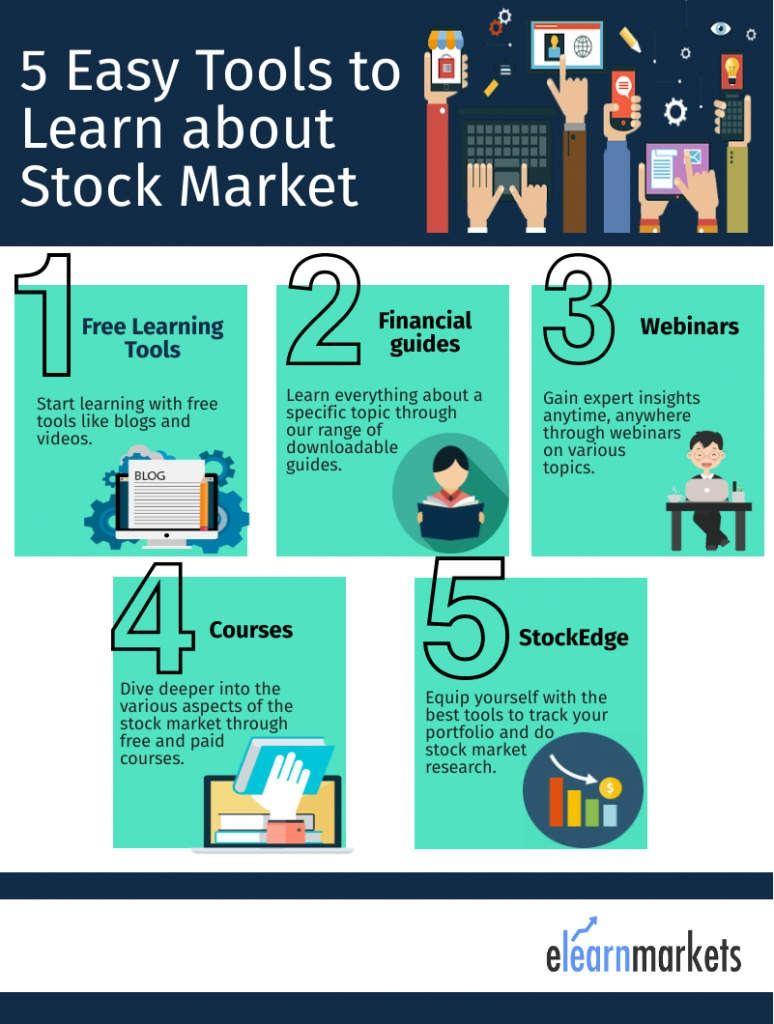
- Books: Classics like “The Intelligent Investor” by Benjamin Graham, “Common Stocks and Uncommon Profits” by Philip Fisher, and “A Random Walk Down Wall Street” by Burton Malkiel provide timeless wisdom.
- Online Courses: Platforms like Coursera, Udemy, edX, and dedicated financial education websites offer structured courses, often taught by experienced professionals.
- Financial Blogs & Podcasts: Follow reputable financial news outlets, analysts, and successful investors. Look for content that educates rather than just gives “hot tips.”
- Regulatory Bodies: Websites of national financial regulators (e.g., SEBI in India, SEC in the USA) offer investor education materials and protect against scams.
Demystifying Financial Statements
A company’s financial health is revealed through its financial statements. Learning to interpret these documents is paramount for informed decision-making:
- Balance Sheet: A snapshot of a company’s assets, liabilities, and owner’s equity at a specific point in time. It shows what a company owns, owes, and the net value.
- Income Statement (Profit & Loss Statement): Reports a company’s financial performance over a period (e.g., a quarter or year), showing revenues, expenses, and profit or loss.
- Cash Flow Statement: Details how a company generates and uses cash over a period, categorized into operating, investing, and financing activities. Understanding these statements allows you to assess a company’s profitability, solvency, and liquidity.
Practice with Paper Trading/Simulators
Before committing real capital, practice with virtual money. Many brokerage firms and financial websites offer paper trading accounts or stock market simulators. These platforms allow you to:
- Execute simulated trades with real-time market data.
- Test different strategies without financial risk.
- Become familiar with the trading platform’s interface.
- Experience the emotional ups and downs of market movements in a safe environment.
This hands-on experience is invaluable for building confidence and refining your approach.
Learn from Experienced Investors
While self-study is crucial, learning from others can accelerate your progress.
- Mentorship: If possible, find a mentor who has a proven track record in investing and aligns with your investment philosophy.
- Investment Communities: Join reputable online forums or local investment clubs where you can discuss ideas, learn from diverse perspectives, and gain insights from collective experience. Always be discerning and critically evaluate advice.

Developing Your Investment Strategy
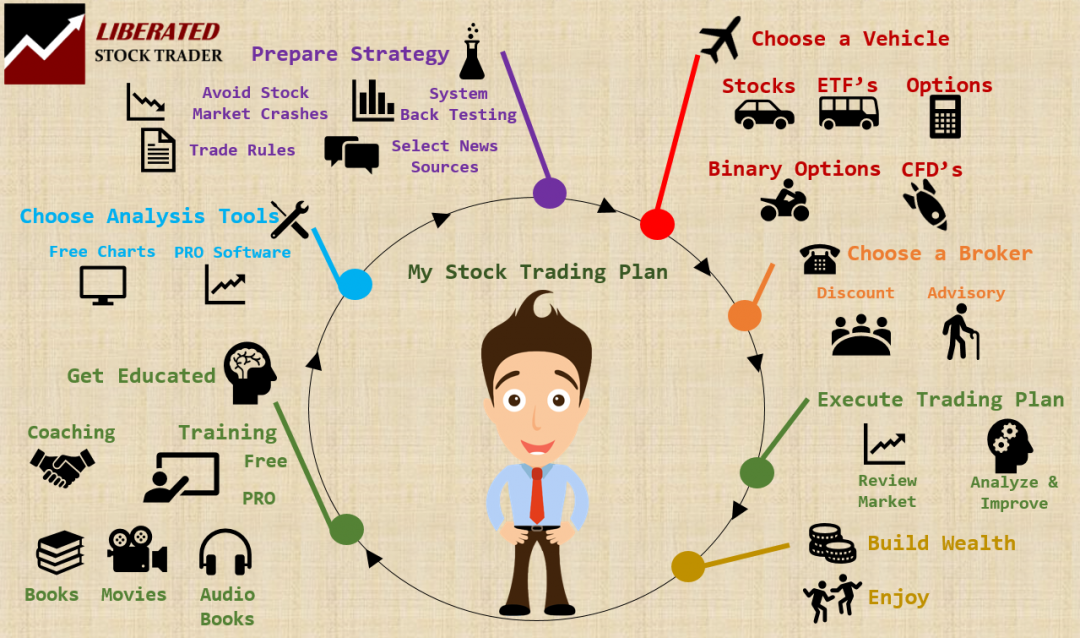
A well-defined investment strategy is your roadmap to achieving financial goals. It aligns your investment choices with your personal circumstances and objectives.
Defining Your Investment Goals and Risk Tolerance
Before making any investment, clarify what you want to achieve:
- Goals: Are you saving for retirement, a down payment on a house, or a child’s education? Your timeframe (short-term vs. long-term) will heavily influence your strategy.
- Risk Tolerance: How much risk are you comfortable taking? Are you willing to accept significant fluctuations for higher potential returns, or do you prioritize capital preservation? Your age, income stability, and existing financial obligations all play a role in determining your risk profile. A young individual with stable income can generally afford to take more risk than someone nearing retirement.
Choosing an Investment Style
There are various approaches to investing, each with its own philosophy:
- Value Investing: Buying stocks that appear to be trading for less than their intrinsic value, often focusing on fundamentals and long-term potential (e.g., Warren Buffett’s approach).
- Growth Investing: Investing in companies that are expected to grow at an above-average rate compared to the market, often characterized by higher valuations but significant future potential.
- Dividend Investing: Focusing on companies that regularly pay out a portion of their earnings as dividends, providing a steady income stream.
- Index Investing: Investing in index funds or ETFs that track a specific market index (e.g., S&P 500), offering diversification and typically lower fees with market-average returns. This is often recommended for beginners due to its simplicity and effectiveness.
The Importance of Diversification
“Don’t put all your eggs in one basket” is a golden rule in investing. Diversification involves spreading your investments across different assets, sectors, and geographical regions to reduce risk. If one investment performs poorly, others may perform well, cushioning the impact on your overall portfolio.
- Asset Allocation: Dividing your portfolio among different asset classes like stocks, bonds, and cash.
- Sector Diversification: Investing in companies from various industries (e.g., technology, healthcare, consumer goods).
- Geographical Diversification: Investing in companies from different countries or regions.
Fundamental vs. Technical Analysis
These are two primary methodologies for analyzing stocks:
- Fundamental Analysis: Involves evaluating a company’s intrinsic value by examining its financial statements, management quality, industry trends, and economic outlook. The goal is to determine if a stock is undervalued or overvalued.
- Technical Analysis: Focuses on studying past market data, primarily price and volume charts, to identify patterns and predict future price movements. Technical analysts believe that all relevant information is already reflected in the stock’s price.
Many investors combine elements of both approaches. For beginners, understanding fundamental analysis is often a more solid starting point for long-term investing.
Practical Aspects of Getting Started
Once you have a grasp of the fundamentals and a nascent strategy, it’s time to take practical steps to enter the market.
Opening a Demat and Trading Account
To buy and sell shares, you will need two accounts:
- Demat Account: A dematerialized account that holds your shares and other securities in electronic form. It’s like a digital locker for your investments.
- Trading Account: An account linked to your demat account and bank account, used to place buy and sell orders on the stock exchange.
You will need to choose a reputable brokerage firm that offers competitive fees, a user-friendly trading platform, and good customer service. The account opening process typically involves KYC (Know Your Customer) verification, including identity and address proofs.
Researching Companies and Sectors
Thorough research is non-negotiable. Before investing in any company:
- Understand the Business: What does the company do? What are its products or services? Who are its competitors?
- Financial Health: Analyze its financial statements (as discussed earlier) to assess profitability, debt levels, and cash flow.
- Management Quality: Evaluate the leadership team. Do they have a clear vision and a track record of good governance?
- Industry Outlook: Is the industry growing or contracting? What are the regulatory risks and opportunities?
- Competitive Advantage: Does the company have a ‘moat’ – something that makes it difficult for competitors to replicate its success (e.g., strong brand, unique technology, cost advantage)?
Navigating Market Psychology and Behavioral Biases
The share market is not just about numbers; human psychology plays a significant role. Emotions like fear and greed can lead to irrational decisions.
- Fear: Panic selling during market downturns can lock in losses.
- Greed: Chasing “hot” stocks or speculative investments can lead to significant losses.
- Herd Mentality: Following the crowd without independent research.
Learning to control your emotions, stick to your strategy, and avoid these common behavioral biases is critical for long-term success. Maintain a disciplined approach and focus on your long-term goals rather than short-term market noise.
Continuous Learning and Adaptation
The share market is dynamic. Economic conditions, industry landscapes, technological advancements, and regulatory environments are constantly evolving. Therefore, continuous learning is not an option but a necessity.
- Stay Updated: Read financial news, follow market trends, and understand macro-economic indicators.
- Review Your Portfolio: Regularly assess your investments against your goals and risk tolerance, making adjustments as needed.
- Learn from Mistakes: Every investor makes mistakes. Analyze them, understand what went wrong, and incorporate the lessons into your future decisions.
The journey of learning the share market is a marathon, not a sprint. Patience, discipline, and a commitment to continuous education are your most valuable assets.
Conclusion
Learning the share market is a transformative endeavor that can significantly impact your financial future. It demands commitment, discipline, and a systematic approach to education. By understanding the fundamentals, leveraging reputable resources, developing a sound strategy, and meticulously researching your investments, you can navigate the complexities of the market with confidence. Remember, the goal is not to get rich quick, but to build wealth steadily and sustainably over time. Embrace the journey of continuous learning, stay patient, manage your emotions, and you will be well-equipped to harness the immense potential of the share market. Your financial independence begins with knowledge, and the time to start learning is now.
aViewFromTheCave is a participant in the Amazon Services LLC Associates Program, an affiliate advertising program designed to provide a means for sites to earn advertising fees by advertising and linking to Amazon.com. Amazon, the Amazon logo, AmazonSupply, and the AmazonSupply logo are trademarks of Amazon.com, Inc. or its affiliates. As an Amazon Associate we earn affiliate commissions from qualifying purchases.