
For decades, Vanguard has stood as a beacon for the individual investor, championing a philosophy of low costs, broad diversification, and long-term discipline. Founded by John C. “Jack” Bogle in 1975, the firm revolutionized the financial industry by introducing the first index fund for individual investors. Today, it remains one of the world’s largest investment management companies, managed not by outside stockholders, but by the very people who invest in its funds.
Understanding how to invest on Vanguard is more than just a mechanical process of clicking buttons; it is about adopting a mindset of “buying the haystack” rather than “searching for the needle.” This guide provides a detailed roadmap for navigating the Vanguard ecosystem, from choosing the right account to selecting the funds that will power your financial future.
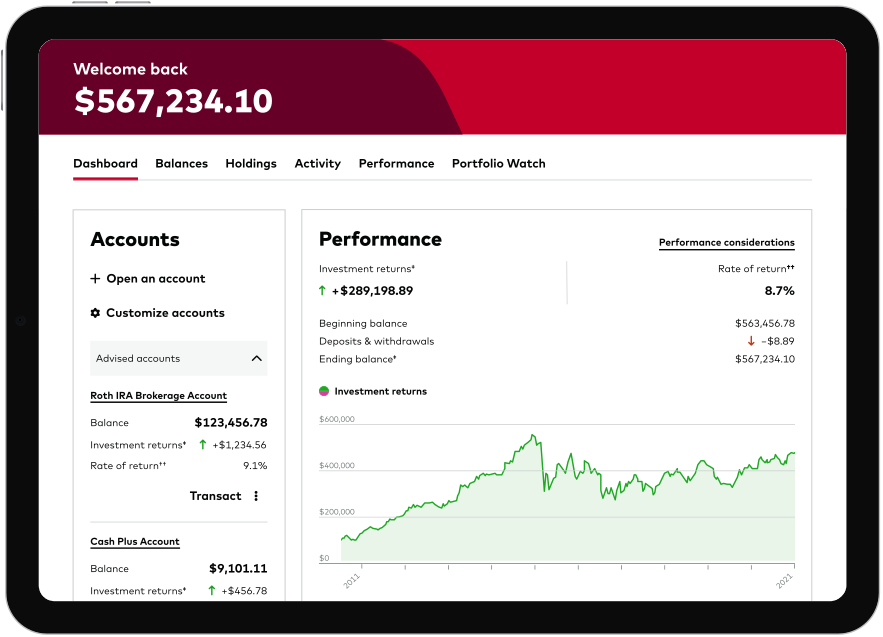
Getting Started: The Vanguard Philosophy and Account Setup
Before putting your first dollar to work, it is essential to understand why Vanguard is structured differently. Unlike other brokerage firms that are publicly traded or privately owned by a small group of individuals, Vanguard is owned by its member funds. Those funds, in turn, are owned by the investors. This unique mutual structure aligns the company’s interests directly with yours: when costs go down, the savings are passed on to the investors in the form of lower expense ratios.
Choosing the Right Account Type
The first step in your Vanguard journey is determining the legal “wrapper” for your investments. The right choice depends on your financial goals and your timeline.
-
Individual Brokerage Account: This is a standard taxable account. There are no contribution limits, and you can withdraw your money at any time. However, you will owe taxes on dividends and realized capital gains each year. This is ideal for goals that occur before retirement.
-
Roth IRA: Contributions to a Roth IRA are made with after-tax dollars, but the investments grow tax-free, and qualified withdrawals in retirement are also tax-free. This is widely considered one of the most powerful wealth-building tools for long-term investors.
-
Traditional IRA: Contributions may be tax-deductible in the year you make them, reducing your current taxable income. The investments grow tax-deferred, and you pay ordinary income tax on withdrawals during retirement.
-
SEP IRA or Individual 401(k): For entrepreneurs or those with side-hustle income, these accounts allow for much higher contribution limits than standard IRAs.
The Registration Process
Opening an account requires standard personal information, including your Social Security number, employment details, and bank account information for funding. Vanguard’s onboarding process will prompt you to link a bank account via ACH transfer. It is often recommended to start with a “settlement fund” (usually a federal money market fund like VMFXX), which acts as the staging area for your cash before it is deployed into specific stocks or bonds.
Building Your Portfolio: Selecting the Right Funds
Once your account is funded, the real work begins: asset allocation. Vanguard offers hundreds of options, which can be overwhelming for a beginner. However, most successful investors adhere to a few core strategies.
Index Funds vs. ETFs
Vanguard offers both mutual funds and Exchange-Traded Funds (ETFs). While they often track the same indices, they have different mechanics:
-
Mutual Funds: These trade once a day after the market closes. Vanguard’s “Admiral Shares” typically have a $3,000 minimum investment but allow for automatic recurring investments of any dollar amount.
-
ETFs: These trade like stocks throughout the day. They have no minimum investment beyond the price of a single share (and Vanguard now allows fractional share trading for its own ETFs). While you gain liquidity, setting up automated, fixed-dollar investments can sometimes be slightly more complex than with mutual funds.
The Power of the Three-Fund Portfolio
Many Vanguard devotees follow the “Three-Fund Portfolio” strategy, which provides exposure to the entire global investable market with just three holdings:
-
Vanguard Total Stock Market Index Fund (VTSAX / VTI): This covers the entire U.S. equity market, from small-cap to mega-cap companies like Apple and Microsoft.
-
Vanguard Total International Stock Index Fund (VTIAX / VXUS): This provides diversification outside the United States, covering both developed and emerging markets.
-
Vanguard Total Bond Market Index Fund (VBTLX / BND): This provides a cushion against stock market volatility and generates steady income through high-quality bonds.
By adjusting the percentages of these three funds, you can tailor your risk level. A younger investor might hold 90% stocks and 10% bonds, while someone nearing retirement might shift toward a 60/40 split.
Target Retirement Funds: The “Set It and Forget It” Option
If you prefer a hands-off approach, Vanguard’s Target Retirement Funds (Target Date Funds) are an excellent choice. You simply choose the fund with the year closest to your expected retirement (e.g., Target Retirement 2055). Vanguard automatically manages the asset allocation for you, starting with an aggressive stock-heavy mix and gradually shifting toward conservative bonds as you approach the target date.

Execution: Placing Your First Trade and Automating Growth
The mechanics of investing on the Vanguard platform are designed for long-term holders rather than day traders. The interface is functional and straightforward, prioritizing clarity over flashy charts.
Placing the Order
To buy a fund, navigate to the “Transact” tab and select “Buy & Sell.” You will select the account you wish to trade in and search for the fund by name or ticker symbol.
-
For Mutual Funds: You enter the dollar amount you wish to invest. If you have $500 to invest in VTSAX (assuming you’ve met the initial minimum), you simply type “500.”
-
For ETFs: You can choose to buy by “Shares” or “Dollars.” Buying by dollars allows you to purchase fractional shares, ensuring every penny of your cash is working for you.
Establishing a Cadence with Automatic Investing
The most successful investors are those who remove emotion from the process. Vanguard allows you to set up “Automatic Investment Plans.” You can instruct the platform to pull a specific amount from your bank account every month or on every payday and automatically purchase shares of your chosen funds. This utilizes Dollar Cost Averaging (DCA), a strategy where you buy more shares when prices are low and fewer when prices are high, effectively lowering your average cost per share over time.
Reinvesting Dividends
When the companies within your funds pay dividends, you have two choices: take the cash or reinvest it. For wealth accumulation, you should almost always select “Reinvest.” This process, known as a Dividend Reinvesting Plan (DRIP), allows your portfolio to compound exponentially. Instead of the cash sitting idle, it is immediately used to purchase more shares, which will then generate their own dividends in the future.
Advanced Strategies and Portfolio Maintenance
While the “buy and hold” mantra is simple, maintaining a healthy portfolio requires occasional intervention. Vanguard provides several tools to help you manage your investments efficiently.
Rebalancing for Risk Control
Over time, different asset classes will perform differently. If the stock market has a stellar year, your 80/20 stock-to-bond ratio might drift to 85/15. This means you are now taking on more risk than you originally intended. Vanguard’s platform allows you to view your “Asset Mix” easily. Once or twice a year, you should rebalance by selling a portion of the over-performing asset to buy more of the under-performing one, or simply by directing new contributions toward the asset that is lagging.
Tax-Loss Harvesting in Taxable Accounts
In a standard brokerage account, you can use “Tax-Loss Harvesting” to your advantage. If an investment has declined in value, you can sell it to “realize” the loss, which can be used to offset capital gains or up to $3,000 of ordinary income. Because Vanguard offers many similar funds (such as an S&P 500 fund and a Total Stock Market fund), you can sell one and immediately buy a “linearly related but not substantially identical” fund to stay invested in the market while capturing the tax benefit.
Minimizing the “Tax Drag”
Vanguard is particularly famous for its patented “ETF-as-a-share-class” structure for its mutual funds. This allows many of its mutual funds to be as tax-efficient as ETFs, minimizing the capital gains distributions that can plague investors in other firms’ mutual funds. When investing on Vanguard, pay close attention to the “Tax-Cost Ratio” of your funds, especially if you are investing in a taxable brokerage account rather than an IRA.
Cost Awareness: The Expense Ratio
Always check the expense ratio before confirming a purchase. Most core Vanguard index funds have expense ratios between 0.03% and 0.08%. This means for every $10,000 invested, you pay only $3 to $8 a year in management fees. Compared to the industry average of 0.50% or higher, this small difference can result in hundreds of thousands of dollars in extra wealth over a 30-year investing career.
Staying the Course: The Psychology of Vanguard Investing
The final and most important aspect of investing on Vanguard is the psychological discipline to stay the course. Vanguard’s platform is not designed for frequent trading; it does not offer the same “gamified” experience as newer fintech apps. This is intentional.
The “Vanguard Way” involves ignoring the daily noise of financial news and focusing on the factors you can control: your savings rate, your costs, and your time in the market. Market volatility is inevitable, but history has shown that the global economy tends to grow over long cycles. By using Vanguard to build a diversified, low-cost portfolio and automating your contributions, you are leveraging the most reliable wealth-building machine ever created.
Whether you are starting with $100 or $1,000,000, the principles remain the same. Open the right account, select broad-market index funds, automate your strategy, and let the power of compounding do the heavy lifting. Investing on Vanguard is not about finding the next “moonshot” stock; it is about securing your financial independence through steady, disciplined growth.
aViewFromTheCave is a participant in the Amazon Services LLC Associates Program, an affiliate advertising program designed to provide a means for sites to earn advertising fees by advertising and linking to Amazon.com. Amazon, the Amazon logo, AmazonSupply, and the AmazonSupply logo are trademarks of Amazon.com, Inc. or its affiliates. As an Amazon Associate we earn affiliate commissions from qualifying purchases.