
The share market remains one of the most potent vehicles for long-term wealth creation. Historically, equity markets have outperformed traditional savings instruments like fixed deposits and gold over extended periods, providing investors with a hedge against inflation and a share in the growth of the global economy. However, for many, the prospect of entering the stock market is shrouded in complexity and perceived risk. Successful investing is not about gambling or timing the market; it is about disciplined strategy, fundamental understanding, and an unwavering focus on long-term objectives.
To transition from a spectator to a successful participant, one must understand the mechanics of the market, the tools required for entry, and the psychological fortitude needed to navigate periods of volatility. This guide provides a structured roadmap for individuals looking to harness the power of the share market to achieve financial independence.
Foundations of Equity Investing
Before committing capital, an investor must grasp what a share actually represents. When you buy a share, you are purchasing a fractional ownership stake in a corporation. This entitles you to a portion of the company’s profits, often distributed as dividends, and potential capital appreciation as the company’s value grows over time.
The Concept of Ownership and Value
The fundamental driver of stock prices is the perceived and actual value of the underlying business. If a company innovates, expands its market share, and increases its profitability, the demand for its shares rises, driving up the price. Conversely, poor management or declining industry relevance can erode share value. Investing in the share market is, at its core, a bet on the ingenuity and resilience of businesses.
How the Market Functions
The share market operates through stock exchanges, such as the New York Stock Exchange (NYSE), the Nasdaq, or the National Stock Exchange (NSE). These exchanges act as regulated marketplaces where buyers and sellers meet. The “Primary Market” is where companies first issue shares to the public through an Initial Public Offering (IPO). Once listed, these shares trade in the “Secondary Market,” which is where the vast majority of daily trading activity occurs. Prices in the secondary market fluctuate based on supply and demand, influenced by corporate earnings, economic data, and geopolitical events.
Setting the Stage: Financial Prerequisites
Investing is the final step in a broader financial plan. Jumping into the share market without a stable foundation can lead to forced liquidations during market downturns, potentially resulting in permanent loss of capital.
Debt Management and Emergency Reserves
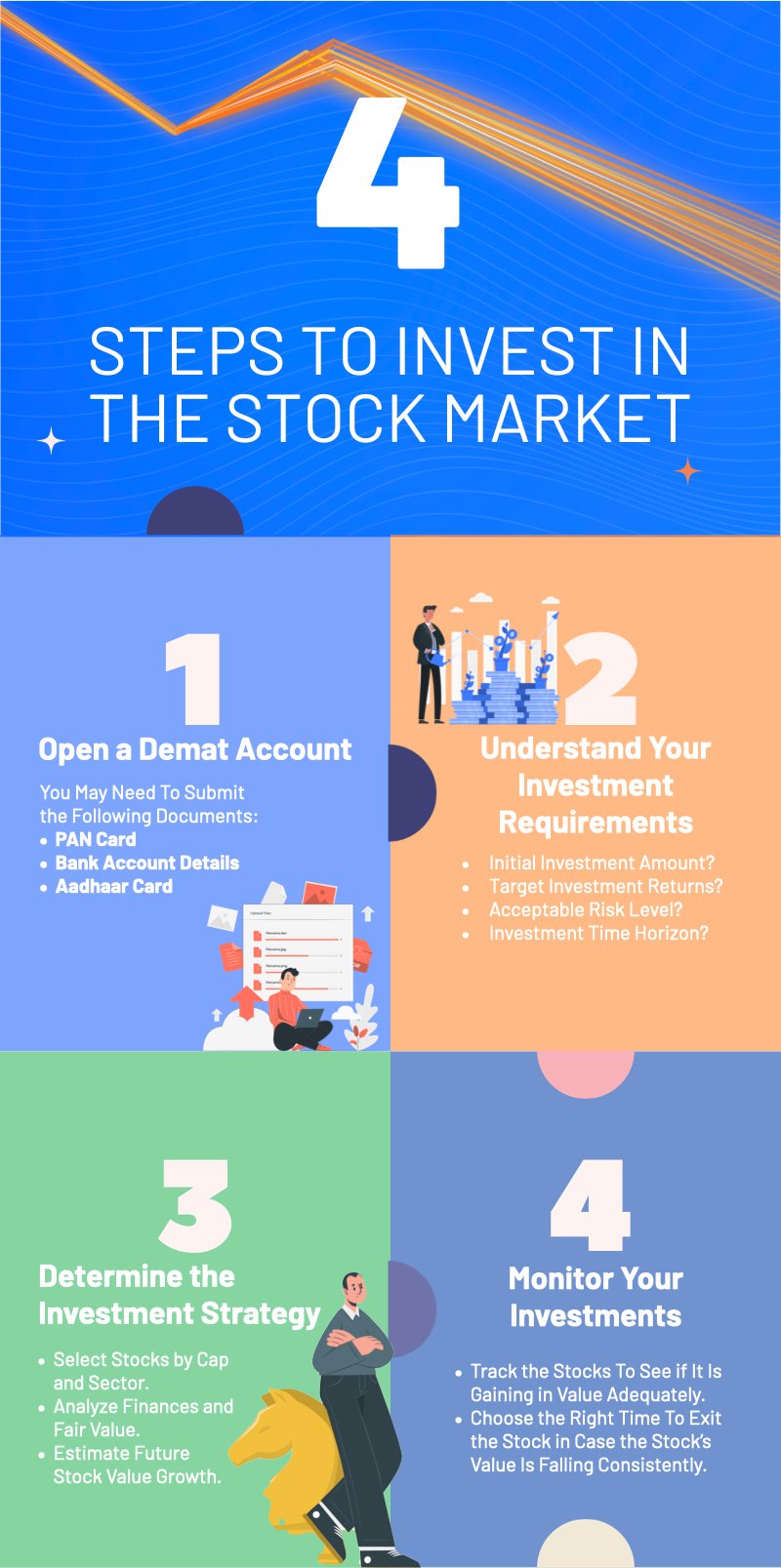
Before allocating funds to stocks, it is imperative to address high-interest debt, such as credit card balances. The interest rates on these debts often exceed the average historical returns of the stock market, making debt repayment the most logical “investment” first.
Furthermore, an emergency fund—comprising three to six months of living expenses—should be parked in a liquid, low-risk account. The stock market is volatile; having an emergency reserve ensures that you are never forced to sell your investments at a loss to cover unexpected medical bills or job loss.
Defining Your Investment Objectives and Risk Appetite
Investment strategies should be dictated by your goals. Are you investing for retirement thirty years away, or for a down payment on a house in five years? Long-term goals allow for a higher exposure to equities, as there is more time to recover from cyclical downturns.
Risk appetite is equally personal. It is a combination of your financial ability to take risks (risk capacity) and your emotional willingness to see your portfolio value fluctuate (risk tolerance). A conservative investor might lean toward established “blue-chip” companies with a history of steady dividends, while an aggressive investor might seek out high-growth technology firms with higher volatility.
The Mechanics of the Market: Getting Started
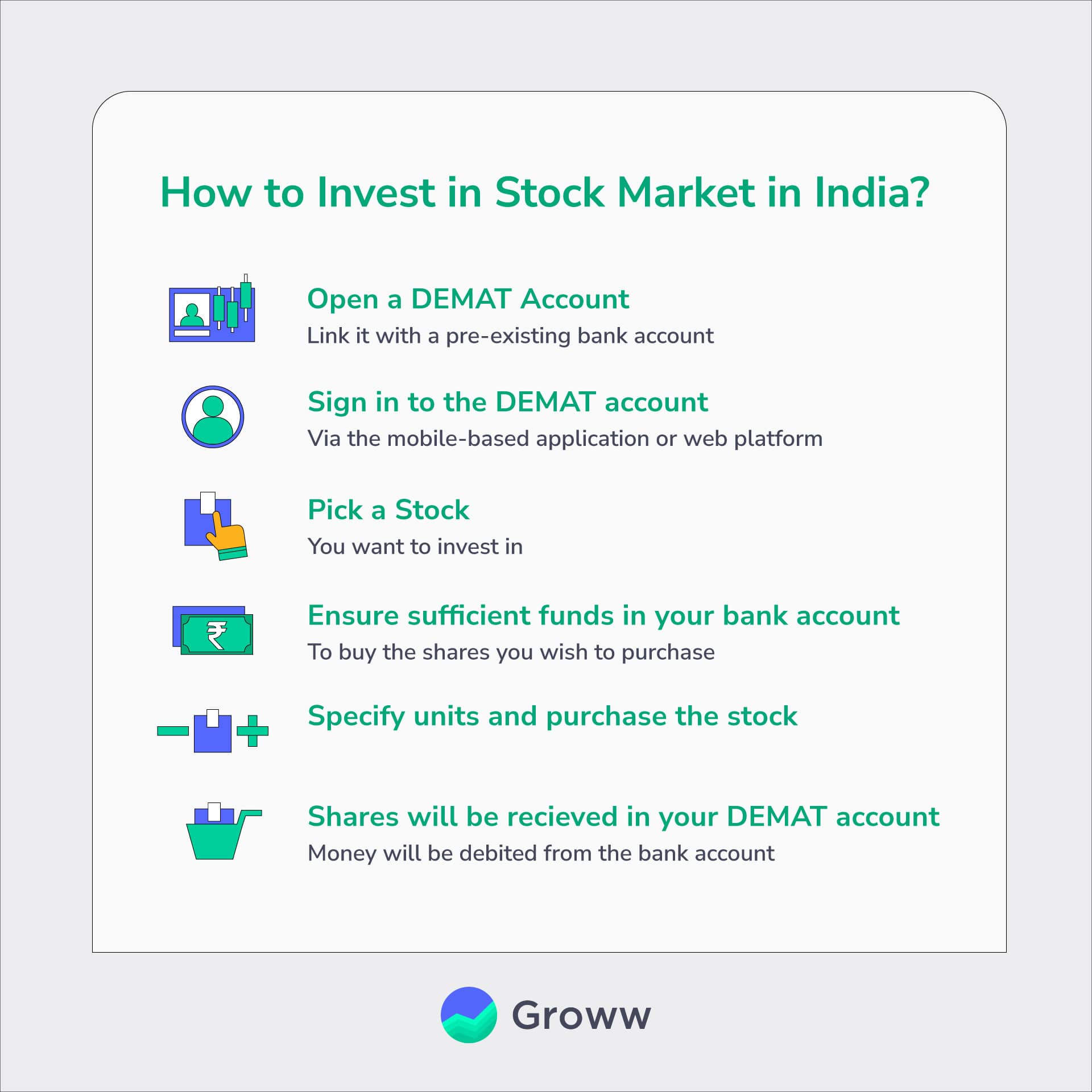
Once the financial foundation is set, the practical phase begins. Entering the share market requires a specific set of tools and a relationship with a financial intermediary.
Selecting the Right Brokerage
A stockbroker is an entity licensed to buy and sell shares on your behalf. In the modern era, investors typically choose between two types:
-
Full-Service Brokers: These offer personalized advice, research reports, and wealth management services. They charge higher commissions but are beneficial for those who want a guided experience.
-
Discount Brokers: These provide a platform for executing trades at a very low cost. They do not offer personalized advice, making them ideal for self-directed investors who prefer to conduct their own research.
When choosing a broker, consider the user interface of their platform, the quality of their customer service, and the transparency of their fee structure, including brokerage fees, maintenance charges, and hidden costs.
Understanding Different Account Types
To trade effectively, you generally need three interconnected accounts:
-
Bank Account: This serves as the source of funds.
-
Trading Account: This is the interface where you place buy and sell orders.
-
Demat Account (Dematerialized Account): This acts like a digital vault where your shares are held in electronic form.
The seamless integration of these three accounts allows for the “T+1” or “T+2” settlement cycle common in modern markets, where ownership of shares is transferred shortly after the trade is executed.
Executing Your First Trade
When you are ready to buy your first stock, you will encounter two primary order types:
-
Market Order: This instructs the broker to buy or sell the stock immediately at the best available current price. It guarantees execution but not price.
-
Limit Order: This instructs the broker to buy or sell only if the stock reaches a specific price. This gives you control over the price but does not guarantee that the trade will be executed if the market does not hit your target.
Core Investment Strategies for Sustainable Growth
Success in the share market is rarely the result of luck. It is the result of applying a consistent methodology to asset selection.
Fundamental Analysis: Evaluating Company Health
Fundamental analysis is the process of looking at a company’s financial health to determine its “intrinsic value.” Key metrics include:
-
Earnings Per Share (EPS): The portion of a company’s profit allocated to each outstanding share.
-
Price-to-Earnings (P/E) Ratio: A valuation metric comparing the current share price to its per-share earnings.
-
Debt-to-Equity Ratio: A measure of a company’s financial leverage, indicating how much of the business is funded by debt versus shareholder equity.
-
Return on Equity (ROE): A measure of how effectively management is using shareholders’ capital to generate profit.
By analyzing these figures alongside qualitative factors like management quality and competitive advantages (often called a “moat”), investors can identify undervalued companies with strong growth prospects.
The Power of Diversification
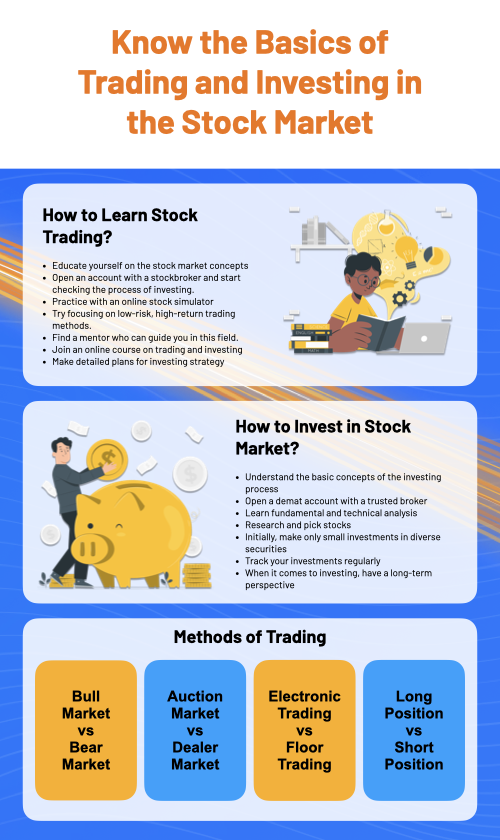
One of the few “free lunches” in investing is diversification. By spreading your capital across different companies, industries, and even geographical regions, you reduce the impact of a single company’s failure on your overall portfolio. A well-diversified portfolio might include a mix of technology, healthcare, finance, and consumer goods stocks. This ensures that a downturn in one sector does not lead to a total collapse of your investment value.
Direct Stocks vs. Index Funds
For those who do not have the time or inclination to research individual companies, index funds and Exchange-Traded Funds (ETFs) offer an excellent alternative. An index fund tracks a specific market benchmark, such as the S&P 500 or the Nifty 50. By buying an index fund, you are essentially buying a small piece of every company in that index. This provides instant diversification and has historically outperformed the majority of actively managed funds over the long term due to lower fees and broad market exposure.
Risk Management and the Investor Mindset
The greatest threat to an investor’s success is often not market volatility, but their own behavior. Emotional reactions to market movements can lead to “buying high” during periods of euphoria and “selling low” during periods of panic.
Navigating Market Volatility
Volatility is an inherent feature of the share market, not a bug. Prices will fluctuate daily based on news cycles and investor sentiment. Successful investors view volatility as an opportunity rather than a threat. Strategies like Dollar-Cost Averaging (DCA)—investing a fixed amount of money at regular intervals regardless of the share price—allow investors to buy more shares when prices are low and fewer when prices are high, effectively lowering the average cost of investment over time.
Avoiding Common Behavioral Biases
-
Confirmation Bias: Seeking out information that supports your existing view of a stock while ignoring red flags.
-
Loss Aversion: The tendency to feel the pain of a loss more acutely than the joy of a gain, often leading investors to hold onto losing stocks for too long in the hope of “breaking even.”
-
Herd Mentality: Following the crowd into “hot” stocks or sectors without understanding the underlying fundamentals.
Maintaining a long-term perspective is the ultimate antidote to these biases. The share market rewards patience. By focusing on a 5-to-10-year horizon, the daily “noise” of the market becomes irrelevant, allowing the power of compounding to do its work.
Investing in the share market is a journey of continuous learning. While the technical aspects of opening accounts and placing trades are straightforward, the mastery of market analysis and emotional discipline takes time. By starting early, staying diversified, and adhering to a disciplined strategy, any individual can turn the share market into a powerful engine for financial growth and security.
aViewFromTheCave is a participant in the Amazon Services LLC Associates Program, an affiliate advertising program designed to provide a means for sites to earn advertising fees by advertising and linking to Amazon.com. Amazon, the Amazon logo, AmazonSupply, and the AmazonSupply logo are trademarks of Amazon.com, Inc. or its affiliates. As an Amazon Associate we earn affiliate commissions from qualifying purchases.