
The S&P 500 is often cited as the ultimate barometer of the American economy. Comprising 500 of the largest and most influential publicly traded companies in the United States, this index represents approximately 80% of the total market capitalization of the U.S. stock market. For the individual investor, gaining exposure to this powerhouse index has historically been one of the most reliable paths to wealth creation. When it comes to accessing the S&P 500, few institutions carry as much weight or trust as Vanguard.

Founded by John C. Bogle, the pioneer of the index fund, Vanguard is built on a unique client-owned structure that prioritizes low costs. Because Vanguard is owned by its funds, and those funds are owned by the investors, the company’s interests are inherently aligned with yours. Investing in the S&P 500 through Vanguard is not just a financial decision; it is an adoption of a philosophy centered on simplicity, frugality, and long-term compounding.
Understanding the Vanguard S&P 500 Options
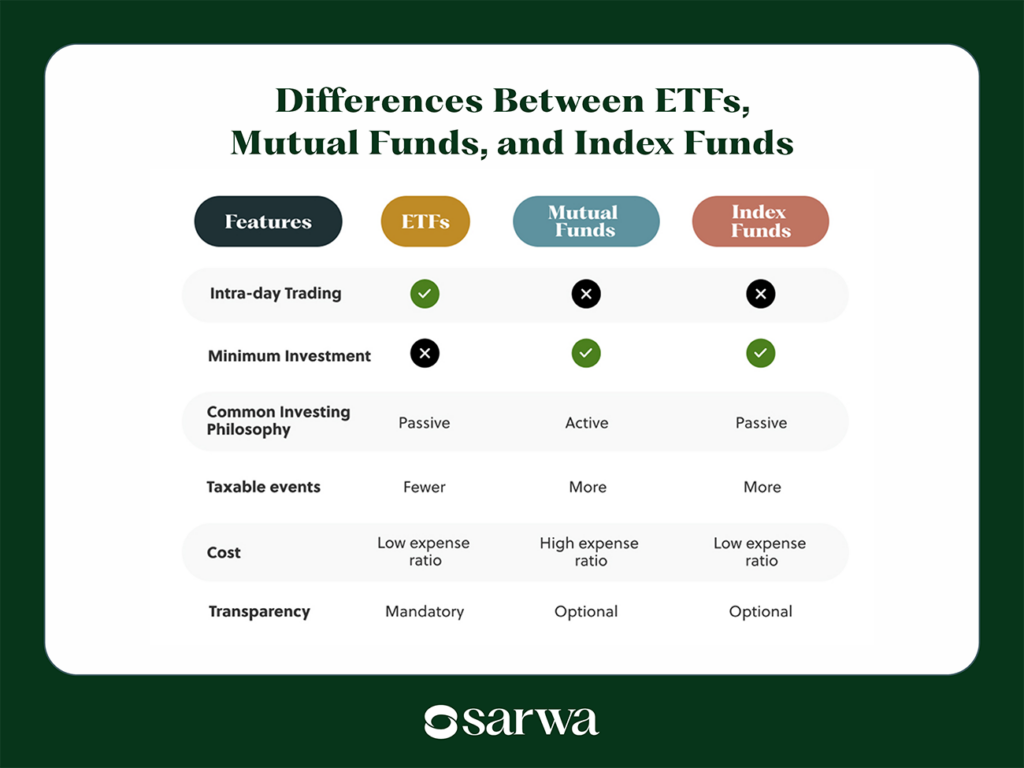
Before clicking “buy,” an investor must understand that Vanguard offers the S&P 500 in two primary flavors: an Exchange-Traded Fund (ETF) and a Mutual Fund. While both track the same index and hold the same underlying stocks, they operate differently in terms of accessibility and management.
The Vanguard S&P 500 ETF (VOO)
The Vanguard S&P 500 ETF, known by its ticker symbol VOO, is one of the most popular investment vehicles in the world. As an ETF, it trades on an exchange throughout the day just like a regular stock. This means the price fluctuates in real-time, and you can buy or sell shares during market hours.
VOO is highly regarded for its ultra-low expense ratio, currently standing at 0.03%. This means for every $10,000 invested, you pay only $3 in annual management fees. For the modern investor, VOO is often the preferred choice because it has no minimum investment requirement beyond the price of a single share—and many brokerages now allow for fractional share investing, making it accessible for as little as $1.
Vanguard 500 Index Fund Admiral Shares (VFIAX)
VFIAX is the mutual fund version of the S&P 500 index. Unlike the ETF, mutual funds are priced only once at the end of the trading day. When you place an order for VFIAX, the transaction is executed at the Net Asset Value (NAV) calculated after the market closes.
The primary hurdle for VFIAX is the minimum initial investment, which is typically $3,000. However, mutual funds offer a distinct advantage for those who prefer automation. Vanguard allows investors to set up automatic recurring investments into mutual funds directly from a bank account—a feature that, until recently, was more difficult to coordinate with ETFs. If your goal is “set it and forget it” through automated monthly contributions, VFIAX may be the superior choice.
Comparing Tax Efficiency and Dividends
Both VOO and VFIAX are remarkably tax-efficient due to the low turnover of the S&P 500 index. However, ETFs are structurally slightly more tax-efficient in taxable brokerage accounts due to the “in-kind” redemption process, which minimizes capital gains distributions. Both funds pay dividends quarterly, which can be automatically reinvested—a process known as a Dividend Reinvestment Plan (DRIP)—to accelerate the effects of compounding.
The Step-by-Step Process of Investing
Once you have decided between the ETF and the mutual fund, the physical process of investing involves a few logistical steps. While the interface is straightforward, understanding the nuances of account types and order execution is vital for maximizing your returns.
Step 1: Open the Right Account Type
You must first decide where your S&P 500 investment will live. Vanguard offers several account types, each with different tax implications:
-
Individual Brokerage Account: This is a standard taxable account. There are no contribution limits and no penalties for withdrawals, but you will owe taxes on dividends and realized capital gains.
-
Roth IRA: Contributions are made with after-tax dollars, but the investment grows tax-free, and withdrawals in retirement are tax-free. This is often the gold standard for long-term S&P 500 investing for those who qualify.
-
Traditional IRA: Contributions may be tax-deductible, but you will pay income tax on withdrawals during retirement.

Step 2: Fund Your Account
After opening an account, you need to link a bank account via Electronic Fund Transfer (EFT). Once the link is established, you can move money into your Vanguard “settlement fund” (usually the Vanguard Federal Money Market Fund). From there, you can use those funds to purchase VOO or VFIAX.
Step 3: Executing the Trade
If you are buying VOO, you will encounter different order types. A “Market Order” buys the shares immediately at the current price, while a “Limit Order” allows you to specify the maximum price you are willing to pay. For long-term investors, the difference is often negligible, but a limit order provides protection against sudden, short-term price spikes. If you are buying VFIAX, you simply specify the dollar amount you wish to invest, and the order will process at the end of the day.
Strategic Asset Allocation and the Power of Compounding
Investing in the S&P 500 is not a “get rich quick” scheme; it is a “get wealthy slowly” strategy. To maximize the effectiveness of a Vanguard S&P 500 investment, one must employ specific strategies to weather market volatility.
Dollar-Cost Averaging (DCA)
The S&P 500 does not move in a straight line. It experiences corrections, bear markets, and periods of stagnation. Dollar-cost averaging is the practice of investing a fixed amount of money at regular intervals, regardless of the share price. When prices are high, your fixed dollar amount buys fewer shares; when prices are low, it buys more. Over time, this lowers your average cost per share and removes the emotional stress of trying to “time the market.”
The Importance of Dividend Reinvestment
The S&P 500 currently yields approximately 1.3% to 1.6% in dividends. While this may seem small, the reinvestment of these dividends is responsible for a massive portion of the index’s total return over decades. By enabling dividend reinvestment in your Vanguard account settings, you ensure that every cent earned is immediately put back to work, purchasing more shares of the 500 largest companies in the U.S.
The Role of the S&P 500 in a Diversified Portfolio
While the S&P 500 provides excellent diversification across industries—including technology, healthcare, financials, and consumer staples—it is still a 100% equity investment. It does not include small-cap companies, international stocks, or bonds. Savvy investors often use VOO or VFIAX as the “core” of their portfolio (the largest holding) while adding other Vanguard funds, such as the Vanguard Total International Stock ETF (VXUS), to capture growth outside the United States.
Risks and Considerations for the Modern Investor
No investment is without risk, and the S&P 500 is no exception. Understanding these risks is crucial to maintaining the discipline required for long-term success.
Market Volatility and Drawdowns
The S&P 500 has historically returned an average of 10% annually before inflation. However, this average is composed of years where the market might be up 30% or down 20%. An investor must have the stomach to watch their portfolio value drop during a recession without panic-selling. History shows that the market has recovered from every single downturn it has ever faced; the risk lies not in the market itself, but in the investor’s behavioral response to it.
Concentration Risk
Because the S&P 500 is market-cap weighted, the largest companies have a disproportionate impact on the index’s performance. In recent years, the “Magnificent Seven” (tech giants like Apple, Microsoft, and Nvidia) have come to represent a significant percentage of the index. If the technology sector faces a systemic downturn, the S&P 500 will feel it acutely, even if the other 490 companies are performing well.
The Cost of Inactivity
The greatest risk in S&P 500 investing is often the “cost of waiting.” Because the index leans toward growth over time, being out of the market can be more expensive than being in it during a downturn. Missing just a few of the market’s best days can drastically reduce long-term returns. Vanguard’s platform is designed to encourage long-term holding, and for most investors, the best course of action after buying an S&P 500 fund is to do nothing at all for several decades.
By choosing Vanguard as your gateway to the S&P 500, you are leveraging one of the most efficient, low-cost financial engines ever created. Whether you choose the flexibility of the VOO ETF or the automated simplicity of the VFIAX mutual fund, the key to success remains the same: consistent contributions, disciplined dividend reinvestment, and an unwavering focus on the long-term horizon. Over time, the collective productivity of America’s largest corporations becomes the wind at your back, driving your financial future toward security and independence.
aViewFromTheCave is a participant in the Amazon Services LLC Associates Program, an affiliate advertising program designed to provide a means for sites to earn advertising fees by advertising and linking to Amazon.com. Amazon, the Amazon logo, AmazonSupply, and the AmazonSupply logo are trademarks of Amazon.com, Inc. or its affiliates. As an Amazon Associate we earn affiliate commissions from qualifying purchases.