
The S&P 500 is often cited as the ultimate barometer for the health of the United States economy. Comprising 500 of the largest, leading companies publicly traded on American stock exchanges, it represents approximately 80% of the available market capitalization. For the individual investor, the S&P 500 offers a unique blend of diversification, stability, and historical growth.
In recent years, the democratization of finance has made it possible for anyone with a smartphone to participate in this growth. Robinhood, with its commission-free trading model and intuitive user interface, has become a primary gateway for millions of retail investors. However, knowing how to technically navigate the app is only half the battle; understanding the underlying financial instruments and the strategy required to build long-term wealth is what separates successful investors from speculators.

Understanding the S&P 500 and Why It Matters for Your Portfolio
Before executing a trade, it is vital to understand exactly what you are buying. The Standard & Poor’s 500 Index is not a single stock but a market-capitalization-weighted index. This means that larger companies, like Apple, Microsoft, and Amazon, have a greater impact on the index’s performance than smaller ones.
The Power of Diversification
One of the primary reasons financial advisors recommend the S&P 500 is instant diversification. When you invest in the index, you are effectively buying a small piece of 500 different businesses across 11 different sectors, including Technology, Healthcare, Consumer Discretionary, and Energy. If one company fails or one sector underperforms, the impact is cushioned by the performance of the others. This “basket” approach significantly reduces the idiosyncratic risk associated with picking individual stocks.
Historical Performance and Reliability
Historically, the S&P 500 has delivered an average annual return of approximately 10% over the long term, before adjusting for inflation. While there are years of significant volatility and market downturns (bear markets), the index has consistently recovered and reached new highs over decades. For an investor on Robinhood, the goal is often to capture this “beta” or market return, rather than trying to “beat the market” through risky day trading.
Choosing Your Investment Vehicle: S&P 500 ETFs
On Robinhood, you cannot buy “the index” directly because an index is simply a mathematical calculation. Instead, you must purchase an Exchange-Traded Fund (ETF) that tracks the index. These funds hold shares of all 500 companies in the index in the correct proportions, allowing your investment to mirror the index’s performance.
Top S&P 500 ETFs on Robinhood
There are three primary ETFs that track the S&P 500, all of which are available for commission-free trading on Robinhood. While they all track the same thing, they have subtle differences:
-
VOO (Vanguard S&P 500 ETF): Vanguard is known for its low-cost philosophy. VOO has an extremely low expense ratio (typically around 0.03%), meaning it costs you very little in management fees to hold the fund. This is a favorite for long-term “buy and hold” investors.
-
IVV (iShares Core S&P 500 ETF): Managed by BlackRock, IVV is nearly identical to VOO in terms of its low expense ratio and performance. It is highly liquid and widely respected.
-
SPY (SPDR S&P 500 ETF Trust): This was the first ETF listed in the United States. While it is the most liquid (traded most frequently), it has a slightly higher expense ratio (around 0.09%) than VOO or IVV. While the difference seems small, over 30 years, those extra basis points can add up to thousands of dollars in lost gains.
The Role of Expense Ratios
In the world of personal finance, fees are the enemy of compounding interest. An expense ratio is the annual fee that all ETFs charge their shareholders. When you search for “VOO” on Robinhood, you can find the expense ratio in the fund details. In the “Money” niche, the gold standard is to keep these costs as low as possible. Choosing a fund with a 0.03% ratio versus a 0.50% ratio can result in a significantly larger portfolio at retirement.
Step-by-Step: Executing the Trade on Robinhood
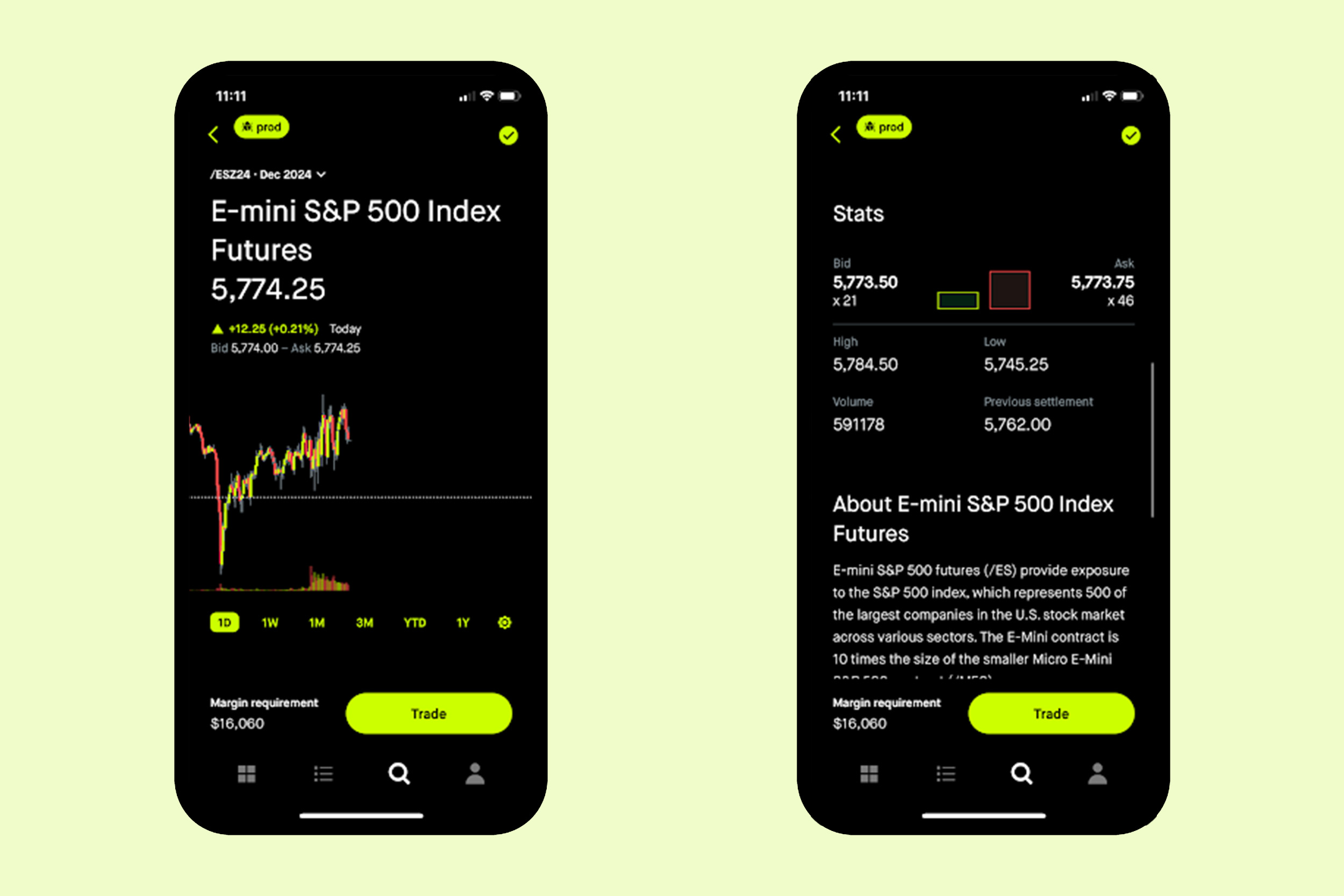
Once you have funded your Robinhood account and decided on an ETF like VOO or IVV, the execution process is straightforward. However, there are specific features on the platform that can optimize your entry.
Fractional Shares
One of Robinhood’s most powerful features for the “Money” conscious investor is fractional shares. A single share of an S&P 500 ETF can cost hundreds of dollars. If you only have $50 or $100 to invest, you don’t have to wait until you can afford a full share. You can enter the dollar amount you wish to buy, and Robinhood will credit you with a fraction of a share. This allows your money to start working for you immediately.
Market Orders vs. Limit Orders
When you click “Buy,” you have choices on how to execute the trade:
-
Market Order: This buys the ETF immediately at the current market price. This is the simplest method but can result in paying a slightly higher price during times of high volatility.
-
Limit Order: This allows you to set a maximum price you are willing to pay. If the ETF price hits that mark, the trade executes. This provides more control over your entry point.
Setting Up Recurring Investments
Consistency is the cornerstone of wealth building. Robinhood allows you to automate your S&P 500 investment. You can set the app to automatically buy a set dollar amount of VOO every day, week, or month. This removes the emotional burden of trying to “time the market” and ensures that you are constantly building your position regardless of short-term price fluctuations.
Strategic Approaches to S&P 500 Investing
Investing in the S&P 500 is not just about the “how,” but also the “strategy.” To maximize your returns on Robinhood, you should employ proven financial principles.
Dollar-Cost Averaging (DCA)
Dollar-cost averaging is the practice of investing a fixed amount of money at regular intervals. When the market is down, your fixed dollar amount buys more shares. When the market is up, it buys fewer shares. Over time, this lowers your average cost per share and eliminates the risk of accidentally investing all your capital at a market peak.
Dividend Reinvestment (DRIP)
The companies within the S&P 500 often pay dividends—a portion of their earnings distributed to shareholders. On Robinhood, you should ensure that “Dividend Reinvestment” is toggled on in your settings. Instead of receiving these dividends as cash sitting idle in your account, Robinhood will automatically use that cash to buy more shares of the ETF. This creates a powerful compounding effect where you earn dividends on your dividends.
Managing the Psychology of Volatility
The Robinhood interface is designed to be engaging, which can sometimes lead to over-monitoring. The S&P 500 will have “red days” and even “red years.” The key to the “Money” niche mindset is understanding that volatility is the price of admission for long-term gains. Investors who panic-sell during a dip lock in their losses, while those who stay the course (or buy more) typically see the greatest rewards during the eventual recovery.
Tax Considerations and Long-Term Planning
Finally, an intelligent investor must consider the tax implications of their Robinhood activities. Investing is not just about how much you make, but how much you keep.
Capital Gains Taxes
If you buy an S&P 500 ETF and sell it for a profit in less than a year, you will be subject to Short-Term Capital Gains tax, which is typically the same as your ordinary income tax rate. If you hold the investment for longer than a year, you qualify for Long-Term Capital Gains tax rates, which are significantly lower (0%, 15%, or 20% depending on your income). This serves as a strong financial incentive to remain a long-term investor rather than a frequent trader.
Choosing the Right Account: Brokerage vs. IRA
Robinhood now offers Individual Retirement Accounts (IRAs) with a 1% to 3% match (depending on Gold status and terms). For many, investing in the S&P 500 within a Roth IRA is superior to a standard brokerage account because the growth and withdrawals are tax-free in retirement. If you are investing for the long term, utilizing the Robinhood IRA for your S&P 500 holdings can save you tens of thousands of dollars in future taxes.
The Importance of a Long Time Horizon
The S&P 500 is a vehicle for wealth over years and decades, not weeks or months. By utilizing a low-cost ETF like VOO, enabling recurring investments, and leveraging tax-advantaged accounts on Robinhood, you are following a blueprint used by the world’s most successful institutional investors. The simplicity of the strategy is its greatest strength; by capturing the growth of the 500 most powerful companies in the world, you are betting on the continued innovation and resilience of the global economy.
aViewFromTheCave is a participant in the Amazon Services LLC Associates Program, an affiliate advertising program designed to provide a means for sites to earn advertising fees by advertising and linking to Amazon.com. Amazon, the Amazon logo, AmazonSupply, and the AmazonSupply logo are trademarks of Amazon.com, Inc. or its affiliates. As an Amazon Associate we earn affiliate commissions from qualifying purchases.