
Palantir Technologies (NYSE: PLTR) has established itself as one of the most debated and scrutinized companies in the modern equity market. Originally founded in 2003 with the help of CIA-backed venture capital, the company spent nearly two decades in the shadows, serving intelligence agencies and defense departments before making its public debut via a direct listing in September 2020. For investors, Palantir represents a unique intersection of big data, artificial intelligence, and national security.
As the global economy shifts toward data-driven decision-making, Palantir has transitioned from a secretive government contractor to a mainstream enterprise software giant. This guide explores the foundational elements of Palantir’s business, the financial metrics that matter most, and the practical steps required to add this high-growth technology stock to your investment portfolio.

Understanding Palantir’s Business Model
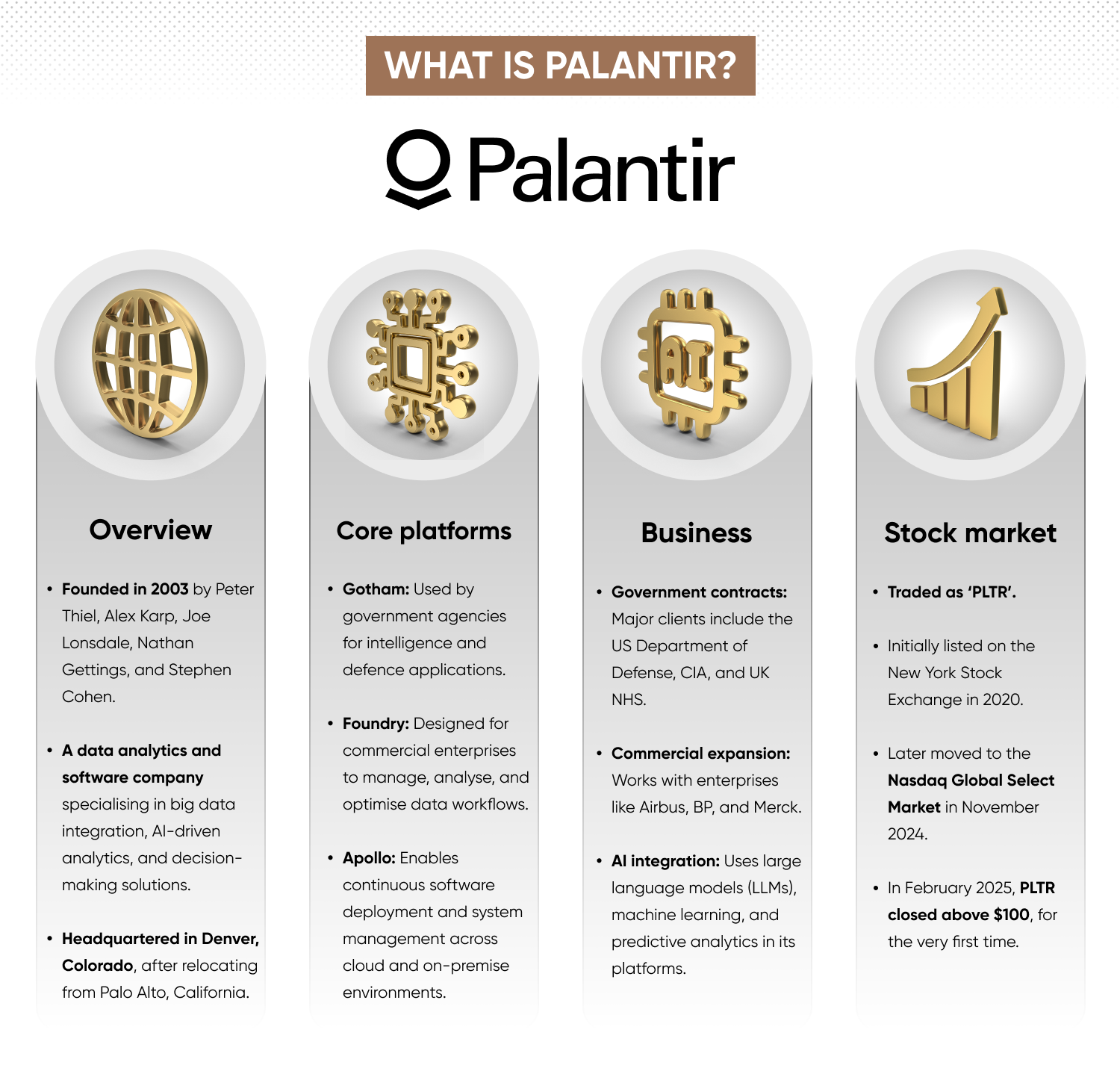
Before deploying capital into any individual stock, an investor must understand how the company generates value. Palantir is not a traditional data “aggregator”; rather, it builds the operating systems that allow organizations to integrate their own disparate data sources to make real-time decisions. Its business is split into four primary platforms.
The Government Sector: Palantir Gotham
Gotham was Palantir’s first flagship product, designed primarily for the U.S. intelligence community and Department of Defense. It allows analysts to find “needles in haystacks” by identifying patterns within deep datasets. Gotham has played a role in counter-terrorism operations, disaster relief, and military logistics. From an investment perspective, the government sector provides Palantir with “sticky” revenue. Once a government agency integrates Palantir’s software into its core operations, the switching costs are incredibly high, creating a reliable long-term revenue stream backed by federal budgets.
The Commercial Sector: Palantir Foundry
Foundry was developed to bring Palantir’s data capabilities to the private sector. It is an end-to-end platform that allows corporations to create a “digital twin” of their operations. Whether it is a global airline optimizing maintenance schedules or a manufacturer managing a fractured supply chain, Foundry provides the infrastructure to visualize and act on data. This segment is the primary growth engine for Palantir, as the addressable market for enterprise software is significantly larger than the niche world of government intelligence.
The Artificial Intelligence Platform (AIP)
Launched in early 2023, AIP is Palantir’s response to the generative AI revolution. AIP allows organizations to apply Large Language Models (LLMs) to their private data securely. Unlike consumer-grade AI, AIP is designed for “high-stakes” environments where security and ethical guardrails are paramount. The rapid adoption of AIP has been a significant catalyst for Palantir’s recent stock performance, as it has drastically shortened the sales cycle by allowing potential clients to see immediate value through “bootcamps” rather than months of negotiation.
Analyzing the Financial Health of Palantir
Investing in Palantir requires a deep dive into its financial statements. Because the company spent years prioritizing growth over profits, its transition into a GAAP-profitable entity marks a significant milestone in its lifecycle as a public company.
Revenue Growth and Profitability
Investors should track Palantir’s quarterly revenue growth rates, particularly in the U.S. commercial segment. Historically, Palantir has targeted a long-term annual revenue growth rate of 30% or more. However, the most critical shift occurred in late 2022 and 2023, when the company achieved several consecutive quarters of GAAP (Generally Accepted Accounting Principles) profitability. This achievement made Palantir eligible for—and eventually included in—the S&P 500 index. Inclusion in major indices often leads to increased demand for the stock from institutional investors and passive ETFs.
Stock-Based Compensation (SBC)
One of the most frequent criticisms from the investment community regarding Palantir is its heavy use of stock-based compensation. In its early years as a public company, Palantir issued significant amounts of stock to employees to attract top-tier engineering talent. While this preserves cash, it can lead to shareholder dilution. As an investor, it is essential to monitor whether the company’s revenue growth and share buyback programs are outpacing the dilutive effects of SBC. In recent quarters, management has shown a commitment to normalizing SBC, which has bolstered investor confidence.
Cash Reserves and Balance Sheet Strength
Palantir maintains a remarkably clean balance sheet, characterized by a substantial cash pile and zero debt. This financial flexibility allows the company to invest heavily in R&D, pursue strategic acquisitions, or weather periods of economic instability. For a growth company, having no debt is a significant advantage, as it eliminates the risk of rising interest rates impacting debt-servicing costs.
The Bull and Bear Case for PLTR
Every investment comes with a set of risks and rewards. Successfully investing in Palantir requires weighing these opposing forces to determine if the stock fits your risk tolerance.
Why the Bulls are Optimistic
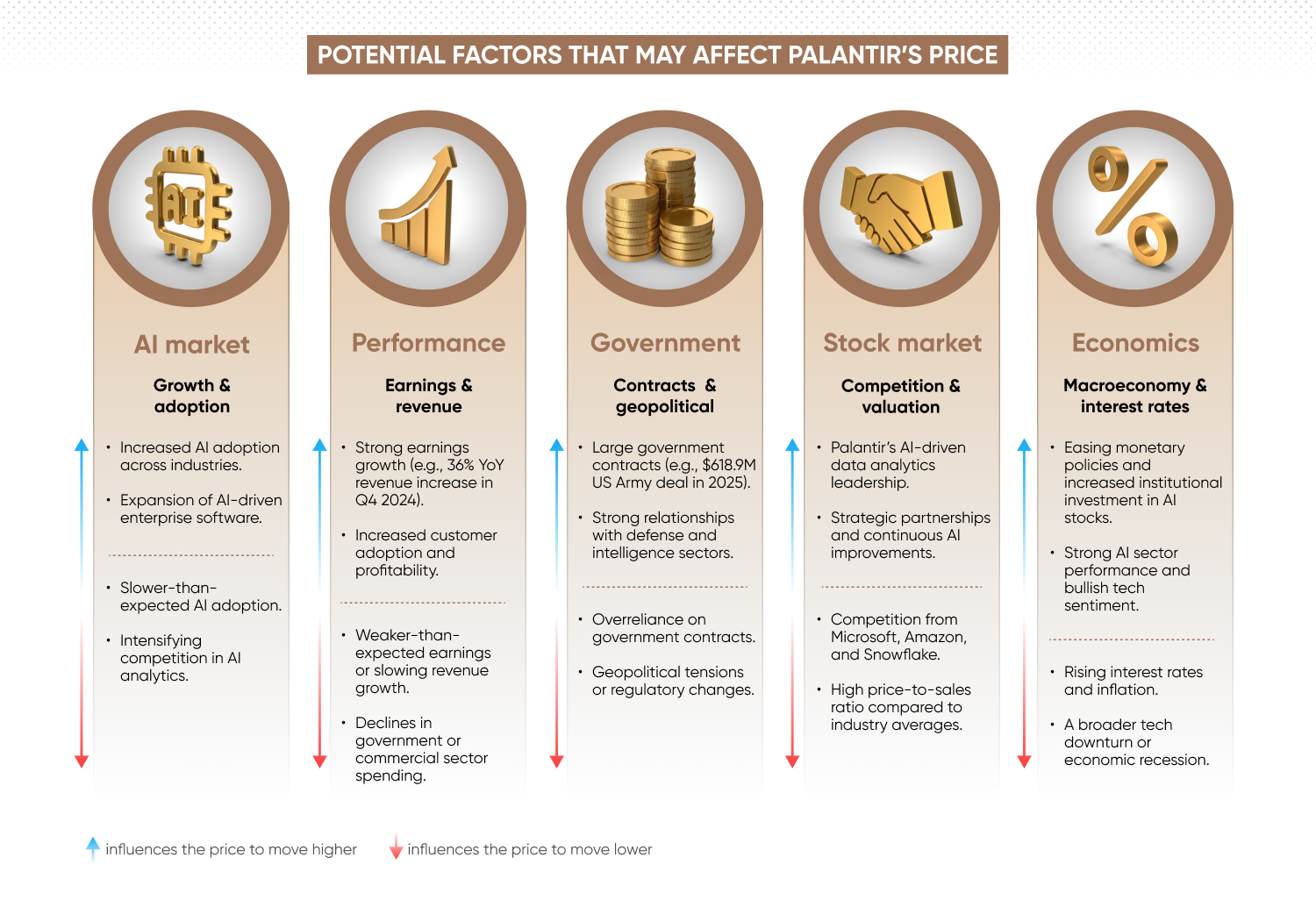
The bullish thesis for Palantir centers on the idea that data is the “new oil” and Palantir is the “refinery.” Proponents argue that Palantir’s software is years ahead of competitors and that the company is uniquely positioned to benefit from increasing geopolitical tensions and the corporate rush to adopt AI.
-
The “Moat”: Palantir’s products are deeply embedded in the most sensitive parts of the U.S. government, providing a level of security clearance and trust that few startups can replicate.
-
Scalability: With the introduction of AIP and the “bootcamp” sales model, Palantir has proven it can acquire customers faster and more efficiently than it did in its early years.
-
Operating Leverage: As the company grows, its fixed costs are spread over a larger revenue base, leading to expanding profit margins.
Potential Risks and Challenges
Conversely, skeptics point to several factors that could hinder the stock’s performance.
-
High Valuation: Palantir often trades at a high price-to-earnings (P/E) and price-to-sales (P/S) ratio compared to other software companies. This means the stock is “priced for perfection,” and any slight miss in earnings could lead to significant volatility.
-
Customer Concentration: Although the company is diversifying, a significant portion of its revenue still comes from a small number of large government and commercial contracts. The loss of a single major client could have a disproportionate impact on its financials.
-
Competition: While Palantir’s platforms are comprehensive, they compete with offerings from tech giants like Microsoft (Azure), Amazon (AWS), and specialized data firms like Snowflake.
Practical Steps to Investing in Palantir
If you have researched the fundamentals and decided that Palantir is a suitable addition to your portfolio, follow these steps to execute your investment.
Choosing a Brokerage and Account Type
Palantir is listed on the New York Stock Exchange (NYSE) under the ticker symbol PLTR. To buy the stock, you will need a brokerage account. Modern platforms such as Fidelity, Charles Schwab, Vanguard, or app-based brokers like Robinhood and Webull allow you to buy PLTR shares with zero commissions.
-
Taxable Brokerage Account: Best for flexibility and accessibility to funds.
-
IRA or 401(k): If you are investing for the long term, buying PLTR within a tax-advantaged account can help you avoid capital gains taxes on the stock’s growth.
Determining Your Entry Point
Timing the market is notoriously difficult, especially with a stock as volatile as Palantir. Instead of trying to “buy the bottom,” many investors utilize Dollar-Cost Averaging (DCA). This involves investing a fixed amount of money at regular intervals (e.g., $500 every month) regardless of the stock price. This strategy reduces the impact of volatility and ensures you are buying more shares when prices are low and fewer when they are high.
Technical Analysis and Valuation
For more active investors, monitoring technical indicators like the 50-day and 200-day moving averages can provide insight into the stock’s momentum. Furthermore, comparing Palantir’s current valuation metrics to its historical averages can help you determine if the stock is overvalued or undervalued at any given moment.
Strategic Diversification and Portfolio Management
No matter how much you believe in Palantir’s mission, it should rarely be the only stock in your portfolio. Proper diversification is the key to long-term wealth preservation.
The Role of PLTR in a Portfolio
Palantir is typically classified as a “Growth” or “Aggressive Growth” stock. Because of its volatility and high valuation, it usually fits into the “satellite” portion of a Core-Satellite investment strategy. The “core” of your portfolio should consist of broad-market index funds (like those tracking the S&P 500), while individual stocks like PLTR serve as the “satellites” intended to provide outsized returns.
Monitoring Your Investment
Investing in Palantir is not a “set it and forget it” endeavor. Because the company operates in a rapidly evolving technological landscape, investors should stay informed by:
-
Reviewing Quarterly Earnings: Pay attention to “Net Dollar Retention,” which measures how much existing customers are increasing their spending.
-
Following Geopolitical Trends: Since a large portion of Palantir’s revenue is tied to government defense, changes in international relations and defense spending can impact the stock.
-
Tracking AI Regulation: As a leader in AI deployment, Palantir may be affected by new laws and ethical guidelines regarding how AI is used by both governments and corporations.
By approaching Palantir with a disciplined, research-driven mindset, you can navigate the complexities of this unique tech giant and potentially capitalize on the massive shift toward an AI-driven global economy. Whether Palantir becomes the next foundational utility of the digital age or remains a specialized niche player will depend on its ability to continue innovating and scaling its commercial footprint. As an investor, your job is to remain objective, monitor the data, and align your position with your broader financial goals.
aViewFromTheCave is a participant in the Amazon Services LLC Associates Program, an affiliate advertising program designed to provide a means for sites to earn advertising fees by advertising and linking to Amazon.com. Amazon, the Amazon logo, AmazonSupply, and the AmazonSupply logo are trademarks of Amazon.com, Inc. or its affiliates. As an Amazon Associate we earn affiliate commissions from qualifying purchases.