
Investing for retirement is one of the most critical financial journeys an individual can undertake. While employer-sponsored plans like 401(k)s are common, the Individual Retirement Account (IRA) remains one of the most powerful tools in the personal finance arsenal. An IRA offers tax advantages, a wide array of investment choices, and the flexibility to manage your financial future independently. However, the process of opening and managing an IRA can seem daunting to the uninitiated.
Understanding how to invest in an IRA involves more than just opening an account; it requires a strategic approach to tax planning, asset allocation, and long-term discipline. This guide will walk you through the nuances of IRAs, helping you navigate the complexities of the financial markets to secure a comfortable retirement.
Understanding the IRA Landscape: Choosing the Right Vehicle
Before you deposit a single dollar, you must understand the different types of IRAs available. The IRS provides several options, each tailored to different income levels, employment statuses, and tax preferences. Choosing the wrong one can lead to missed tax benefits or unnecessary penalties.
Traditional vs. Roth IRA: Which is Right for You?
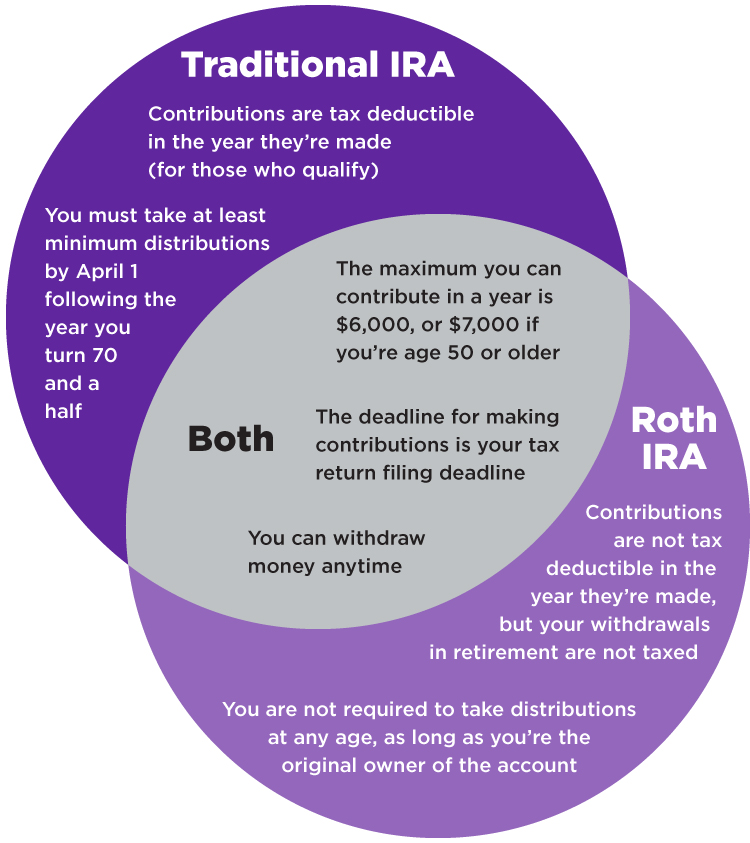
The most common debate in retirement planning is the choice between a Traditional IRA and a Roth IRA. The primary difference lies in the timing of the tax benefit.
A Traditional IRA allows you to contribute “pre-tax” or tax-deductible dollars. This reduces your taxable income in the year you contribute, which is highly beneficial for those currently in a high tax bracket. However, when you withdraw the money during retirement, those distributions are taxed as ordinary income.
Conversely, a Roth IRA is funded with “after-tax” dollars. You do not get an immediate tax break, but the investments grow tax-free, and qualified withdrawals in retirement are completely tax-free. This is often the preferred choice for younger investors who expect to be in a higher tax bracket later in life. It is important to note that Roth IRAs have income eligibility limits; if you earn above a certain threshold, you may need to look into a “Backdoor Roth” strategy.
SEP and SIMPLE IRAs for the Self-Employed
If you are a freelancer, small business owner, or entrepreneur, you have access to specialized IRAs that allow for much higher contribution limits than the standard versions.
The SEP IRA (Simplified Employee Pension) is a popular choice for sole proprietors. It allows you to contribute a significant percentage of your net earnings from self-employment. The SIMPLE IRA (Savings Incentive Match Plan for Employees) is designed for small businesses with fewer than 100 employees, requiring an employer match but offering a straightforward way to save. Understanding these niche products is essential for business owners looking to optimize their corporate and personal tax strategies simultaneously.
The Step-by-Step Process of Opening an IRA
Once you have identified the type of IRA that fits your financial profile, the next step is the mechanical process of setting it up. This phase is crucial because the platform you choose will dictate your fees, investment options, and user experience.
Choosing the Right Brokerage or Financial Institution
Not all IRA providers are created equal. When selecting a brokerage, you should prioritize low costs and a robust selection of investment products. Major discount brokerages like Vanguard, Charles Schwab, and Fidelity are industry leaders because they offer commission-free trades on most stocks and ETFs, along with a vast library of low-cost index funds.
For those who prefer a “hands-off” approach, robo-advisors such as Betterment or Wealthfront use algorithms to manage your IRA based on your risk tolerance. While these services charge a small management fee, they provide automated rebalancing and tax-loss harvesting, which can be invaluable for busy professionals.
Setting Up Your Account and Navigating Contribution Limits
Opening an IRA is typically a digital process that takes less than 15 minutes. You will need your Social Security number, employment information, and bank details for funding.
The most important technical detail to remember is the annual contribution limit. For 2024, the limit is $7,000 for those under age 50, and $8,000 for those 50 and older (the “catch-up” contribution). It is vital to monitor these limits across all your IRA accounts combined. Over-contributing can result in a 6% excise tax penalty from the IRS every year the excess remains in the account.
Strategic Asset Allocation: What to Buy Inside Your IRA
The most common mistake new investors make is “funding the account but not investing the money.” Simply moving money from your bank to an IRA does not mean it is invested; it often sits in a money market fund earning minimal interest. You must actively select assets to build a portfolio.

Diversification Through Low-Cost Index Funds and ETFs
For the vast majority of investors, the most effective way to build wealth in an IRA is through diversification. Instead of betting on individual “hot” stocks, you can buy Exchange-Traded Funds (ETFs) or Mutual Funds that track the entire market.
A classic “Three-Fund Portfolio” consists of:
- A Total Stock Market Index Fund: Providing exposure to thousands of U.S. companies.
- An International Stock Index Fund: Capturing growth in developed and emerging markets outside the U.S.
- A Total Bond Market Index Fund: Adding stability and reducing volatility.
By utilizing low-cost index funds, you ensure that you are not losing a significant portion of your gains to management fees (expense ratios), which can compound into hundreds of thousands of dollars over a 30-year horizon.
The Role of Individual Stocks and Bonds
While index funds provide the foundation, some investors choose to allocate a portion of their IRA to individual equities. Because IRAs are tax-advantaged, they are excellent places to hold dividend-paying stocks. In a taxable brokerage account, you would owe taxes on dividends every year. Inside an IRA, those dividends can be automatically reinvested to purchase more shares without triggering a tax event, accelerating the “snowball effect” of your wealth.
Optimizing Your Investment Strategy for Maximum Growth
Investing in an IRA is a marathon, not a sprint. To maximize the utility of this financial vehicle, you must adopt habits that favor long-term growth and mitigate the impact of market volatility.
The Power of Compound Interest and Reinvesting Dividends
The true magic of an IRA lies in compound interest. When your investments earn a return, and that return is reinvested to earn its own return, your wealth begins to grow exponentially. This is why “time in the market” is far more important than “timing the market.”
Consider two investors: one who starts contributing $500 a month at age 25, and another who starts at age 35. By age 65, the early starter will likely have more than double the wealth of the late starter, even though they only contributed for ten more years. Reinvesting dividends is a key part of this; by setting your IRA to “DRIP” (Dividend Reinvestment Plan), you ensure that every cent is working for you at all times.
Rebalancing Your Portfolio and Managing Risk
As the market fluctuates, your original asset allocation will shift. If stocks perform exceptionally well, they may become a larger percentage of your portfolio than you intended, increasing your risk. Professional investors practice “rebalancing”—selling a portion of outperforming assets and buying underperforming ones to return to their target allocation.
In an IRA, rebalancing is “tax-neutral.” Unlike a standard brokerage account where selling for a profit triggers capital gains tax, you can buy and sell within your IRA freely. This allows you to maintain your risk profile without being penalized by the IRS.
Avoiding Common Pitfalls and Planning for Distributions
Finally, a successful IRA strategy requires an exit plan. Understanding the rules for taking money out is just as important as knowing how to put it in.
Understanding Early Withdrawal Penalties
IRAs are designed for retirement. Generally, if you withdraw funds before age 59½, you will face a 10% early withdrawal penalty in addition to ordinary income taxes (for Traditional IRAs). There are exceptions for first-time home purchases, qualified education expenses, or significant medical bills, but these should be used as a last resort. Your IRA should be viewed as an “untouchable” vault until your golden years.
Required Minimum Distributions (RMDs) and Legacy Planning
For Traditional IRAs, the government eventually wants its tax money. You are required to start taking Required Minimum Distributions (RMDs) starting at age 73 (as of current legislation). Failing to take an RMD can result in a massive 25% penalty on the amount that should have been withdrawn.
Roth IRAs, however, do not have RMDs during the original owner’s lifetime. This makes the Roth IRA a superior tool for legacy planning, as you can leave the account to your heirs, who can then enjoy tax-free growth for another decade under current “Inherited IRA” rules.

Conclusion
Investing in an IRA is one of the most effective ways to ensure financial independence. By selecting the right account type, choosing a low-cost brokerage, diversifying your assets through index funds, and maintaining the discipline to stay invested through market cycles, you can build a substantial nest egg.
The most important step in the process is the first one: starting. Regardless of how much you can contribute today, the power of tax-advantaged growth and compounding interest is a force that rewards those who begin early and remain consistent. Treat your IRA not just as a savings account, but as a strategic engine for wealth creation.
aViewFromTheCave is a participant in the Amazon Services LLC Associates Program, an affiliate advertising program designed to provide a means for sites to earn advertising fees by advertising and linking to Amazon.com. Amazon, the Amazon logo, AmazonSupply, and the AmazonSupply logo are trademarks of Amazon.com, Inc. or its affiliates. As an Amazon Associate we earn affiliate commissions from qualifying purchases.