
The Dow Jones Industrial Average (DJIA), often simply referred to as “the Dow,” stands as one of the most iconic and frequently cited stock market indices globally. For decades, it has served as a prominent barometer of U.S. economic health and the performance of its blue-chip companies. Many aspiring investors, and even seasoned ones, are drawn to the idea of investing in the Dow, seeking to capitalize on the stability and growth potential of these established market leaders. However, directly investing in an index isn’t possible, as an index is merely a statistical measure. This guide will demystify how individual investors can gain exposure to the Dow Jones Industrial Average, exploring the various avenues available and outlining a strategic approach to integrate this legendary index into your investment portfolio.

Understanding the Dow Jones Industrial Average (DJIA)
Before diving into investment strategies, it’s crucial to grasp what the DJIA represents and how it operates. This foundational understanding will equip you to make informed decisions about its role in your financial planning.
What is the DJIA?
The Dow Jones Industrial Average is a stock market index that measures the stock performance of 30 large companies listed on stock exchanges in the United States. Founded by Charles Dow in 1896, it is the second-oldest U.S. market index after the Dow Jones Transportation Average. Unlike broader indices like the S&P 500, which are market-capitalization weighted, the DJIA is a price-weighted index. This means that stocks with higher share prices are given greater weight in the index’s calculation, regardless of their total market value.
The companies included in the Dow are often referred to as “blue-chip” stocks, representing large, well-established, and financially sound corporations with a long history of stable earnings. Examples frequently include giants across various sectors, such as Apple, Microsoft, Johnson & Johnson, and JPMorgan Chase. The composition of the Dow is reviewed periodically by a committee at S&P Dow Jones Indices, with changes made to reflect current market trends and ensure the index accurately represents the broader industrial sector of the U.S. economy.
Significance and Limitations of the Dow
The Dow holds significant psychological importance for investors and the public alike. Its movements are often reported as headline news, acting as a quick gauge of market sentiment and overall economic performance. For many, a “rising Dow” signifies economic prosperity, while a “falling Dow” can signal trouble. Its long history also provides a valuable benchmark for comparing market performance over different eras.
However, the DJIA also has notable limitations. Its price-weighted methodology means that a stock with a higher price can have a disproportionate impact on the index’s movement, even if it has a smaller market capitalization than a lower-priced component. Furthermore, with only 30 companies, the Dow is not as comprehensive a representation of the broader U.S. stock market as the S&P 500, which includes 500 companies across a wider range of industries. Critics argue that its small sample size and weighting methodology make it less suitable as a definitive indicator of the entire market’s health. Despite these limitations, the Dow remains a powerful and relevant index that continues to influence investment decisions and public perception.
Direct vs. Indirect Investment Approaches
As established, you cannot directly purchase the Dow Jones Industrial Average itself. An index is an abstract mathematical construct, not a tangible asset like a stock or a bond. Therefore, investing in the Dow necessitates an indirect approach, leveraging financial instruments designed to replicate its performance.
Why You Can’t Invest Directly in the DJIA
Imagine the Dow as a recipe: it lists ingredients (the 30 companies) and instructions for combining them to achieve a certain flavor profile (its weighted average). You can’t buy “the recipe” itself; you can only buy the ingredients in the specified proportions to recreate it. Similarly, the DJIA is a benchmark, a calculation reflecting the average performance of its 30 components. To “invest in the Dow” means to invest in a portfolio of assets that aims to mimic or track the movements of this calculated average.
The Power of Index Funds and ETFs
This is where index funds and Exchange-Traded Funds (ETFs) become indispensable. These investment vehicles are specifically designed to track the performance of a particular index, such as the DJIA. Instead of requiring you to buy 30 individual stocks in precise, price-weighted proportions, these funds do all the heavy lifting.
An index fund is a type of mutual fund with a portfolio constructed to match or track the components of a market index, like the Dow. When you invest in an index fund, you’re essentially buying a tiny slice of all the stocks that make up the index, in the proportions necessary to replicate its performance.
An Exchange-Traded Fund (ETF) is similar to a mutual fund in that it holds a basket of assets. However, ETFs trade on stock exchanges throughout the day, much like individual stocks, offering greater liquidity and flexibility. Many ETFs are designed to track specific indices, making them an extremely popular and efficient way to gain exposure to the Dow. Both index funds and ETFs offer instant diversification across the 30 blue-chip companies of the Dow, typically at a lower cost than actively managed funds.
Key Investment Vehicles for Dow Exposure
For most individual investors, the most practical and efficient way to invest in the Dow is through pooled investment vehicles. These funds simplify the process, offering diversification and professional management at a reasonable cost.
Exchange-Traded Funds (ETFs) Tracking the DJIA
ETFs are arguably the most popular and accessible method for gaining exposure to the Dow Jones Industrial Average. The most prominent ETF specifically designed to track the DJIA is the SPDR Dow Jones Industrial Average ETF Trust (ticker symbol: DIA), often referred to as “Diamonds.”
-
Advantages of ETFs:
- Diversification: Instantly provides exposure to all 30 Dow components, reducing the risk associated with investing in single stocks.
- Liquidity: ETFs trade like stocks on exchanges, allowing you to buy and sell shares throughout the trading day at market prices.
- Low Expense Ratios: Because they are passively managed (simply tracking an index), ETFs typically have very low annual fees (expense ratios) compared to actively managed mutual funds.
- Transparency: The holdings of an ETF are generally disclosed daily, so investors always know what assets they own.
- Accessibility: Easily bought and sold through any standard brokerage account.
-
How to Buy DJIA ETFs:
- Open a Brokerage Account: If you don’t already have one, open an investment account with a reputable online broker (e.g., Fidelity, Charles Schwab, Vanguard, E*TRADE).
- Fund Your Account: Transfer money from your bank account to your brokerage account.
- Search for the ETF: Use the ticker symbol “DIA” or search for “Dow Jones Industrial Average ETF.”
- Place an Order: Decide how many shares you want to buy and place a market order (to buy at the current price) or a limit order (to buy at a specific price or better).
Mutual Funds with Dow-Related Holdings
While not as common as direct index ETFs, some mutual funds may offer exposure to the Dow, either by explicitly tracking it or by heavily investing in its component stocks.
- Index Mutual Funds: Some mutual fund providers offer traditional index mutual funds that aim to replicate the performance of the DJIA. These work similarly to ETFs but trade only once per day after the market closes, at their Net Asset Value (NAV).
- Actively Managed Funds: Certain actively managed mutual funds might focus on large-cap, blue-chip stocks, often leading them to hold many of the same companies that comprise the Dow. However, these funds aim to outperform the index, so their holdings might deviate, and they typically come with higher expense ratios due to active management.

- Considerations for Mutual Funds:
- Active vs. Passive: Understand whether the fund is passively tracking an index or actively managed. Passive funds will generally have lower fees.
- Expense Ratios: Always check the annual expense ratio, as this directly impacts your net returns.
- Minimum Investment: Mutual funds often have higher minimum initial investment requirements compared to ETFs.
Investing in Individual Dow Component Stocks
A more hands-on approach involves individually purchasing shares of the 30 companies that make up the Dow. This requires more effort and management but offers greater control over your specific holdings.
- Pros and Cons of Single Stock Investing:
- Pros:
- Control: You choose exactly which companies you own and in what quantities.
- Customization: You can overweight companies you have high conviction in.
- Potential for Outperformance: If you pick winners, you could potentially outperform the index.
- Cons:
- Higher Risk: Investing in individual stocks carries higher company-specific risk compared to diversified funds. If one company performs poorly, it can significantly impact your portfolio.
- Complexity & Cost: Buying all 30 stocks in the correct proportions to mimic the Dow’s price-weighted methodology would be complex and incur higher transaction costs (though many brokers offer commission-free trading now).
- Maintenance: You would need to monitor all 30 companies and adjust your holdings if the Dow’s composition changes or if you want to maintain its specific weighting.
- Diversification Challenge: Achieving true diversification with only 30 stocks can still leave you exposed to sector-specific risks, unlike broader market index funds.
- Pros:
For most investors seeking broad Dow exposure with minimal fuss, ETFs are generally the superior choice over attempting to replicate the index through individual stock purchases.
Building Your Investment Strategy
Gaining exposure to the Dow is just one piece of the puzzle. Integrating it effectively into your broader financial plan requires a thoughtful investment strategy.
Defining Your Financial Goals and Risk Tolerance
Before making any investment, clarify your financial objectives. Are you saving for retirement decades away, a down payment on a house in five years, or something else? Your timeline will influence your risk appetite. The Dow, despite its blue-chip components, is still an equity index and subject to market volatility. A longer time horizon typically allows you to weather short-term market downturns. Assess your comfort level with risk; if you’re prone to panic selling during market dips, a more conservative allocation might be appropriate. For many long-term growth investors, Dow-tracking investments can be a stable component of a diversified portfolio.
Dollar-Cost Averaging into the Dow
Dollar-cost averaging (DCA) is a powerful strategy, particularly when investing in volatile assets like stocks or stock market indices. It involves investing a fixed amount of money at regular intervals (e.g., $200 every month), regardless of the asset’s price. When prices are high, your fixed amount buys fewer shares; when prices are low, it buys more shares. Over time, this strategy helps to average out your purchase price, reducing the risk of making a large investment just before a market downturn. Applying DCA to your Dow ETF or mutual fund purchases can smooth out market fluctuations and potentially lead to a lower average cost per share over the long run.
Diversification Beyond the Dow
While investing in the Dow provides diversification across 30 major U.S. companies, it’s crucial to understand that it does not provide complete diversification. The Dow is concentrated in large-cap U.S. industrial and service companies, and its price-weighted nature can give undue influence to a few high-priced stocks.
A truly diversified portfolio should extend beyond the Dow to include:
- Broader U.S. Market Exposure: Consider complementing your Dow holdings with ETFs or mutual funds that track the S&P 500 (500 large U.S. companies) or a total U.S. stock market index (thousands of companies, including mid- and small-caps).
- International Stocks: Invest in companies outside the U.S. to benefit from global growth and reduce reliance on any single country’s economy.
- Bonds: Incorporate fixed-income assets like government or corporate bonds to reduce overall portfolio volatility, especially as you approach retirement.
- Other Asset Classes: Depending on your profile, alternatives like real estate (through REITs) or commodities might also be considered, though these are more advanced.
The goal is to create a portfolio where different asset classes perform well under varying economic conditions, reducing overall risk and enhancing potential returns. The Dow should be a component of this broader strategy, not the entirety of it.
Considerations Before Investing
Before executing your investment plan, take a moment to understand some practical aspects that can impact your returns and overall experience.
Understanding Fees and Expense Ratios
All investment funds, including ETFs and mutual funds, charge fees. For passively managed index funds and ETFs, these are primarily expressed as expense ratios – an annual percentage of your invested assets that goes towards covering the fund’s operational costs. While these ratios for Dow-tracking funds are typically low (e.g., 0.05% to 0.16%), even small percentages can compound over decades, significantly eroding your long-term returns. Always compare expense ratios when choosing between similar funds. For example, a 0.50% expense ratio on a $100,000 portfolio costs $500 per year, which adds up considerably over a 30-year investment horizon. Opt for funds with the lowest possible expense ratios, assuming comparable performance and structure.
Market Volatility and Long-Term Perspective
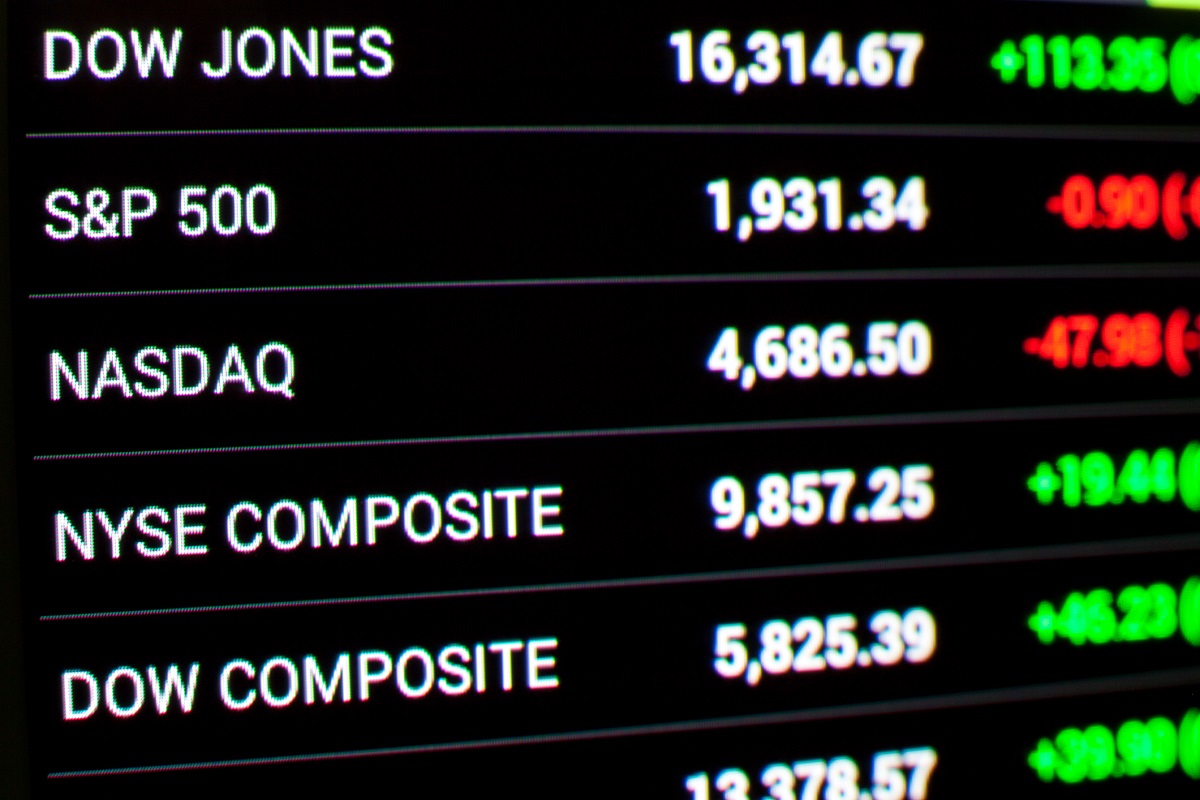
The stock market is inherently volatile. The Dow, like any stock index, will experience periods of significant gains and painful losses. Short-term fluctuations are normal and should not be a cause for panic. Attempting to time the market – buying low and selling high – is notoriously difficult and often leads to worse outcomes than a consistent, long-term approach.
Adopting a long-term perspective is crucial for investing in the Dow. Historically, equity markets have trended upwards over extended periods, rewarding patient investors. Focus on your long-term financial goals, stick to your investment plan, and resist the urge to react emotionally to daily market news. The power of compounding returns is best realized over many years, allowing your investments to grow exponentially.
Rebalancing Your Portfolio
Over time, market movements can cause your portfolio’s asset allocation to drift away from your target. For instance, if your Dow-tracking ETF performs exceptionally well, it might grow to represent a larger percentage of your total portfolio than you initially intended. Rebalancing is the process of adjusting your portfolio back to your desired asset allocation. This typically involves selling some of your overperforming assets and buying more of your underperforming assets (or directing new contributions towards the underperformers) to maintain your target percentages.
Regular rebalancing (e.g., annually or semi-annually) is a disciplined way to manage risk, ensure your portfolio remains aligned with your financial goals, and can even act as a “buy low, sell high” mechanism over the long run. It prevents any single asset or sector from becoming an overly dominant or risky part of your overall investment strategy.
In conclusion, investing in the Dow Jones Industrial Average is a strategic move for many seeking exposure to robust U.S. blue-chip companies. By understanding its structure, leveraging efficient vehicles like ETFs and index mutual funds, and integrating it into a well-diversified, long-term investment strategy, you can effectively harness the power of this venerable index to pursue your financial aspirations. Remember to prioritize low costs, maintain a long-term outlook, and periodically rebalance your portfolio to stay on track.
aViewFromTheCave is a participant in the Amazon Services LLC Associates Program, an affiliate advertising program designed to provide a means for sites to earn advertising fees by advertising and linking to Amazon.com. Amazon, the Amazon logo, AmazonSupply, and the AmazonSupply logo are trademarks of Amazon.com, Inc. or its affiliates. As an Amazon Associate we earn affiliate commissions from qualifying purchases.