
For many taxpayers, tax season is often viewed through a lens of stress and administrative burden. However, when approached with a proactive mindset, the filing process becomes a significant opportunity to optimize your personal balance sheet. Increasing your tax return—or, more accurately, maximizing your tax refund—is not about finding “loopholes” in a legal grey area; it is about a sophisticated understanding of the tax code’s incentives and ensuring you claim every dollar you are legally entitled to retain.
The difference between a mediocre refund and a substantial one often comes down to year-round preparation and the strategic application of deductions and credits. By viewing tax planning as a continuous financial strategy rather than a once-a-year chore, you can significantly alter your annual financial trajectory.

The Mechanics of Deductions: Lowering Your Taxable Income
The primary goal of any tax strategy is to reduce your taxable income. The lower your taxable income, the lower your overall tax liability, which ultimately leads to a larger refund of the taxes withheld from your paychecks throughout the year.
Choosing Between the Standard Deduction and Itemizing
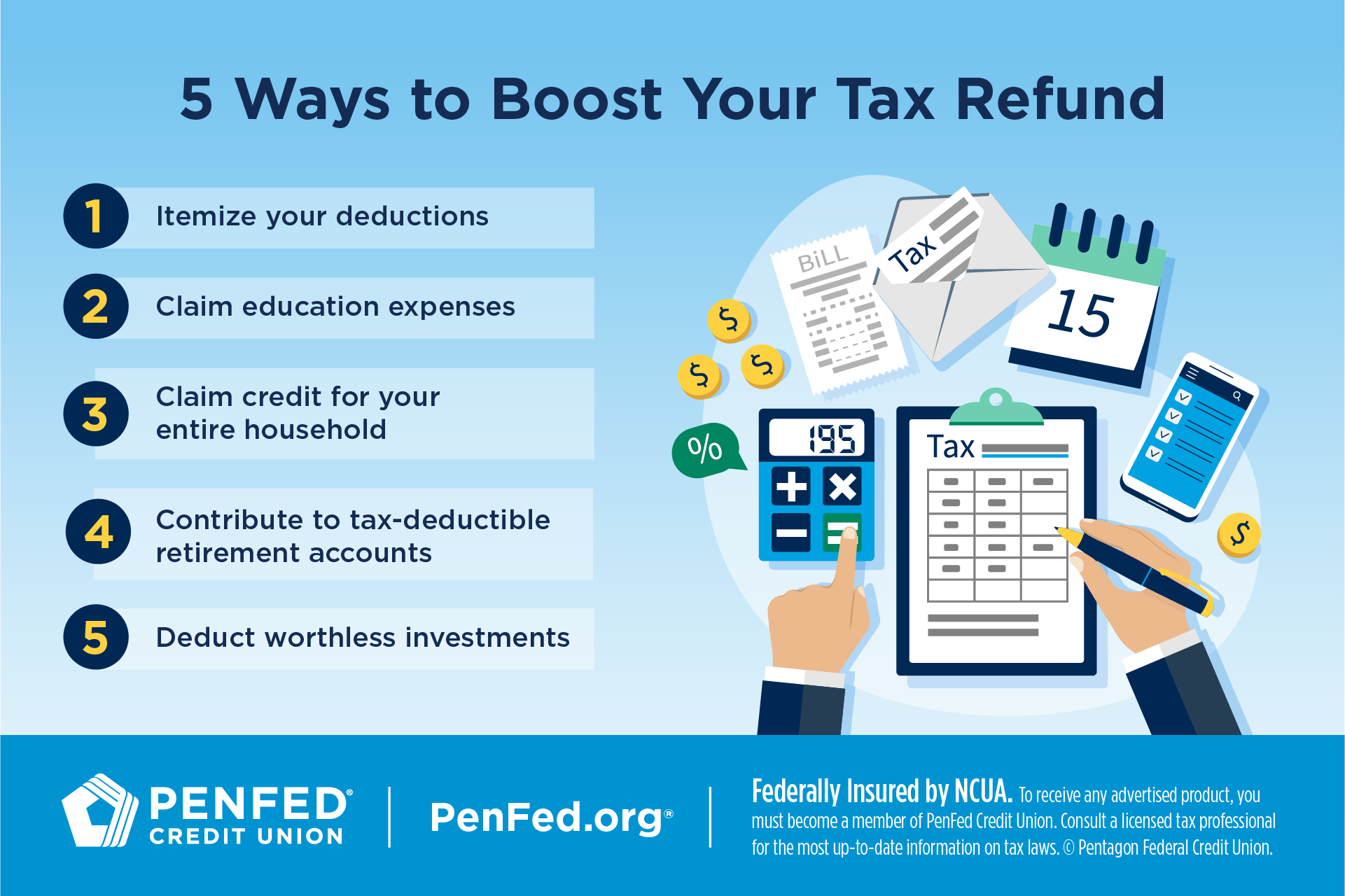
The first major decision every taxpayer faces is whether to take the standard deduction or to itemize. Since the Tax Cuts and Jobs Act of 2017, the standard deduction has nearly doubled, making it the most beneficial choice for the majority of Americans. However, if your total deductible expenses—including mortgage interest, state and local taxes (SALT), and charitable contributions—exceed the standard deduction threshold, itemizing is the superior path to a larger return.
For those near the threshold, a strategy known as “deduction bunching” can be highly effective. This involves concentrating two years’ worth of deductible expenses into a single tax year. For example, you might make a large charitable donation or pay two years’ worth of property taxes in December of one year to exceed the standard deduction, then take the standard deduction the following year.
Above-the-Line Deductions
Often overlooked, “above-the-line” deductions, or adjustments to income, are particularly powerful because they reduce your Adjusted Gross Income (AGI). A lower AGI can qualify you for other credits and deductions that have income phase-outs. These include:
-
Educator Expenses: Teachers can deduct up to $300 for unreimbursed classroom supplies.
-
Student Loan Interest: You may be able to deduct up to $2,500 of interest paid on student loans, even if you do not itemize.
-
Health Savings Account (HSA) Contributions: If you have a high-deductible health plan, contributions to an HSA are 100% tax-deductible (unless made via pre-tax payroll), reducing your AGI dollar-for-dollar.
Home Office and Self-Employment Deductions
With the rise of the gig economy and remote work, many taxpayers are eligible for business-related deductions. If you are a freelancer or have a side hustle, you can deduct expenses related to your home office, equipment, marketing, and professional development. Even a portion of your utility bills and internet costs can be deducted relative to the size of your dedicated workspace. Ensuring these are meticulously documented throughout the year is key to maximizing these returns without triggering red flags.
Capitalizing on Tax Credits: Dollar-for-Dollar Reductions
While deductions reduce the amount of income you are taxed on, credits are arguably more valuable because they provide a dollar-for-dollar reduction of your actual tax bill. If you owe $5,000 in taxes and qualify for a $2,000 credit, your bill drops directly to $3,000.
Family and Dependent Credits
The Child Tax Credit (CTC) remains one of the most substantial boons for families. Understanding the eligibility requirements and the refundable portion of this credit is vital. Additionally, the Child and Dependent Care Credit allows you to recoup a percentage of the costs paid for daycare, summer camps, or after-school care for children under 13, provided those expenses were necessary for you to work or look for work.
Education Credits
For those pursuing higher education or supporting a dependent who is, education credits can significantly boost a refund. The American Opportunity Tax Credit (AOTC) is available for the first four years of post-secondary education and can be worth up to $2,500 per student. If you are beyond your first four years or are taking classes to improve job skills, the Lifetime Learning Credit (LLC) provides up to $2,000 per tax return for an unlimited number of years.
Energy-Efficiency Incentives
In recent years, the government has heavily incentivized green energy. The Residential Clean Energy Credit allows taxpayers to claim a percentage of the cost of installing solar panels, wind turbines, or geothermal heat pumps. Furthermore, the Energy Efficient Home Improvement Credit provides substantial rebates for installing energy-efficient windows, doors, or heat pumps. If you made home improvements this year, checking the energy ratings of your upgrades is essential for capturing these significant credits.
Strategic Retirement Contributions and Savings
The tax code is designed to reward those who save for the future. By directing funds into specific types of accounts, you can create a dual benefit: growing your long-term wealth and increasing your immediate tax refund.
Traditional IRA and 401(k) Contributions
Contributions to a Traditional 401(k) or a Traditional IRA are typically made with pre-tax dollars. If you contribute to an employer-sponsored 401(k), that money is taken out of your check before taxes are calculated, which lowers your taxable income immediately. If you contribute to a Traditional IRA, you may be able to deduct those contributions on your tax return. For 2023 and 2024, the contribution limits have increased, allowing savvy investors to shield more income from the IRS than in previous years.
The Saver’s Credit
The Retirement Savings Contributions Credit, commonly known as the Saver’s Credit, is a “hidden gem” for low-to-moderate-income earners. It provides a credit of up to $1,000 ($2,000 for married couples) for contributions made to an IRA, 401(k), or other retirement plans. This is in addition to the deduction you already receive for the contribution, effectively allowing you to “double-dip” on tax benefits.
The Power of the HSA
As mentioned earlier, the Health Savings Account is one of the most tax-advantaged vehicles available. It offers a triple tax advantage: contributions are tax-deductible, the balance grows tax-free through investments, and withdrawals for qualified medical expenses are tax-free. If you are healthy and can afford to pay out-of-pocket for current medical needs, letting your HSA grow while using the contributions to lower your current year’s tax liability is a top-tier financial move.
Investment Strategies for Tax Efficiency
High-net-worth individuals and disciplined retail investors alike use specific maneuvers within their portfolios to minimize the “tax drag” on their investments. Implementing these can turn an investment loss into a tax-filing win.
Tax-Loss Harvesting
If you have investments in a taxable brokerage account that have declined in value, you can sell those assets to realize a loss. This loss can be used to offset any capital gains you realized during the year. If your losses exceed your gains, you can use up to $3,000 of the excess loss to offset your ordinary income, such as your salary. Any remaining loss can be carried forward to future years. This strategy, known as tax-loss harvesting, is a powerful way to “subsidize” a poor investment performance with tax savings.
Understanding Capital Gains Timing
The duration for which you hold an asset significantly impacts the tax rate. Assets held for more than a year qualify for long-term capital gains tax rates, which are substantially lower (0%, 15%, or 20% depending on income) than the ordinary income tax rates applied to short-term gains. By strategically timing the sale of profitable assets to hit that one-year mark, you keep more of your earnings and reduce the tax bite, which can indirectly influence your overall tax standing and potential for a refund if you have overpaid via estimated taxes or withholdings.
Documentation, Timing, and the W-4
The most sophisticated tax strategy will fail without proper execution and documentation. The IRS operates on proof, and the burden of proof lies with the taxpayer.
The Importance of Meticulous Record Keeping
To increase your return, you must be able to justify your claims. Digital tools and apps now make it easier than ever to track receipts for charitable donations, business expenses, and medical bills. Maintaining a dedicated folder (physical or digital) for the entire year ensures that when tax season arrives, you aren’t scrambling to find the “missing” $500 donation receipt that could have pushed you over the edge into itemization.
Adjusting Your W-4 Withholding
A large tax refund is essentially an interest-free loan you have given to the government. While many people enjoy the “windfall” in the spring, others prefer to have that money in their monthly paychecks to invest or pay down high-interest debt. However, if your goal is specifically to see a large lump sum at the end of the year, you can adjust your W-4 form with your employer to withhold more tax. Conversely, if you found yourself owing money last year, adjusting your W-4 is the most effective way to ensure you don’t get hit with a penalty and instead move toward a neutral or positive return.

Filing Correctly and On Time
Finally, the simplest way to protect your return is to avoid errors. Simple mistakes in Social Security numbers, math errors, or failing to report a single 1099-INT from a high-yield savings account can lead to processing delays or audits. E-filing with reputable software or a professional accountant is the fastest way to ensure your return is calculated accurately and your refund is issued promptly.
In conclusion, increasing your tax return is a multifaceted process that involves lowering your taxable income through deductions, reducing your tax bill through credits, and making strategic decisions about retirement and investments. By treating the tax code as a roadmap for financial incentives rather than a list of restrictions, you can turn your annual filing into a cornerstone of your long-term wealth-building strategy.
aViewFromTheCave is a participant in the Amazon Services LLC Associates Program, an affiliate advertising program designed to provide a means for sites to earn advertising fees by advertising and linking to Amazon.com. Amazon, the Amazon logo, AmazonSupply, and the AmazonSupply logo are trademarks of Amazon.com, Inc. or its affiliates. As an Amazon Associate we earn affiliate commissions from qualifying purchases.