
A credit limit increase is more than just a license to spend; it is a sophisticated tool for managing personal cash flow and optimizing one’s credit score. For Bank of America (BofA) customers, securing a higher limit requires a blend of timing, financial health, and an understanding of the bank’s internal risk assessment protocols. When managed correctly, a higher credit limit lowers your credit utilization ratio—a primary factor in FICO score calculations—thereby strengthening your overall financial profile.
Whether you are looking to make a significant purchase, prepare for an emergency, or simply boost your credit score, navigating the Bank of America ecosystem requires a methodical approach. This guide explores the prerequisites for an increase, the specific methods to request one, and the strategic considerations that dictate success.
Preparing Your Financial Profile for a Credit Limit Increase
Before initiating a request, it is essential to understand that Bank of America views a credit limit increase through the lens of risk management. The bank wants to ensure that providing you with more credit does not increase the likelihood of default. Therefore, the preparation phase is the most critical part of the process.
Optimizing Your Credit Score and Payment History
Bank of America typically looks for a consistent history of on-time payments. If you have any late payments within the last 12 to 24 months, your chances of approval drop significantly. Ideally, your credit score should be in the “Good” to “Excellent” range (700 or above) before you submit a request. If your score has recently seen a jump due to a debt payoff or the removal of a negative item, wait until that change is fully reflected in your credit report before applying.
Managing Current Credit Utilization
Your credit utilization ratio—the amount of credit you are using compared to your total available limit—should ideally be under 30%, though under 10% is preferred for the best results. If your BofA card is currently maxed out, the bank may view a request for more credit as a sign of financial distress rather than financial growth. Paying down your existing balance significantly before making the request demonstrates responsible credit management.
The Six-Month Rule
Bank of America generally requires a cooling-off period between significant account changes. If you have recently opened the account, you should wait at least six months before requesting an increase. The same applies if you have recently received an increase on that specific card or another BofA card. This waiting period allows the bank to gather enough data on your spending and repayment habits to make an informed decision.
Step-by-Step Methods to Request an Increase
Bank of America offers multiple channels for requesting a credit limit increase. The method you choose can depend on your preference for automation versus human interaction, though the criteria for approval remain largely the same across all platforms.
Requesting via Online Banking
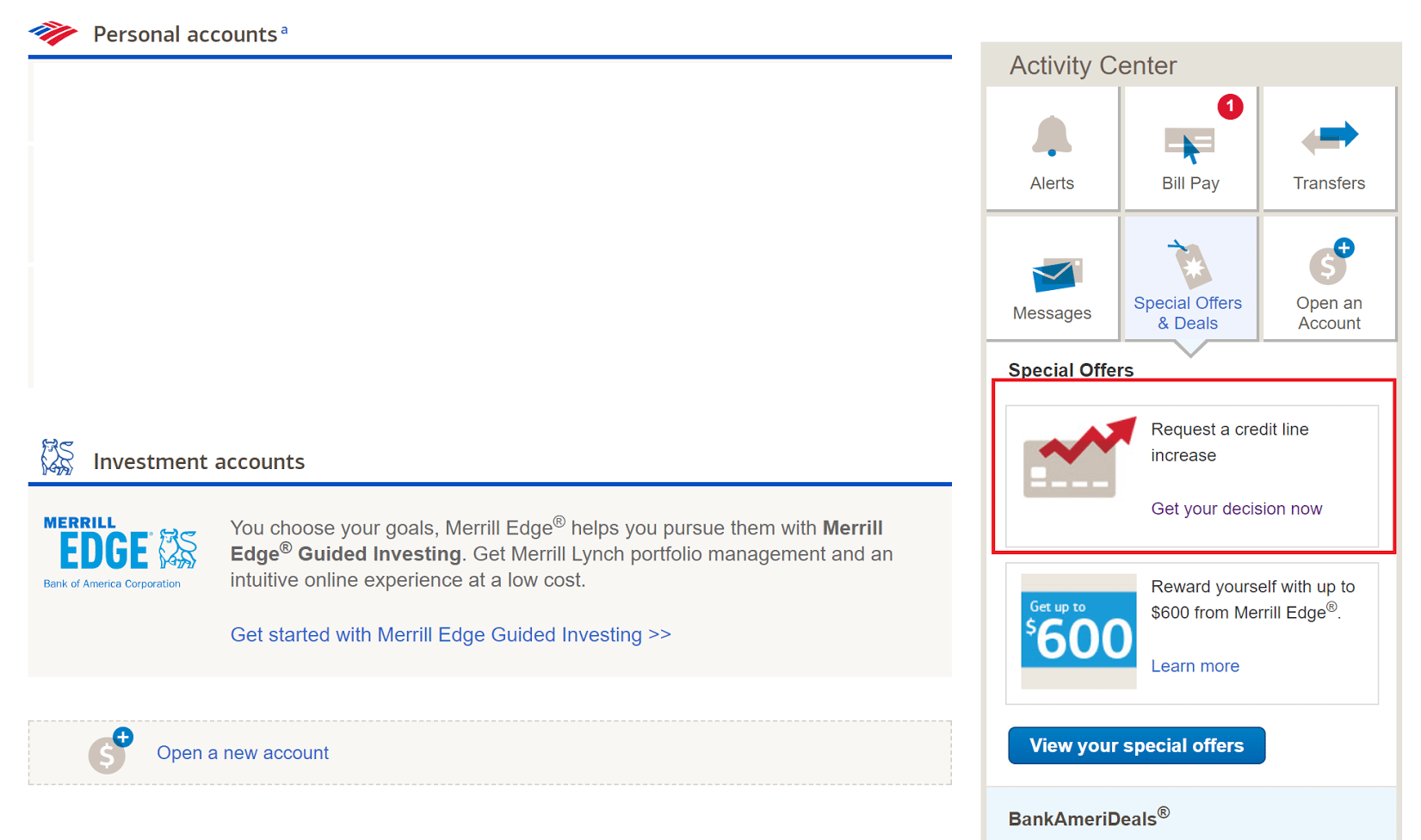
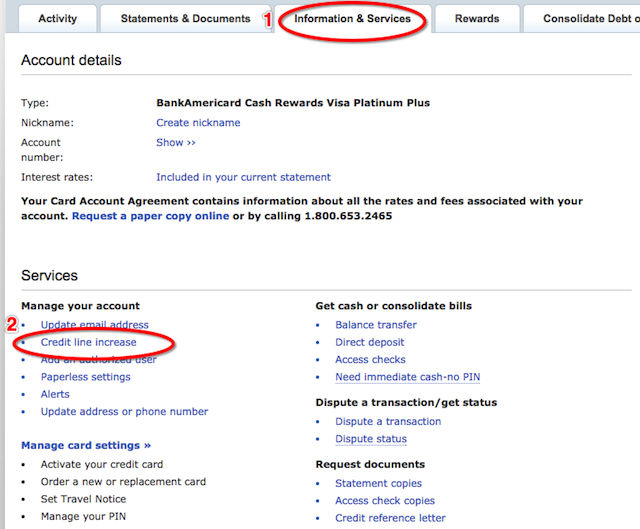
The most efficient way to check for eligibility is through the Bank of America online portal. Once logged in, navigate to the specific credit card account you wish to upgrade. Under the “Information & Services” tab, look for a link labeled “Request a credit line increase.”
If this link is visible, it often implies that the bank has pre-screened your account for a potential increase. If the link is absent, it may mean your account is too new or you have recently had a limit change. Upon clicking the link, you will be asked to provide your total annual income and your employment status. In many cases, an automated decision is rendered within seconds.
Utilizing the Bank of America Mobile App
For those who prefer managing finances on the go, the mobile app provides a streamlined interface for limit requests.
-
Log into the app and select the credit card account.
-
Scroll down to the “Card Details” or “Services” section.
-
Tap on “Request a Credit Line Increase.”
-
Enter the required financial data, including your gross annual income and monthly housing payment.
The app uses the same backend logic as the desktop site, providing a quick response based on your current internal standing with the bank.
The Benefits of a Phone Request
While digital methods are fast, calling Bank of America’s customer service department can be beneficial if your financial situation is nuanced. Speaking with a representative allows you to explain the “why” behind your request. For instance, if your income has increased significantly or if you are planning a specific large-scale project (like a home renovation), a human agent may be able to note these details in your file.
When calling, be prepared to provide the exact amount you are requesting. It is often recommended to ask for a specific, reasonable increase—such as 25% to 50% of your current limit—rather than a vague “as much as possible.”
Strategic Timing and Risk Management
Success in increasing your credit limit is often a matter of timing. Beyond the standard six-month rule, there are specific moments when your “ask” carries more weight.
Updating Your Income Regularly
One of the simplest ways to trigger an automatic or “soft” increase is to ensure your income information is always current in the Bank of America system. Banks are required by regulation to consider a borrower’s ability to pay. If you received a raise, a new bonus structure, or started a side business, updating this in your profile gives the bank the data they need to justify a higher limit without you even having to ask.
Hard Pull vs. Soft Pull Inquiries
A major concern for many cardholders is whether a request will result in a “hard” credit inquiry, which can temporarily lower your credit score. Historically, Bank of America has been known to perform both soft and hard pulls for limit increases.
-
Soft Pull: This does not affect your credit score and is used when the bank uses your existing data to make a decision.
-
Hard Pull: This occurs if the bank needs to pull a fresh report from a credit bureau (like TransUnion or Equifax).
When requesting an increase, you can explicitly ask the representative if a hard pull is required. If you are applying online, look for language stating that the request “will not impact your credit score.” If you are concerned about a small dip in your score, only proceed if a soft pull is guaranteed.
Balancing Across Multiple Cards
If you hold multiple Bank of America cards—such as the Customized Cash Back Rewards and the Premium Rewards card—the bank views your “total exposure.” This is the maximum amount of credit the bank is willing to extend to you across all accounts. If you are denied an increase on one card, you might ask if you can reallocate part of the limit from another card. This doesn’t increase your total credit, but it puts the spending power exactly where you need it.
Why a Higher Limit Matters for Your Long-Term Financial Health
While the immediate benefit of a credit limit increase is increased purchasing power, the long-term advantages are centered on credit scoring and financial flexibility.
Improving the Utilization Ratio
Credit utilization accounts for 30% of your FICO score. If you have a $5,000 limit and carry a $2,500 balance, your utilization is 50%, which can negatively impact your score. If you increase that limit to $10,000 while keeping the same $2,500 balance, your utilization drops to 25%. This shift can result in a significant boost to your credit score without you having to change your spending habits.
Enhancing Financial Leverage
In the world of personal finance, credit is a tool for leverage. A higher limit provides a safety net for significant, unexpected expenses, allowing you to manage cash flow without liquidating investments or dipping into high-yield savings accounts. Furthermore, for those who use Bank of America’s “Preferred Rewards” program, maintaining high-limit cards and healthy spending patterns can lead to better interest rates on mortgages and auto loans.
Navigating a Denied Request
If Bank of America denies your request for a credit limit increase, it is not a permanent setback. By law, the bank must provide an Adverse Action Notice, which outlines the specific reasons for the denial.
Common Reasons for Denial
The most frequent reasons for denial include:
-
Insufficient payment history: You haven’t used the card enough for the bank to judge your risk.
-
High utilization on other cards: Even if your BofA card is empty, if your other cards are maxed out, they will see you as a high-risk borrower.
-
Recent credit inquiries: Too many applications for new credit in a short period suggest financial instability.

The Reconsideration Strategy
If you believe the denial was based on outdated information, you can call the Bank of America reconsideration line. Prepare to discuss your credit report in detail. If you have recently paid off a large debt that hasn’t appeared on your report yet, or if your income has changed since the last time they pulled your data, this is the time to mention it. Persistence and a clear, logical argument can sometimes turn a “no” into a “yes.”
Ultimately, increasing your credit limit with Bank of America is a marathon, not a sprint. By maintaining a pristine payment record, keeping utilization low, and timing your requests strategically, you can systematically expand your financial horizons and build a more robust credit profile.
aViewFromTheCave is a participant in the Amazon Services LLC Associates Program, an affiliate advertising program designed to provide a means for sites to earn advertising fees by advertising and linking to Amazon.com. Amazon, the Amazon logo, AmazonSupply, and the AmazonSupply logo are trademarks of Amazon.com, Inc. or its affiliates. As an Amazon Associate we earn affiliate commissions from qualifying purchases.