
Understanding how to increase an amount by a percentage is a foundational skill in personal and business finance. Far from being a mere arithmetic exercise, this calculation is a cornerstone for making informed financial decisions, from evaluating investment returns and understanding salary raises to calculating sales tax and projecting business growth. Whether you’re a budding investor, a small business owner, or simply managing your household budget, mastering this concept empowers you to navigate the financial world with greater confidence and precision.
At its core, increasing an amount by a percentage involves adding a proportional part of the original value back to itself. This article will demystify the process, explore various practical applications across different financial contexts, and equip you with the knowledge to perform these calculations accurately and efficiently, leveraging both fundamental formulas and modern tools.
The Fundamental Formula: Unpacking the Calculation
The concept of increasing an amount by a percentage is built upon understanding what a percentage truly represents and how it translates into a tangible value. Once this foundation is laid, the calculation itself becomes straightforward, offering both a step-by-step approach and a more direct, streamlined method.
The Basic Concept: Percentage as a Fraction
The word “percentage” derives from “per centum,” meaning “per hundred.” Essentially, a percentage is a way of expressing a number or a ratio as a fraction of 100. For instance, 10% means 10 out of 100, or 10/100. To use percentages in calculations, especially for multiplication or division, it’s almost always necessary to convert them into their decimal equivalent. This is done by dividing the percentage by 100.
-
Example:
-
10% = 10 / 100 = 0.10
-
25% = 25 / 100 = 0.25
-
1% = 1 / 100 = 0.01
-
150% = 150 / 100 = 1.50
-
This conversion is crucial because it allows percentages to be easily integrated into standard mathematical operations, forming the basis of both methods discussed below.
Step-by-Step Calculation Method 1: The Two-Step Approach
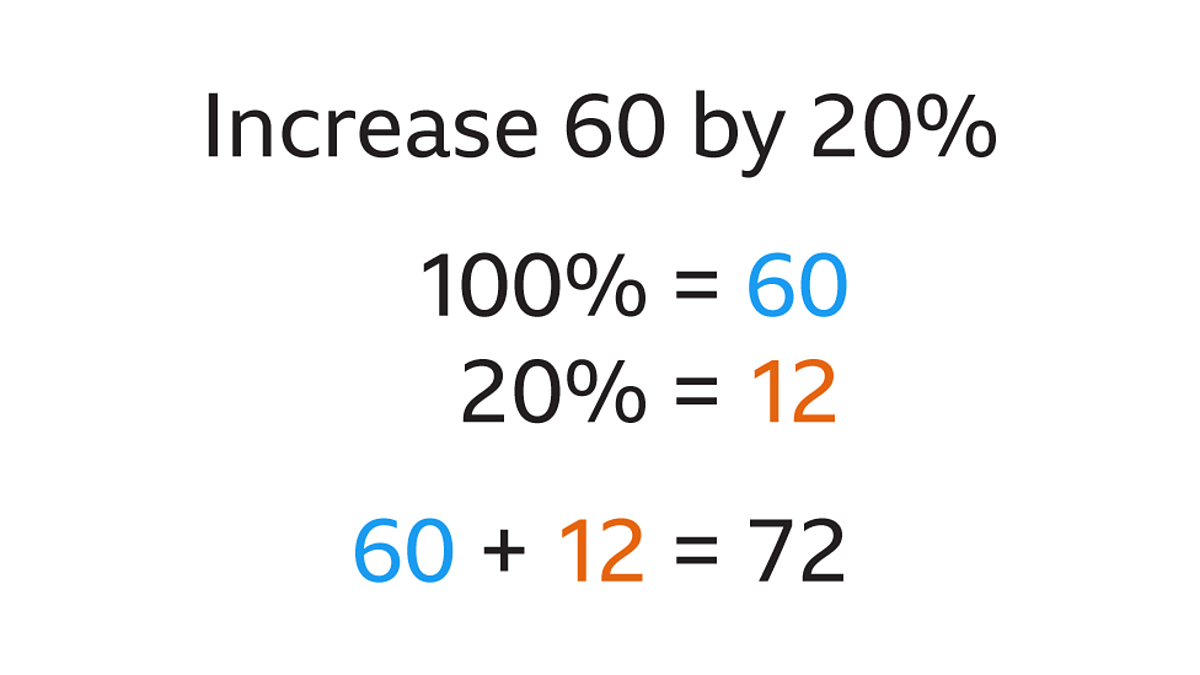
The two-step method is intuitive and easy to grasp, breaking the calculation into two logical parts: first, finding the value of the percentage, and second, adding it to the original amount.
-
Step 1: Calculate the Percentage Amount
-
Multiply the original amount by the percentage (converted to a decimal).
-
Formula:
Percentage Amount = Original Amount × (Percentage / 100)
-
-
Step 2: Add to the Original Amount
-
Add the calculated percentage amount to the original amount.
-
Formula:
New Amount = Original Amount + Percentage Amount
-
Let’s illustrate with an example:
-
Scenario: You want to increase an investment of $500 by 15%.
-
Step 1: Calculate 15% of $500.
-
15% as a decimal is 0.15.
-
Percentage Amount = $500 × 0.15 = $75
-
-
Step 2: Add the percentage amount to the original investment.
- New Amount = $500 + $75 = $575
This method is straightforward and helps visualize exactly how much is being added.
Step-by-Step Calculation Method 2: The Direct Method (Multiplier)
The direct method, also known as the multiplier method, streamlines the process into a single multiplication step. It’s often preferred in finance for its efficiency and for being the foundation of more complex financial models like compound interest calculations.
The logic behind this method is that if you’re increasing an amount by X%, you are essentially retaining 100% of the original amount and adding X% to it. Therefore, the new amount will be (100% + X%) of the original amount.
-
Step 1: Determine the Percentage Multiplier
-
Convert the percentage increase to a decimal.
-
Add 1 to this decimal. (This ‘1’ represents 100% of the original amount).
-
Formula:
Multiplier = 1 + (Percentage / 100)
-
-
Step 2: Multiply the Original Amount by the Multiplier
- Formula:
New Amount = Original Amount × Multiplier
- Formula:
Using the same example:
-
Scenario: Increase an investment of $500 by 15%.
-
Step 1: Determine the multiplier.
-
15% as a decimal is 0.15.
-
Multiplier = 1 + 0.15 = 1.15
-
-
Step 2: Multiply the original amount by the multiplier.
- New Amount = $500 × 1.15 = $575
Both methods yield the same result, but the direct method is often quicker, especially when performed with a calculator or spreadsheet.
Why the Direct Method is Often Preferred in Finance
The direct method holds a significant advantage in financial calculations due to its efficiency and its direct applicability to scenarios involving multiple percentage changes or compound growth.
-
Efficiency: It reduces the number of steps, minimizing potential for error, especially when dealing with many calculations.
-
Compounding: It forms the bedrock for calculating compound interest, where an amount grows by a percentage, and then the subsequent percentage growth is applied to the new, larger amount. If your investment earns 5% annually, after one year it’s
Original * 1.05. After two years, it’s(Original * 1.05) * 1.05, orOriginal * (1.05)^2. This exponential growth is elegantly captured by the multiplier method. -
Clarity in Growth: It immediately shows the growth factor, which is valuable for comparing different growth rates or understanding the overall impact of an increase.
Mastering both methods provides flexibility, but recognizing the power and common usage of the direct method is key for anyone serious about financial literacy.
Practical Applications in Personal Finance
Understanding how to increase an amount by a percentage is not an abstract mathematical concept; it’s a daily tool for managing personal finances effectively. From planning for the future to understanding everyday transactions, this skill empowers better decision-making.
Budgeting and Savings Growth
For individuals, knowing how to apply percentage increases is fundamental to managing income and growing wealth.
-
Salary Raises: When you receive a 5% raise, you can quickly calculate your new salary. If your current salary is $60,000, a 5% raise means your income increases by $60,000 * 0.05 = $3,000, bringing your new salary to $63,000. This helps in adjusting your budget and lifestyle expectations.
-
Savings Account Interest: While banks often compound interest, understanding simple percentage increases is the first step. If your savings account offers a 2% annual interest rate, and you have $10,000, at the end of the year (ignoring compounding for simplicity), you’d earn $10,000 * 0.02 = $200, bringing your total to $10,200. This allows you to project your savings growth over time.
-
Investment Returns: Evaluating the performance of your investments (stocks, mutual funds, retirement accounts) heavily relies on percentage increases. A 7% return on an initial $10,000 investment means it grew by $700, making its new value $10,700. This calculation is crucial for tracking portfolio performance and making informed adjustments.
Debt Management and Loan Interest
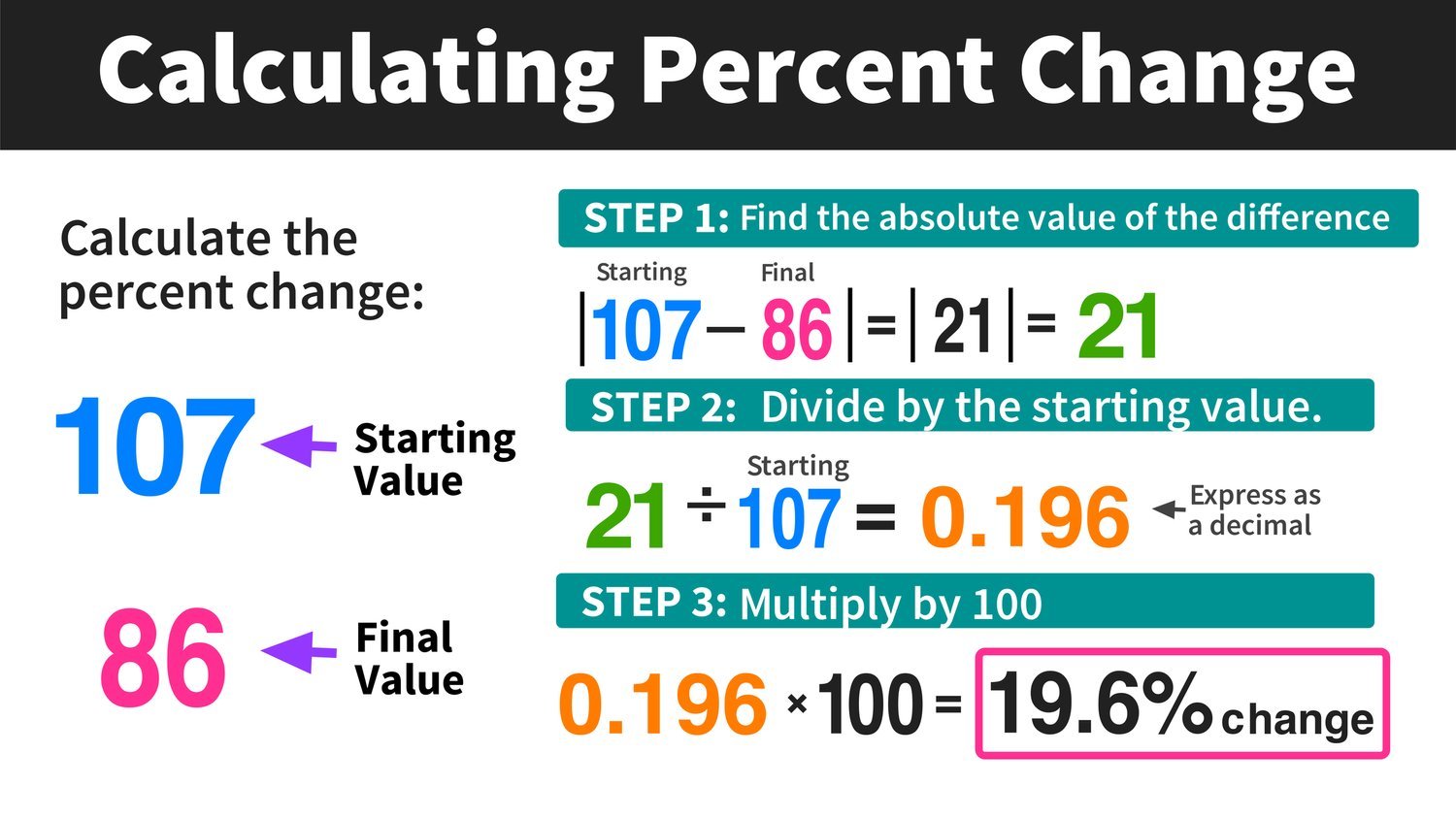
On the flip side, percentage increases are vital for comprehending the true cost of debt.
-
Loan Interest Accumulation: When you take out a loan, the interest rate is expressed as a percentage. While complex loan calculations involve amortization, understanding that interest adds to your principal is key. A $1,000 personal loan with a 10% simple annual interest rate would accrue $100 in interest over a year, increasing your total repayment obligation to $1,100 (excluding any fees).
-
Credit Card Balances: If you carry a balance on a credit card, interest charges (often very high percentages) are added monthly. Understanding how a 20% annual percentage rate (APR) translates to a monthly increase helps to visualize how quickly debt can grow if not paid off.
Everyday Spending: Taxes, Tips, and Markups
Percentage increases are embedded in many common financial transactions.
-
Sales Tax Calculation: Almost every purchase of goods and services is subject to sales tax, a percentage added to the original price. If you buy a $50 item in an area with 8% sales tax, you’ll pay an additional $50 * 0.08 = $4, making the total cost $54.
-
Tipping: In many service industries, tipping is customary, typically ranging from 15% to 20% of the bill. For a $75 restaurant bill, a 20% tip would be $75 * 0.20 = $15, bringing the total cost of your meal to $90.
-
Price Increases Due to Inflation or Markups: Businesses often increase prices to cover rising costs or improve profit margins. When you hear a product price has increased by 3%, you can quickly calculate the new price. If a product previously cost $100, a 3% increase means it now costs $103. This helps consumers understand the impact of inflation on their purchasing power.
Mastering these everyday calculations ensures you’re never caught off guard by the final price or an unexpected financial outcome, fostering a stronger sense of financial control.
Strategic Uses in Business Finance
For businesses, the ability to increase an amount by a percentage is not just a calculation; it’s a strategic tool integral to profitability, growth, and sound financial management. From setting prices to projecting future earnings, this skill is indispensable.
Pricing and Profit Margins
One of the most direct applications in business finance is in setting prices and managing profit.
-
Calculating Markups: Businesses buy products at a cost and sell them at a higher price, known as a markup, to cover expenses and generate profit. If a retailer buys an item for $50 and wants to apply a 40% markup, the selling price would be determined by increasing the cost by 40%.
-
Markup Amount = $50 * 0.40 = $20
-
Selling Price = $50 + $20 = $70.
-
Alternatively, using the direct method: Selling Price = $50 * (1 + 0.40) = $50 * 1.40 = $70.
-
-
Setting Desired Profit Margins: While markup is applied to cost, profit margin is typically a percentage of the selling price. Businesses use percentage increases (and related percentage calculations) to ensure that their pricing strategy achieves their desired profitability targets after all costs are factored in.
Sales Growth and Revenue Projections
Projecting future performance is critical for business planning, investment, and operations.
-
Projecting Future Revenue: If a business achieved $1,000,000 in sales last year and anticipates a 10% growth rate for the coming year, they can project next year’s revenue as $1,000,000 * 1.10 = $1,100,000. This projection is vital for setting budgets, staffing decisions, and inventory management.
-
Analyzing Year-over-Year Growth: Comparing current period sales to previous periods using percentage increases provides insights into the business’s trajectory. A 15% year-over-year revenue increase is a strong indicator of successful strategies or market expansion.
Cost Management and Budget Increases
Managing expenses and allocating resources effectively is paramount for any business.
-
Allocating Budget Increases: Departmental budgets often increase by a certain percentage each year to account for inflation or expanded operations. If the marketing department’s budget was $200,000 last year and is approved for a 5% increase, their new budget will be $200,000 * 1.05 = $210,000.
-
Understanding Supplier Price Hikes: When suppliers increase their prices by a percentage, businesses need to quickly calculate the impact on their cost of goods sold and potentially adjust their own pricing or sourcing strategies. A 7% increase in the cost of raw materials can significantly affect the bottom line.
Investment Returns and Valuation
Businesses also need to evaluate the returns on their internal investments and assess the value of assets.
-
Calculating Return on Investment (ROI): While ROI is often presented as a ratio, its components involve percentage increases in value relative to the initial investment. A project that cost $50,000 and generated $65,000 in profit (a $15,000 increase) yielded an ROI of ($15,000 / $50,000) * 100% = 30%.
-
Valuing Appreciating Assets: Businesses hold assets that may appreciate in value, such as real estate or certain financial instruments. If a property owned by the business is expected to appreciate by 4% annually, this percentage increase is used to estimate its future market value.
The strategic application of percentage increases allows businesses to not only track performance but also to forecast, plan, and optimize their financial health, ensuring sustained growth and profitability in a dynamic market.
Tools and Tips for Accurate Percentage Calculations
While the underlying formulas for increasing an amount by a percentage are straightforward, the complexity of financial scenarios often necessitates the use of various tools and strategies to ensure accuracy and efficiency. Developing good habits and avoiding common pitfalls can significantly enhance your financial computations.
Using Calculators and Spreadsheets
For most financial professionals and individuals, relying on technology for calculations is the norm, offering speed and precision.
-
Basic Calculators: Any standard scientific or financial calculator can easily perform percentage increases. Most have a dedicated “%” button, but it’s often safer and more reliable to use the decimal conversion. For example, to increase $100 by 10%:
-
100 * 1.10 =(Direct Method) -
100 * 0.10 =(then+ 100 =) (Two-Step Method)
-
-
Excel/Google Sheets Formulas: Spreadsheets are incredibly powerful for handling large datasets and complex financial models. The formula for increasing an amount by a percentage is simple:
-
If
A1contains the original amount andB1contains the percentage increase (e.g., 10% entered as 0.10 or 10%), the formula would be:-
=A1 * (1 + B1)(if B1 is decimal, e.g., 0.10) -
=A1 * (1 + B1/100)(if B1 is whole number, e.g., 10)
-
-
This allows for instant updates and easy replication across hundreds or thousands of rows, making it ideal for budgeting, forecasting, and investment analysis.
-
Mental Math Shortcuts (Approximations)
While exact figures are crucial for financial records, quick mental approximations can be incredibly useful for on-the-spot estimations and sanity checks.
-
Estimating 10%: To find 10% of any number, simply move the decimal point one place to the left. For example, 10% of $250 is $25.
-
Estimating 5%: Half of 10%. So, 5% of $250 is $12.50.
-
Estimating 1%: Move the decimal point two places to the left. 1% of $250 is $2.50.
-
Combining for Estimates: To increase $250 by 17%:
-
10% = $25
-
5% = $12.50
-
2% = $5 (1% * 2)
-
Approximate increase = $25 + $12.50 + $5 = $42.50.
-
New amount (approx) = $250 + $42.50 = $292.50. (Actual: $250 * 1.17 = $292.50).
-
These mental shortcuts are excellent for checking if your calculator answer is in the right ballpark.
Common Pitfalls to Avoid
Even with simple calculations, common mistakes can lead to significant financial errors.
-
Confusing Percentage Points with Percentage Change: A common error is misunderstanding the difference between an increase of a certain percentage and an increase in percentage points. If an interest rate goes from 5% to 7%, that’s an increase of 2 percentage points, not a 2% increase (it’s actually a 40% increase: (7-5)/5 = 0.40).
-
Incorrectly Converting Percentages to Decimals: Forgetting to divide by 100 when converting a percentage to a decimal is a frequent mistake. Using 10 instead of 0.10 for 10% will lead to vastly incorrect results.
-
Applying Percentages Sequentially vs. Combined: If an item’s price increases by 10%, and then again by 10%, it’s not a total 20% increase on the original price.
-
Original: $100
-
First Increase: $100 * 1.10 = $110
-
Second Increase: $110 * 1.10 = $121
-
Total increase is $21, which is 21% of the original $100, not 20%. Each percentage increase is applied to the new amount. This is critical for understanding compound growth and chained price changes.
-
By leveraging the right tools and being mindful of these common errors, you can significantly enhance the accuracy and reliability of your financial percentage calculations.

Conclusion
The ability to accurately increase an amount by a percentage is more than a fundamental mathematical skill; it is a critical competency for navigating the complexities of modern finance. As we’ve explored, this single calculation forms the bedrock for a vast array of personal and business financial decisions, from understanding a salary raise or investment return to calculating sales tax, setting profit margins, and projecting future revenues.
By understanding both the intuitive two-step method and the more efficient direct multiplier method, you gain the flexibility to approach calculations with confidence. The practical applications span every aspect of financial life, illustrating how this seemingly simple concept empowers individuals to manage their budgets, grow their savings, and understand their debts, while enabling businesses to strategically price products, forecast growth, and optimize profitability.
In an increasingly data-driven world, where financial figures are constantly presented with percentage changes, mastering this skill is indispensable for critical thinking and informed decision-making. Leverage calculators and spreadsheets for precision, employ mental math for quick checks, and remain vigilant against common pitfalls. Embrace this fundamental financial tool, and you will undoubtedly enhance your financial literacy, empowering you to make smarter, more strategic choices in your personal and professional financial journey.
aViewFromTheCave is a participant in the Amazon Services LLC Associates Program, an affiliate advertising program designed to provide a means for sites to earn advertising fees by advertising and linking to Amazon.com. Amazon, the Amazon logo, AmazonSupply, and the AmazonSupply logo are trademarks of Amazon.com, Inc. or its affiliates. As an Amazon Associate we earn affiliate commissions from qualifying purchases.