
In the dynamic world of entrepreneurship, securing adequate funding is often the critical determinant of whether a brilliant idea remains a concept or blossoms into a thriving enterprise. For many businesses, especially startups and those looking to scale, external financing in the form of a loan becomes an indispensable tool. Navigating the complex landscape of business loans can be daunting, however, rife with jargon, stringent requirements, and a plethora of options. This comprehensive guide aims to demystify the process, providing entrepreneurs with a clear roadmap to successfully obtain the capital their business needs to prosper. From understanding your financial requirements to mastering the application process and beyond, we’ll equip you with the knowledge to make informed decisions and present a compelling case to lenders.
Understanding Your Business Loan Needs and Options
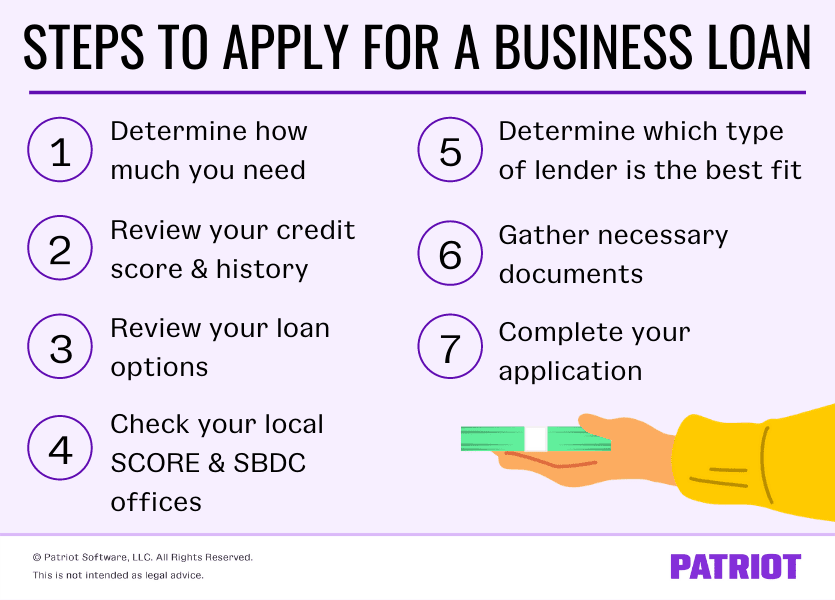
Before approaching any lender, the first and most crucial step is to gain a crystal-clear understanding of your business’s financial needs. This involves a thorough internal assessment and an exploration of the various loan types available, each designed for different purposes and business profiles.
Assessing Your Financial Requirements
Begin by quantifying precisely how much capital you need and, more importantly, why. A vague request for “more money” will not impress lenders. Instead, detail the specific use of funds:
- Working Capital: To cover day-to-day operational expenses, payroll, inventory, or to bridge cash flow gaps.
- Equipment Financing: For purchasing machinery, vehicles, technology, or other tangible assets.
- Real Estate: To acquire or renovate commercial property.
- Expansion: For opening new locations, entering new markets, or significantly increasing production capacity.
- Debt Refinancing: To consolidate existing, higher-interest debts into a single, more manageable loan.
Having a precise figure and a detailed breakdown of how the funds will be allocated demonstrates financial prudence and a clear vision, crucial attributes lenders seek. Consider also the desired repayment term – short-term loans (under 1 year) are for immediate needs, while long-term loans (1-10+ years) are for significant investments like real estate or major expansion.
Exploring Types of Business Loans
The financial market offers a diverse array of loan products, each with its own characteristics, eligibility criteria, and repayment structures. Choosing the right type is paramount:
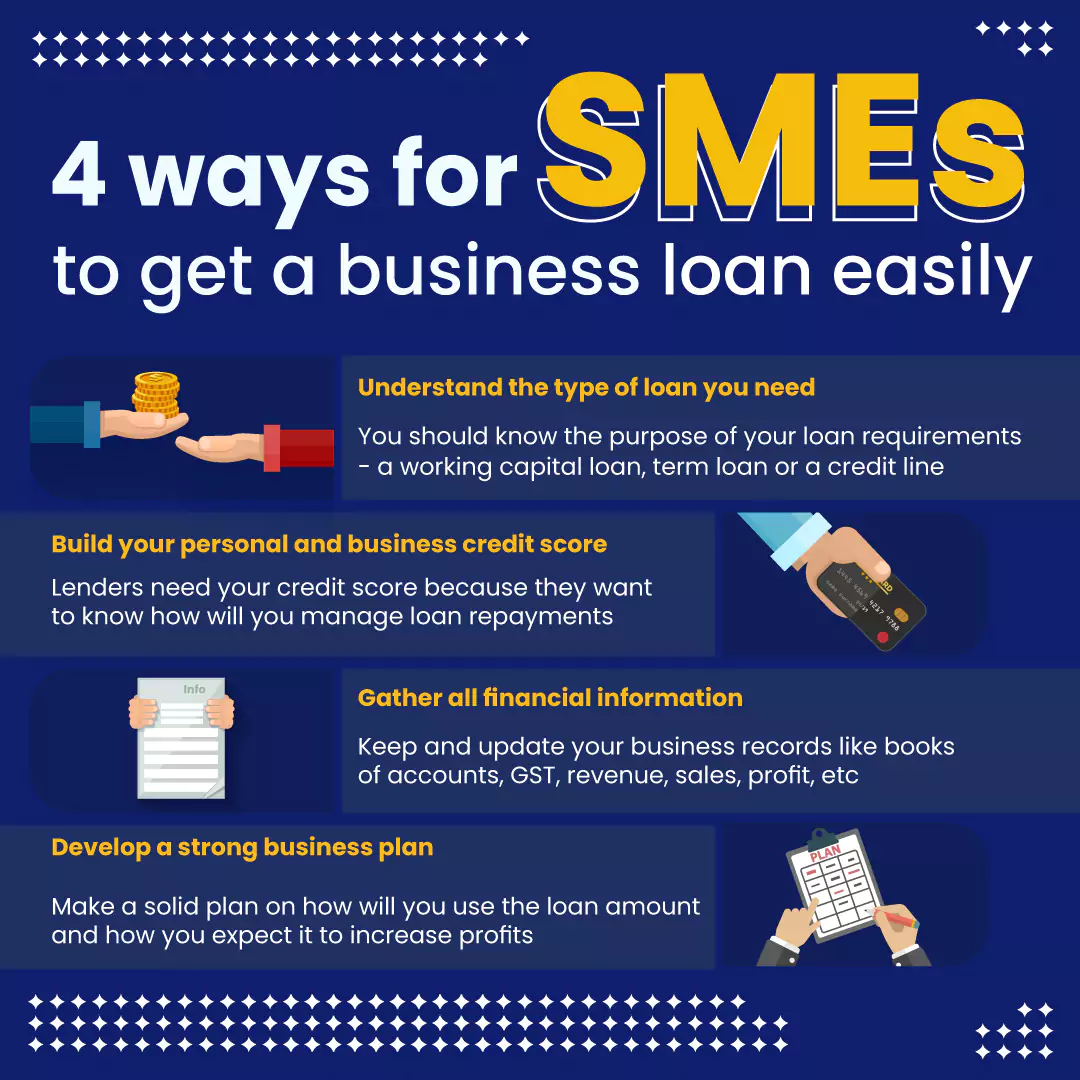
- Term Loans: These are perhaps the most common, offering a lump sum of money upfront that is repaid over a fixed period with regular interest payments. They can be short-term or long-term, secured or unsecured.
- Lines of Credit: Similar to a credit card for your business, a line of credit provides access to a revolving pool of funds up to a certain limit. You only pay interest on the amount you draw, making it ideal for managing cash flow fluctuations or unexpected expenses.
- SBA Loans (Small Business Administration): Government-backed loans offered through banks, these come with favorable terms, lower down payments, and longer repayment periods. They are highly sought after but often involve a more extensive application process.
- Equipment Loans: Specifically designed to finance the purchase of machinery or equipment, these loans often use the purchased asset as collateral, making them easier to obtain.
- Invoice Financing (Accounts Receivable Financing): If your business has outstanding invoices, you can sell them to a third party (a factor) for an immediate cash advance, typically 70-90% of the invoice value. The factor then collects the payment from your customer.
- Merchant Cash Advance (MCA): Businesses with high credit card sales can get an upfront sum of cash, which is then repaid by taking a percentage of daily credit card sales. While quick and accessible, MCAs often come with very high effective interest rates.
- Commercial Real Estate Loans: Used to purchase or refinance commercial property, these are typically long-term, secured loans.
Understanding these options allows you to identify which best aligns with your specific needs, risk tolerance, and business profile, narrowing down your search for suitable lenders.
Preparing a Comprehensive Loan Application
Once you’ve identified your financial needs and the appropriate loan type, the next critical phase involves meticulously preparing your application. Lenders are inherently risk-averse; your application is your opportunity to demonstrate that your business is a sound investment. A well-organized, thorough, and compelling application significantly increases your chances of approval.
The Importance of a Solid Business Plan
A robust business plan serves as the cornerstone of any loan application. It articulates your vision, strategy, and operational blueprint, convincing lenders of your business’s viability and potential for success. Key components include:
- Executive Summary: A concise overview of your business, its mission, products/services, and growth potential.
- Company Description: Legal structure, history, and current status.
- Market Analysis: Understanding your industry, target market, competitors, and competitive advantages.
- Organization and Management: Key personnel, their roles, experience, and organizational structure.
- Service or Product Line: Detailed description of what you offer.
- Marketing and Sales Strategy: How you will reach and retain customers.
- Financial Projections: The most critical section for lenders, including detailed forecasts for the next 3-5 years (more on this below).
- Funding Request: A clear articulation of the loan amount requested and how it will be used.
A well-researched and professionally presented business plan demonstrates foresight and a deep understanding of your market, instilling confidence in potential lenders.
Essential Financial Statements and Projections
Lenders scrutinize your financials to assess your business’s health, profitability, and capacity to repay the loan. You’ll typically need to provide:
- Profit & Loss (P&L) Statements: Also known as Income Statements, these show your revenues, costs, and profits over a specific period (usually monthly, quarterly, and annually for the last 2-3 years).
- Balance Sheets: A snapshot of your business’s assets, liabilities, and equity at a specific point in time.
- Cash Flow Statements: Detail the cash coming in and going out of your business, showing your liquidity and ability to meet short-term obligations.
- Tax Returns: Personal and business tax returns for the past 2-3 years.
- Financial Projections: Forward-looking statements, usually for the next 3-5 years, including projected P&L, balance sheets, and cash flow. These must be realistic, well-substantiated, and demonstrate how your business will generate sufficient revenue to cover loan repayments.
Ensure all financial documents are accurate, up-to-date, and presented clearly. If you have gaps in your financial reporting, consider working with an accountant to get them in order.
The Role of Credit Scores and Collateral
Lenders assess risk on multiple fronts, and your creditworthiness is paramount:
- Business Credit Score: Separate from your personal credit, this score reflects your business’s payment history, credit utilization, and public records. A strong business credit score indicates reliability.
- Personal Credit Score: For small businesses, particularly startups or those without an established business credit history, your personal credit score (FICO score) will be heavily weighed. A good personal credit score (typically 680+) is often a prerequisite.
- Collateral: Many business loans, especially larger ones, require collateral. This is an asset (e.g., real estate, equipment, inventory, accounts receivable) that the lender can seize if you default on the loan. Providing collateral reduces the lender’s risk and can lead to more favorable terms.
- Personal Guarantee: Lenders often require a personal guarantee from the business owner, meaning you are personally liable for the loan if the business cannot repay it. This is a significant commitment and should be considered carefully.
Proactively working to improve both your personal and business credit scores and understanding your collateral options will significantly strengthen your loan application.
Navigating the Lender Landscape
With your application materials ready, the next step is to identify the right lending institution. The “best” lender isn’t universal; it depends on your specific business, its stage of development, the type of loan you need, and your credit profile. Exploring various avenues ensures you find the most suitable partner.
Traditional Banks vs. Online Lenders
These represent the two primary categories of business loan providers, each with distinct advantages and disadvantages:
- Traditional Banks: Think large national banks and smaller community banks. They typically offer a wide range of products, including term loans, lines of credit, and SBA loans. Banks are often the source for the lowest interest rates and most favorable terms, especially for well-established businesses with strong credit. However, their application processes can be lengthy, rigorous, and often require significant collateral and strong financial history. They may be less flexible with newer businesses or those with less-than-perfect credit.
- Online Lenders: The rise of financial technology (FinTech) has brought forth a multitude of online lending platforms. These lenders often specialize in speed and convenience, with streamlined application processes and quicker funding times (sometimes within days). They are generally more flexible with eligibility requirements, making them accessible to startups or businesses with lower credit scores. However, this accessibility often comes at a cost, with higher interest rates and shorter repayment terms compared to traditional banks. Examples include alternative lenders offering short-term loans, invoice financing, or merchant cash advances.
Consider your business’s age, revenue, credit scores, and urgency of funds when deciding between these two. If speed is paramount and you’re willing to pay more, online lenders might be suitable. If you prioritize lower costs and have the time and strong financials, a traditional bank is usually the better choice.
Government-Backed Programs and Credit Unions
Beyond the commercial banking sector, other valuable lending avenues exist:
- SBA Loans: As mentioned, these are partially guaranteed by the U.S. Small Business Administration, reducing the risk for lenders and allowing them to offer more attractive terms. The most common are the 7(a) loan program (flexible for various uses) and the 504 loan program (for real estate or equipment). While the government guarantees a portion, the loan itself is issued by participating banks, credit unions, and non-profit lenders. They require extensive documentation but are invaluable for many small businesses.
- Credit Unions: These member-owned financial cooperatives often offer competitive rates and a more personalized service than large banks. They tend to be more community-focused and might be more willing to work with local small businesses, sometimes even those with slightly less perfect profiles than required by larger banks, especially if you have an existing relationship with them.
- Community Development Financial Institutions (CDFIs): These are mission-driven organizations that provide financial services to underserved markets and populations. They are often excellent resources for businesses in low-income communities, minority-owned businesses, or women-owned businesses, offering capital and often business advisory services. Their loans can be more flexible and tailored to specific community needs.
Exploring these options can unlock funding opportunities that might not be available through conventional channels, particularly if your business aligns with their specific missions or target demographics.
The Application and Approval Process
Once you’ve selected potential lenders and prepared your documentation, the next stage involves formally submitting your application and navigating the assessment period. This phase requires patience, diligence, and a clear understanding of what lenders look for.
Submitting Your Application and Lender Scrutiny
The submission process will vary based on the lender. Online lenders typically have digital portals for quick uploads, while banks may require in-person meetings and physical document submissions. Regardless, ensure every document requested is provided accurately and promptly.
Lenders employ a rigorous evaluation process to determine your creditworthiness and the likelihood of loan repayment. This often boils down to assessing what are known as the “5 Cs of Credit”:
- Character: Your personal and business integrity, repayment history, and overall trustworthiness. This is often inferred from your credit reports, business plan, and interviews.
- Capacity: Your business’s ability to repay the loan, measured by cash flow, debt-to-income ratio, and historical financial performance. Lenders want to see consistent profitability and sufficient cash reserves.
- Capital: The amount of money you and your business have invested. Lenders prefer to see that owners have “skin in the game,” demonstrating commitment and sharing the risk.
- Collateral: Assets pledged to secure the loan. As discussed, collateral mitigates the lender’s risk.
- Conditions: The economic climate, industry trends, and the specific purpose of the loan. Lenders assess external factors that could impact your business’s ability to succeed.
Understanding these criteria allows you to anticipate lender questions and proactively address potential concerns within your application.
Common Reasons for Loan Denial and How to Overcome Them
Despite best efforts, loan applications can be denied. Common reasons include:
- Poor Credit History: Low personal or business credit scores.
- Insufficient Cash Flow: Your financial projections don’t convincingly demonstrate an ability to repay.
- Lack of Collateral: For secured loans, insufficient assets to pledge.
- New Business/Lack of Operating History: Startups often struggle without a track record.
- Incomplete or Inaccurate Application: Errors or missing documents.
- High Debt-to-Equity Ratio: Too much existing debt relative to your equity.
If denied, request feedback from the lender to understand the specific reasons. This invaluable information allows you to address weaknesses, refine your application, or explore alternative financing options more suited to your current situation. Don’t be discouraged; use it as a learning opportunity.
Understanding Loan Terms and Agreements
If your loan is approved, congratulations! However, the process isn’t over. Carefully review the loan agreement before signing anything. Pay close attention to:
- Interest Rate: Fixed or variable?
- Repayment Schedule: Monthly, bi-weekly, or other?
- Fees: Origination fees, closing costs, late payment penalties, prepayment penalties.
- Covenants: Conditions the lender imposes (e.g., maintaining certain financial ratios, not taking on more debt without approval).
- Collateral Requirements: Specific assets pledged.
- Default Clauses: What constitutes a default and the consequences.
If anything is unclear, ask for clarification. It may be wise to consult with an attorney or financial advisor to ensure you fully understand your obligations and the implications of the agreement.
Responsible Borrowing and Future Financial Health
Securing a business loan is a significant milestone, but it also marks the beginning of a new responsibility. Managing your loan effectively and maintaining financial discipline are crucial for your business’s long-term health and your ability to access future funding.
Managing Your Loan Effectively
Once funded, the loan capital should be deployed precisely as outlined in your business plan and application. This not only ensures efficient use of funds but also builds credibility with your lender.
- Adhere to the Repayment Schedule: Make all payments on time, every time. Late payments can incur penalties, damage your credit score, and strain your relationship with the lender. Set up automatic payments to avoid missing deadlines.
- Monitor Your Cash Flow: Continuously track your business’s cash inflows and outflows to ensure you always have sufficient liquidity to cover loan repayments and operational costs.
- Maintain Accurate Records: Keep meticulous financial records, including all loan statements and payment confirmations. This is vital for internal review, tax purposes, and any future financing applications.
- Communicate with Your Lender: If you foresee any challenges in making a payment or fulfilling a loan covenant, communicate proactively with your lender. They may be willing to work with you on a temporary solution, such as a deferral or modified payment plan, especially if you have a good relationship and a valid reason. Ignoring problems only exacerbates them.
Building a Strong Financial Foundation for the Future
Successful loan management contributes to a stronger financial foundation, paving the way for future growth and easier access to capital.
- Build Your Business Credit: Consistently making on-time payments on your business loan will significantly boost your business credit score, making it easier and cheaper to borrow in the future.
- Maintain Strong Financial Performance: Continuously work to improve profitability and cash flow. A track record of strong financial health is the most powerful asset when seeking additional funding.
- Regularly Review Your Business Plan: As your business evolves, revisit and update your business plan. This ensures your strategic direction remains sound and aligns with your financial goals.
- Explore Refinancing Opportunities: As your business grows and your credit improves, you may qualify for better loan terms (lower interest rates, longer repayment periods). Regularly assess the market for refinancing opportunities that could reduce your debt burden.
In conclusion, obtaining a business loan is a strategic process that demands thorough preparation, an understanding of the diverse lending landscape, and diligent financial management. By approaching each stage with professionalism and foresight, entrepreneurs can successfully secure the capital needed to fuel their ambitions and drive their businesses toward sustained success. The journey may be challenging, but with the right approach, the rewards of growth and stability are well within reach.
aViewFromTheCave is a participant in the Amazon Services LLC Associates Program, an affiliate advertising program designed to provide a means for sites to earn advertising fees by advertising and linking to Amazon.com. Amazon, the Amazon logo, AmazonSupply, and the AmazonSupply logo are trademarks of Amazon.com, Inc. or its affiliates. As an Amazon Associate we earn affiliate commissions from qualifying purchases.