
In an increasingly data-driven world, understanding percentages is not just a mathematical skill; it’s a fundamental aspect of financial literacy. From personal budgeting and investment analysis to business profit margins and calculating discounts, percentages of money are woven into the fabric of daily economic life. Mastery of this concept empowers individuals and businesses alike to make informed decisions, track progress, and effectively manage their financial resources. This comprehensive guide will demystify the process of calculating percentages of money, exploring essential methods, practical applications, and valuable tools to enhance your financial acumen.
Understanding the Fundamentals: What is a Percentage of Money?
At its core, a percentage represents a proportion or a fraction of a whole, expressed as a number out of 100. The term “percent” literally means “per hundred.” When applied to money, it allows us to quantify a part of a total monetary amount in a standardized and easily comparable way. Instead of saying “you spent a quarter of your salary on groceries,” we can say “you spent 25% of your salary on groceries,” which is universally understood.
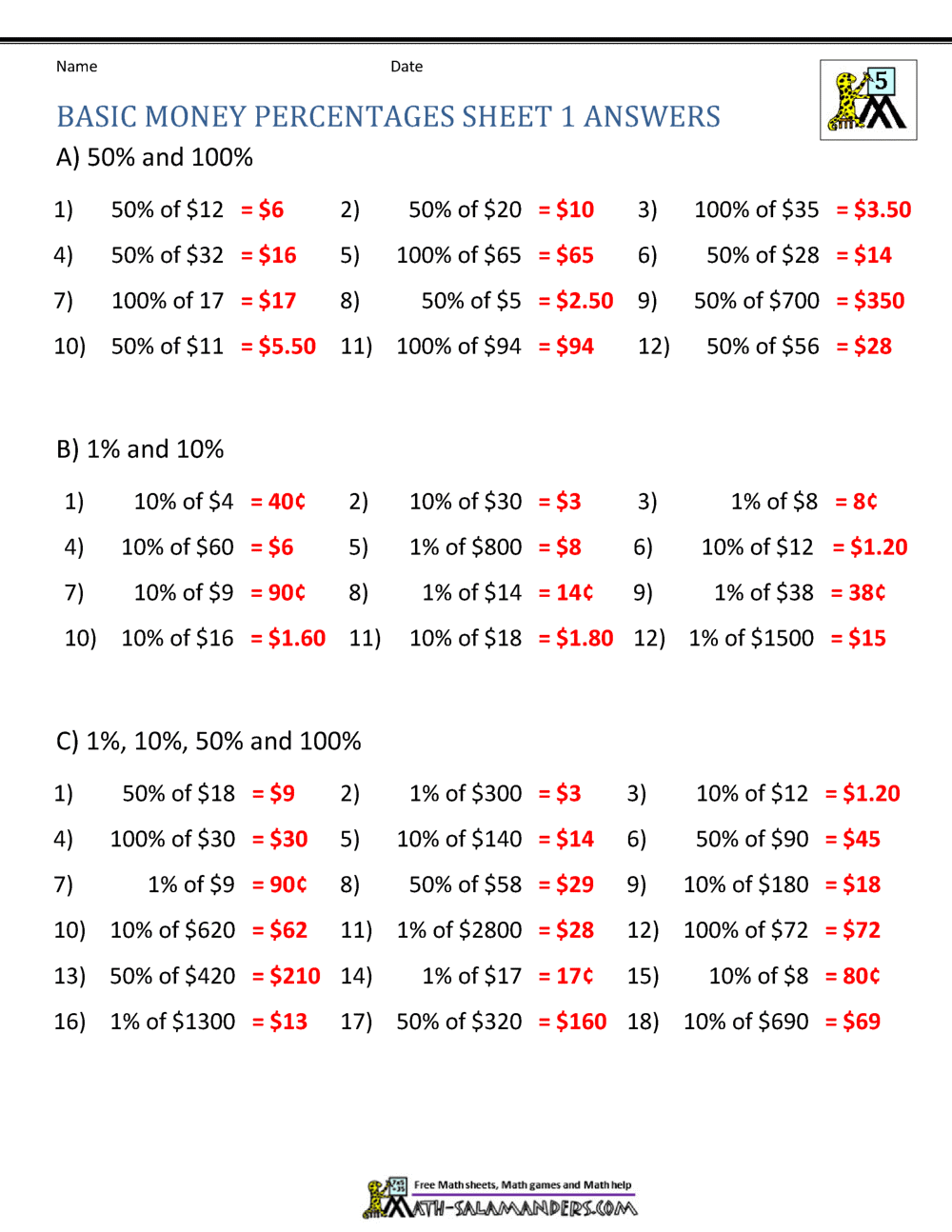
The Core Concept: Part of a Whole
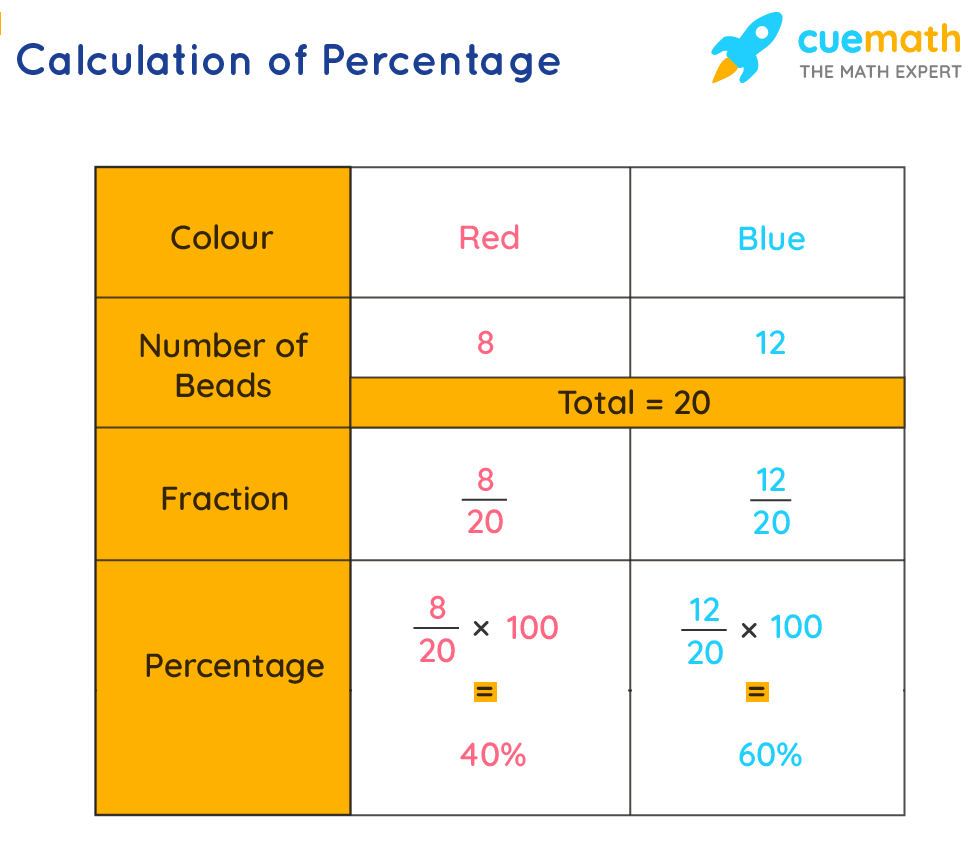
The essence of a percentage calculation revolves around identifying two key components: the “part” and the “whole.” The “part” is the specific amount you are interested in, while the “whole” is the total monetary figure against which the part is being compared. For instance, if you earned $3,000 and saved $300, the $300 is the “part,” and the $3,000 is the “whole.” Understanding which figure represents which is the first crucial step in accurate percentage calculation.
Why Financial Percentages Matter
The relevance of percentages in finance extends far beyond simple arithmetic. They serve as powerful analytical tools that help us:
- Make Informed Decisions: Whether it’s choosing between investment options with different rates of return, comparing loan interest rates, or evaluating a discount offer, percentages provide a standardized metric for comparison.
- Track Progress and Performance: Monitoring the percentage increase in savings, the percentage growth of an investment portfolio, or the percentage of your budget allocated to various categories allows for clear progress tracking.
- Communicate Clearly: Financial reports, business proposals, and economic news frequently use percentages to convey complex data concisely and understandably. “The economy grew by 2%,” or “profit margins improved by 5%,” are common examples.
- Identify Trends and Patterns: By comparing percentage changes over time, individuals and businesses can spot emerging trends, identify areas for improvement, or capitalize on opportunities.
Without a solid grasp of how to calculate and interpret percentages, navigating the complexities of personal finance, business operations, and investment strategies becomes significantly more challenging and prone to errors.
Essential Methods for Calculating Percentages of Money
Calculating percentages of money involves a few fundamental formulas, each tailored to a specific financial scenario. Mastering these methods is key to confidently applying percentages in your financial life.
Basic Formula: (Part / Whole) x 100
This is the foundational formula for finding what percentage one number is of another.
- Example: You have a budget of $2,000 for the month, and you spent $500 on dining out. To find what percentage of your budget you spent on dining out:
- Part = $500 (amount spent)
- Whole = $2,000 (total budget)
- Calculation: ($500 / $2,000) x 100 = 0.25 x 100 = 25%
- Conclusion: You spent 25% of your budget on dining out.
Calculating a Percentage of a Given Amount
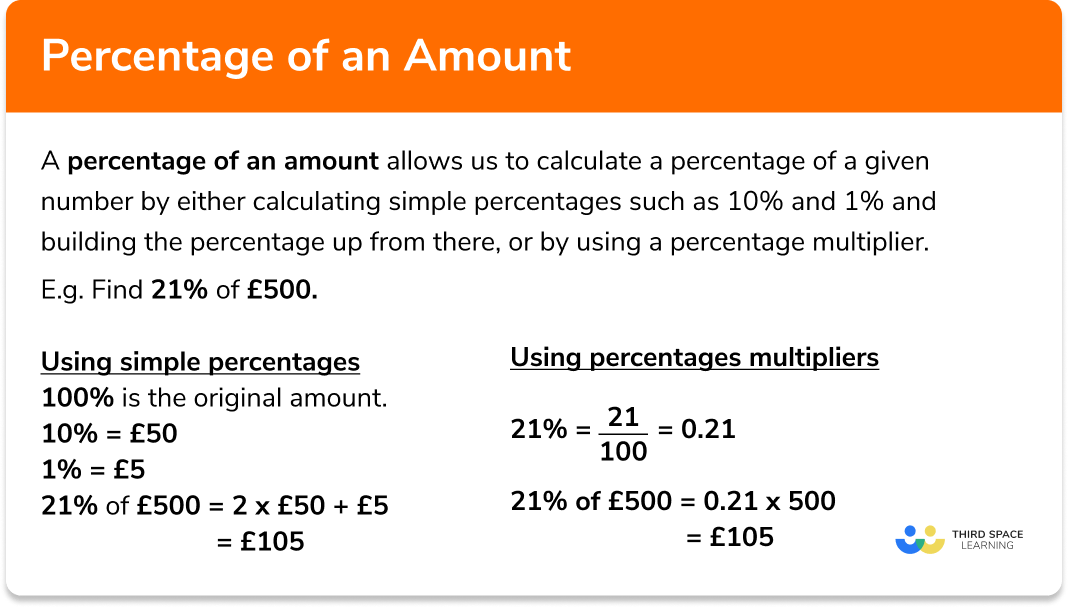
Often, you know the total amount and a percentage, and you need to find the specific monetary value that percentage represents. This is common for discounts, taxes, or commissions.
- Formula: (Percentage / 100) x Whole Amount
- Example: You receive a 15% discount on an item that costs $120. How much is the discount in dollars?
- Percentage = 15
- Whole Amount = $120
- Calculation: (15 / 100) x $120 = 0.15 x $120 = $18
- Conclusion: The discount is $18. The final price would be $120 – $18 = $102.
Finding the Original Amount After a Percentage Change
This method is useful when you know the final amount after a percentage increase or decrease, and you want to determine the original value. This requires a bit of algebraic thinking.
- For a Decrease (Discount/Loss): Original Amount = Final Amount / (1 – (Percentage Decrease / 100))
- Example: An item is on sale for $80 after a 20% discount. What was its original price?
- Final Amount = $80
- Percentage Decrease = 20
- Calculation: $80 / (1 – (20 / 100)) = $80 / (1 – 0.20) = $80 / 0.80 = $100
- Conclusion: The original price was $100.
- Example: An item is on sale for $80 after a 20% discount. What was its original price?
- For an Increase (Mark-up/Gain): Original Amount = Final Amount / (1 + (Percentage Increase / 100))
- Example: After a 10% price increase, a product now costs $165. What was its original price?
- Final Amount = $165
- Percentage Increase = 10
- Calculation: $165 / (1 + (10 / 100)) = $165 / (1 + 0.10) = $165 / 1.10 = $150
- Conclusion: The original price was $150.
- Example: After a 10% price increase, a product now costs $165. What was its original price?
Percentage Increase and Decrease
This calculation measures the relative change between two values over time or in different contexts.
- Formula: ((New Value – Old Value) / Old Value) x 100
- Example (Increase): Your investment grew from $1,000 to $1,200. What is the percentage increase?
- New Value = $1,200
- Old Value = $1,000
- Calculation: (($1,200 – $1,000) / $1,000) x 100 = ($200 / $1,000) x 100 = 0.20 x 100 = 20%
- Conclusion: Your investment increased by 20%.
- Example (Decrease): The value of a stock dropped from $50 to $45. What is the percentage decrease?
- New Value = $45
- Old Value = $50
- Calculation: (($45 – $50) / $50) x 100 = (-$5 / $50) x 100 = -0.10 x 100 = -10%
- Conclusion: The stock decreased by 10%. (The negative sign indicates a decrease).
Practical Applications: Where Percentages Drive Financial Decisions
The ability to calculate percentages of money isn’t just an academic exercise; it’s a critical skill for navigating a multitude of real-world financial scenarios across personal and business domains.
Personal Finance: Budgeting, Savings, and Debt
- Budgeting: Many budgeting rules, like the 50/30/20 rule (50% needs, 30% wants, 20% savings/debt), are percentage-based. Calculating what percentage of your income goes to housing, transportation, or entertainment is vital for financial health.
- Savings Goals: Determining what percentage of each paycheck you need to save to reach a financial goal (e.g., a down payment, retirement) allows for concrete planning.
- Debt Management: Understanding the interest rate (a percentage) on loans, credit cards, and mortgages is crucial for evaluating the true cost of borrowing and prioritizing debt repayment strategies.
Business Finance: Profit Margins, Discounts, and Commissions
- Profit Margins: Businesses constantly calculate gross profit margin ((Revenue – Cost of Goods Sold) / Revenue x 100) and net profit margin ((Net Income / Revenue) x 100) to assess profitability and operational efficiency.
- Discounts and Markups: Retailers use percentages to apply discounts during sales events or to mark up products to achieve desired profit levels.
- Commissions: Sales professionals often earn a percentage commission on their sales, requiring precise calculations to determine their earnings.
- Sales Tax: Businesses must calculate and collect sales tax, which is a percentage of the selling price, before remitting it to the government.
Investing: Returns, Gains, and Losses
- Return on Investment (ROI): Investors frequently calculate ROI ((Current Value – Original Cost) / Original Cost x 100) to gauge the profitability of their investments.
- Capital Gains/Losses: Understanding the percentage gain or loss on stocks, bonds, or real estate is essential for investment analysis and tax planning.
- Dividend Yield: For income-focused investors, dividend yield (Annual Dividend Per Share / Price Per Share x 100) helps assess the income generated relative to the investment’s cost.
- Expense Ratios: Mutual funds and ETFs charge expense ratios (a percentage of assets under management) which directly impact investor returns.
Taxes and Deductions
- Income Tax: Tax systems often involve income tax brackets, where different percentages of income are taxed at varying rates. Understanding these percentages is key to estimating tax liabilities.
- Property Tax: Property taxes are typically calculated as a percentage of a property’s assessed value.
- Deductions and Credits: Certain deductions and credits can reduce your taxable income or tax liability by a specific percentage or amount.
Tools and Tips for Accurate Percentage Calculations
While the basic formulas are straightforward, real-world financial scenarios can involve larger numbers and multiple calculations. Fortunately, various tools and practices can help ensure accuracy and efficiency.
Leveraging Spreadsheets for Complex Calculations
Tools like Microsoft Excel or Google Sheets are indispensable for financial calculations involving percentages. They allow you to:
- Automate Formulas: Input a formula once, and apply it to hundreds or thousands of rows of data.
- Track Changes: Easily see how changes in one variable (e.g., interest rate) impact another (e.g., total payment).
- Create Dashboards: Visualize percentage-based data with charts and graphs (e.g., budget allocation pie charts).
Basic percentage formulas in spreadsheets are simple:
- To find what percentage A is of B:
= (A/B)*100 - To find X percent of A:
= A * (X/100)or simply= A * X%
Online Calculators and Financial Apps
For quick, one-off calculations, a multitude of online percentage calculators, financial apps, and even your smartphone’s built-in calculator can be incredibly useful. Many financial websites offer specialized calculators for mortgage payments, loan amortization, investment returns, and more, all relying heavily on percentage calculations. Always ensure you are using a reputable source for online tools.
Double-Checking Your Work
Especially when dealing with significant sums of money, it’s prudent to double-check your calculations. A small error in a percentage can lead to substantial financial discrepancies. Use a different method, cross-verify with a calculator or spreadsheet, or even have a trusted colleague review complex figures.
Understanding Context and Assumptions
The accuracy of a percentage calculation is only as good as the underlying data and assumptions. Ensure you are comparing apples to apples. Is the “whole” amount truly the correct base for your calculation? Are you using the gross income or net income? Understanding the context will prevent misinterpretations and erroneous conclusions. For example, a “20% return on investment” sounds great, but if it’s over ten years, the annual percentage return is significantly lower.
Mastering Percentage Calculations for Financial Empowerment
The ability to confidently “get percentage of money” is a cornerstone of robust financial literacy. It transcends mere mathematical proficiency, transforming into a vital skill that informs prudent spending, strategic saving, shrewd investing, and effective business management. By internalizing the fundamental formulas, applying them to diverse financial scenarios, and leveraging available tools, you gain not just numbers, but profound insights into your financial world.
Embrace the power of percentages. Use them to dissect your budget, project your savings, analyze investment performance, and understand the true cost of financial products. This mastery will not only lead to more informed decisions but will also instill a greater sense of control and empowerment over your financial future. Continuous practice and application will solidify this skill, making financial percentages an intuitive language in your personal and professional life.
aViewFromTheCave is a participant in the Amazon Services LLC Associates Program, an affiliate advertising program designed to provide a means for sites to earn advertising fees by advertising and linking to Amazon.com. Amazon, the Amazon logo, AmazonSupply, and the AmazonSupply logo are trademarks of Amazon.com, Inc. or its affiliates. As an Amazon Associate we earn affiliate commissions from qualifying purchases.