
Securing adequate capital is the most critical hurdle for any aspiring entrepreneur. While a brilliant idea is the spark, capital is the fuel that allows a business to transition from a conceptual framework to a functional, revenue-generating entity. Navigating the world of business finance requires more than just enthusiasm; it demands a strategic understanding of different funding vehicles, the cost of capital, and the long-term financial implications of each choice.
This guide explores the multifaceted landscape of business funding, categorizing the most effective methods for raising capital while maintaining a focus on financial health and sustainability.

1. Bootstrapping and Personal Financial Management
Before looking toward external institutions or investors, most successful businesses begin with internal capital. Bootstrapping refers to the process of starting a company using only personal savings and initial cash flow. From a financial perspective, this is often the most efficient way to maintain 100% equity, although it carries the highest personal risk.
Leveraging Personal Savings and Liquid Assets
The first step in any funding journey is a thorough audit of personal liquid assets. This includes savings accounts, brokerage accounts, and sometimes the liquidation of non-essential assets. Using your own money demonstrates “skin in the game” to future investors. Financially, this is non-dilutive capital—you aren’t giving up any percentage of your company. However, the opportunity cost must be considered: the money you invest in your business is money not earning interest or dividends in a diversified index fund.
The Role of Credit Scores in Early-Stage Financing
Your personal financial reputation is the gateway to professional business finance. For new businesses without a multi-year track record, lenders look almost exclusively at the founder’s personal credit score. A high FICO score (generally 720 or above) allows access to lower interest rates on personal loans or business credit cards that can bridge the gap during the first six months of operation. Maintaining a low debt-to-income ratio during the startup phase is essential for preserving your borrowing capacity.
Managing Cash Flow During the Seed Phase
Bootstrapping requires rigorous financial discipline. Founders must master the “burn rate”—the rate at which the company spends its available capital before reaching profitability. In the early stages, managing cash flow often involves delaying payables and accelerating receivables. Utilizing financial tools like automated accounting software can help track every dollar, ensuring that the limited seed capital is allocated to high-ROI activities rather than administrative overhead.
2. Debt Financing and Traditional Banking Solutions
Debt financing involves borrowing money from a lender that must be repaid over time with interest. Unlike equity financing, debt allows you to retain full ownership of your business. However, it introduces a fixed monthly obligation that can strain a new company’s cash flow.
Navigating Small Business Administration (SBA) Loans
In the United States, the SBA is a cornerstone of business finance. While the SBA doesn’t lend money directly, it guarantees loans made by partner banks, reducing the risk for the lender. The SBA 7(a) loan program is the most popular, providing capital for working capital, equipment, and real estate. These loans are highly sought after because they offer longer repayment terms and lower interest rates than conventional commercial loans, though the application process is financially rigorous, requiring detailed balance sheets and profit-and-loss projections.
Understanding Term Loans and Lines of Credit
Traditional banks offer two primary types of debt: term loans and lines of credit. A term loan provides a lump sum of cash upfront, which is repaid over a set period (usually 1 to 5 years). This is ideal for one-time capital expenditures like machinery. A business line of credit, conversely, functions like a credit card for your company. You are approved for a maximum amount and only pay interest on what you actually draw. This is an essential financial tool for managing seasonal fluctuations in inventory or payroll.

The Pros and Cons of Equipment Financing
If your business requires expensive hardware, vehicles, or specialized machinery, equipment financing can be a more accessible route than a general business loan. In this scenario, the equipment itself serves as collateral for the loan. If the business fails to make payments, the lender repossesses the equipment. From a financial standpoint, this is often easier to secure because it is “asset-backed,” meaning the lender has a physical security interest that mitigates their risk.
3. Equity Financing and Attracting External Investors
Equity financing involves selling a portion of your business to an investor in exchange for capital. This is the primary route for high-growth startups that require significant amounts of cash and are willing to trade ownership for the expertise and networks that investors bring.
Pitching to Angel Investors
Angel investors are typically high-net-worth individuals who invest their personal funds into early-stage startups. Financially, angel rounds usually range from $25,000 to $500,000. When seeking angel funding, the “valuation” of your company becomes the central point of negotiation. You must be prepared to justify your “pre-money valuation” based on market size, intellectual property, and early traction. Angel investors often use “Convertible Notes”—short-term debt that converts into equity during a future funding round—to simplify the financial transaction.
Venture Capital (VC) and the Series Funding Cycle
Venture capital firms manage pooled money from institutional investors to fund high-potential startups. VC funding usually occurs in stages: Seed, Series A, Series B, and so on. VCs are not just looking for a steady business; they are looking for a 10x return on their investment. This level of funding comes with intense financial scrutiny. Founders must provide detailed “cap tables” (capitalization tables) that show the percentage of ownership of all shareholders. While VCs provide the largest sums of money, they often demand a seat on the board of directors and significant influence over financial strategy.
Equity Crowdfunding: Democratizing Capital
Platforms like Wefunder or StartEngine have changed the landscape of business finance by allowing the general public to invest small amounts of money in exchange for equity. Unlike rewards-based crowdfunding (like Kickstarter), equity crowdfunding is regulated by the SEC. It allows a business to raise capital from hundreds of “micro-investors.” This can be a powerful marketing tool, but it also creates a complex cap table with many small shareholders, which can sometimes complicate future institutional funding rounds.
4. Specialized Financial Tools and Government Incentives
In the modern economy, “funding” doesn’t always come from a bank or an investor’s checkbook. There are various alternative financial structures and government-backed programs designed to stimulate entrepreneurship without the burden of traditional debt or equity dilution.
Utilizing Fintech Platforms for Alternative Lending
The rise of Financial Technology (Fintech) has birthed new lending models such as Revenue-Based Financing (RBF). In an RBF model, a company receives capital and agrees to pay the lender a fixed percentage of its monthly gross revenue until the principal plus a multiple (the “cap”) is repaid. This is a flexible financial tool because if your sales are slow one month, your payment is lower. It is particularly popular for SaaS (Software as a Service) companies with predictable recurring revenue.
Identifying Grants and Non-Dilutive Funding
Grants are essentially “free money” in the sense that they do not have to be repaid and do not require giving up equity. However, they are highly competitive and usually restricted to specific industries or demographics. Programs like the Small Business Innovation Research (SBIR) provide significant funding for companies engaged in R&D that has a high potential for commercialization. From a financial management perspective, grants are the “gold standard” of funding because they improve your balance sheet without increasing liabilities.
Tax Credits and R&D Incentives for New Enterprises
Often overlooked as a form of “funding,” tax credits can significantly reduce the amount of capital leaving the business. Many governments offer Research and Development (R&D) tax credits that allow startups to recoup a portion of the wages paid to employees developing new products. Additionally, certain jurisdictions offer “Tax Holidays” or payroll tax offsets for new businesses. Managing your tax strategy effectively acts as a form of indirect funding, allowing you to reinvest saved capital back into the company’s growth.
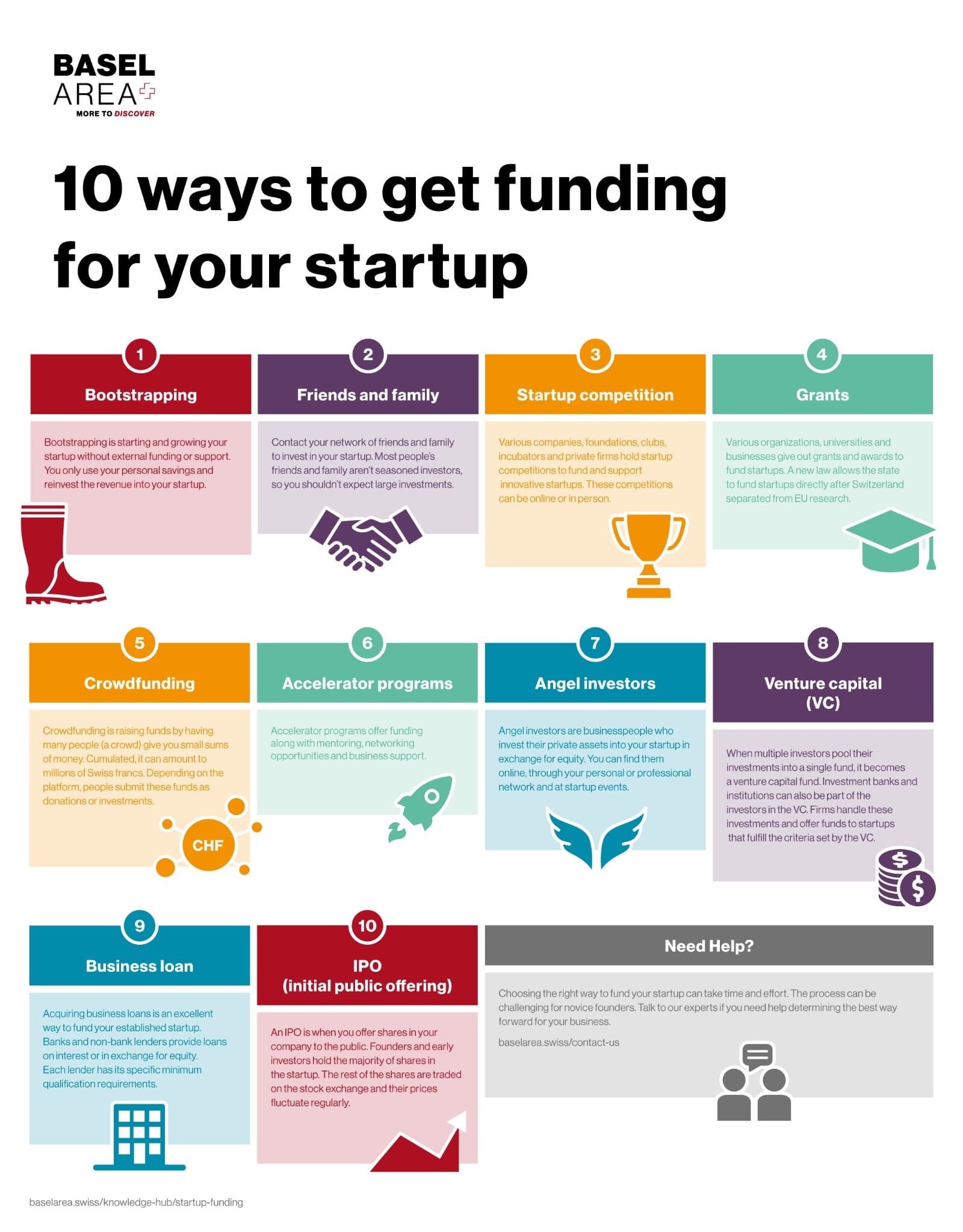
Conclusion
Getting funding to start a business is not a one-size-fits-all process. It requires a nuanced understanding of your company’s financial needs, your comfort level with debt, and your willingness to share ownership. Whether you choose to bootstrap through personal savings, take on the disciplined repayment of a bank loan, or seek the high-octane growth of venture capital, each path carries specific financial risks and rewards. By diversifying your approach and utilizing modern financial tools, you can build a stable capital structure that supports your business from its first day through its eventual scale.
aViewFromTheCave is a participant in the Amazon Services LLC Associates Program, an affiliate advertising program designed to provide a means for sites to earn advertising fees by advertising and linking to Amazon.com. Amazon, the Amazon logo, AmazonSupply, and the AmazonSupply logo are trademarks of Amazon.com, Inc. or its affiliates. As an Amazon Associate we earn affiliate commissions from qualifying purchases.