
Starting a new business is an exhilarating journey, fraught with innovation, passion, and often, a significant financial hurdle. Securing adequate funding is not just about keeping the lights on; it’s about providing the fuel for growth, innovation, and ultimately, success. Many brilliant ideas languish due to a lack of capital, while others soar with the right financial backing. This guide delves into the multifaceted world of business funding, exploring various avenues, strategies, and essential preparations to help you navigate the complex landscape of startup finance.
The quest for funding isn’t a one-size-fits-all endeavor. It requires a deep understanding of your business’s needs, an honest assessment of its potential, and a strategic approach to attracting the right investors or lenders. From bootstrapping to venture capital, each funding source comes with its own set of expectations, risks, and rewards. By meticulously preparing your business and understanding the options available, you can significantly increase your chances of securing the capital needed to transform your entrepreneurial vision into a thriving reality.

Understanding Your Funding Needs and Business Readiness
Before you even begin to approach potential funders, it’s crucial to have a crystal-clear understanding of your financial requirements and to ensure your business is presentation-ready. This foundational work is non-negotiable and will be the bedrock of all your funding efforts.
Assessing Your Financial Requirements
The first step is to meticulously map out exactly how much money you need and what it will be used for. This isn’t just a vague estimate; it requires detailed financial projections.
-
Startup Costs: List every initial expense, from legal fees for incorporation and permits, to equipment purchases, software licenses, initial inventory, and office setup.
-
Operational Costs: Project your monthly operating expenses for at least 12-24 months. This includes salaries, rent, utilities, marketing, insurance, and other recurring costs. Be realistic and factor in potential contingencies.
-
Runway: Determine how long your current funds will allow your business to operate without additional revenue. Investors look for a healthy runway, typically 12-18 months, to cover development, market entry, and initial sales cycles. A clear understanding of your burn rate (how quickly you spend capital) is vital.
Developing a Solid Business Plan
Your business plan is more than just a document; it’s a strategic roadmap and your primary communication tool for potential funders. It needs to be comprehensive, compelling, and financially sound.
-
Executive Summary: A concise overview of your business, market opportunity, solution, team, and financial projections. This should hook the reader immediately.
-
Company Description: What your business does, its mission, vision, and legal structure.
-
Market Analysis: A deep dive into your target market, industry trends, competition, and your unique selling proposition. Demonstrate a clear understanding of the problem you’re solving and the demand for your solution.
-
Organization & Management: Detail your team’s experience, roles, and how their expertise contributes to the business’s success. Investors invest in people as much as ideas.
-
Service or Product Line: Describe what you offer, its benefits, and your intellectual property (if any).
-
Marketing & Sales Strategy: How you plan to reach your customers, acquire them, and generate revenue.
-
Financial Projections: This is critical. Include detailed profit and loss statements, cash flow projections, and balance sheets for at least three to five years. Highlight your funding ask and how the capital will be used to achieve these projections.
Understanding Investor Expectations
Different funders have different criteria, but common threads exist. Investors want to see a clear path to profitability and a return on their investment.
-
Scalability: Can your business grow significantly and rapidly?
-
Market Opportunity: Is the market large enough to support substantial growth?
-
Team: Do you have a capable, committed, and coachable team?
-
Traction: Any early indicators of success, such as pre-orders, pilot programs, or initial customer feedback, can significantly boost your appeal.
-
Clear Use of Funds: Funders need to know exactly where their money is going and how it will contribute to achieving key milestones.
Diverse Avenues for Startup Capital
With your business plan in hand and your financial needs clearly defined, you can now explore the various funding pathways. These can broadly be categorized into traditional, equity-based, and alternative sources.
Bootstrapping and Personal Savings
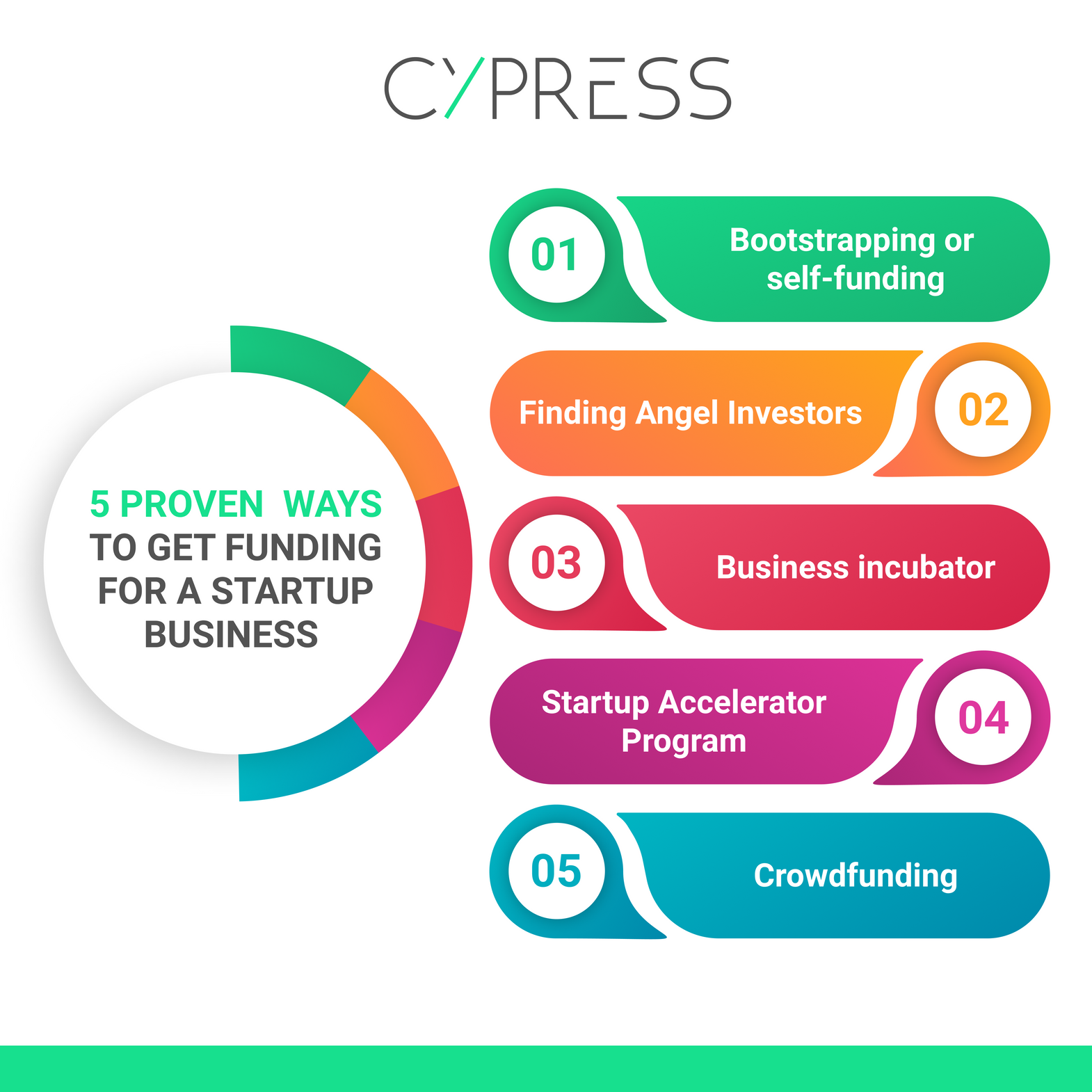
This is often the first and most challenging funding source, involving self-funding the business’s initial stages.
-
Self-Funding: Using your personal savings, credit cards, or taking on personal loans. This demonstrates incredible commitment and retains 100% ownership but comes with significant personal financial risk.
-
Friends, Family, and Fools (FF&F): Approaching your inner circle for initial capital. These are typically the earliest and most accessible investors, often driven by personal trust rather than purely financial metrics. It’s crucial to formalize these arrangements with clear loan agreements or equity stakes to avoid future disputes.
Bank Loans and Lines of Credit
Traditional financial institutions offer various debt financing options, though they often require collateral, a strong business history, or personal guarantees for new businesses.
-
SBA Loans: Backed by the U.S. Small Business Administration, these loans offer more favorable terms and lower down payments than conventional bank loans, making them more accessible to startups and small businesses.
-
Traditional Business Loans: Unsecured or secured loans from banks, often requiring a solid business plan, strong credit history (personal and business), and potentially collateral.
-
Lines of Credit: Provides flexible access to funds up to a certain limit, ideal for managing short-term cash flow needs. Interest is only paid on the amount borrowed.
Equity-Based Funding: Trading Ownership for Capital
Equity financing involves selling a portion of your company’s ownership in exchange for capital. This can provide significant growth capital but means diluting your ownership stake.

Angel Investors
Angel investors are high-net-worth individuals who invest their personal funds into early-stage companies, often in exchange for equity.
-
Characteristics: They typically invest smaller sums (tens of thousands to a few million dollars) than venture capitalists, often play a more hands-on role, and may offer valuable mentorship and industry connections. They often have a personal interest in the startup’s success beyond just financial returns.
-
Finding Angels: Networking events, angel investor groups, and online platforms.
Venture Capital Firms
Venture capital (VC) firms are professional investment funds that manage money from institutional investors (pension funds, endowments) and high-net-worth individuals. They invest in companies with high growth potential in exchange for significant equity.
-
Characteristics: VCs typically invest larger sums (millions to tens of millions), seek substantial returns (often 10x or more), and expect a clear exit strategy (acquisition or IPO). They provide strategic guidance, but their involvement can be more demanding, and the due diligence process is rigorous.
-
Stages: VCs often specialize in different stages of funding: seed, Series A, B, C, etc.
Crowdfunding
Crowdfunding platforms allow a large number of individuals to invest small amounts of money in a business.
-
Equity Crowdfunding: Investors receive equity in your company. Platforms like SeedInvest or Republic connect startups with accredited and non-accredited investors.
-
Reward-Based Crowdfunding: Backers receive a product or service in exchange for their pledge (e.g., Kickstarter, Indiegogo). While not direct equity funding, it can validate your product, build a customer base, and generate initial capital.
Alternative and Non-Dilutive Funding Strategies
Beyond traditional debt and equity, several other avenues can provide capital without requiring you to give up ownership or incur heavy debt obligations.
Grants and Competitions
Grants are non-repayable funds provided by government agencies, foundations, or corporations, usually for specific purposes or industries.
-
Government Grants: Agencies like the Small Business Innovation Research (SBIR) and Small Business Technology Transfer (STTR) programs offer grants for innovative research and development.
-
Corporate Sponsorships & Competitions: Many large corporations and industry organizations run startup competitions, offering prize money, mentorship, and exposure. These can be highly competitive but provide non-dilutive capital.
Revenue-Based Financing
This is a form of debt that ties repayment directly to a company’s revenue, offering more flexibility than traditional loans.
-
Royalty Financing: Investors provide capital in exchange for a percentage of future revenues until a certain multiple of the initial investment is repaid.
-
Merchant Cash Advances (MCAs): Businesses receive an upfront sum in exchange for a percentage of future credit card sales. While quick to access, MCAs often come with very high effective interest rates.
Incubators and Accelerators
These programs offer more than just funding; they provide mentorship, resources, and networking opportunities.
-
Incubators: Often support very early-stage startups, helping them develop their ideas into viable business models. Funding is sometimes provided, but the focus is on development.
-
Accelerators: Typically provide seed funding (in exchange for a small equity stake), intensive mentorship, and a structured curriculum over a fixed period (e.g., 3-6 months), culminating in a “Demo Day” to pitch to investors.
Preparing for and Securing Funding
Once you’ve identified potential funding sources, the process shifts to meticulous preparation for pitches, due diligence, and legal considerations.
Crafting a Compelling Pitch Deck
Your pitch deck is a concise visual presentation that tells your business’s story, highlights key data, and communicates your funding needs.
-
Storytelling: Weave a narrative that captivates your audience. What problem are you solving? What’s your unique solution?
-
Key Metrics: Showcase early traction, market size, growth projections, and competitive advantages.
-
The Ask: Clearly state how much money you need, what percentage of equity you’re offering (if applicable), and how the funds will be deployed.
-
Team Slide: Emphasize the experience and expertise of your founding team.
Due Diligence and Legal Considerations
Once an investor expresses interest, they will conduct thorough due diligence, scrutinizing every aspect of your business.
-
Financials: Be prepared to provide detailed financial records, projections, and assumptions.
-
Legal: All your legal documents—incorporation papers, intellectual property registrations, contracts, and any existing debt or equity agreements—must be in order.
-
Term Sheet: Understand the terms proposed by investors, including valuation, equity stake, investor rights, and exit clauses. Always seek legal counsel before signing any agreements.
-
Investor Relations: Be transparent and proactive in communicating with potential investors. Building trust is paramount.
Building Relationships and Networking
Funding often comes from connections, not just cold applications.
-
Industry Events: Attend conferences, pitch events, and networking mixers to meet potential investors and mentors.
-
Mentors and Advisors: Engage with experienced entrepreneurs and industry leaders. Their guidance can be invaluable, and their introductions can open doors to funding.
-
Warm Introductions: A referral from a trusted source is far more effective than a cold email. Cultivate relationships that can lead to such introductions.
Securing funding for a new business is a marathon, not a sprint. It demands persistence, resilience, and an unwavering belief in your vision. By meticulously planning, understanding the diverse funding landscape, and building strong relationships, you can position your startup for financial success and transform your innovative ideas into a lasting business legacy.
aViewFromTheCave is a participant in the Amazon Services LLC Associates Program, an affiliate advertising program designed to provide a means for sites to earn advertising fees by advertising and linking to Amazon.com. Amazon, the Amazon logo, AmazonSupply, and the AmazonSupply logo are trademarks of Amazon.com, Inc. or its affiliates. As an Amazon Associate we earn affiliate commissions from qualifying purchases.