
Compound interest is often hailed as the “eighth wonder of the world” by none other than Albert Einstein. While the exact quote is debated, the sentiment behind it perfectly encapsulates the profound power of this financial principle. It’s a force that, over time, can transform modest savings into substantial wealth, making it an indispensable concept for anyone serious about personal finance, investing, and securing their financial future. Understanding how to harness this power isn’t just about accumulating money; it’s about building a sustainable path to financial independence.
At its core, compound interest is the interest on an initial principal and the accumulated interest from previous periods. Unlike simple interest, which is calculated only on the principal amount, compound interest allows your money to grow exponentially. This might sound complex, but the underlying mechanism is elegantly simple: your earnings start earning their own earnings. This article will demystify compound interest, explain how to strategically deploy it, and provide actionable insights to maximize its incredible potential.
Understanding the Power of Compounding
To truly leverage compound interest, one must first grasp its fundamental mechanics. It’s more than just a calculation; it’s a financial philosophy that rewards patience and consistency.
What is Compound Interest?
Imagine you invest $100 and earn 5% interest per year. With simple interest, you’d earn $5 each year, and after 10 years, you’d have your initial $100 plus $50 in interest, totaling $150.
Now, consider compound interest. In the first year, you still earn $5, bringing your total to $105. In the second year, however, you don’t just earn 5% on the original $100; you earn 5% on the new total of $105. That’s $5.25 in interest, bringing your total to $110.25. This seemingly small difference quickly accelerates. Each year, your interest income grows because the base on which it’s calculated expands. This snowball effect is the essence of compounding. The longer your money is invested, and the more frequently the interest is compounded (e.g., daily, monthly, annually), the more dramatic the growth. This mechanism is what allows wealth to build not just arithmetically, but geometrically.
Simple vs. Compound Interest: A Crucial Distinction
The contrast between simple and compound interest is pivotal. Simple interest is a linear growth model; the principal remains constant for interest calculation. It’s often seen in short-term loans or very basic savings accounts. Compound interest, on the other hand, is an exponential growth model. The principal grows over time as earned interest is added back, creating a larger base for future interest calculations.
- Simple Interest Formula: P x I x N (Principal x Interest Rate x Number of Periods)
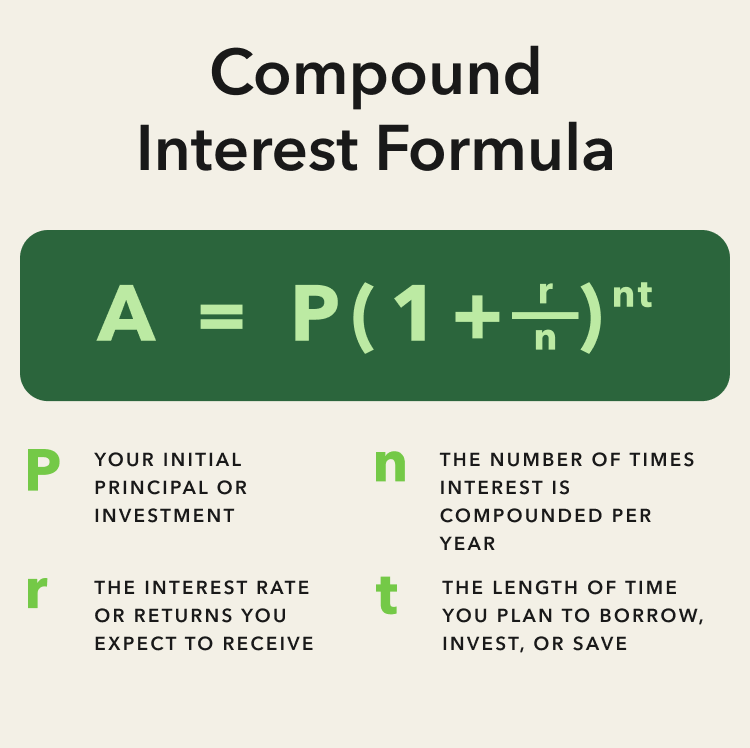
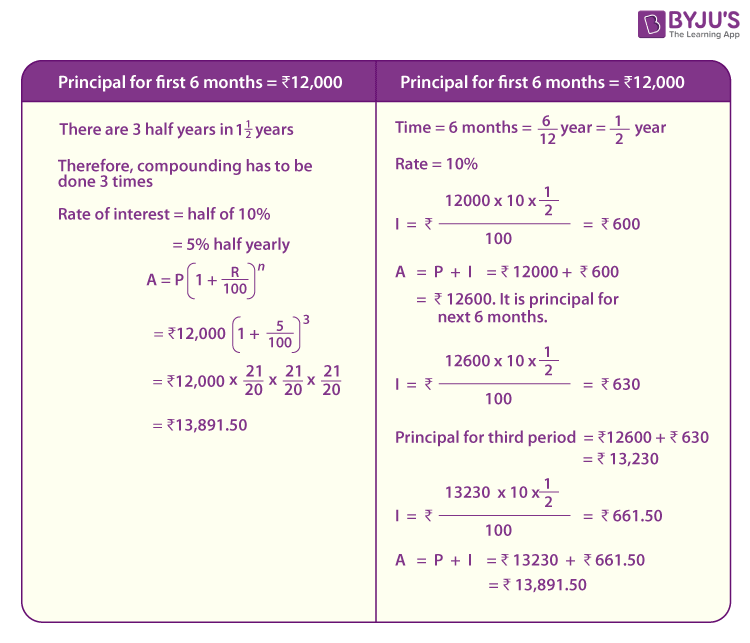
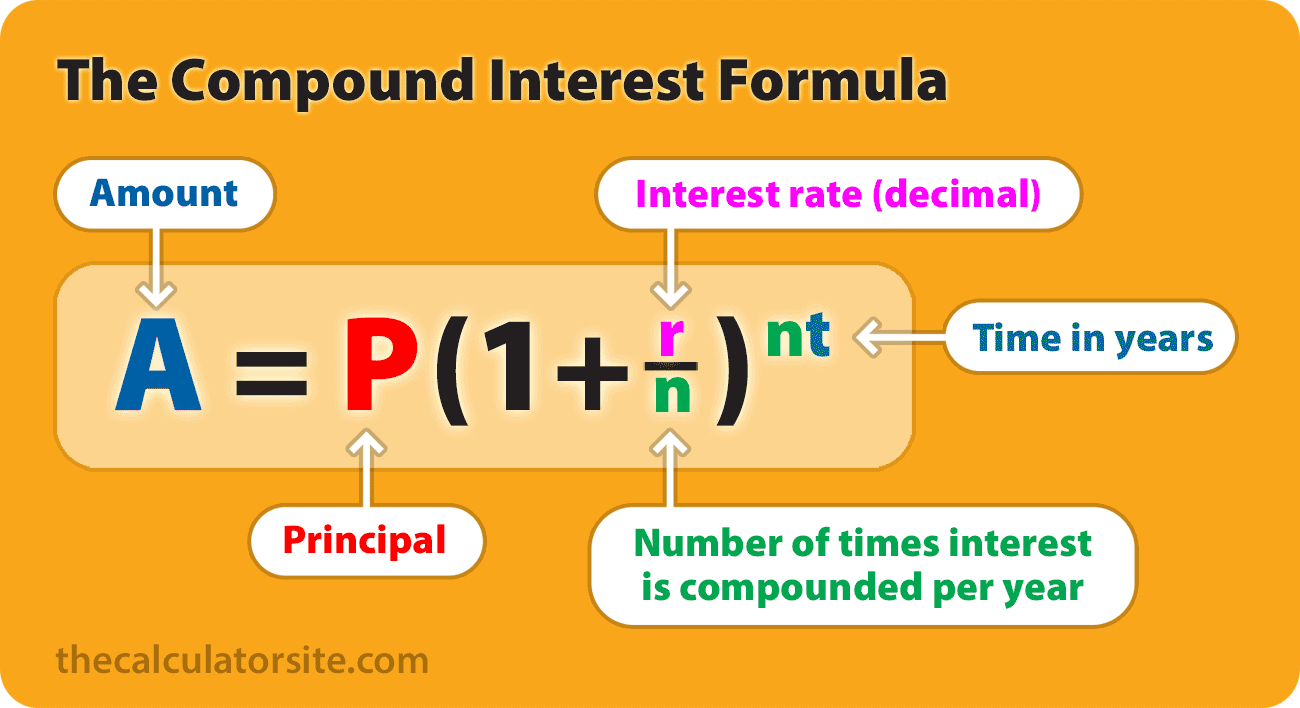
- Compound Interest Formula: P (1 + r/n)^(nt) (Principal x (1 + annual interest rate / number of times interest is compounded per year)^(number of times interest is compounded per year x number of years))
While the compound interest formula might look daunting, the takeaway is simple: the “nt” exponent is what drives the exponential growth. A higher ‘t’ (time) and higher ‘n’ (compounding frequency) significantly boost returns. Understanding this distinction underscores why financial planners consistently emphasize starting early and staying invested.
The “Magic” of Reinvestment
The true magic of compound interest hinges on one critical action: reinvestment. For compound interest to work its wonders, the interest or dividends earned must be put back into the original investment. If you continually withdraw your earnings, you interrupt the compounding cycle and revert to something closer to simple interest. Reinvesting ensures that your capital base continually expands, allowing each subsequent period’s earnings to be larger than the last, all without you having to contribute additional funds manually. This principle applies to various investment types, from dividend stocks where dividends are used to buy more shares, to mutual funds where earnings are automatically reinvested, to high-yield savings accounts where earned interest remains in the account.
Laying the Foundation: Essential Steps for Compounding
Actively pursuing compound interest requires more than just understanding the concept; it demands strategic planning and consistent action. Building a solid foundation is crucial for maximizing its benefits.
Start Early: Time is Your Greatest Ally
The single most powerful variable in the compound interest formula is time. The longer your money has to compound, the more significant the returns. Even small, consistent contributions made early in life can outperform much larger contributions made later. This is because early investments have more time for their interest to earn interest, allowing the exponential growth curve to truly kick in during later decades. For instance, a person who invests $200 per month from age 25 to 35 (10 years) and then stops, will likely have more money at age 65 than someone who starts investing $200 per month at age 35 and continues until age 65 (30 years). The initial 10 years of compounding for the first individual creates an almost insurmountable head start.
Consistent Contributions: The Fuel for Growth
While time is paramount, consistent contributions act as the fuel that feeds the compounding engine. Regular investments, no matter how small, increase your principal over time, giving your money more to compound on. This is where the discipline of saving and investing regularly pays off immensely. Whether it’s setting up automatic transfers from your checking to your investment account or committing to investing a portion of every paycheck, consistency amplifies the effect of time. The “dollar-cost averaging” principle also comes into play here, where consistent investments average out market fluctuations, reducing the risk of investing a lump sum at a market peak.
Choosing the Right Investment Vehicles
The vehicle you choose for your investments significantly impacts how effectively your money compounds. Different instruments offer varying levels of risk, return, and compounding frequency.
Savings Accounts & CDs (Limited Compounding)
High-yield savings accounts and Certificates of Deposit (CDs) offer low-risk environments where interest compounds. While they provide a secure way to grow your money, their interest rates are typically lower than other investment types, leading to slower compounding. They are excellent for emergency funds and short-term savings goals but are less effective for long-term wealth accumulation due to inflation eroding purchasing power.
Stocks & ETFs (Equity Compounding)
Investing in individual stocks or Exchange Traded Funds (ETFs) offers the potential for higher returns and, therefore, more aggressive compounding. Stocks can provide returns through capital appreciation (the stock price going up) and dividends. Reinvesting these dividends back into buying more shares or other investments directly fuels compounding. ETFs offer diversification by holding a basket of stocks or other assets, providing a balance of growth potential and reduced individual stock risk.
Mutual Funds (Diversified Compounding)
Mutual funds pool money from multiple investors to invest in a diversified portfolio of stocks, bonds, or other securities. Managed by professionals, they often automatically reinvest dividends and capital gains, making them an excellent choice for hands-off compounding. They provide immediate diversification and are suited for long-term growth objectives.
Retirement Accounts (Tax-Advantaged Compounding)
Accounts like 401(k)s, IRAs (Traditional and Roth), and other employer-sponsored plans offer significant tax advantages that supercharge compounding. Contributions to traditional accounts are often tax-deductible, and growth is tax-deferred until retirement. Roth accounts offer tax-free withdrawals in retirement. The ability for investments to grow without annual taxation on gains allows for more robust compounding, as more money remains invested year after year. These accounts are arguably the most powerful tools for leveraging compound interest for retirement planning.
Strategies to Maximize Your Compounding Returns
Understanding the basics is only the beginning. To truly harness compound interest, proactive strategies are required to optimize its impact on your wealth.
Automate Your Investments
One of the simplest yet most effective strategies is to automate your contributions. Set up automatic transfers from your checking account to your investment accounts on a regular schedule (e.g., weekly, bi-weekly, monthly). This removes the psychological barrier of “deciding” to invest, ensures consistency, and guarantees that your money is always working for you. Automation makes saving and investing a habit rather than a chore, ensuring your compounding engine never runs out of fuel.
Minimize Fees and Taxes
Fees and taxes are silent killers of compounding. Every dollar lost to management fees, trading commissions, or unnecessary taxes is a dollar that cannot compound.
- Fees: Opt for low-cost index funds, ETFs, or commission-free trading platforms. Be mindful of expense ratios on mutual funds; even a 1% difference can cost you tens of thousands over decades.
- Taxes: Utilize tax-advantaged accounts like 401(k)s and IRAs where growth is tax-deferred or tax-free. Employ strategies like tax-loss harvesting in taxable accounts when appropriate. Understanding the tax implications of your investment choices is crucial for maximizing net returns over the long run.
Reinvest Dividends and Earnings
As mentioned earlier, reinvesting any dividends, interest, or capital gains received from your investments is non-negotiable for maximizing compounding. Most brokerage accounts and mutual funds offer automatic dividend reinvestment plans (DRIPs), which allow you to use your dividends to purchase more shares or units of the same investment, typically without commission fees. This ensures that every penny earned is put back to work, further expanding your principal and accelerating the compounding process.
The Impact of Interest Rate and Frequency
The interest rate and compounding frequency significantly influence the speed and magnitude of your returns. Higher interest rates lead to faster growth, assuming all other factors are equal. Similarly, the more frequently interest is compounded (e.g., daily vs. annually), the more rapidly your money grows. While you may not always control the interest rate, understanding its importance helps in selecting appropriate investment vehicles. For example, a bank account that compounds daily will yield slightly more than one that compounds monthly, even if the nominal annual interest rate is the same.
Avoid Interrupting the Compounding Cycle (Patience is Key)
The greatest enemy of compound interest is impatience. Withdrawing funds prematurely, panicking during market downturns, or constantly tweaking your portfolio disrupts the compounding cycle. For compound interest to truly work its magic, money needs to stay invested for extended periods. Resist the urge to chase short-term gains or react emotionally to market volatility. A disciplined, long-term approach allows your investments the necessary time to ride out fluctuations and benefit from sustained growth. Patience isn’t just a virtue in investing; it’s a financial superpower.
Overcoming Challenges and Maintaining Momentum
While the concept of compounding is straightforward, maintaining momentum and navigating the inherent challenges of investing requires resilience and foresight.
The Illusion of Slow Starts
One common pitfall is giving up early because the initial growth feels insignificant. In the early stages, the power of compounding might not be immediately apparent, as the exponential curve is still relatively flat. However, this is precisely when the most important work is being done. Each small contribution and every reinvested interest payment is laying the groundwork for future massive growth. Remind yourself that the biggest gains occur later in the timeline, as the principal has grown substantially, and the interest on that principal becomes increasingly large.
Battling Inflation and Market Volatility
Compounding doesn’t happen in a vacuum. Inflation erodes purchasing power, meaning your money needs to grow faster than the inflation rate to truly increase your wealth. This is why investing in assets that historically outpace inflation (like stocks) is crucial, rather than relying solely on low-interest savings accounts. Market volatility, characterized by ups and downs, is also an inherent part of investing. While it can be unnerving, smart investors view downturns as opportunities to buy more assets at a lower price, further fueling their compounding efforts.
Staying Disciplined Through Market Swings
The urge to sell when the market drops is a natural human reaction, but it’s detrimental to long-term compounding. Successfully harnessing compound interest requires a disciplined approach, especially during turbulent times. Stick to your investment plan, continue making regular contributions, and remember that market downturns are often temporary. Historically, markets have always recovered and reached new highs, rewarding those who stayed invested.
Regularly Reviewing and Adjusting Your Strategy
While patience and a long-term view are critical, periodic review of your investment strategy is also important. As your financial goals, risk tolerance, and life circumstances change, your portfolio may need adjustments. Rebalancing your asset allocation, exploring new investment opportunities, or consolidating accounts can optimize your compounding efforts. This isn’t about market timing; it’s about ensuring your strategy remains aligned with your overarching financial objectives.
Compound Interest Beyond Investments: A Holistic View
The principles of compounding extend beyond mere financial investments, offering a powerful framework for growth in various aspects of life.
Compounding Your Knowledge and Skills
Just as financial capital compounds, so too does intellectual capital. Continuously learning new skills, reading, taking courses, and expanding your knowledge base creates a compounding effect on your personal and professional growth. Each new piece of information or skill builds upon existing ones, enhancing your capabilities and opening up new opportunities exponentially over time. The more you learn, the faster and easier it becomes to learn even more.
The Power of Compounding in Debt Reduction
While typically discussed in the context of earning, compound interest can also work against you in the form of debt. High-interest credit card debt, for instance, compounds rapidly, increasing the amount you owe if not managed properly. Conversely, applying the compounding mindset to debt reduction can be highly effective. The “debt snowball” or “debt avalanche” methods use this principle: aggressively paying down one debt frees up funds that can then be applied to the next, creating a compounding effect in your favor by reducing total interest paid and accelerating debt freedom.
Building Compounding Habits
Developing positive habits – whether it’s regular exercise, healthy eating, or consistent saving – also demonstrates a compounding effect. Each small, consistent action builds upon the last, leading to significant, life-altering results over time. A daily five-minute meditation might seem insignificant, but over years, it compounds into improved mental clarity and reduced stress. Small, consistent efforts in any domain lead to exponential improvements.
Conclusion: The Legacy of Compounding
Compound interest is more than just a financial concept; it’s a profound principle of growth that can shape your financial destiny and impact various facets of your life. By understanding its mechanics, starting early, making consistent contributions, choosing the right investment vehicles, and employing smart strategies, anyone can harness this “eighth wonder of the world.” It demands patience, discipline, and a long-term perspective, but the rewards are immense. The legacy of compounding isn’t just about accumulating wealth; it’s about building a robust financial future, achieving independence, and allowing your money to work tirelessly for you, creating a self-sustaining engine of prosperity for generations to come. Embrace its power, and watch your financial future unfold.
aViewFromTheCave is a participant in the Amazon Services LLC Associates Program, an affiliate advertising program designed to provide a means for sites to earn advertising fees by advertising and linking to Amazon.com. Amazon, the Amazon logo, AmazonSupply, and the AmazonSupply logo are trademarks of Amazon.com, Inc. or its affiliates. As an Amazon Associate we earn affiliate commissions from qualifying purchases.