
Cash App has become an indispensable tool for millions, simplifying peer-to-peer payments, bill splitting, and even direct deposit. Its digital-first approach offers immense convenience, yet the practical need to access physical cash or transfer funds out of the platform remains a frequent user query. Understanding the various mechanisms and associated financial implications is crucial for effectively managing your personal finances within the Cash App ecosystem. This guide delves into the strategic approaches to move your digital balance into tangible currency or traditional bank accounts, focusing on efficiency, cost-effectiveness, and security.
Integrating Cash App into Your Personal Finance Strategy
At its core, Cash App functions as a mobile payment service, holding a digital balance that represents funds linked to your account. While its primary strength lies in facilitating rapid digital transactions, converting this digital balance into spendable cash or transferring it to a traditional bank account requires a clear understanding of its features. For many, Cash App acts as an extension of their checking account, a quick way to manage incidental expenses, or a conduit for receiving income. Strategic integration means knowing precisely how to fluidly move money between your Cash App balance and your other financial accounts, or access it directly for cash-only transactions.
Understanding Your Cash App Balance
Your Cash App balance isn’t a separate bank account in the traditional sense, but rather a stored value managed by Square, Inc. Funds held here are available for sending to other Cash App users, making purchases with your Cash App Card, or initiating transfers to linked bank accounts. The challenge of “getting cash off” arises from the distinction between this digital balance and the physical currency required for certain transactions, or the need to consolidate funds into a primary checking or savings account.
Primary Methods for Extracting Funds from Cash App
Accessing the money in your Cash App balance can be achieved through several direct methods, each with distinct advantages, processing times, and potential costs. Selecting the right method depends on your urgency, the amount you wish to withdraw, and your access to banking infrastructure or ATMs.
1. Standard Transfer to a Linked Bank Account
The most common and often preferred method for moving funds out of Cash App is a standard transfer to a linked debit card or bank account. This process initiates an Automated Clearing House (ACH) transfer, which is a backbone of the U.S. financial system for electronic payments.
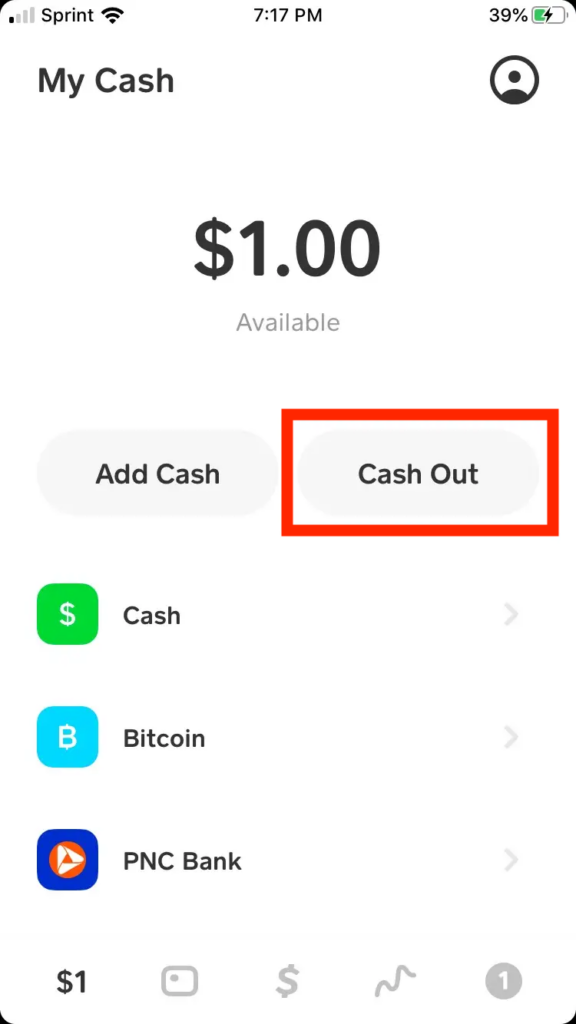
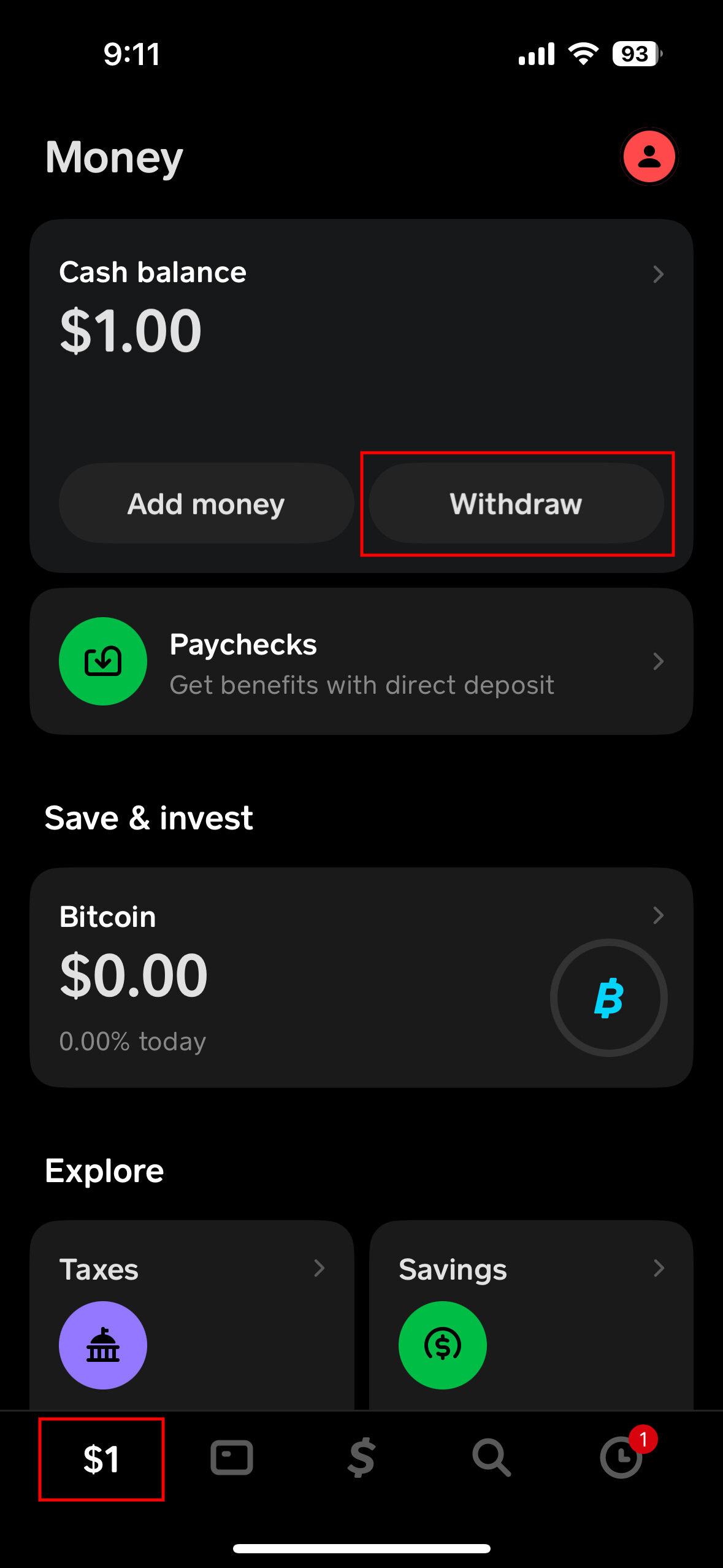
- Process: From the Cash App home screen, tap the “Banking” tab (the house icon) or the dollar amount representing your balance. Then, select “Cash Out.” You’ll be prompted to enter the amount you wish to transfer. Choose “Standard Deposit” and confirm the transfer to your linked bank account.
- Timeframe: Standard deposits typically complete within 1-3 business days. This timeframe excludes weekends and bank holidays. Transfers initiated late in the day or on a Friday may take longer to process, potentially arriving on Tuesday or Wednesday of the following week.
- Cost: Standard deposits are free of charge. This makes them the most economical option for non-urgent transfers, allowing users to consolidate funds without incurring additional fees.
2. Instant Deposit to a Linked Bank Account
For situations demanding immediate access to funds, Cash App offers an instant deposit option. This feature bypasses the standard ACH processing time, providing near-instantaneous transfer to your linked debit card.
- Process: The steps are identical to a standard transfer: tap “Banking” or your balance, select “Cash Out,” enter the amount, but this time choose “Instant Deposit.”
- Timeframe: Funds are usually available in your linked bank account within minutes, often almost immediately. The exact speed can sometimes depend on your bank’s processing capabilities, but delays are rare.
- Cost: Instant deposits incur a fee, typically 0.5% to 1.75% of the transaction amount, with a minimum fee often around $0.25. This fee is clearly displayed before you confirm the transfer, allowing you to weigh the cost against the urgency of accessing your funds. For larger sums, this fee can become significant, so it’s essential to consider whether the immediate access is truly necessary.
3. Using the Cash App Card for ATM Withdrawals
The Cash App Card is a free, customizable Visa debit card linked directly to your Cash App balance. It functions like any other debit card, enabling purchases and, critically, ATM withdrawals.
- Process: Order your Cash App Card directly through the app (tap the card icon, then “Get Free Cash Card”). Once activated, you can use it at any ATM that accepts Visa. Simply insert your card, enter your PIN (set within the Cash App), and select “Withdrawal from Checking.”
- Timeframe: ATM withdrawals provide instant access to physical cash, limited only by the ATM’s availability and your daily withdrawal limits.
- Cost: Cash App charges a $2 fee for ATM withdrawals. Additionally, the ATM operator may levy its own separate surcharge. To avoid these ATM operator fees, Cash App offers fee-free withdrawals at certain ATMs if you have at least $300 in qualifying direct deposits each month. Identifying these ATMs typically involves looking for network logos (e.g., Allpoint) or checking the ATM locator feature within the Cash App.
4. Using the Cash App Card for Point-of-Sale Purchases (Indirect Access)
While not a direct method for getting cash, using your Cash App Card for everyday purchases effectively reduces your need for physical cash or funds from your primary bank account. This is an important indirect strategy for managing your overall spending.
- Process: Use your Cash App Card anywhere Visa is accepted, just like a regular debit card. This includes online shopping, in-store purchases, and bill payments.
- Cost: There are no additional fees from Cash App for making purchases with your Cash App Card.
Navigating Fees, Limits, and Transaction Times
Understanding the operational specifics of Cash App’s transfer and withdrawal options is key to efficient financial management and avoiding unexpected costs or delays.
Fee Structure at a Glance
- Standard Deposit: Free (1-3 business days)
- Instant Deposit: 0.5% – 1.75% fee (within minutes)
- ATM Withdrawal with Cash App Card: $2 Cash App fee + potential third-party ATM operator fees. Free ATM withdrawals available if you meet direct deposit criteria.
Daily and Weekly Limits
Cash App imposes limits on transactions to enhance security and comply with financial regulations. These limits apply to both sending and receiving money, as well as withdrawals.
- Cash Out Limits: While specific limits can vary based on account verification status and usage history, there are typically daily and weekly caps on how much you can transfer out of your account via standard or instant deposit. ATM withdrawal limits also apply per transaction and per day.
- Verification: Fully verifying your Cash App account (by providing your full legal name, date of birth, and the last four digits of your SSN) significantly increases these limits, offering greater flexibility for managing larger sums. Unverified accounts have much stricter limitations.
Understanding Processing Times
The difference between “business days” and “calendar days” is critical. Business days exclude weekends and public holidays. A transfer initiated on a Friday evening may not begin processing until the following Monday morning, pushing its completion to Tuesday or Wednesday. Planning urgent transfers around these timelines is essential to prevent financial shortfalls.
Security Best Practices and Financial Planning for Cash App Users
Maintaining the security of your Cash App account and integrating its use into your broader financial plan are paramount. Digital payment platforms, while convenient, require diligence.
Protecting Your Account and Funds
- Strong, Unique Passwords/PINs: Always use a strong, unique PIN for your Cash App Card and enable a login passcode or biometric security (fingerprint, facial recognition) for the app itself.
- Two-Factor Authentication (2FA): Enable 2FA for an extra layer of security. This usually involves a code sent to your linked phone number or email, preventing unauthorized access even if your password is compromised.
- Beware of Scams: Be vigilant against phishing attempts, fake customer support, and unsolicited requests for money. Cash App will never ask for your PIN, sign-in code, or full bank account number.
- Monitor Activity: Regularly review your transaction history within the app. Report any unauthorized transactions immediately.
- Public Wi-Fi Caution: Avoid accessing sensitive financial apps like Cash App on unsecured public Wi-Fi networks, which can be vulnerable to eavesdropping.
Integrating Cash App into Your Overall Budgeting Strategy
Cash App can be a valuable tool in your financial arsenal if managed strategically.
- Designated Funds: Consider using your Cash App balance for specific categories of spending, such as discretionary entertainment or shared household expenses. This compartmentalization can help in tracking these particular outflows.
- Budgeting Tool Integration: While Cash App doesn’t have robust budgeting features, you can link it to external budgeting apps that aggregate all your financial accounts. This allows for a holistic view of your income and expenses.
- Emergency Fund Supplement: For smaller, immediate emergencies, knowing how to quickly cash out from Cash App can be a lifeline, provided you understand the instant deposit fees. However, it should not replace a dedicated, liquid emergency savings account.
- Regular Reconciliation: Periodically reconcile your Cash App transactions with your bank statements to ensure accuracy and catch any discrepancies early.
By understanding the various methods, their associated costs and timelines, and by adopting robust security practices, users can seamlessly manage their funds on Cash App, transforming it from a simple payment app into a powerful component of their personal financial toolkit. Responsible usage ensures that when the need arises to “get cash off Cash App,” the process is predictable, secure, and aligned with your financial goals.
aViewFromTheCave is a participant in the Amazon Services LLC Associates Program, an affiliate advertising program designed to provide a means for sites to earn advertising fees by advertising and linking to Amazon.com. Amazon, the Amazon logo, AmazonSupply, and the AmazonSupply logo are trademarks of Amazon.com, Inc. or its affiliates. As an Amazon Associate we earn affiliate commissions from qualifying purchases.