
Navigating the internal processes of the Internal Revenue Service (IRS) is often cited as one of the most daunting challenges in personal and business finance. Whether you are dealing with an unexpected tax bill, a delayed refund, or a complex audit notice, the ability to speak directly with a human representative can be the difference between a swift resolution and months of financial uncertainty. However, with millions of taxpayers vying for the attention of a limited number of agents, reaching a live person requires more than just patience; it requires a strategic approach.

In the realm of financial management, time is a currency. Every hour spent on hold is an hour taken away from productive business activities or personal financial planning. This guide provides a comprehensive roadmap for navigating the IRS telephonic system, ensuring that when you do pick up the phone, you are positioned for a successful and efficient interaction.
The Strategic Importance of Direct Communication with the IRS
In an era dominated by digital transformation, many taxpayers assume that online portals and automated systems should suffice for all their needs. While the IRS has made significant strides in its digital offerings, certain high-stakes financial situations demand human intervention. Automated letters (notices) are generated by algorithms that may not account for the nuance of a specific financial hardship or a complex accounting error.
Direct communication allows for “real-time” dispute resolution. For example, if you receive a CP2000 notice—which indicates a discrepancy between what you reported and what third parties reported—an agent can help you identify exactly which 1099 or W-2 is causing the friction. From a cash-flow perspective, resolving these issues quickly prevents the accrual of penalties and interest, which are compounded daily. Understanding how to bypass the automated “gatekeepers” is a vital skill in modern financial literacy.
Navigating the Telephonic Labyrinth: A Step-by-Step Tactical Approach
The IRS uses a sophisticated Telephonic Interactive Voice Response (IVR) system designed to filter out calls that can be handled by automated scripts. To reach a human, you must understand the logic of this system.
Timing Your Call for Maximum Success
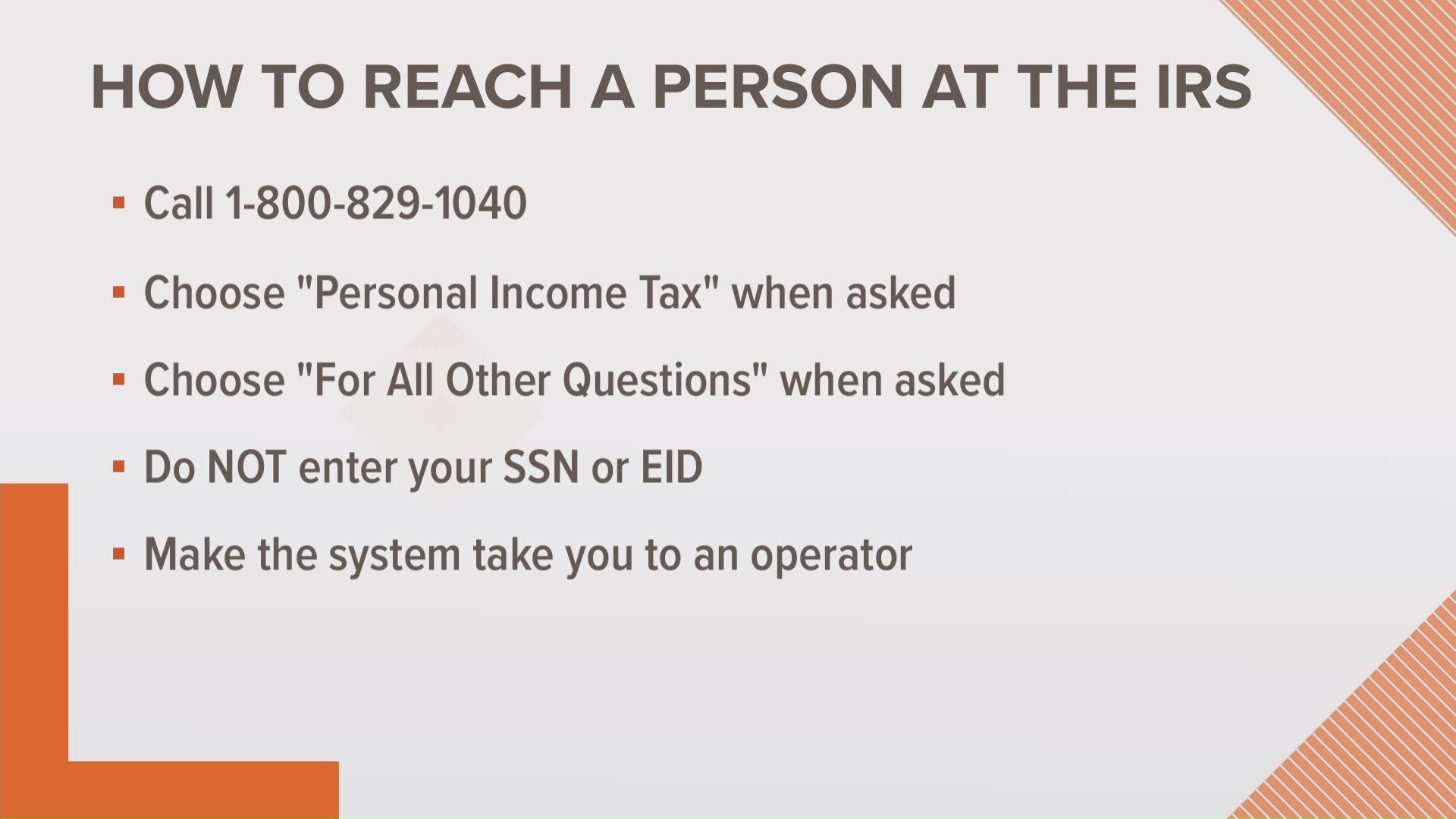
The most critical factor in reaching an agent is timing. The IRS phone lines (1-800-829-1040 for individuals) are generally open from 7:00 AM to 7:00 PM local time, Monday through Friday.
Financial professionals consistently find that the “sweet spot” for calling is either immediately upon opening at 7:00 AM or late in the evening just before closing. Tuesdays, Wednesdays, and Thursdays are typically better than Mondays (when the weekend backlog is processed) or Fridays. Additionally, calling during the peak of tax season (January through April) will naturally result in longer wait times. If your issue is not time-sensitive, waiting until after the April 15th deadline can significantly reduce your time on hold.
The “Cheat Codes” for the IVR System
While the IRS frequently updates its menu options, a specific sequence of inputs has historically proven effective for bypassing the general information loops. After dialing the main individual line, follow these steps:
-
Select your primary language.
-
Select option 2 for “Questions about your personal income tax.”
-
Select option 1 for “Questions about a form you have already filed.”
-
Select option 3 for “All other questions.”
-
Select option 2 for “All other questions.”
-
When prompted for your Social Security Number or EIN, do not enter anything. After two prompts, the system will usually move you to another menu.
-
Select option 2 for individual tax questions.
-
Select option 4 for all other inquiries.
This sequence is designed to move your call from the automated informational queue into the live assistance queue. Once in the queue, do not hang up. The IRS “callback” feature is sometimes offered during high-volume periods; if it is available, it is highly recommended to utilize it to preserve your place in line without staying on the phone.
Essential Documentation for a Productive Call
Once you have successfully navigated the hold music and reached an agent, the clock starts ticking. To protect your financial interests and ensure the agent can actually help you, you must have a “tax file” ready in front of you.
Identity Verification
The agent cannot discuss your account until they have verified your identity to a high degree of certainty. You will need:
-
Your full legal name and current mailing address.
-
Social Security Number (SSN) or Individual Taxpayer Identification Number (ITIN).
-
Date of birth.
-
Your filing status (Single, Married Filing Jointly, etc.).
-
The specific tax forms you are calling about (e.g., Form 1040).
Transactional Records
If you are calling about a balance due or a missing refund, have copies of your previous year’s tax return and any correspondence you received from the IRS (the notice number is usually found in the top right corner, such as CP14 or LTR 3172). If you made payments that have not been credited to your account, have the exact dates, amounts, and methods of payment (e.g., check number or electronic confirmation code) ready. Having this data at your fingertips demonstrates professional organization and allows the agent to locate the discrepancy in their system much faster.
Leveraging Professional Representation and Online Tools
Sometimes, the complexity of a financial situation exceeds what can be handled in a simple phone call. In these instances, it is important to know when to escalate the issue or delegate it to a professional.
The Power of Attorney (Form 2848)
If you find the process of dealing with the IRS too overwhelming or if the financial stakes are high (such as a large-scale audit or a lien), you can appoint a representative. By filing Form 2848 (Power of Attorney and Declaration of Representative), you can authorize a Certified Public Accountant (CPA), an Enrolled Agent (EA), or an attorney to speak to the IRS on your behalf. These professionals often have access to a dedicated “Practitioner Priority Service” line, which generally has shorter wait times and connects to more senior agents.
The Taxpayer Advocate Service (TAS)
If your issue is causing a significant financial hardship—such as an inability to meet payroll or pay for essential living expenses—and you have been unable to resolve it through normal channels, the Taxpayer Advocate Service is an independent organization within the IRS that can help. They act as a mediator to ensure that your rights as a taxpayer are protected and that your case is handled fairly.
The IRS Online Account
Before calling, check your “IRS Online Account” on the official website. Many tasks that previously required a phone call, such as viewing your balance, creating a payment plan, or accessing tax transcripts, can now be handled digitally. Using these tools for simple administrative tasks frees up the phone lines for taxpayers with more complex financial dilemmas.
Beyond the Call: Ensuring Long-Term Compliance and Financial Stability
The ultimate goal of getting an IRS agent on the phone is to reach a resolution that aligns with your overall financial strategy. Once you have reached an agreement or clarified an issue, the work is not finished.
Documenting the Interaction
Always ask the agent for their name and their unique “Badge Number” at the beginning of the call. Keep a detailed log of the date, time, and the specific guidance provided. If the agent agrees to waive a penalty or adjust a balance, ask for the expected timeframe for these changes to appear on your account. Follow up the call by sending a summary letter via certified mail if the issue involves significant sums of money. This creates a “paper trail” that is invaluable if the issue is not resolved as promised.
Establishing Sustainable Payment Solutions
If the phone call reveals that you do indeed owe a balance that you cannot pay in full, use the opportunity to discuss an Installment Agreement or an Offer in Compromise. A live agent can help you determine the minimum monthly payment required to stay in “Good Standing” and avoid aggressive collection actions like wage garnishments or bank levies. From a personal finance perspective, securing a structured payment plan is far superior to ignoring the debt, as it provides a predictable framework for your monthly budget.
Reaching a live person at the IRS is a test of persistence, but it is a manageable process when approached with a professional mindset. By mastering the timing, understanding the automated system’s logic, and having your financial documentation prepared, you can navigate the federal bureaucracy and protect your financial future. In the complex world of taxation, being proactive is the most effective strategy for wealth preservation and peace of mind.
aViewFromTheCave is a participant in the Amazon Services LLC Associates Program, an affiliate advertising program designed to provide a means for sites to earn advertising fees by advertising and linking to Amazon.com. Amazon, the Amazon logo, AmazonSupply, and the AmazonSupply logo are trademarks of Amazon.com, Inc. or its affiliates. As an Amazon Associate we earn affiliate commissions from qualifying purchases.