
Securing your financial future is one of the most significant responsibilities of adulthood, yet the path to a comfortable retirement often feels shrouded in complex jargon and bureaucratic hurdles. At the heart of a robust retirement strategy for most Americans is the Individual Retirement Account, or IRA. Unlike a 401(k), which is tied to an employer, an IRA is a personal investment vehicle that offers significant tax advantages, allowing your wealth to grow more efficiently over decades.
Opening an IRA is a straightforward process, but it requires making several informed decisions before you click the “submit” button on an application. Whether you are just starting your first job or looking to supplement an existing pension, understanding how to navigate the landscape of financial institutions, account types, and investment options is essential. This guide will walk you through the nuances of selecting, opening, and optimizing an IRA to ensure your golden years are financially secure.

Understanding Your Options: Choosing the Right IRA Type
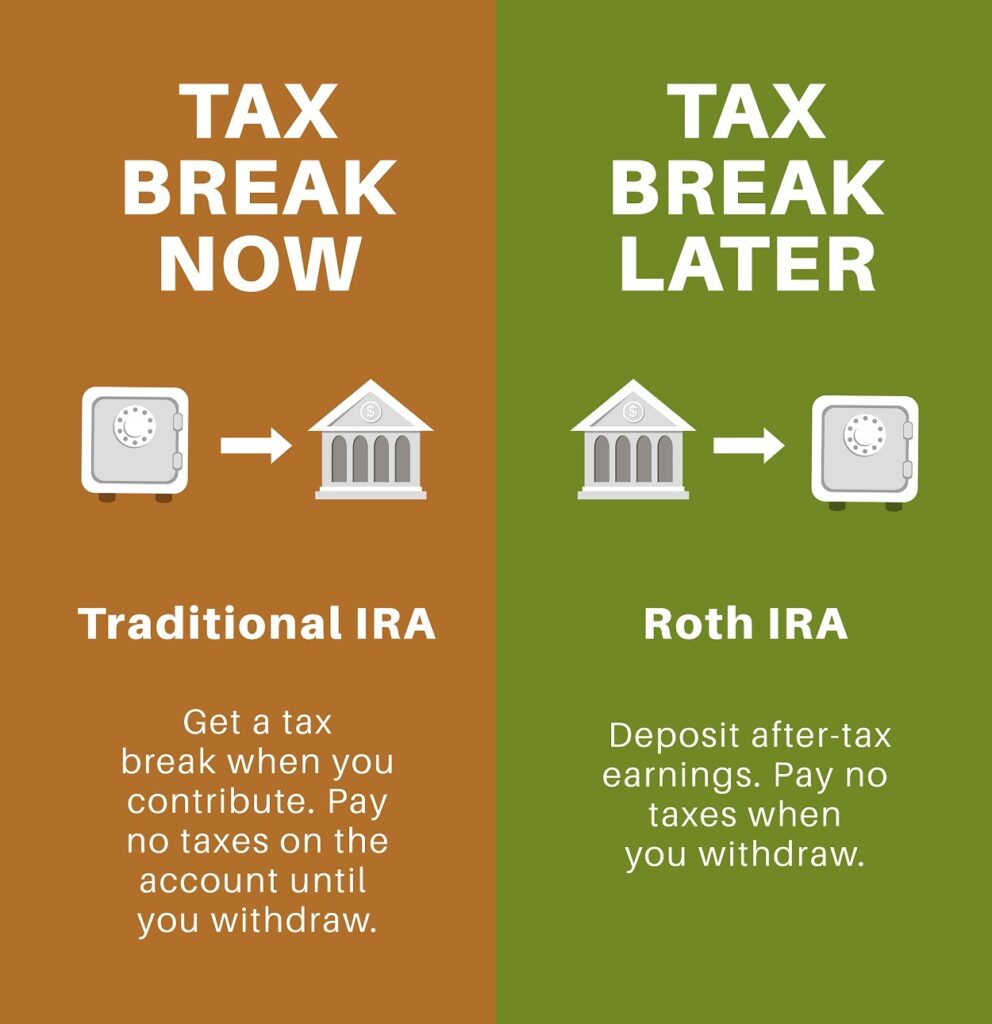
The first step in getting an IRA account is deciding which “flavor” of account best suits your current financial situation and your future expectations. The IRS provides several variations, but the two most common for individuals are the Traditional IRA and the Roth IRA. The primary difference between them lies in when you receive your tax break.
Traditional IRA vs. Roth IRA
In a Traditional IRA, contributions are often tax-deductible. This means the money you put into the account lowers your taxable income for the year, potentially putting you in a lower tax bracket today. However, you will pay ordinary income tax on the withdrawals you make during retirement. This is generally preferred by individuals who believe they are in a higher tax bracket now than they will be when they retire.
Conversely, the Roth IRA offers no immediate tax break. You contribute “after-tax” dollars—money that has already been taxed at your current rate. The massive advantage of the Roth is that your investments grow tax-free, and qualified withdrawals in retirement are also tax-free. This is often the superior choice for younger investors who expect their income (and the tax rates) to be higher in the future.
SEP and SIMPLE IRAs for the Self-Employed
If you are a freelancer, a small business owner, or have a “side hustle” that generates significant income, you might look beyond the standard Traditional and Roth options. A Simplified Employee Pension (SEP) IRA allows business owners to contribute a significantly higher percentage of their income compared to standard IRAs. Similarly, the SIMPLE IRA (Savings Incentive Match Plan for Employees) is designed for small businesses with fewer than 100 employees, allowing both employer and employee contributions. These accounts follow many of the same rules as Traditional IRAs but offer higher contribution ceilings to accommodate the unique needs of entrepreneurs.
Tax Implications and Contribution Limits
It is crucial to be aware of the annual contribution limits set by the IRS. For 2024, the limit for Traditional and Roth IRAs is $7,000, or $8,000 if you are age 50 or older (the “catch-up” contribution). It is also important to note that Roth IRAs have income eligibility limits; if you earn above a certain threshold, you may be restricted from contributing directly to a Roth, though “Backdoor Roth” strategies exist for high earners. Understanding these boundaries ensures you don’t face tax penalties for over-contributing.
Selecting the Best Financial Institution for Your Account
Once you know which type of IRA you need, the next step is deciding where to house it. An IRA is not an investment itself; it is a “basket” or a shell that holds your investments. You must choose a custodian—a financial institution—to hold that basket.
Discount Brokerages vs. Robo-Advisors
For the hands-on investor, discount brokerages like Charles Schwab, Fidelity, or Vanguard are the gold standard. These platforms offer a vast array of investment choices, including individual stocks, bonds, and thousands of mutual funds or Exchange-Traded Funds (ETFs). Most of these major players have moved to a $0 commission model for online stock and ETF trades, making them highly cost-effective.
For those who prefer a “set it and forget it” approach, Robo-advisors such as Betterment or Wealthfront use algorithms to manage your portfolio based on your risk tolerance and time horizon. While they charge a small management fee (typically around 0.25%), they handle the rebalancing and tax-loss harvesting for you, which can be invaluable for passive investors.
Banks and Credit Unions
While most people think of brokerage firms for IRAs, you can also open an IRA at a traditional bank or credit union. However, there is a significant caveat: banks typically limit your IRA investments to Certificates of Deposit (CDs) or savings accounts. While these are safe and insured by the FDIC, they rarely offer the growth potential needed to outpace inflation over several decades. For long-term retirement planning, a brokerage account is almost always preferable to a bank-based IRA.
Evaluating Fees, Platforms, and Customer Support
When comparing providers, look closely at the “expense ratios” of the funds they offer. Even a 1% difference in fees can eat away tens of thousands of dollars from your final retirement nest egg over 30 years. Furthermore, consider the user experience of their digital platform. Does the website make it easy to set up automatic contributions? Do they have a robust mobile app? Lastly, check their reputation for customer service; if you have a question about a rollover or a required minimum distribution (RMD) later in life, you will want a responsive team to assist you.
The Step-by-Step Process of Opening Your Account
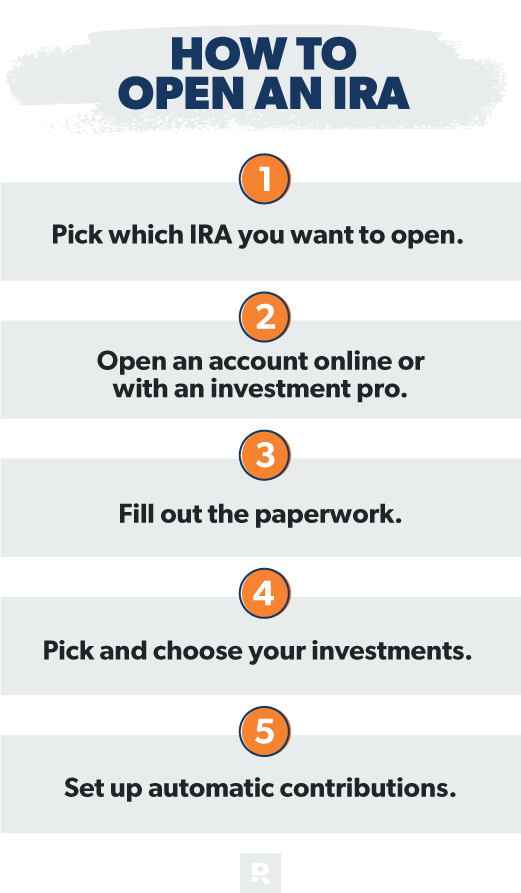
With your account type and provider selected, the actual opening of the account is a digital process that can usually be completed in under 15 minutes. Financial institutions have streamlined these applications to encourage more people to save.
Gathering Necessary Documentation
Before you start the application, have your personal information ready. You will typically need:
- Your Social Security Number (SSN) or Individual Taxpayer Identification Number (ITIN).
- A valid government-issued ID (driver’s license or passport).
- Your employer’s name and address.
- Your bank account and routing numbers (to link for transfers).
- Beneficiary information: You will need the names and birthdates of the people you want to inherit the account in the event of your passing.
Completing the Online Application
Most applications follow a standard flow. You will select the account type (Roth, Traditional, etc.), enter your personal details, and answer a series of questions regarding your investment experience and financial goals. These questions are part of “Know Your Customer” (KYC) regulations designed to protect investors and prevent money laundering. During this stage, you will also designate your beneficiaries. This is a critical step that many overlook; IRA assets pass directly to beneficiaries outside of a will, so keeping this information updated is vital for estate planning.
Funding Your New IRA
An empty IRA does nothing for your future. You need to move money into it. You can fund the account through a one-time transfer from your checking or savings account, or by setting up a recurring monthly contribution. Another common way to fund an IRA is through a “Rollover.” If you have a 401(k) from a previous employer, you can “roll” those funds into your new IRA. This consolidates your retirement assets and often gives you access to lower-cost investment options than those provided by your former employer’s plan.
Developing an Investment Strategy for Your IRA
The most common mistake new IRA owners make is funding the account but failing to actually invest the money. When you transfer cash into an IRA, it often sits in a “money market” or “settlement” fund, earning very little interest. To grow your wealth, you must use that cash to purchase assets.
Asset Allocation and Diversification
Your investment strategy should be dictated by your “time horizon”—how many years remain until you need the money. A younger investor can afford more volatility and should generally lean toward a higher percentage of equities (stocks), which offer higher historical returns. As you approach retirement, you will likely shift toward fixed-income assets (bonds) to preserve capital. Diversification is the key to managing risk; you shouldn’t put all your money into a single company’s stock, but rather spread it across different sectors and geographies.
Target-Date Funds vs. Individual Stock Selection
If you are unsure how to build a portfolio, Target-Date Funds (TDFs) are an excellent tool. You choose a fund with a year in its name that matches your expected retirement year (e.g., “Target Retirement 2055”). The fund automatically adjusts its risk profile, becoming more conservative as you get closer to that date. If you are more experienced, you might prefer to build a “Three-Fund Portfolio” consisting of a Total Stock Market Index Fund, an International Stock Index Fund, and a Total Bond Market Index Fund. This provides maximum diversification at a very low cost.
Rebalancing and Long-Term Maintenance
Investing is not a “one and done” event. Over time, some investments will perform better than others, causing your original asset allocation to shift. For example, if your stocks perform exceptionally well, they might grow to represent 80% of your portfolio when you only intended for them to be 70%. Periodically “rebalancing”—selling some of what has grown and buying more of what has lagged—helps you maintain your desired risk level. Additionally, you should review your contribution amounts annually. As your salary increases, try to increase your IRA contributions until you are “maxing out” the account each year.
The journey to financial independence begins with the simple act of opening an account, but the true rewards come from consistency and discipline. By choosing the right IRA, selecting a low-cost provider, and staying invested in a diversified portfolio, you are taking a definitive step toward a retirement defined by choice and security rather than financial constraint. Remember, the best time to start an IRA was yesterday; the second best time is today.
aViewFromTheCave is a participant in the Amazon Services LLC Associates Program, an affiliate advertising program designed to provide a means for sites to earn advertising fees by advertising and linking to Amazon.com. Amazon, the Amazon logo, AmazonSupply, and the AmazonSupply logo are trademarks of Amazon.com, Inc. or its affiliates. As an Amazon Associate we earn affiliate commissions from qualifying purchases.