
Securing funding for higher education can be a labyrinthine process, and while federal student loans often serve as the first line of defense, they may not always cover the full cost of attendance. This is where personal student loans, also known as private student loans, come into play. Designed to bridge the financial gap, these loans are offered by banks, credit unions, and state-affiliated organizations. Understanding their nuances, application process, and repayment responsibilities is crucial for any student or parent considering this path. This comprehensive guide will demystify personal student loans, equipping you with the knowledge to make informed decisions and navigate the borrowing landscape effectively.
Understanding Personal Student Loans
Personal student loans differ significantly from their federal counterparts, primarily in their origination, terms, and borrower protections. Grasping these distinctions is the first step toward determining if a private loan is the right financial tool for your educational journey.
What Differentiates Them from Federal Loans?
The most fundamental difference lies in their source. Federal student loans are provided by the U.S. government, while personal (private) student loans come from private lenders. This distinction impacts nearly every aspect of the loan:
-
Interest Rates: Federal loans typically offer fixed interest rates, often lower than private options, and these rates are standardized across borrowers. Private loans, on the other hand, often feature variable interest rates that can fluctuate over the life of the loan, though fixed-rate options are also available. The rate you receive on a private loan is highly dependent on your creditworthiness.
-
Creditworthiness: Federal student loans, particularly subsidized and unsubsidized Stafford loans, do not generally require a credit check for undergraduate students. Private loans, however, are credit-based. Lenders will evaluate your credit score and financial history, and often require a co-signer, especially for students with limited credit history.
-
Borrower Protections: Federal loans come with robust borrower protections, including income-driven repayment plans, deferment and forbearance options for financial hardship, and possibilities for loan forgiveness in certain professions. Private loans offer fewer, if any, of these safety nets. Repayment terms are generally less flexible.
-
Loan Limits: Federal loans have annual and aggregate borrowing limits, which can sometimes be insufficient for tuition and living expenses, particularly at expensive institutions. Private loans often have higher limits, sometimes up to the full cost of attendance, but this flexibility comes with increased risk.
-
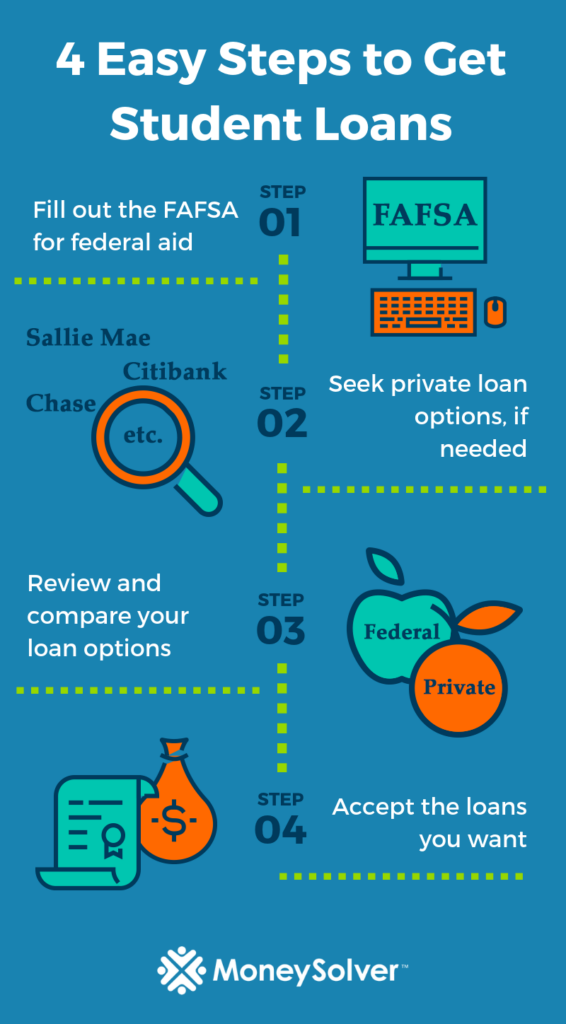
Application Process: Federal loans are accessed by completing the Free Application for Federal Student Aid (FAFSA). Private loan applications are submitted directly to individual lenders and require a more detailed financial assessment.
When Are Personal Student Loans Necessary?
While federal student loans should always be exhausted first due to their favorable terms and protections, there are several scenarios where private student loans become a necessary consideration:
-
Maxing Out Federal Loan Limits: If the cost of attendance exceeds the amount you can borrow through federal loans, a private loan can cover the remaining balance.
-
Ineligibility for Federal Aid: Some students may not qualify for sufficient federal aid due to income levels, enrollment status (e.g., part-time students), or lack of satisfactory academic progress.
-
High-Cost Programs/Institutions: Certain specialized programs or institutions have tuition fees that significantly surpass federal loan limits, making private loans essential for enrollment.
-
Graduate or Professional School: While graduate students have higher federal loan limits, they may still find a gap, especially if pursuing degrees in fields like medicine, law, or business, where tuition can be exceptionally high.
-
Refinancing Existing Loans: Although not strictly “getting a loan” for new education, many borrowers use personal student loans to refinance existing federal or private loans, potentially securing a lower interest rate or different repayment terms.
Key Considerations Before Applying
Before diving into applications, a thorough self-assessment is paramount. Borrowing should always be a calculated decision, especially when it comes to private loans with fewer protections.
-
Financial Need vs. Want: Distinguish between what you genuinely need for your education and what might be considered discretionary spending. Borrow only what is absolutely necessary.
-
Total Cost of Attendance (COA): Obtain an accurate COA from your school’s financial aid office. This includes tuition, fees, room and board, books, supplies, transportation, and personal expenses. Use this figure to determine the precise funding gap.
-
Future Earning Potential: Consider your chosen field’s typical starting salaries and long-term earning potential. Will you realistically be able to repay the loan amount with your projected income after graduation?
-
Impact on Credit: Taking on significant debt will affect your credit score, both positively (if repaid diligently) and negatively (if payments are missed). Understand the long-term implications.
-
Co-signer Burden: If you require a co-signer, understand that they are equally responsible for the loan. Their credit will also be impacted, and they will be on the hook if you fail to pay. This is a significant commitment for them.
Preparing for Your Application
The application for a personal student loan is a rigorous process that demands organization and a clear understanding of your financial standing. Preparation is key to a smooth and successful application.
Assessing Your Financial Health (Credit Score & Income)
Private lenders primarily assess your ability to repay the loan, which is heavily reliant on your credit score and income.
-
Credit Score: Lenders typically look for a good to excellent credit score (generally 670 or higher). If you’re a student, you likely have a limited credit history, making a high score difficult to achieve. This is where a co-signer becomes almost essential. Check your credit score and report from the three major credit bureaus (Equifax, Experian, TransUnion) well in advance to identify and rectify any errors.
-
Income: While students may not have substantial income, lenders will consider any consistent earnings you or your co-signer have. A steady income stream demonstrates repayment capacity. Lenders may also have specific debt-to-income ratio requirements.
-
Debt-to-Income Ratio: This ratio compares your monthly debt payments to your gross monthly income. A lower ratio indicates that you have more disposable income to put towards new debt, making you a less risky borrower.
Gathering Necessary Documentation
Being prepared with all required documents will streamline your application process. While specific requirements vary by lender, you can generally expect to need:
-
Personal Information: Government-issued ID (driver’s license, passport), Social Security number, proof of U.S. citizenship or eligible non-citizen status.
-
Financial Information: Recent pay stubs (for you and/or your co-signer), tax returns (past two years are common), bank statements, and details of any other debts (mortgage, car loans, credit cards).
-
Academic Information: Enrollment verification from your school, cost of attendance details, and sometimes your academic transcript.
-
Co-signer Information (if applicable): Your co-signer will need to provide all the same personal and financial documentation.
Exploring Co-signer Options
For most students, particularly undergraduates with little to no credit history or income, a co-signer is almost a prerequisite for securing a private student loan with favorable terms.
-
Who Can Be a Co-signer? Typically, a parent, guardian, or another creditworthy adult with a strong credit history and stable income.
-
Responsibilities: A co-signer is legally just as responsible for the loan as the primary borrower. If the primary borrower defaults, the lender will pursue the co-signer for payment, and their credit will be negatively impacted.
-
Co-signer Release: Some lenders offer a “co-signer release” option, allowing the co-signer to be removed from the loan after the primary borrower makes a certain number of on-time payments and meets specific credit and income criteria. This is a highly desirable feature to look for.
-
The Conversation: Have an open and honest conversation with potential co-signers about the responsibilities and risks involved. Ensure they fully understand the commitment.
Navigating the Application Process
Once prepared, the next phase involves researching lenders, comparing offers, and submitting your application. This stage requires meticulous attention to detail and careful consideration of all terms and conditions.
Researching Lenders and Comparing Offers
Do not settle for the first lender you find. The private student loan market is competitive, and terms can vary widely.
-
Banks and Credit Unions: Traditional financial institutions often offer private student loans. If you or your co-signer have an existing relationship, you might qualify for slightly better rates or perks. Credit unions often have a community focus and competitive rates.
-
Online Lenders: A growing number of online-only lenders specialize in student loans. They often have streamlined application processes and can offer competitive rates.
-
State-Affiliated Lenders: Some states offer their own student loan programs, which can sometimes provide unique benefits or lower rates for residents.
-
Comparison Websites: Utilize comparison tools and websites that allow you to pre-qualify with multiple lenders without impacting your credit score. This gives you a snapshot of potential rates and terms.
-
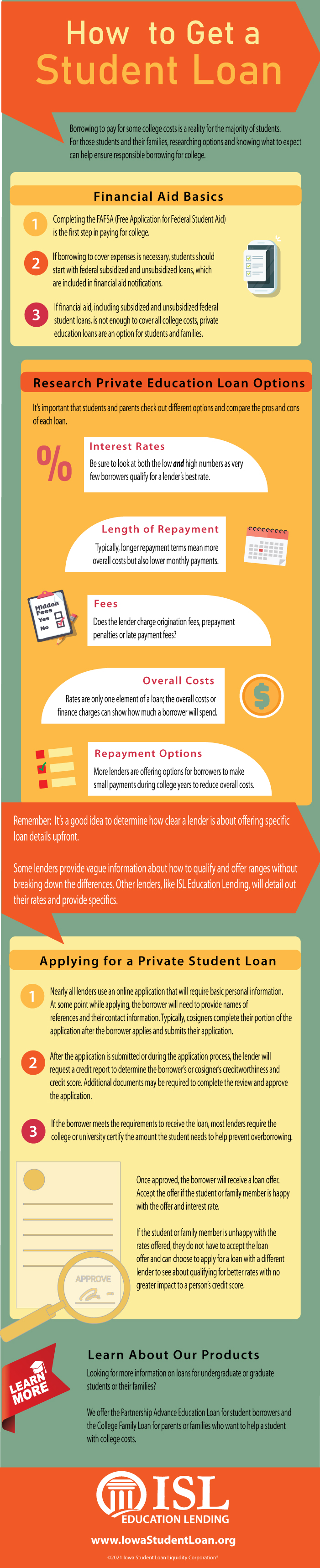
Key Comparison Points: When comparing offers, focus on interest rates (fixed vs. variable), fees (origination, late payment), repayment terms (in-school deferment, grace period), and co-signer release options.

Understanding Interest Rates and Repayment Terms
These are the most critical aspects of your loan agreement, directly impacting the total cost of your education.
-
Fixed vs. Variable Interest Rates:
-
Fixed Rates: Remain constant throughout the life of the loan. They offer predictability but might start slightly higher than initial variable rates. Ideal if you want stability.
-
Variable Rates: Can change over time based on a market index (like LIBOR or SOFR). While they might start lower, they can increase, potentially making your monthly payments higher in the future. Better for those who plan to pay off their loan quickly or are comfortable with market fluctuations.
-
-
Repayment Terms:
-
In-School Deferment: Most private loans allow you to defer payments while enrolled in school at least half-time. Interest may or may not accrue during this period, depending on the loan and lender.
-
Grace Period: A period after graduation (typically 6 months) before you must start making full payments. Interest often accrues during this time.
-
Repayment Period: The length of time you have to repay the loan, typically 5, 10, or 15 years. A longer repayment period means lower monthly payments but more interest paid over the life of the loan.
-
Payment Options: Some lenders offer interest-only payments during school or a small flat monthly payment to help reduce the total interest paid.
-
The Application Submission and Approval Process
Once you’ve selected a lender, the application process generally follows these steps:
-
Online Application: Most lenders have online applications that are relatively quick to fill out. You’ll provide personal, financial, and educational details.
-
Co-signer Application (if applicable): If you’re using a co-signer, they will also need to complete a separate section of the application, providing their details.
-
Credit Check: The lender will perform a hard credit inquiry (which may temporarily ding your credit score) to assess your and your co-signer’s creditworthiness.
-
Document Submission: You’ll be asked to upload or submit supporting documents (pay stubs, tax returns, enrollment verification).
-
Review and Approval: The lender will review your application and documents. If approved, they will send you a disclosure statement outlining the loan terms, interest rate, and repayment schedule.
-
School Certification: Your school’s financial aid office must certify your enrollment and the requested loan amount to ensure it doesn’t exceed your cost of attendance minus other aid.
-
Disbursement: Once certified, the funds are typically disbursed directly to your school to cover tuition and fees. Any remaining funds may be sent to you to cover other educational expenses.
Responsible Borrowing and Repayment Strategies
Obtaining a personal student loan is only half the battle; managing it responsibly and strategizing for repayment is equally critical to avoid financial distress.
Budgeting for Loan Repayments
Before the first payment is due, you should have a clear plan for how you will manage your monthly obligations.
-
Create a Post-Graduation Budget: Project your income and expenses after graduation, incorporating your estimated student loan payments. Be realistic about your potential starting salary.
-
Track Spending During School: If you have income during school, practice making “mock” loan payments into a savings account to get used to the habit and build an emergency fund.
-
Understand Total Debt Burden: Factor in all your student loans (federal and private), credit card debt, and any other loans you might have. Use a loan calculator to estimate total monthly payments.
-
Emergency Fund: Prioritize building an emergency fund to cover at least 3-6 months of living expenses. This is a crucial buffer if you encounter unexpected financial setbacks after graduation.
Exploring Deferment and Forbearance Options
Life is unpredictable, and sometimes financial hardship makes it difficult to make payments. While private loans offer fewer protections than federal loans, some lenders do provide options.
-
Deferment: Allows you to temporarily postpone loan payments, usually for specific circumstances like returning to school, military service, or unemployment. Interest may or may not accrue, depending on the loan terms.
-
Forbearance: A temporary suspension or reduction of loan payments, often for general financial hardship. Interest almost always accrues during forbearance, potentially increasing your total loan cost.
-
Communication is Key: If you anticipate difficulty making payments, contact your lender immediately. Do not wait until you miss a payment. They may be willing to work with you on a temporary solution.
-
Understand Terms: Carefully review the terms and conditions of any deferment or forbearance offered by a private lender, as they vary significantly.
Strategies for Early Repayment and Refinancing
Aggressive repayment can save you thousands in interest over the life of the loan. Refinancing can also be a powerful tool for optimizing your debt.
-
Make Extra Payments: Any additional payments you make, even small ones, can significantly reduce the principal balance and the amount of interest paid over time. Specify that extra payments should go towards the principal.
-
Pay More Than the Minimum: If financially feasible, pay more than the minimum monthly payment. Focus on loans with the highest interest rates first (the “debt avalanche” method) or the smallest balances (the “debt snowball” method).
-
Automate Payments: Set up automatic payments to avoid missing due dates and potentially qualify for a small interest rate reduction (e.g., 0.25%) offered by some lenders.
-
Refinancing: After graduation, once you have a stable job and an improved credit score (or your co-signer wants to be released), you might consider refinancing your private student loans. This involves taking out a new loan with a lower interest rate to pay off your existing loans. This can significantly reduce your monthly payments and total interest paid. Compare offers from multiple refinancing lenders.
Common Pitfalls and How to Avoid Them
The journey of securing and repaying a personal student loan is fraught with potential missteps. Awareness of these common pitfalls can help you navigate the process more safely.
Over-borrowing and Unmanageable Debt
The allure of easily accessible funds can lead to borrowing more than is truly needed, setting the stage for long-term financial struggle.
-
Borrow Only What’s Essential: Reiterate the importance of borrowing only the minimum amount required after exhausting all other financial aid options. Resist the temptation to borrow extra for discretionary spending.
-
Understand the True Cost: Remember that every dollar borrowed comes with interest. A $10,000 loan might end up costing you $12,000 or more to repay, depending on the interest rate and term.
-
Future Impact: Over-borrowing can lead to higher monthly payments, delaying other financial goals like buying a home, saving for retirement, or starting a family.
Ignoring the Fine Print
Loan agreements are legal documents. Skipping over the detailed terms and conditions can lead to unpleasant surprises down the road.
-
Read Everything Carefully: Before signing, thoroughly read and understand all aspects of the loan agreement, including interest rates, fees, repayment terms, deferment/forbearance policies, and co-signer release clauses.
-
Ask Questions: If anything is unclear, ask the lender for clarification. Do not assume anything.
-
Understand Variable Rate Indexes: If you choose a variable rate loan, understand which market index it’s tied to (e.g., SOFR) and how often the rate can adjust. Research historical trends of that index.
The Importance of Communication with Lenders
Silence and avoidance are your worst enemies when dealing with student loan debt.
-
Proactive Engagement: If you anticipate or experience financial difficulties, contact your lender immediately. They are generally more willing to work with borrowers who communicate proactively.
-
Documentation: Keep records of all communications with your lender, including dates, names of representatives, and summaries of discussions.
-
Avoid Default: Defaulting on a loan has severe consequences, including significant damage to your credit score, collection agency involvement, wage garnishment, and potential legal action. This is why communication and seeking alternatives are so vital.
In conclusion, personal student loans can be a valuable resource for financing higher education, but they demand a high level of responsibility and informed decision-making. By understanding their characteristics, diligently preparing your application, carefully comparing offers, and committing to responsible repayment, you can effectively leverage these loans to achieve your educational aspirations without jeopardizing your financial future. Always remember to prioritize federal aid, borrow only what you need, and remain vigilant in managing your debt.
aViewFromTheCave is a participant in the Amazon Services LLC Associates Program, an affiliate advertising program designed to provide a means for sites to earn advertising fees by advertising and linking to Amazon.com. Amazon, the Amazon logo, AmazonSupply, and the AmazonSupply logo are trademarks of Amazon.com, Inc. or its affiliates. As an Amazon Associate we earn affiliate commissions from qualifying purchases.