
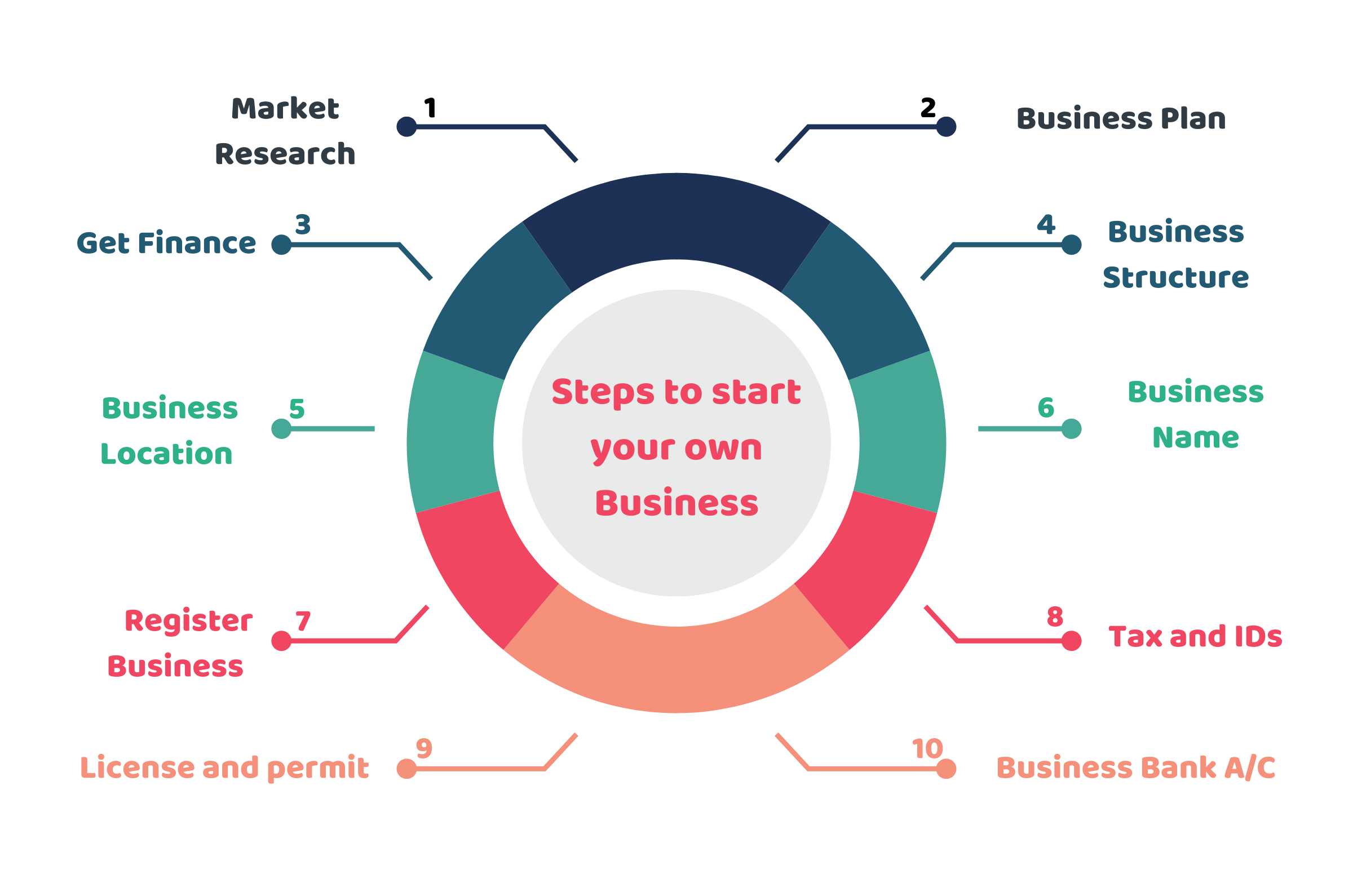
Forming your own company is a pivotal step towards financial independence and wealth creation. While the entrepreneurial journey is often romanticized, the practicalities of establishing a robust financial and legal framework are paramount for long-term success. Understanding the monetary implications of each decision, from choosing your business structure to securing initial capital and managing ongoing finances, is crucial for building a sustainable enterprise.
Choosing the Right Financial Structure: Tax and Liability Considerations
The legal structure you choose for your company has profound implications for your personal liability, taxation, and administrative burden. This foundational decision directly impacts your financial risk and the path to profitability.
Sole Proprietorship & Partnership: Simplicity vs. Risk
A Sole Proprietorship is the simplest and least expensive structure to form, essentially making you and your business one legal and financial entity. From a financial perspective, this means all business income is reported on your personal tax return (Schedule C, Form 1040), and you pay self-employment taxes (Social Security and Medicare) on your net earnings. While easy to set up, the significant financial drawback is unlimited personal liability. Your personal assets are not protected from business debts or lawsuits, posing a substantial financial risk.
A Partnership operates similarly but involves two or more owners. Like a sole proprietorship, partners report their share of business profits and losses on their personal tax returns. Each partner is personally liable for the business’s debts and obligations, and potentially for the actions of other partners, depending on the specific partnership agreement. While a partnership agreement can outline financial contributions, profit distribution, and responsibilities, the fundamental financial risk of unlimited liability remains for general partners. Limited Partnerships (LPs) or Limited Liability Partnerships (LLPs) offer some liability protection for certain partners but come with more complex formation requirements.
Limited Liability Company (LLC): Balancing Protection and Flexibility
The Limited Liability Company (LLC) offers a popular middle ground, providing personal liability protection similar to a corporation while maintaining the simpler tax treatment of a sole proprietorship or partnership. Financially, an LLC shields your personal assets from business debts and lawsuits, providing a critical layer of financial security. For tax purposes, an LLC is a pass-through entity by default. Profits and losses are “passed through” to the owners’ personal income without being taxed at the company level. This avoids “double taxation” often associated with C-Corporations.
Owners of an LLC, known as members, can elect for the LLC to be taxed as a Sole Proprietorship (if it has one owner), a Partnership (if it has multiple owners), an S-Corporation, or even a C-Corporation. This flexibility allows businesses to optimize their tax strategy as they grow. While slightly more complex to establish than a sole proprietorship and involving state-specific filing fees, the financial protection and tax flexibility often make the LLC an attractive choice for many new businesses.
Corporations (S-Corp & C-Corp): Scalability and Tax Nuances
Corporations (C-Corp) are distinct legal entities separate from their owners. This structure offers the strongest personal liability protection, as shareholders are generally not personally liable for corporate debts or obligations. The C-Corp is subject to “double taxation” – the corporation pays taxes on its profits, and then shareholders pay taxes again on dividends they receive. However, C-Corps offer advantages for scaling, such as easier access to venture capital due to the ability to issue different classes of stock, and a clear path for employee stock options. They are ideal for businesses planning to seek significant outside investment or eventually go public.
An S-Corporation (S-Corp) is a special tax election available to eligible domestic corporations, LLCs, or partnerships that avoids the double taxation of a C-Corp. Profits and losses are passed through directly to the owners’ personal income, similar to an LLC or partnership. A key financial advantage of an S-Corp election is the potential to save on self-employment taxes. Owners who also work for the company can be paid a reasonable salary, subject to payroll taxes. Any remaining profits distributed to them are considered distributions and are not subject to self-employment taxes. This can lead to significant tax savings, though it requires more stringent compliance and payroll management. Both C-Corps and S-Corps involve more complex setup and ongoing administrative costs compared to LLCs or sole proprietorships.
Capitalizing Your Venture: Funding Strategies and Financial Projections
Every new company requires capital to get off the ground and sustain operations. Securing adequate funding is a critical financial hurdle that dictates the pace and scope of your business development.
Bootstrapping and Personal Investment
Bootstrapping involves funding your company primarily through personal savings, revenue generated from early sales, or by minimizing expenses. This approach maintains complete ownership and control but can be financially demanding on the founder. It requires meticulous budgeting and a lean operational model. Personal investment often takes the form of savings, credit cards, or even loans from friends and family. While convenient, it puts your personal finances directly on the line and can strain relationships if not managed with clear financial terms.
Debt Financing: Loans and Lines of Credit
Debt financing involves borrowing money that must be repaid with interest. Common sources include traditional bank loans, Small Business Administration (SBA) loans, and lines of credit.
- Bank Loans often require a solid business plan, collateral, and a good personal credit score. They provide a lump sum of capital with structured repayment schedules.
- SBA Loans are partially guaranteed by the government, making banks more willing to lend to small businesses. They often have more favorable terms and lower down payments but can have a longer application process.
- Lines of Credit offer flexibility, allowing you to borrow and repay funds as needed, up to a certain limit. Interest is only paid on the amount borrowed.
The financial benefit of debt financing is that it avoids equity dilution – you retain full ownership of your company. However, it introduces fixed financial obligations (loan payments) that must be met regardless of business performance.
Equity Financing: Investors and Dilution
Equity financing involves selling a percentage of your company to investors in exchange for capital. This can come from angel investors, venture capitalists (VCs), or crowdfunding platforms.
- Angel Investors are typically affluent individuals who invest their own money, often in early-stage companies. They provide capital and often mentorship, but demand a stake in your company.
- Venture Capital (VC) firms invest larger sums in high-growth potential businesses, usually at later stages. VCs provide significant capital and strategic guidance but will take a substantial equity stake and often a board seat.
- Crowdfunding allows you to raise small amounts of capital from a large number of individuals, often through online platforms. Equity crowdfunding gives investors a small ownership stake.
The primary financial trade-off with equity financing is dilution – you give up a portion of ownership and control. However, you don’t incur debt repayments, and investors often bring valuable expertise and networks. Careful financial valuation of your company is essential before pursuing equity financing to ensure you don’t give away too much ownership too early.
Crafting Financial Projections and Business Plans

Regardless of the funding strategy, a comprehensive business plan with detailed financial projections is indispensable. This document outlines your revenue model, cost structure, break-even analysis, profit and loss forecasts, cash flow statements, and balance sheets. Financial projections demonstrate your understanding of the market, your ability to generate revenue, and how you will manage expenses. They are critical for attracting lenders and investors, proving your financial viability, and serving as a roadmap for your company’s financial future.
Establishing Your Financial Foundations: Registrations and Banking
Once you’ve chosen a structure and considered funding, the next financial step involves formalizing your business through necessary registrations and setting up distinct financial accounts. This ensures legal compliance and sound financial management from day one.
Obtaining Your Employer Identification Number (EIN)
An Employer Identification Number (EIN), also known as a Federal Tax Identification Number, is a unique nine-digit number assigned by the IRS to identify your business. If you plan to hire employees, operate as a corporation or partnership, or file certain tax returns, an EIN is required. Even for sole proprietorships without employees, an EIN can be beneficial for opening a business bank account and establishing business credit, separating your personal and business financial identities. Applying for an EIN is a free, straightforward process directly through the IRS website.
State and Local Financial Compliance
Beyond federal requirements, most states and many local jurisdictions impose their own financial registration and licensing requirements. These can include:
- State business registration: Often with the Secretary of State, particularly for LLCs and corporations, involving filing fees.
- Sales tax permits: If your business sells taxable goods or services, you’ll need to register to collect and remit sales tax. Understanding your state’s sales tax laws and filing deadlines is critical for financial compliance.
- Industry-specific licenses and permits: Certain industries (e.g., food service, construction, healthcare) require specific licenses that often involve application fees and ongoing compliance costs.
- Local business licenses: Cities and counties may require general business licenses or permits, often with annual renewal fees.
Failing to comply with these state and local financial regulations can result in significant fines and penalties, impacting your company’s early financial stability. Researching and budgeting for these costs upfront is essential.
Setting Up Business Bank Accounts and Credit
Separating your personal and business finances is a cornerstone of responsible financial management. Opening dedicated business checking and savings accounts is crucial for:
- Tracking income and expenses: Simplifies bookkeeping and tax preparation.
- Legal protection: For LLCs and corporations, maintaining separate finances reinforces the limited liability shield.
- Professionalism: Lenders and investors prefer dealing with businesses that have dedicated financial accounts.
Shop around for business banking options that offer low fees, convenient services, and potentially lines of credit or other financial tools tailored for small businesses.
Simultaneously, start building your business credit profile. Just as personal credit impacts your ability to get loans, business credit affects your company’s access to financing, favorable supplier terms, and insurance rates. Obtain an EIN, open business bank accounts, and register your business legally. Then, apply for a business credit card (even if unsecured) and ensure timely payments to vendors and suppliers who report to business credit bureaus. This proactive approach will strengthen your company’s financial standing for future growth.
Understanding Initial Costs and Fees
Forming a company involves various initial costs that must be budgeted for. These can include:
- Formation fees: State filing fees for LLCs and corporations.
- Legal and accounting fees: If you hire professionals to assist with setup and initial financial planning.
- Licenses and permits: Application and initial renewal fees.
- Website and branding costs: While not strictly financial, these are essential for market presence and will require capital.
- Initial inventory or equipment: Depending on the business type.
- Insurance: General liability, professional liability, or specific industry insurance policies are crucial for mitigating financial risk and carry premium costs.
Developing a detailed startup budget that accounts for all these initial expenditures will provide a clear financial roadmap for your company’s launch.
Navigating Ongoing Business Finance: Accounting, Payroll, and Taxes
Effective ongoing financial management is critical for a company’s survival and growth. This includes establishing robust accounting practices, managing payroll, understanding tax obligations, and regularly reviewing financial performance.
Essential Accounting Systems and Software
A solid accounting system is the backbone of financial health. It tracks all income and expenses, provides insights into profitability, and simplifies tax preparation. For most small businesses, cloud-based accounting software like QuickBooks Online, Xero, or FreshBooks offers user-friendly interfaces to:
- Categorize transactions: To understand where money is coming from and going.
- Generate financial reports: Such as profit and loss statements, balance sheets, and cash flow statements.
- Manage invoices and payments: For effective accounts receivable.
- Track expenses and integrate with bank accounts: Automating much of the data entry.
Investing in the right accounting software from the start, or hiring a bookkeeper, ensures accurate financial records, which are invaluable for making informed business decisions, managing cash flow, and demonstrating financial credibility.
Payroll Management and Employer Obligations
If your company hires employees, payroll management becomes a significant financial responsibility. This involves:
- Calculating wages and withholding taxes: Federal income tax, Social Security, Medicare, and state/local taxes.
- Remitting payroll taxes: To the IRS and state tax agencies on schedule.
- Filing payroll tax forms: Quarterly (Form 941) and annually (Form 940 for FUTA, W-2s for employees).
- Managing employee benefits: Health insurance, retirement plans, etc., if offered.
Payroll errors can lead to substantial penalties from tax authorities. Many companies choose to use payroll services (e.g., ADP, Gusto, QuickBooks Payroll) to ensure compliance and accuracy, though these services come with associated costs that must be budgeted for. Understanding worker classification (employee vs. independent contractor) is also crucial, as misclassification can lead to significant financial penalties.
Understanding Business Tax Requirements
Business taxes extend beyond payroll. Your company will likely face:
- Income tax: Based on your chosen business structure. Sole proprietorships, partnerships, and S-Corps have pass-through taxation; C-Corps pay corporate income tax.
- Estimated taxes: Most businesses are required to pay estimated taxes quarterly to the IRS and relevant state agencies if they expect to owe a certain amount of tax. Failure to pay estimated taxes on time can result in penalties.
- Sales tax: If your business sells taxable products or services, you must collect sales tax from customers and remit it to the state.
- Property tax: On real estate or business equipment.
- Excise taxes: On certain goods or services.
Staying informed about your specific tax obligations, filing deadlines, and potential deductions is critical for financial compliance and minimizing your tax burden. Consulting with a qualified tax professional or accountant is highly recommended to develop a robust tax strategy and ensure accurate filings.

Financial Reporting for Growth and Compliance
Regular financial reporting is not just for tax purposes; it’s a vital tool for strategic financial management. Key reports include:
- Profit and Loss (P&L) Statement: Also known as an Income Statement, shows your revenue, costs, and profit over a period.
- Balance Sheet: Provides a snapshot of your company’s assets, liabilities, and owner’s equity at a specific point in time.
- Cash Flow Statement: Tracks the movement of cash in and out of your business, indicating liquidity.
Analyzing these reports regularly allows you to monitor financial performance, identify trends, make informed adjustments to your budget, assess profitability, manage cash flow, and plan for future growth. Consistent financial reporting is also essential for demonstrating financial health to potential lenders or investors and maintaining compliance with regulatory requirements.