
In the intricate world of finance, numbers tell a story. They paint a picture of growth, decline, opportunity, and risk. Yet, raw figures alone often lack the depth required for truly informed decision-making. This is where the concept of percentage increase becomes indispensable. Far more than a simple mathematical operation, understanding how to calculate and interpret percentage increases is a cornerstone of financial literacy, empowering individuals and businesses alike to measure progress, evaluate investments, track expenses, and plan strategically.
From assessing the performance of your investment portfolio to monitoring the rise in your monthly expenses, or even analyzing the year-over-year revenue growth of a business, the ability to accurately determine a percentage increase provides invaluable context. It allows for apples-to-apples comparisons, clarifies the magnitude of change, and ultimately, illuminates the trends that shape our financial realities. This article will delve into the mechanics of finding a percentage increase, illustrating its profound relevance across various financial domains, and equipping you with the knowledge to wield this powerful analytical tool effectively.
The Foundational Importance of Percentage Increase in Finance
At its core, a percentage increase quantifies the relative change between an initial value and a subsequent, larger value. While a simple subtraction might tell you the absolute numerical difference, a percentage increase reveals the proportionate change, offering a more nuanced and often more meaningful perspective. This distinction is critical in finance, where context is everything.
Understanding Growth and Decline
In finance, growth is often the ultimate objective, whether it’s the growth of capital, income, or market share. Percentage increase provides a standardized metric to measure this growth. For instance, knowing that your investment grew by $1,000 might sound good, but understanding that it represents a 10% increase on an initial $10,000 investment versus a 1% increase on an initial $100,000 investment drastically changes your perception of its performance. The percentage increase allows for a universal language to describe performance regardless of the absolute scale of the values involved.
Conversely, while the title focuses on “increase,” the same underlying principles apply to understanding percentage decrease (which is simply a negative percentage change). Recognizing a 5% increase in operational costs year-over-year or a 2% decline in profit margins provides actionable insights that absolute dollar figures alone might obscure. It helps identify areas of concern or success, facilitating timely adjustments to financial strategies.
Beyond Simple Numbers: Context and Comparison
One of the most powerful aspects of percentage increase is its ability to provide context and facilitate comparisons. Imagine comparing the growth of two different companies. Company A’s revenue increased by $1 million, while Company B’s revenue increased by $500,000. On the surface, Company A appears to have performed better. However, if Company A started with $10 million in revenue (a 10% increase) and Company B started with $2 million (a 25% increase), Company B actually demonstrated more significant relative growth. This kind of insight is vital for investors, analysts, and business owners making strategic decisions.
Furthermore, percentages allow for comparisons against benchmarks, industry averages, or inflation rates. Did your salary increase by 3%? That sounds positive. But if the inflation rate was 5% in the same period, your real purchasing power actually decreased. Understanding these percentage-based relationships is fundamental to grasping the true economic implications of financial changes. Without this lens, financial data remains a collection of isolated numbers, rather than a coherent narrative of progress or regress.
Demystifying the Calculation: Your Step-by-Step Guide
The formula for calculating a percentage increase is straightforward, yet its correct application is vital. Once you grasp the simple steps, you’ll be able to apply it to a myriad of financial scenarios with confidence.
The Core Formula: Old Value vs. New Value
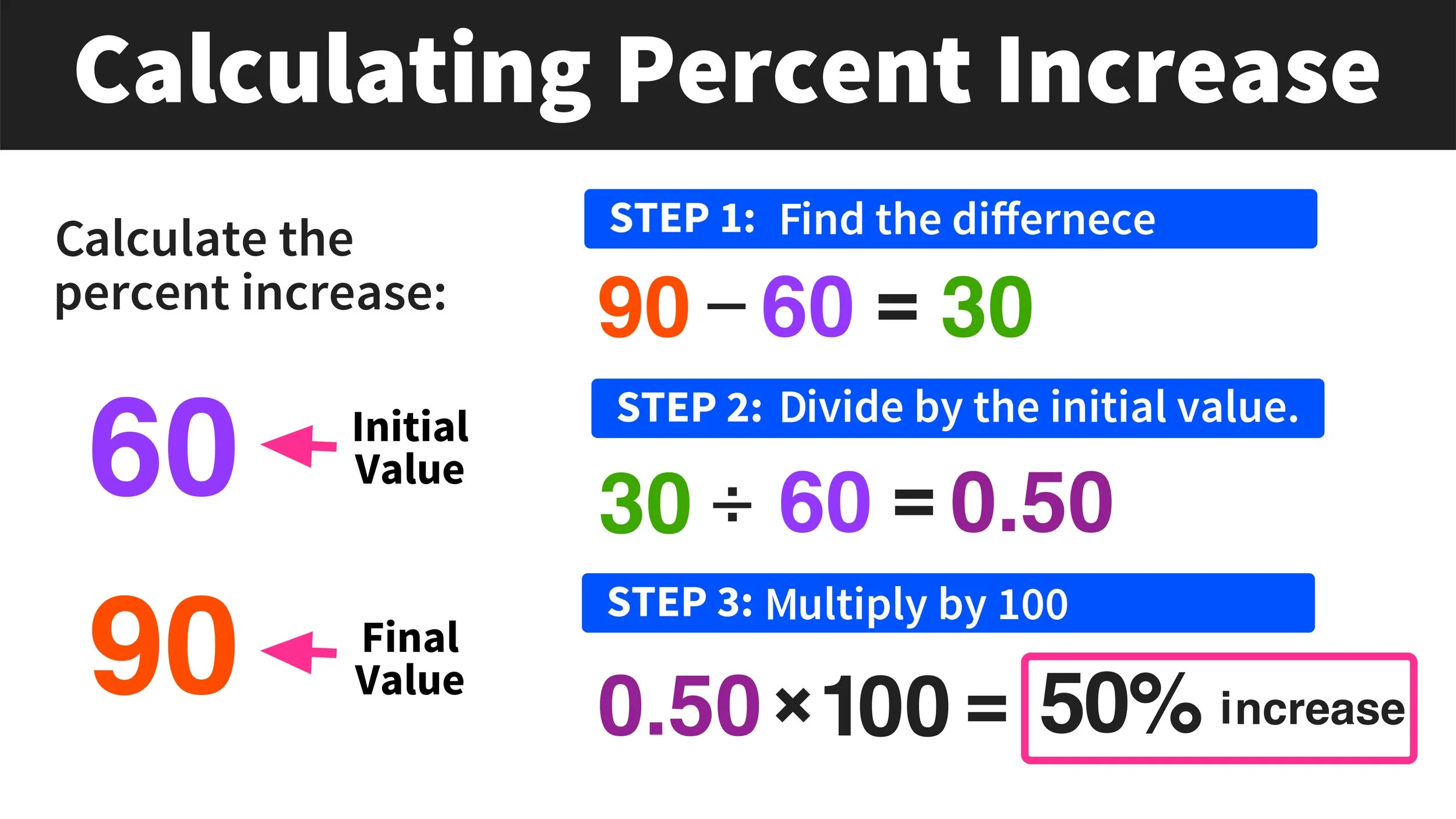
The formula for percentage increase is as follows:
$$ text{Percentage Increase} = left( frac{text{New Value} – text{Old Value}}{text{Old Value}} right) times 100 $$
Let’s break down each component:
- Old Value (or Original Value): This is your starting point, the baseline figure you are measuring change against.
- New Value (or Current Value): This is the figure after the change has occurred, which you are comparing to the old value.
- New Value – Old Value: This calculates the absolute amount of increase (the difference).
- Dividing by Old Value: This step normalizes the increase, expressing it as a fraction of the original value. This is what makes it a relative measure.
- Multiplying by 100: This converts the fractional result into a percentage, making it easier to understand and compare.
It’s crucial that the New Value is greater than the Old Value for an increase. If the New Value is less than the Old Value, the result will be a negative percentage, indicating a decrease.
Practical Walkthroughs: From Theory to Application
Let’s apply this formula to common financial situations to solidify your understanding.
Example 1: Investment Returns
Imagine you invested $5,000 in a stock, and after a year, its value grew to $5,750. What is the percentage increase in your investment?
- Old Value: $5,000
- New Value: $5,750
First, find the absolute increase:
$5,750 – $5,000 = $750
Next, divide the increase by the old value:
$frac{$750}{$5,000} = 0.15$
Finally, multiply by 100 to get the percentage:
$0.15 times 100 = 15%$
Your investment experienced a 15% increase. This allows you to compare its performance against other investment opportunities or market indices.
Example 2: Budgeting and Expense Growth
Suppose your monthly grocery bill was $400 last year, and this year, due to inflation and changing habits, it has risen to $460. What is the percentage increase in your grocery expenses?
- Old Value: $400
- New Value: $460
Absolute increase:
$460 – $400 = $60
Divide by old value:
$frac{$60}{$400} = 0.15$
Multiply by 100:
$0.15 times 100 = 15%$
Your grocery expenses have seen a 15% increase. This insight can prompt you to re-evaluate your budget or seek ways to reduce costs.
Example 3: Business Revenue Increase
A small business reported quarterly revenue of $80,000 in Q1 and $96,000 in Q2. What was the percentage increase in revenue from Q1 to Q2?
- Old Value: $80,000
- New Value: $96,000
Absolute increase:
$96,000 – $80,000 = $16,000
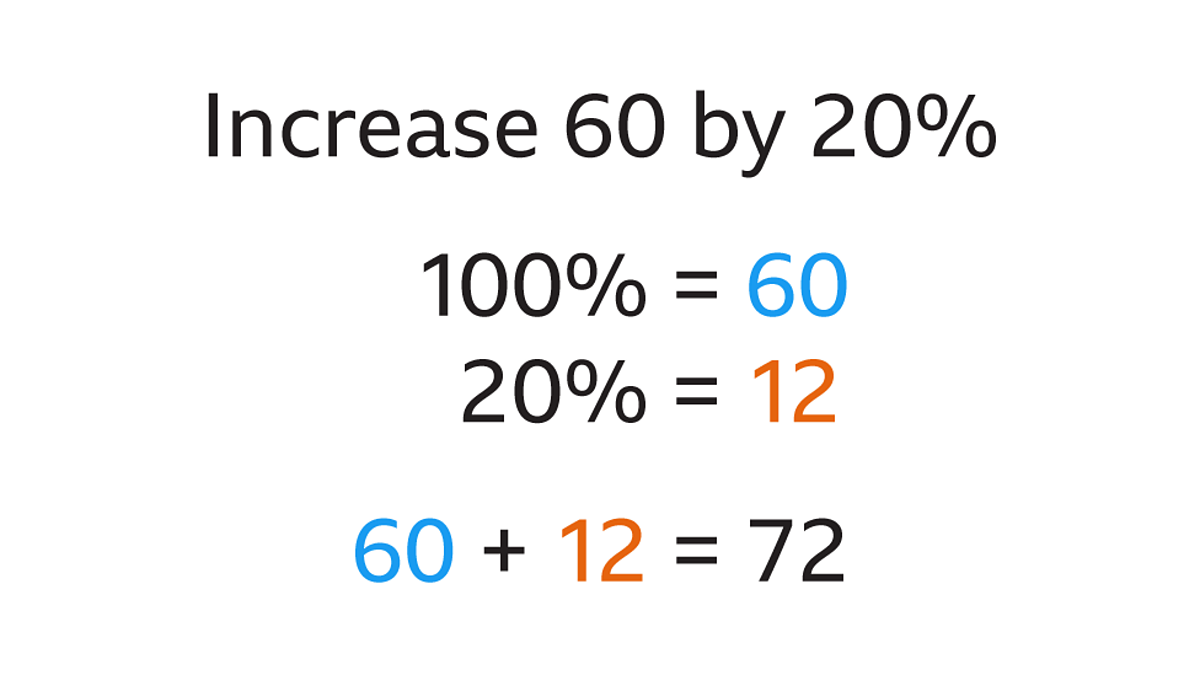
Divide by old value:
$frac{$16,000}{$80,000} = 0.20$
Multiply by 100:
$0.20 times 100 = 20%$
The business experienced a 20% increase in revenue. This is a vital metric for assessing business health and growth trajectory.
Real-World Applications Across Your Financial Journey
The ability to calculate percentage increases isnends itself to virtually every facet of financial management. From personal wealth building to corporate strategic planning, this skill is a constant companion.
Personal Finance: Tracking Your Wealth and Spending
For individuals, understanding percentage increases is critical for maintaining financial health and achieving personal goals.
Savings Growth and Debt Reduction
Are your savings growing effectively? If your savings account balance increased from $10,000 to $10,300 over a year, you can quickly calculate a 3% increase. This helps you compare the yield from your savings account to inflation or other investment opportunities. Similarly, tracking the percentage decrease in your outstanding debt provides powerful motivation and a clear metric of progress towards financial freedom. Seeing a 10% reduction in your credit card balance, for example, is often more impactful than just seeing a dollar amount.
Salary Raises and Income Evolution
When you receive a salary raise, converting it into a percentage increase allows you to immediately understand its real impact and compare it against the cost of living or previous raises. A $2,000 raise on a $40,000 salary is a 5% increase, while the same $2,000 raise on an $80,000 salary is only a 2.5% increase. This distinction helps in salary negotiations and in assessing your career progression in relative terms.
Investing: Gauging Performance and Portfolio Health
In the investment world, percentage increase is the language of performance. It’s the primary way investors evaluate the success of their assets.
Stock Returns and Market Fluctuations
When a stock price moves from $100 to $105, it’s a 5% increase. This seemingly simple calculation is at the heart of daily market analysis. Investors use it to compare the performance of different stocks, sectors, or even entire market indices. Over longer periods, compounded percentage increases are how true wealth is built, and understanding how to track these changes is crucial for managing expectations and making buy/sell decisions.
Mutual Funds and Retirement Accounts
For broader investment vehicles like mutual funds or exchange-traded funds (ETFs), percentage returns (which are often percentage increases) are the standard measure of performance. Your quarterly statement will almost certainly highlight the percentage increase or decrease of your holdings. Understanding these figures, and what constitutes a good or bad percentage return over different timeframes, is essential for retirement planning and long-term wealth accumulation.
Business Finance: Measuring Success and Identifying Trends
For businesses, percentage increases are fundamental metrics used to assess operational efficiency, market penetration, and overall financial health.
Sales Growth and Profit Margins
Year-over-year sales growth is a key indicator of a company’s vitality. A 15% increase in sales might signal successful marketing campaigns or expanding market demand. Equally important is tracking profit margins. If a company’s revenue increased by 10%, but its costs of goods sold increased by 15%, its profit margin likely decreased, despite revenue growth. Percentage analysis here is critical for identifying profitability trends.
Operating Expenses and Cost Control
Monitoring operating expenses as a percentage increase allows businesses to identify areas where costs are escalating unexpectedly. If utility costs increased by 8% while revenue only increased by 3%, it indicates a potential issue with cost control that needs investigation. Similarly, a decrease in the percentage of administrative overhead relative to total revenue indicates improved efficiency. These insights are vital for budgeting, forecasting, and strategic cost management.
Common Pitfalls and Advanced Considerations
While the calculation itself is straightforward, interpreting percentage increases in complex financial contexts requires a nuanced understanding and an awareness of potential misinterpretations.
Beware of Base Effects and Misinterpretations
One common pitfall is the “base effect.” A large percentage increase can look impressive if it’s calculated from a very small initial base. For example, a company increasing its profit from $100 to $200 is a 100% increase, which sounds phenomenal. However, a company increasing its profit from $1,000,000 to $1,050,000 is only a 5% increase, but represents a much larger absolute gain ($50,000 vs. $100). Always consider the absolute numbers alongside the percentages to get a complete picture.
Conversely, a small percentage increase on a very large base can still represent a massive absolute change. A 1% increase in the national GDP, for instance, translates to billions of dollars. Misinterpreting these effects can lead to poor financial decisions.
Annualized Growth Rates vs. Period-Specific Increases
When dealing with financial data over different timeframes, it’s crucial to distinguish between a period-specific percentage increase and an annualized growth rate. A stock might show a 2% increase over one month. To compare this to an annual return or another investment, you might need to annualize it (often by compounding the monthly rate over 12 months, though more complex methods exist). Similarly, a 50% increase over 5 years is less impressive than a 50% increase over one year. Always clarify the time period to which a percentage increase refers.
Utilizing Financial Tools and Software for Efficiency
While manual calculation is essential for understanding the concept, in practice, financial tools and software make the process incredibly efficient. Spreadsheets like Microsoft Excel or Google Sheets are adept at handling percentage calculations with simple formulas. Financial calculators, both physical and online, also offer dedicated functions. Investment platforms often automatically display percentage gains and losses for your portfolio. Leveraging these tools not only saves time but also reduces the risk of manual errors, allowing you to focus more on the interpretation of the numbers rather than just their derivation.
Mastering Percentage Increase for Informed Financial Decisions
The ability to accurately calculate and critically interpret percentage increases is not merely an academic exercise; it is a fundamental skill that underpins sound financial decision-making in both personal and professional spheres. It moves you beyond anecdotal observations to data-driven insights.
Empowering Your Financial Literacy
By mastering this concept, you empower yourself to better understand economic news, evaluate investment opportunities, scrutinize your own spending patterns, and effectively manage your personal wealth. You gain a clearer lens through which to view your financial world, enabling you to ask more informed questions and seek out more precise answers. It transforms you from a passive observer of numbers into an active participant in your financial narrative.

Strategic Planning and Goal Setting
For businesses, percentage increases are vital for strategic planning, setting realistic targets, and evaluating the effectiveness of initiatives. A business aiming for a 10% revenue increase year-over-year needs to understand what that entails in absolute terms and how past performance measured up. For individuals, setting a goal to increase savings by 15% this year or reduce debt by 20% provides concrete, measurable objectives that drive action and allow for clear progress tracking.
In conclusion, “how to find the increase in percentage” is more than a simple query; it’s an entry point into a deeper understanding of financial dynamics. By embracing this core mathematical tool, you unlock a powerful capability to analyze, compare, and strategize, ensuring that your financial journey is guided by clarity, precision, and an informed perspective.
aViewFromTheCave is a participant in the Amazon Services LLC Associates Program, an affiliate advertising program designed to provide a means for sites to earn advertising fees by advertising and linking to Amazon.com. Amazon, the Amazon logo, AmazonSupply, and the AmazonSupply logo are trademarks of Amazon.com, Inc. or its affiliates. As an Amazon Associate we earn affiliate commissions from qualifying purchases.