
In the modern financial landscape, the seamless movement of capital depends on a sophisticated network of identifiers and protocols. Among these, the American Bankers Association (ABA) routing number stands as one of the most critical pieces of information for any account holder. Whether you are setting up a direct deposit for a new career, authorizing a monthly mortgage payment, or initiating a domestic wire transfer, the routing number serves as the “address” for your financial institution within the vast infrastructure of the United States banking system.

Understanding how to locate and verify this nine-digit code is more than just a clerical necessity; it is a fundamental aspect of financial literacy and security. This guide explores the diverse methods for finding your routing number, the structural logic behind these digits, and the best practices for safeguarding your financial data in an increasingly digital world.
The Anatomy and Purpose of the ABA Routing Number
To effectively manage your personal or business finances, it is essential to understand what a routing number actually represents. Introduced by the American Bankers Association in 1910, the routing transit number (RTN) was designed to facilitate the sorting and bundling of paper checks. Today, while physical checks are less common, the routing number remains the backbone of the Automated Clearing House (ACH) network and electronic fund transfers.
What is an ABA Routing Number?
A routing number is a nine-digit code used to identify a specific financial institution in the United States. It acts as a digital signpost, ensuring that funds traveling through the Federal Reserve or private clearinghouses reach the correct bank. Without this code, the domestic financial system would be unable to distinguish between thousands of different credit unions, commercial banks, and savings associations.
The Logic Behind the Nine Digits
A routing number is not a random string of integers; it follows a specific mathematical formula known as the “checksum” algorithm.
- The First Four Digits: These represent the Federal Reserve routing symbol, indicating the geographic district where the bank is located.
- The Next Four Digits: These identify the specific financial institution or “bank identifier.”
- The Ninth Digit: This is the check digit. It is calculated based on a weighted sum of the previous eight digits. If the math doesn’t add up, the transfer system immediately flags the number as invalid, preventing many clerical errors before a transaction is even processed.
Routing Numbers vs. Account Numbers
A common point of confusion for consumers is the distinction between a routing number and an account number. While the routing number identifies the bank, the account number identifies your specific pocket within that bank. You share a routing number with every other customer at your branch or institution, but your account number is unique to you. In the context of financial logistics, the routing number gets the money to the right building, and the account number puts it in the right room.
Practical Methods to Locate Your Routing Number
In the era of digital-first banking, there are several ways to retrieve your routing number, ranging from traditional physical documents to sophisticated mobile interfaces.
1. The MICR Line on a Personal Check
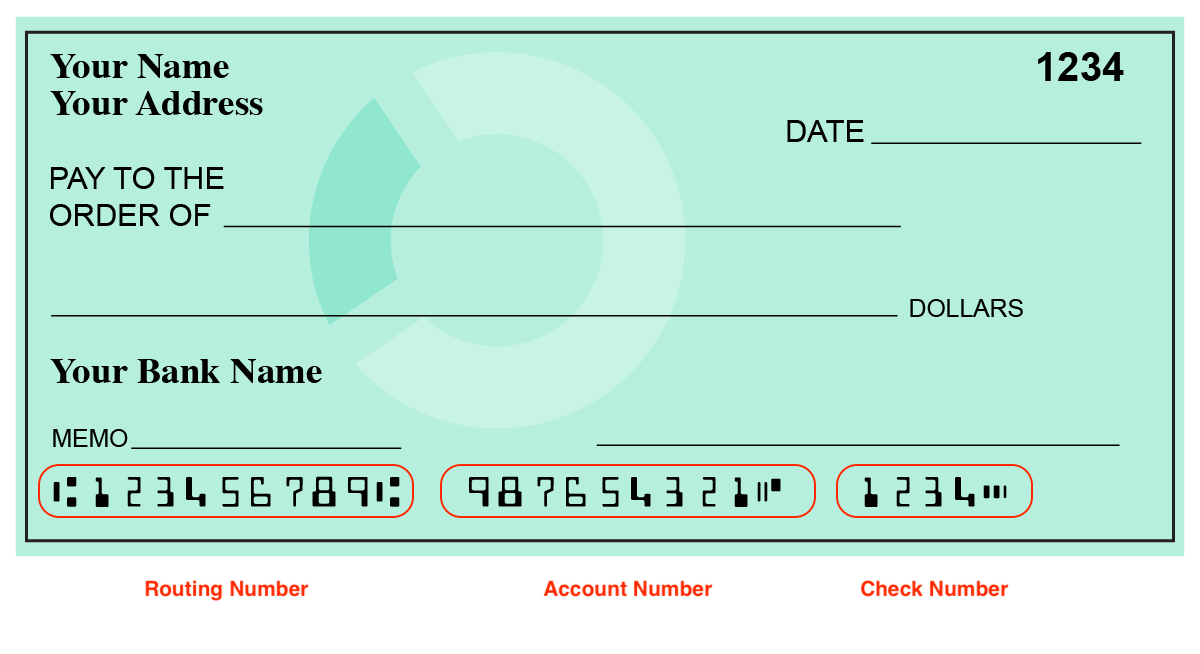
The most traditional method of finding a routing number is by looking at a physical check. At the bottom of every check is a string of numbers printed in a specialized font known as Magnetic Ink Character Recognition (MICR).
- The Leftmost Sequence: On a standard personal check, the nine-digit routing number is typically the first set of numbers on the bottom left.
- The Middle Sequence: This is usually your unique account number.
- The Rightmost Sequence: This is the specific check number for your records.
It is important to note that on some business checks, the order of these numbers may vary, so always count for the nine-digit sequence.
2. Utilizing Online Banking and Mobile Apps
As we transition toward a paperless economy, many consumers no longer carry checkbooks. Most modern financial institutions prominently display routing numbers within their secure online portals.
- Account Details: After logging in, navigate to your “Account Summary” or “Account Details” page. The routing number is usually listed alongside your current balance and account type.
- Mobile Apps: In a banking app, this information is often tucked under a “Settings” or “Info” tab. Many banks now include a “Copy” button next to the routing number to prevent transcription errors when pasting the data into other financial applications.
3. The Official ABA Lookup Tool and Bank Websites
If you do not have immediate access to your account login, you can often find the routing number on the bank’s public-facing website. Most large national banks have a dedicated “Routing Numbers” page, often categorized by state, as some larger institutions use different routing numbers for different regions. Additionally, the American Bankers Association provides an official online lookup tool, though it is limited to a certain number of searches per day for individual users.
When and Why You Need Your Routing Number
Knowing where to find your routing number is only half the battle; understanding when to use it—and which one to use—is crucial for ensuring that your financial transactions are processed without delay.
Setting Up Direct Deposits and Automated Payments
The most frequent use of a routing number is for “push” and “pull” transactions through the ACH network. When you provide your employer with your routing and account numbers, you are authorizing an ACH credit (direct deposit). Conversely, when you set up an automated payment for a utility bill or a gym membership, you are authorizing an ACH debit. These transactions are generally free or very low-cost, making them the preferred method for recurring personal finance tasks.
Wire Transfers: A Critical Distinction
A common pitfall in financial management is using a standard ACH routing number for a domestic wire transfer. Some larger banks maintain two separate routing numbers: one for ACH transactions and one for wire transfers.
- ACH Routing: Used for payroll, bill pay, and person-to-person transfers (like Venmo or Zelle).
- Wire Routing: Used for high-value, near-instantaneous transfers, such as a down payment on a home.
Using the wrong number can result in the transfer being rejected or, in rare cases, delayed for several business days. Always confirm with your bank if they require a specific “Wire Transit Number” before initiating a large transfer.
Taxes and Government Payments
When filing taxes with the IRS, providing a routing number allows for a significantly faster refund via direct deposit compared to a paper check. Similarly, if you owe taxes, the routing number facilitates an electronic federal tax payment. Accuracy here is paramount, as correcting a misrouted government payment can take months of administrative effort.
Security Protocols and Protecting Your Financial Data
Because a routing number and an account number together grant access to your funds, they must be treated with the same level of security as a social security number or a digital password.
Is a Routing Number Public Information?
Technically, routing numbers are not “secret.” You can find the routing number for Chase or Bank of America with a simple Google search. However, the security risk arises when your routing number is paired with your account number. This combination is effectively the key to your “financial front door.” If a malicious actor gains access to both, they could potentially initiate unauthorized ACH withdrawals.
Mitigating the Risk of Financial Fraud
To maintain high standards of financial security, consider the following protocols:
- Review Statements Regularly: Monitor your transaction history for small “test” debits, which are often a precursor to larger fraudulent withdrawals.
- Use Secure Portals: Never send your routing and account numbers via unencrypted email. Use secure portals provided by HR departments or financial institutions.
- Be Wary of “Micro-deposits”: When linking accounts (e.g., linking a brokerage account to a checking account), banks will often send two tiny deposits of a few cents. This is a security measure to verify that you have actual access to the account associated with that routing number.

The Future of Routing Numbers: FedNow and Beyond
The American financial system is currently undergoing a shift toward real-time payments (RTP). With the introduction of the Federal Reserve’s “FedNow” service, the reliance on traditional ACH windows is decreasing. However, even in a real-time environment, the routing number remains the foundational identifier. As we move toward more integrated financial technologies, the “logic” of the routing number will likely be integrated into more user-friendly aliases (like email addresses or phone numbers), but the underlying 9-digit ABA code will remain the anchor of the US banking infrastructure for the foreseeable future.
By mastering the simple task of finding and verifying your routing number, you are taking a professional step toward better financial management. Whether through a checkbook, a mobile app, or a bank’s official portal, this nine-digit code is your primary tool for navigating the complex world of personal and business finance.
aViewFromTheCave is a participant in the Amazon Services LLC Associates Program, an affiliate advertising program designed to provide a means for sites to earn advertising fees by advertising and linking to Amazon.com. Amazon, the Amazon logo, AmazonSupply, and the AmazonSupply logo are trademarks of Amazon.com, Inc. or its affiliates. As an Amazon Associate we earn affiliate commissions from qualifying purchases.